
What is Meghalaya Famous For?
Meghalaya is famous for its living root bridges, waterfalls, caves, hills, tribal culture, clean villages, crystal clear rivers, and unique natural landscapes that attract travellers throughout the year.
+91 9910402252
admin@chalbanjare.com


Meghalaya offers some of India’s most authentic nature and village experiences, featuring living root bridges, crystal-clear rivers, sacred forests, traditional Khasi villages, and breathtaking countryside landscapes.
Mawlynnong in East Khasi Hills is widely known for its community-led cleanliness and organized village lifestyle, where local residents collectively maintain pathways, gardens, and shared spaces. The village reflects a strong sense of cooperation that shapes daily life and visitor experience.
Walking through Mawlynnong reveals neatly maintained lanes, bamboo structures, and flower-lined paths that create a calm rural atmosphere. The village is not just a tourist spot but a living example of sustainable community practices.
It is one of the most well-maintained villages in Meghalaya.
The village reflects strong community participation in daily life.
Mawlynnong showcases disciplined and community-driven village living.
Kongthong, also known as the Whistling Village, is a unique settlement in Meghalaya where residents use musical whistles instead of names to communicate. Each individual has a distinct tune that is used for calling and identification within the community.
The village is surrounded by hills and natural landscapes, offering a peaceful and culturally rich environment. Visitors can experience local traditions that have been preserved for generations.
It is one of the most unique cultural villages in India.
The communication system is deeply rooted in tradition.
Kongthong preserves one of Meghalaya’s rare cultural traditions.
Across Khasi and Jaintia Hills, numerous small villages offer authentic rural experiences where daily life remains closely connected to nature, agriculture, and seasonal rhythms. These villages are often surrounded by hills, forests, and small water streams.
The simplicity of these settlements provides insight into traditional lifestyles that have remained largely unchanged over time. Visitors experience quiet surroundings and natural hospitality.
It is one of the most authentic rural regions in Meghalaya.
The villages reflect deep cultural continuity.
These villages reflect Meghalaya’s untouched rural identity.
Khasi villages offer opportunities to observe traditional architecture, community-centered living, and sustainable rural lifestyles that have evolved over generations.
Visitors can gain insights into Khasi traditions, folklore, festivals, and cultural practices that continue to play an important role in village life.
Homestays allow travelers to enjoy authentic hospitality, local cuisine, and meaningful cultural exchanges with village communities.
Meghalaya’s natural landscape is defined by continuous stretches of waterfalls, dense forests, and rolling green hills that change dramatically with seasons. The region experiences heavy rainfall, which keeps vegetation lush and rivers active throughout most of the year.
Travelers moving through these landscapes encounter a constant blend of misty hills, flowing streams, and dense greenery that creates a layered natural environment. Each region offers a slightly different expression of the same rich ecological system.
It is one of the most naturally diverse regions in India.
The environment remains green and constantly evolving.
Meghalaya’s nature is shaped by continuous rainfall and terrain.
Cherrapunji, Dawki, and Jowai represent three distinct natural identities of Meghalaya, each offering unique landscapes ranging from waterfalls and caves to rivers and hills. Cherrapunji is known for heavy rainfall and dramatic cliffs, while Dawki is famous for crystal-clear rivers.
Jowai adds a balance of lakes, waterfalls, and cultural landscapes, making this combination ideal for a complete Meghalaya travel experience. Together, they cover the core diversity of the state’s natural beauty.
It is one of the most complete travel circuits in Meghalaya.
Each destination represents a different natural theme.
These three regions define Meghalaya’s natural identity.
Across Meghalaya, peaceful valleys and natural viewpoints provide wide perspectives of hills, rivers, and forests. These areas are often less crowded, allowing visitors to experience quiet observation of landscapes.
The combination of flowing rivers, open valleys, and elevated viewpoints creates constantly changing scenery depending on weather and light conditions. Monsoon adds mist and depth to these views.
It is one of the most calming nature experiences in Northeast India.
The landscapes remain dynamic throughout the year.
Meghalaya’s nature offers calm and immersive landscapes.
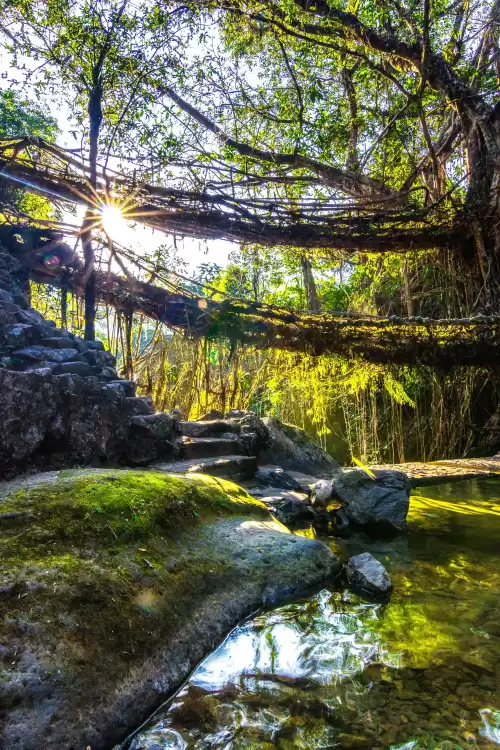
The Double Decker Living Root Bridge in Nongriat is one of Meghalaya’s most remarkable natural engineering wonders, formed by the Khasi community using aerial roots of rubber trees over generations. The structure spans across a flowing stream deep in the rainforest.
Reaching the bridge involves a long trek through stone steps and forest trails, but the experience rewards visitors with dense greenery, natural pools, and cascading waterfalls along the route. The bridge itself is strong, functional, and deeply integrated with its environment.
It is one of the most iconic trekking experiences in Meghalaya.
The bridge reflects centuries of living bioengineering.
Nongriat offers a deep rainforest trekking experience.
The Riwai Living Root Bridge near Mawlynnong is one of the most accessible root bridges in Meghalaya, requiring only a short walk from the village. Unlike the deeper Nongriat trek, this bridge is suitable for all types of travelers.
The bridge crosses a small stream surrounded by greenery and rural landscapes, offering a simple yet authentic introduction to Khasi living root architecture. Its accessibility makes it a popular stop on village circuits.
It is one of the easiest root bridges to visit.
The structure blends nature and village life.
Riwai Bridge is ideal for quick root bridge experiences.
Living root bridges across Meghalaya represent a unique form of Khasi bioengineering where tree roots are guided, shaped, and strengthened over decades to form functional bridges. This traditional practice is deeply connected to sustainability and ecological balance.
These structures grow stronger with time and integrate seamlessly into forest ecosystems. They are not built in a conventional sense but nurtured through generations, reflecting a deep understanding of natural growth processes.
It is one of the most unique engineering traditions in the world.
The bridges evolve continuously with nature.
Root bridges represent living connections between people and nature.
The Umngot River in Dawki is one of Meghalaya’s most visually striking natural attractions, famous for its crystal-clear water where boats appear to float above the riverbed. The clarity is most prominent during the dry season when sediment levels are extremely low.
The river flows gently through a valley surrounded by green hills and rural settlements, creating a peaceful atmosphere ideal for boating and photography. The underwater stones and shifting light patterns remain visible from above the surface.
It is one of the most iconic river experiences in India.
The transparency defines its global recognition.
Dawki River offers a surreal water experience unmatched in India.
Shnongpdeng and nearby riverside villages along the Umngot River offer a quieter and more immersive countryside experience compared to central Dawki. These villages are closely connected to river life and traditional rural practices.
The surroundings include rocky riverbanks, small settlements, and open landscapes where visitors can experience camping, walking, and slow travel along the river edge. The environment remains peaceful and less commercialized.
It is one of the most serene river zones in Meghalaya.
The area blends nature and village life.
Shnongpdeng offers a slower and more natural river experience.
The countryside of Jaintia Hills is characterized by rolling landscapes, agricultural fields, small streams, and scattered villages that maintain a strong connection with nature. The region offers long scenic drives through quiet rural environments.
The landscape changes gradually from hills to valleys, with seasonal water flow influencing greenery and agricultural activity. The simplicity of rural life defines the experience.
It is one of the most peaceful regions in Meghalaya.
The countryside reflects natural rural balance.
Jaintia countryside offers calm and immersive travel experiences.
Mawphlang Sacred Forest is one of the most ecologically and culturally significant forest zones in Meghalaya, protected for generations by Khasi traditions. The forest is preserved through strict community rules that prevent extraction of any natural element, keeping the ecosystem intact in its original form.
Walking through the forest reveals dense vegetation, ancient trees, moss-covered stones, and a humid atmosphere shaped by continuous moisture. The trails are guided, ensuring visitors understand both ecological and cultural importance while moving through this protected area.
It is one of the most preserved natural forests in Meghalaya.
The forest reflects deep ecological and cultural harmony.
Mawphlang offers a rare untouched forest experience.
Nokrek National Park in the Garo Hills is a UNESCO Biosphere Reserve known for its rich biodiversity, rare flora and fauna, and dense forest cover. The region remains largely undisturbed, making it one of the most important ecological zones in Meghalaya.
The forest supports a wide range of wildlife species and serves as a natural habitat for several endemic plants. The terrain is hilly and covered with thick vegetation, creating a true wilderness experience.
It is one of the most important biodiversity zones in Northeast India.
The forest remains largely untouched and protected.
Nokrek preserves Meghalaya’s natural ecological heritage.
Balpakram National Park, located in the Garo Hills, is often referred to as the “land of spirits” due to its cultural legends and deep valleys surrounded by untouched forest landscapes. The park features cliffs, canyons, and dense vegetation that create a dramatic natural setting.
It is home to diverse wildlife species and offers a raw wilderness experience with minimal human interference. The terrain is rugged, making exploration more suitable for nature enthusiasts and experienced travelers.
It is one of the most dramatic natural parks in Meghalaya.
The landscape blends mythology with ecology.
Balpakram combines wilderness with cultural heritage landscapes.
Nohwet is a quiet village in the East Khasi Hills that offers a calm countryside atmosphere away from mainstream tourist routes. The village is surrounded by green hills, small farms, and traditional Khasi homes that reflect a simple rural lifestyle.
The environment here is slow-paced, making it ideal for travelers looking to experience Meghalaya without crowds. Walking through the village gives a sense of everyday rural life closely connected to nature and seasonal cycles.
It is one of the most peaceful offbeat villages in Meghalaya.
The village reflects untouched rural simplicity.
Nohwet offers a slow and authentic village experience.
Kongthong, while known as the Whistling Village, also offers a deeper offbeat experience when explored beyond its main attraction. The surrounding landscape includes rolling hills, forest paths, and quiet rural settlements that remain largely untouched.
Away from the central village area, travelers can experience traditional Khasi life in its most natural form, where agriculture and community living define daily routines. The region remains calm and culturally rich.
It is one of the most unique cultural landscapes in Meghalaya.
The area extends beyond its whistling identity.
Kongthong’s surroundings offer deeper rural immersion.
West Jaintia Hills contains several hidden villages that are rarely included in mainstream itineraries but offer authentic rural experiences. These settlements are surrounded by hills, streams, and agricultural fields that define local life.
Visitors passing through these villages encounter simple lifestyles, traditional housing, and a strong connection with natural surroundings. The region remains largely untouched by commercial tourism.
It is one of the most unexplored rural zones in Meghalaya.
The villages preserve traditional Khasi and Jaintia lifestyles.
These villages showcase Meghalaya’s untouched rural identity.
Meghalaya’s Khasi villages offer strong visual storytelling opportunities where traditional homes, bamboo structures, terraced fields, and forest backdrops come together in a naturally balanced composition. The simplicity of rural life adds authenticity to every frame.
Photographers often focus on everyday scenes such as farming activities, village pathways, and community spaces that reflect the region’s cultural rhythm. The soft light in hilly areas enhances textures and natural tones.
It is one of the most authentic rural photography regions in India.
The villages offer naturally composed visual scenes.
Khasi villages offer deeply human and natural photography moments.
Meghalaya’s waterfalls, forests, and river valleys create dynamic photography environments where water flow, dense greenery, and misty conditions interact continuously. Each location changes appearance depending on season and weather.
Waterfalls appear more powerful during monsoon, while valleys and rivers reflect softer tones during dry periods. Forest trails add depth with layered greenery and natural textures.
It is one of the most visually diverse landscapes in Northeast India.
The region supports both wide and close-up compositions.
Nature in Meghalaya constantly changes photographic moods.
Sunrise viewpoints across Meghalaya reveal mist-covered hills, valleys, and villages slowly emerging from early morning fog. These conditions create soft lighting and layered landscapes ideal for atmospheric photography.
As the sun rises, mist gradually lifts, revealing detailed textures of forests and settlements below. The transition between fog and light makes each moment visually unique.
It is one of the most cinematic natural experiences in Meghalaya.
The region is ideal for atmospheric landscape shots.
Meghalaya’s mornings offer some of the most dramatic natural visuals.
Khasi culture in Meghalaya is deeply rooted in community living, oral traditions, and a strong connection with nature. Village life reflects these values through shared responsibilities, agricultural practices, and respect for natural surroundings.
Festivals in Khasi regions are closely linked to seasonal cycles and community beliefs, often featuring traditional music, dance, and collective participation. These cultural expressions are not staged for tourism but remain part of everyday life.
It is one of the most culturally rooted societies in Northeast India.
Traditions remain actively practiced across generations.
Khasi culture remains deeply connected to land and community.
The Nartiang Monoliths in West Jaintia Hills represent one of the most important historical heritage sites in Meghalaya, featuring large standing stones that reflect ancient Jaintia civilization and its social structure. These monoliths are arranged in significant formations across open grounds.
The site allows visitors to observe the scale and arrangement of these stones, which are believed to have ceremonial and historical importance. The surrounding village adds cultural context to the heritage site.
It is one of the most important heritage landmarks in Meghalaya.
The monoliths represent ancient community traditions.
Nartiang preserves Meghalaya’s ancient historical identity.
Local markets across Meghalaya serve as cultural spaces where daily life, trade, and traditional craftsmanship come together. These markets offer handmade goods, local produce, and culturally significant items that reflect regional identity.
Handicrafts in Meghalaya often include bamboo products, woven textiles, and traditional artifacts made by local communities. The market atmosphere remains simple, community-driven, and closely tied to rural life.
It is one of the most authentic cultural experiences in Meghalaya.
The markets reflect everyday indigenous life.
Markets in Meghalaya reflect living cultural traditions.
Meghalaya offers a wide spectrum of travel experiences that blend nature, culture, and village life into a single connected landscape. Choosing destinations depends on whether the focus is waterfalls and rivers, traditional village culture, or immersive forest and hill experiences.
Travelers interested in nature can prioritize locations like Cherrapunji, Dawki, and Jowai, while those seeking cultural depth can explore Khasi villages, monolith sites, and rural settlements. Each region offers a different perspective of Meghalaya’s identity.
It is one of the most versatile travel destinations in Northeast India.
The state combines culture and nature seamlessly.
Meghalaya allows flexible travel planning across interests.
An offbeat Meghalaya itinerary goes beyond popular destinations like Shillong and Cherrapunji to include hidden villages, remote forests, lesser-known waterfalls, and quiet countryside routes. This approach provides a deeper understanding of the state’s natural and cultural diversity.
Such itineraries often include regions like West Jaintia Hills, Garo Hills, and interior Khasi villages where tourism is minimal. The travel experience becomes slower, more immersive, and closely connected to local life.
It is one of the most rewarding ways to explore Meghalaya.
The focus shifts from sightseeing to experience-based travel.
Offbeat travel reveals Meghalaya’s deeper identity.
Before traveling across Meghalaya, it is important to prepare for variable weather, rural terrain, and long travel distances between attractions. Essentials such as rain protection, sturdy footwear, and flexible planning are crucial for a smooth journey.
Carrying cash, basic medicines, and navigation support is also recommended, especially in remote regions where infrastructure may be limited. Weather conditions can change rapidly, particularly during monsoon seasons.
It is one of the most important steps for safe travel in Meghalaya.
Preparation ensures comfort and safety throughout the trip.
Proper preparation enhances every Meghalaya travel experience.

Get customized Meghalaya tour planning designed around rainfall patterns, road connectivity, seasonal visibility, and realistic hill travel timing. Whether you are visiting for waterfalls, cave exploration, scenic drives, village experiences, or nature-fo
⚡ Quick Response | 💰 Free consultation | 🕒 24×7 expert support