
What is Meghalaya Famous For?
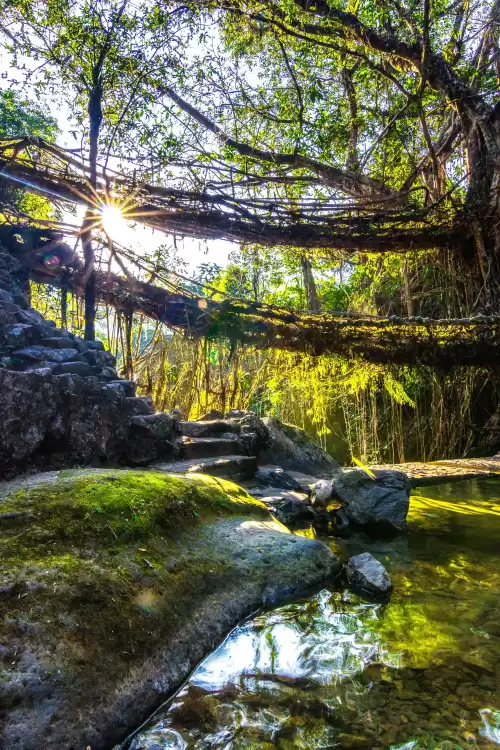
Meghalaya is famous for its living root bridges, waterfalls, caves, hills, tribal culture, clean villages, crystal clear rivers, and unique natural landscapes that attract travellers throughout the year.
+91 9910402252
admin@chalbanjare.com


Meghalaya is known as India’s cave capital, offering spectacular limestone caves, underground rivers, fossil chambers, and unique geological formations across the Khasi, Jaintia, and Garo Hills.
Mawsmai Cave near Cherrapunji is one of the most accessible and well-known limestone caves in Meghalaya, featuring narrow passages, natural rock corridors, and striking formations shaped by thousands of years of water erosion. The cave is partially illuminated, making it easier for visitors to navigate without technical equipment.
Inside, the temperature drops slightly, and the atmosphere becomes humid and echoing, giving a sense of entering a natural underground world. The formations include stalactites and stalagmites that create intricate patterns along the cave walls.
It is one of the most beginner-friendly caves in Meghalaya.
The cave offers a simple introduction to underground geology.
Mawsmai Cave is ideal for first-time cave explorers.
Arwah Cave, also located near Cherrapunji, is famous for its fossil imprints and naturally sculpted limestone formations that date back millions of years. The cave is longer and more layered compared to Mawsmai, offering a deeper exploration experience.
Inside, visitors can observe fossilized remains embedded in rock walls, along with natural chambers formed by underground water flow. The cave’s structure is more complex, making it both educational and visually engaging.
It is one of the most important geological caves in Meghalaya.
The site connects natural history with exploration.
Arwah Cave offers a deeper geological understanding of Meghalaya.
Siju Cave in the Garo Hills is one of the longest and most significant cave systems in Meghalaya, known for its massive underground chambers, river passages, and limestone formations. It is part of a larger cave network that remains partially unexplored.
The cave features dark tunnels, flowing underground streams, and large echo-filled halls that require guided exploration. Its remote location adds to the sense of adventure and isolation.
It is one of the most important cave systems in Northeast India.
The cave showcases Meghalaya’s hidden underground world.
Siju Cave represents Meghalaya’s vast subterranean landscape.
Mawsmai Cave is the most visited cave in Cherrapunji due to its easy accessibility and partially illuminated pathways that allow visitors to explore without advanced equipment. The cave is located close to the main tourist circuit, making it a convenient stop.
Inside, narrow limestone passages and naturally formed chambers give a close-up view of Meghalaya’s geological structure. The walk-through experience is short but visually rich, especially for first-time cave visitors.
It is one of the simplest cave experiences in Sohra.
The cave is ideal for casual exploration.
Mawsmai Cave is perfect for a quick geological visit.
Arwah Cave near Cherrapunji offers a more detailed cave experience compared to Mawsmai, featuring fossil imprints, layered limestone formations, and longer internal passages. The cave provides a deeper insight into Meghalaya’s ancient geological history.
The interior includes sections where fossil remains are visible on cave walls, along with naturally sculpted rock formations formed by long-term water erosion. The experience is both educational and adventurous.
It is one of the most informative caves in Meghalaya.
The cave combines science and exploration.
Arwah Cave adds geological depth to Sohra exploration.
Beyond the well-known caves, the Sohra region contains several smaller and less-explored cave systems that are often part of larger limestone formations. These caves are scattered across hills, forests, and rural areas surrounding Cherrapunji.
Many of these caves remain partially mapped and are accessible only through local guidance or trekking routes. They offer a more raw and less commercialized cave exploration experience.
It is one of the most diverse cave regions in Meghalaya.
The area remains rich in underground formations.
Sohra caves reveal Meghalaya’s hidden underground diversity.
Liat Prah Cave in the Jaintia Hills is part of one of the longest known cave systems in India, featuring vast underground networks of limestone passages that extend deep into Meghalaya’s karst landscape. The cave remains partially unexplored, adding a strong sense of mystery to its scale and structure.
Inside, visitors encounter wide chambers, narrow tunnels, and natural rock formations shaped over thousands of years by underground water flow. Certain sections require careful navigation and are best explored with local guides due to complex terrain conditions.
It is one of the most significant cave systems in Northeast India.
The cave reflects Meghalaya’s deep underground geological world.
Liat Prah represents one of Meghalaya’s most complex cave systems.
Krem Um Ladaw is a lesser-known limestone cave in the Jaintia Hills, characterized by narrow passages, naturally sculpted rock structures, and a quiet underground environment. The cave is less commercialized, offering a more raw and natural exploration experience.
The interior features uneven surfaces, small chambers, and rock formations created by long-term water erosion. Due to its relatively untouched nature, it provides a calm and less crowded cave experience.
It is one of the more offbeat caves in Meghalaya.
The cave highlights natural geological processes.
Krem Um Ladaw offers a quiet underground exploration experience.
Krem Syndai in the Jaintia Hills is known for its complex underground formations, including limestone structures, hidden chambers, and water-carved passages that reflect the region’s rich geological history. The cave is part of a broader system of underground networks in Meghalaya.
Exploration here can vary depending on water levels and seasonal conditions, making each visit slightly different. Local guidance is often important due to uneven terrain and changing internal pathways.
It is one of the most intriguing cave systems in the region.
The cave showcases Meghalaya’s underground diversity.
Krem Syndai reveals Meghalaya’s hidden subterranean landscapes.
Siju Cave in the Garo Hills is one of Meghalaya’s most significant cave systems, known for its vast limestone passages, underground river sections, and naturally formed chambers. The cave is part of a larger network that remains partially unexplored, adding to its sense of depth and mystery.
Inside, the environment shifts between narrow tunnels and large echoing halls where water flows through underground channels. The cave requires careful movement and is best experienced with local guidance due to its complex internal structure.
It is one of the most important cave systems in the Garo Hills region.
The cave reflects Meghalaya’s hidden subterranean world.
Siju Cave offers a deep underground adventure experience.
Tetengkol Balwakol Cave is a lesser-known cave in the Garo Hills, offering a more adventurous and raw exploration experience compared to the more accessible caves in Meghalaya. The cave features narrow passages, uneven terrain, and naturally formed limestone structures.
Due to its less commercialized nature, the cave provides a quiet and isolated environment where visitors can experience Meghalaya’s underground formations in a more untouched state. Exploration requires caution and local familiarity.
It is one of the most adventurous caves in the region.
The cave remains largely unexplored by mainstream tourism.
Tetengkol Balwakol is ideal for experienced cave explorers.
Beyond the well-known systems, the Garo Hills region contains numerous lesser-known caves scattered across forests, hills, and rural landscapes. These caves vary in size and structure, often connected to underground river systems and limestone formations.
Many of these caves are still partially unmapped and require guidance from local communities. The exploration experience is raw and closely connected to the natural environment of the region.
It is one of the most unexplored cave networks in Meghalaya.
The underground system remains largely hidden from mainstream tourism.
Garo Hills hides some of Meghalaya’s most mysterious caves.
Mawsmai Cave near Cherrapunji is one of the most beginner-friendly caves in Meghalaya, designed with partially illuminated pathways and relatively smooth walking sections. The cave allows visitors to experience limestone formations without requiring technical gear or advanced trekking skills.
The route is short and structured, making it suitable for families and first-time cave explorers. Inside, natural rock formations, narrow passages, and soft lighting create an accessible yet immersive underground experience.
It is one of the easiest caves to explore in Meghalaya.
The cave offers a safe introduction to underground landscapes.
Mawsmai Cave is ideal for first-time cave visitors.
Arwah Cave also offers a moderately easy exploration experience, with a defined entrance pathway and sections that are accessible without technical climbing. The cave is slightly more extensive than Mawsmai but still manageable for most visitors.
Inside, fossil imprints and limestone formations provide an educational experience while maintaining a relatively safe and guided route. The cave is suitable for travelers who want a deeper experience without extreme difficulty.
It is one of the most balanced caves for beginners.
The experience combines learning with light adventure.
Arwah Cave offers safe yet engaging exploration.
Beginners exploring Meghalaya’s caves should prioritize sites with clear pathways, guided access, and shorter exploration routes. Caves like Mawsmai and Arwah provide the right balance of safety, accessibility, and natural beauty.
These caves allow visitors to experience limestone formations and underground environments without the challenges of deep trekking or technical navigation. Proper footwear and basic awareness are still recommended for comfort.
It is one of the safest ways to explore Meghalaya’s cave systems.
Beginner caves focus on ease and accessibility.
Beginner caves make Meghalaya accessible to all travelers.
Liat Prah Cave in the Jaintia Hills is one of the most challenging cave systems in Meghalaya, ideal for experienced adventurers seeking deep underground exploration. The cave stretches across extensive limestone networks with complex passages, uneven terrain, and partially unmapped sections.
Exploration here requires proper guidance due to its scale and internal complexity. The cave features long corridors, underground chambers, and water-formed structures that demand careful movement and planning throughout the route.
It is one of the most advanced cave systems in India.
The experience is raw, deep, and physically demanding.
Liat Prah is suited for serious cave explorers only.
Krem Um Ladaw offers a more rugged and less structured cave exploration experience, featuring narrow passages, uneven limestone surfaces, and dimly lit interior sections. The cave is not heavily commercialized, which increases its difficulty level.
Visitors must navigate natural obstacles and irregular terrain, making it suitable only for those comfortable with basic adventure conditions. The raw environment enhances the sense of exploration and discovery.
It is one of the more challenging offbeat caves in Meghalaya.
The cave remains largely untouched by tourism infrastructure.
Krem Um Ladaw demands caution and experience.
The Jaintia Hills region is home to numerous remote and partially explored cave systems connected by limestone networks and underground water channels. Many of these caves remain undocumented or only partially mapped.
Exploration often involves trekking through forest trails and rural landscapes before reaching cave entrances. Due to unpredictable conditions, local guidance is essential for safe navigation.
It is one of the most adventurous cave regions in Meghalaya.
The area is a hotspot for serious spelunking activity.
Jaintia Hills offers Meghalaya’s most extreme cave adventures.
Mawsmai Cave near Cherrapunji offers one of the most accessible geological study environments in Meghalaya, where limestone formations are clearly visible along illuminated cave passages. The cave showcases stalactites and stalagmites formed through long-term mineral deposition and water erosion.
The relatively short and structured route allows visitors to closely observe rock textures, layered deposits, and natural carving patterns without requiring technical caving skills. The controlled lighting enhances visibility of geological features.
It is one of the most educational caves in Meghalaya for beginners.
The formations clearly demonstrate limestone evolution over time.
Mawsmai Cave is ideal for basic geological observation.
Arwah Cave is particularly significant for geology enthusiasts due to its fossil imprints preserved in limestone walls, offering a rare glimpse into ancient marine life and sedimentary history. The cave extends deeper than many nearby formations, revealing multiple geological layers.
Inside, visitors can observe natural fossil patterns, rock stratification, and erosion-formed chambers that highlight Meghalaya’s ancient underwater origins. The cave acts as a natural archive of geological history.
It is one of the most scientifically interesting caves in the region.
The formations provide clear fossil evidence in rock structures.
Arwah Cave connects geology with natural history.
Liat Prah Cave in the Jaintia Hills contains some of the most complex underground geological structures in Meghalaya, including extensive limestone corridors, underground river systems, and multi-level cave formations. Much of the system remains partially unexplored.
The cave reflects long-term geological processes involving water erosion, mineral deposition, and structural rock formation over thousands of years. Its scale makes it significant for advanced geological interest.
It is one of the largest cave systems in Northeast India.
The cave showcases deep underground geological evolution.
Liat Prah reveals Meghalaya’s deep geological structure.
Nohkalikai Falls, located close to the Cherrapunji cave region, is one of the most dramatic waterfalls in Meghalaya and often included in combined cave and nature itineraries. The waterfall drops from high cliffs into a deep natural pool, creating a powerful visual contrast with the surrounding greenery.
The viewpoint offers sweeping views of the valley, especially during monsoon when water flow is at its peak. Its proximity to caves like Mawsmai and Arwah makes it a natural extension of cave exploration routes.
It is one of the most iconic natural attractions in Meghalaya.
The waterfall complements cave exploration circuits perfectly.
Nohkalikai adds dramatic scenery to cave-based travel routes.
The Nongriat region, known for its famous living root bridges, is closely connected with Meghalaya’s cave and waterfall systems. Dense rainforests, natural streams, and underground water channels shape the entire landscape.
The Double Decker Living Root Bridge trek also passes through multiple natural water formations and forest ecosystems, making it a combined experience of caves, rivers, and living structures.
It is one of the most immersive nature zones in Meghalaya.
The area connects caves, rivers, and forest life.
Nongriat links caves and nature into one continuous experience.
Meghalaya’s cave regions are surrounded by dense forests, deep valleys, and seasonal waterfalls that enhance the overall exploration experience. These natural elements create a continuous ecological system connecting underground caves with surface landscapes.
Forest trails often lead to cave entrances, while valleys and streams shape the terrain around them. During monsoon, the entire region becomes more vibrant with active water flow and lush greenery.
It is one of the most diverse natural environments in Meghalaya.
Caves exist within a larger living ecosystem.
Caves in Meghalaya are part of a larger natural world.
Meghalaya’s caves often have wet limestone floors, narrow passages, and uneven rocky surfaces that become slippery due to constant moisture and dripping water. Proper footwear with strong grip is essential to maintain stability during exploration.
Shoes designed for trekking or hiking provide better traction and reduce the risk of slipping in dimly lit or water-affected areas. Open footwear or smooth soles should be avoided entirely in cave environments.
It is one of the most important safety requirements for cave visits.
Good grip footwear directly improves exploration safety.
Proper footwear ensures safer movement inside Meghalaya caves.
Many caves in Meghalaya have limited or no natural lighting, especially deeper sections in systems like Liat Prah or Siju Cave. A reliable flashlight or headlamp is essential for visibility and safe navigation through dark passages.
Headlamps are particularly useful as they allow hands-free movement, which is important when climbing or balancing on uneven terrain. Extra batteries or backup light sources are recommended for longer explorations.
It is one of the most essential tools for cave exploration.
Light sources ensure safe and confident movement underground.
Proper lighting is critical for safe cave exploration.
Many caves in Meghalaya require local guidance due to complex layouts, seasonal water levels, and uneven terrain. Following instructions from local guides ensures safer navigation and helps protect fragile geological formations.
Guides also help identify safe paths, restricted areas, and best entry routes depending on weather and water conditions. Respecting local regulations contributes to both personal safety and environmental preservation.
It is one of the most important aspects of responsible cave tourism.
Local knowledge significantly improves safety and experience.
Following guidelines ensures safe and responsible cave exploration in Meghalaya.
Meghalaya offers a wide range of caves that suit different experience levels, from easy walk-in caves like Mawsmai to highly complex systems such as Liat Prah and Siju. Selecting the right cave depends on physical fitness, time availability, and comfort with underground environments.
Beginners can focus on well-lit and short caves near Cherrapunji, while experienced explorers may prefer deeper and less structured cave systems in Jaintia and Garo Hills. Proper selection ensures a safe and enjoyable experience.
It is one of the most important decisions for cave exploration in Meghalaya.
The right choice improves both safety and experience quality.
Choosing wisely ensures a smooth cave exploration journey.
A well-structured Meghalaya cave itinerary typically combines Cherrapunji caves for easy access, Jaintia Hills for deep geological systems, and Garo Hills for remote exploration. This allows travelers to experience the full diversity of Meghalaya’s underground landscapes.
Travel routes should account for long distances between regions, as cave systems are spread across different districts. Combining caves with waterfalls, root bridges, and valleys creates a more balanced travel experience.
It is one of the most diverse exploration circuits in Northeast India.
Proper planning helps maximize travel efficiency.
A balanced itinerary reveals Meghalaya’s full cave diversity.
Before entering Meghalaya’s caves, travelers should prepare for slippery surfaces, low light conditions, and uneven terrain. Essential items include proper footwear, headlamps, and weather-appropriate clothing to handle humidity and damp environments.
Carrying water, basic first aid, and backup lighting is highly recommended, especially for longer or remote cave systems. Following local instructions and safety guidelines is crucial for a secure experience.
It is one of the most important preparation steps for cave travel.
Good preparation ensures safety and comfort underground.
Preparation is key to safely experiencing Meghalaya’s cave systems.

Get customized Meghalaya tour planning designed around rainfall patterns, road connectivity, seasonal visibility, and realistic hill travel timing. Whether you are visiting for waterfalls, cave exploration, scenic drives, village experiences, or nature-fo
⚡ Quick Response | 💰 Free consultation | 🕒 24×7 expert support