
What is Meghalaya Famous For?
Meghalaya is famous for its living root bridges, waterfalls, caves, hills, tribal culture, clean villages, crystal clear rivers, and unique natural landscapes that attract travellers throughout the year.
+91 9910402252
admin@chalbanjare.com


Meghalaya is India’s premier cave exploration destination, offering vast limestone cave systems, underground rivers, fossil chambers, narrow passages, and thrilling adventures across the Khasi, Jaintia, and Garo Hills.
Mawsmai Cave is the most accessible and frequently visited cave in Meghalaya, located near Cherrapunji. It offers an excellent introduction to the state's remarkable underground limestone landscape without requiring technical caving experience. The cave was naturally formed over thousands of years as rainwater slowly dissolved limestone rock, creating winding passages, smooth rock walls, stalactites hanging from the ceiling, stalagmites rising from the cave floor, and beautifully sculpted natural chambers. Because only a developed section of the cave is open to visitors, travelers can safely experience Meghalaya's cave environment while still appreciating the geological beauty that has made the region internationally famous among cave researchers.
Unlike remote caves that demand specialized equipment, Mawsmai Cave has designated walkways and carefully installed lighting that guide visitors through narrow passages, wider chambers, and naturally carved tunnels. Some sections require visitors to bend slightly while passing through low ceilings, adding a sense of adventure without becoming physically demanding. Moist limestone walls, cool temperatures, dripping water, and fascinating rock formations create an atmosphere that differs completely from the landscapes above ground. The visit usually fits comfortably within a Cherrapunji sightseeing itinerary alongside waterfalls and viewpoints.
Mawsmai Cave provides the ideal introduction to Meghalaya's extraordinary underground landscapes. It combines geological beauty, convenient access, and a genuine cave experience, making it one of the state's most essential natural attractions for visitors of all ages.
Located a short distance from Mawsmai Cave, Arwah Cave offers a different underground experience by combining impressive limestone formations with fossil-bearing rock walls that reveal evidence of ancient marine life. Millions of years ago, much of this region lay beneath the sea, and fossilized shells and marine organisms preserved within the limestone provide fascinating insight into Meghalaya's geological history. Visitors walking through the cave can observe these fossils embedded naturally within the rock while exploring a network of underground chambers shaped by flowing water over countless centuries.
The approach to Arwah Cave is equally rewarding because a well-maintained walking trail passes through green valleys and scenic viewpoints before reaching the cave entrance. Inside, natural lighting combines with carefully developed pathways that allow visitors to appreciate the changing rock textures, underground passages, and impressive cave formations without requiring technical caving skills. Compared with Mawsmai Cave, Arwah generally feels quieter, allowing visitors to explore at a slower pace while appreciating both geology and natural scenery.
Arwah Cave combines natural beauty with scientific interest, allowing visitors to explore underground landscapes while discovering evidence of Meghalaya's remarkable geological past preserved within ancient limestone formations.
Siju Cave, located in the South Garo Hills, is one of Meghalaya's oldest known cave attractions and remains one of the state's most significant underground destinations. Unlike the developed tourist caves around Cherrapunji, Siju Cave presents a more natural environment where visitors experience large underground chambers, limestone formations, narrow passages, and sections shaped by underground streams. The cave extends much farther than the portion generally explored by regular visitors, making it an important site for scientific research as well as adventure tourism.
The surrounding Garo Hills landscape enhances the overall experience, with dense forests, rolling hills, and quiet rural roads creating a sense of remoteness before visitors even reach the cave entrance. Inside, impressive limestone formations, naturally sculpted ceilings, and cool underground conditions create an exciting atmosphere for travelers interested in geology and nature. Good footwear and careful movement are essential because natural cave floors may remain damp throughout much of the year. Many visitors combine Siju Cave with nearby wildlife areas and scenic drives through the Garo Hills.
Siju Cave offers visitors a more natural underground adventure while showcasing another important part of Meghalaya's extraordinary cave heritage. Its impressive chambers and remote setting make it one of the state's most rewarding geological destinations.
Mawsmai Cave offers one of the safest and most enjoyable cave experiences in Cherrapunji because its developed pathways and carefully installed lighting allow visitors to appreciate natural limestone formations without requiring specialized equipment. The illuminated passages highlight thousands of years of geological activity, revealing delicate stalactites suspended from the ceiling, stalagmites growing upward from the floor, naturally carved pillars, and beautifully textured rock surfaces. These features demonstrate how continuous rainfall has shaped Meghalaya's underground landscape over countless generations.
The walking route passes through sections of varying width, creating an engaging experience where visitors occasionally move through narrow openings before emerging into wider underground chambers. Water droplets continuously falling from the cave ceiling remind visitors that limestone formation remains an ongoing natural process. Despite its popularity, the cave retains an authentic underground atmosphere with cool temperatures and naturally humid conditions throughout the year.
Mawsmai Cave remains the easiest and most accessible way to experience Meghalaya's underground limestone world while appreciating the remarkable geological processes that continue shaping the cave today.
Arwah Cave provides visitors with an underground journey that combines scenic walking trails, impressive limestone chambers, and fascinating fossil discoveries. Unlike many caves that focus primarily on rock formations, Arwah allows travelers to observe fossilized marine organisms preserved within limestone walls, demonstrating that Meghalaya's landscape was once covered by an ancient sea. These fossils transform an ordinary cave visit into an educational experience where geology and natural history become equally important.
The cave's pathways gradually lead visitors through naturally formed passages where changing light conditions reveal unique rock textures, underground chambers, and erosion patterns created by flowing water over millions of years. The relatively peaceful atmosphere encourages slow exploration, making Arwah Cave especially enjoyable for travelers interested in photography, geology, and nature rather than adventure alone.
Arwah Cave offers a unique combination of underground beauty and geological history, making it one of Cherrapunji's most fascinating natural attractions for visitors interested in both science and scenic exploration.
One of the distinctive features of cave exploration in Cherrapunji is that the experience extends well beyond the caves themselves. Walking trails leading toward caves frequently pass through lush forests, limestone hills, deep valleys, seasonal streams, and panoramic viewpoints that reflect the extraordinary biodiversity of Meghalaya. These natural surroundings create a complete adventure where visitors experience rainforest landscapes before entering the underground world.
During the post-monsoon season, the vegetation surrounding cave entrances becomes especially vibrant, while winter provides clearer skies and more comfortable walking conditions. Travelers often combine cave visits with nearby attractions such as Nohkalikai Falls, Seven Sisters Falls, Dainthlen Falls, and Eco Park, creating rewarding full-day itineraries. Comfortable footwear, rain protection, and flexible planning help visitors enjoy both the surface landscapes and underground formations throughout the journey.
Cherrapunji's caves are best experienced as part of the region's broader natural landscape. The combination of forests, valleys, waterfalls, and underground limestone formations creates one of Meghalaya's most rewarding nature experiences.
Liat Prah Cave, located in the East Jaintia Hills, is one of India's longest known cave systems and is internationally recognized among cave explorers for its enormous underground network. Unlike developed tourist caves such as Mawsmai, Liat Prah is a true expedition cave where exploration extends through vast limestone passages, underground rivers, massive chambers, natural tunnels, and intricate geological formations. Large sections of the cave remain suitable only for experienced cavers because of their complexity, making Liat Prah one of Meghalaya's most significant destinations for serious underground exploration.
The cave has been explored by professional speleologists from India and abroad, who continue mapping new passages within its extensive network. Entering Liat Prah requires proper preparation, experienced local guides, suitable safety equipment, and an understanding of changing underground conditions. Unlike casual sightseeing attractions, this cave demands physical endurance, navigation skills, and careful planning. Even approaching the cave often involves walking through remote forests, limestone landscapes, and rural villages that remain largely untouched by commercial tourism.
Liat Prah represents the adventurous side of Meghalaya's cave heritage. Its enormous underground network attracts serious explorers seeking one of the country's most remarkable limestone cave systems.
Krem Um Ladaw is another important cave system within the Jaintia Hills that appeals primarily to adventure enthusiasts rather than casual tourists. The cave features naturally formed passages, underground streams, limestone walls, narrow sections, and expansive chambers that require careful movement throughout the journey. Unlike illuminated tourist caves, Krem Um Ladaw remains largely in its natural condition, providing visitors with an authentic underground exploration experience.
Exploring this cave requires experienced local guides who understand the cave layout, seasonal water conditions, and safe routes through the underground network. Visitors should expect wet surfaces, uneven rock formations, low ceilings in certain sections, and complete darkness beyond natural entrance light. Proper helmets, headlamps, waterproof footwear, gloves, and suitable clothing are essential for a safe and enjoyable expedition. Weather conditions should also be checked carefully because heavy rainfall can affect underground water levels.
Krem Um Ladaw offers visitors a genuine cave expedition where natural conditions remain largely unchanged. Careful preparation and experienced guidance allow adventurers to safely appreciate one of the Jaintia Hills' impressive underground landscapes.
Krem Syndai represents another fascinating example of Meghalaya's extraordinary limestone geology. Although less well known than Mawsmai or Liat Prah, the cave offers adventurous visitors opportunities to explore hidden underground passages, naturally sculpted limestone walls, and quiet chambers away from regular tourist routes. The surrounding Jaintia Hills remain relatively peaceful compared with Cherrapunji, allowing explorers to experience remote landscapes before entering the underground environment.
Like many caves in the region, Krem Syndai continues to attract researchers studying Meghalaya's complex karst landscape. Visitors entering the cave should always be accompanied by knowledgeable local guides who understand both the route and current cave conditions. Respecting the fragile cave environment is particularly important because limestone formations develop extremely slowly over thousands of years and can easily be damaged through careless behavior.
Krem Syndai offers adventurous travelers an opportunity to explore one of Meghalaya's quieter cave systems while appreciating the remarkable limestone landscape that makes the Jaintia Hills one of the world's premier cave regions.
Siju Cave is one of the most important cave attractions in the Garo Hills and remains among Meghalaya's best-known underground destinations. Formed naturally within limestone rock over countless centuries, the cave contains impressive chambers, winding passages, underground streams, and fascinating rock formations that create an exciting environment for nature enthusiasts. Compared with several developed tourist caves, Siju retains much of its original natural character while remaining accessible enough for visitors interested in experiencing a larger cave system.
The interior of the cave showcases remarkable geological features shaped by flowing water over thousands of years. Stalactites, stalagmites, naturally carved limestone walls, and spacious underground halls provide excellent opportunities to appreciate Meghalaya's remarkable geological diversity. Because lighting remains limited inside certain sections, carrying reliable illumination and following local guidance significantly improves both safety and the overall exploration experience.
Siju Cave offers one of Meghalaya's most memorable underground experiences by combining impressive geological formations with the peaceful natural surroundings of the Garo Hills.
Tetengkol Balwakol Cave attracts visitors seeking a more adventurous underground experience within the forests of the Garo Hills. Unlike developed tourist caves, this cave presents a natural environment where exploration involves navigating uneven limestone surfaces, narrow sections, underground chambers, and passages that require careful attention throughout the journey. The cave's relatively remote location adds to the sense of exploration while showcasing another important component of Meghalaya's extensive cave network.
Experienced local guides play an essential role in ensuring safe exploration because cave conditions may vary depending on seasonal rainfall and underground water flow. Visitors should carry appropriate equipment, including helmets, headlamps, waterproof footwear, gloves, and suitable clothing for damp underground conditions. Careful movement and respect for the fragile cave environment remain essential throughout the expedition.
Tetengkol Balwakol Cave rewards adventurous visitors with an authentic underground experience while highlighting the geological richness hidden within the forests of the Garo Hills.
Beyond the better-known caves, the Garo Hills contain numerous remote limestone cave systems that continue attracting researchers, experienced explorers, and nature enthusiasts. Many remain relatively unexplored compared with caves in the Khasi and Jaintia Hills, preserving their natural character while offering exciting opportunities for responsible adventure tourism. Dense forests, quiet villages, rolling hills, and limited commercial development contribute to the sense of discovery associated with these remote underground landscapes.
Because many cave systems remain in isolated locations, careful planning becomes especially important. Travelers should arrange experienced local guides, reliable transportation, appropriate equipment, and sufficient supplies before beginning any exploration. Respect for wildlife, cave ecosystems, and surrounding communities ensures that these remarkable geological environments remain protected while continuing to provide opportunities for scientific study and responsible tourism.
The remote cave systems of the Garo Hills demonstrate another remarkable dimension of Meghalaya's underground heritage. Careful preparation and responsible exploration allow visitors to appreciate these hidden geological treasures while preserving their natural condition.
Mawsmai Cave is widely regarded as the ideal introduction to cave exploration in Meghalaya because it combines natural beauty with visitor-friendly infrastructure. Located near Cherrapunji, the cave allows first-time explorers to experience an authentic limestone cave without requiring technical skills or specialized equipment. Well-maintained pathways, carefully installed lighting, and clearly defined visitor routes make navigation straightforward while preserving the cave's natural appearance. Visitors can comfortably observe impressive stalactites, stalagmites, limestone walls, and naturally carved chambers while remaining within designated walking areas.
The cave provides an excellent opportunity to understand how Meghalaya's famous limestone landscapes were formed through thousands of years of continuous rainfall and underground water movement. The journey inside includes narrow passages, wider chambers, and interesting rock formations that introduce visitors to cave environments without becoming physically demanding. Families, casual travelers, senior visitors with reasonable mobility, and first-time cave enthusiasts generally find Mawsmai both enjoyable and accessible.
Mawsmai Cave provides a comfortable introduction to Meghalaya's remarkable underground world. Its combination of accessibility, geological beauty, and visitor-friendly design makes it the perfect starting point for anyone exploring caves for the first time.
Arwah Cave is another excellent destination for first-time cave explorers because it combines manageable walking conditions with fascinating geological features. The approach to the cave follows a scenic pathway overlooking valleys and forests before reaching the entrance, allowing visitors to enjoy both surface landscapes and underground exploration within a single excursion. Inside, clearly defined walking routes lead through naturally formed limestone chambers where fossil-bearing rock walls provide an educational element rarely found in other tourist caves.
Unlike more technical cave systems, Arwah Cave allows visitors to move comfortably through most sections while appreciating underground formations, changing rock textures, and evidence of ancient marine life preserved within the limestone. The relatively uncrowded atmosphere also encourages slow exploration, making it especially suitable for travelers who wish to spend time observing geological details rather than rushing through the cave. Comfortable footwear remains important because natural cave floors can remain damp throughout the year.
Arwah Cave combines geology, natural history, and gentle exploration, making it one of Meghalaya's most rewarding beginner-friendly cave experiences for visitors interested in both science and scenic landscapes.
Travelers visiting Meghalaya for the first time should carefully choose caves that match their comfort level and physical ability rather than attempting technically demanding underground expeditions. Mawsmai Cave and Arwah Cave remain the two most suitable options because both provide developed visitor routes, relatively easy access, and rewarding geological features without requiring specialized caving knowledge. These caves introduce visitors to limestone landscapes while allowing them to gain confidence before considering more adventurous underground destinations.
When selecting caves, visitors should consider walking distance, lighting, pathway conditions, weather, and available facilities. Guided tours further improve the experience by explaining geological formations, local history, and the processes responsible for creating Meghalaya's remarkable cave systems. Beginning with accessible caves allows travelers to appreciate underground landscapes safely while deciding whether they wish to explore more advanced cave systems in future visits.
Choosing beginner-friendly caves helps visitors enjoy Meghalaya's underground heritage with confidence while developing an appreciation for the remarkable geological landscapes that make the state internationally famous among cave enthusiasts.
Liat Prah Cave is one of Meghalaya's premier destinations for experienced adventure travelers seeking genuine underground exploration. Unlike tourist-friendly caves with developed pathways, Liat Prah contains an enormous network of natural limestone passages, underground rivers, vast chambers, and complex tunnel systems that require careful navigation. Because of its size and geological significance, the cave has attracted professional speleologists from around the world who continue mapping and studying sections of this remarkable underground landscape.
Exploring Liat Prah safely requires experienced local guides who understand seasonal conditions, underground navigation, and emergency procedures. Visitors should arrive fully prepared with helmets, reliable headlamps, gloves, waterproof footwear, suitable clothing, and adequate food and drinking water. Physical fitness is equally important because exploration often involves walking long distances, climbing over natural rock formations, and moving through uneven cave terrain where lighting is entirely dependent on personal equipment.
Liat Prah represents the highest level of cave adventure available in Meghalaya. Proper preparation and experienced guidance allow explorers to safely appreciate one of India's most remarkable underground landscapes.
Krem Um Ladaw offers adventurous travelers an authentic cave expedition where natural conditions remain largely untouched. The cave includes underground streams, damp limestone passages, uneven rock formations, narrow corridors, and spacious chambers that create a varied exploration experience. Unlike commercial tourist caves, visitors encounter complete darkness beyond the entrance, requiring continuous use of headlamps throughout the journey.
Seasonal weather significantly influences exploration because heavy rainfall may increase underground water flow and create more challenging conditions. Local guides evaluate safety before entering and determine suitable routes according to current cave conditions. Visitors should never attempt independent exploration because natural cave environments can be disorienting without local knowledge. Proper equipment, teamwork, and responsible behavior remain essential from the beginning to the end of every expedition.
Krem Um Ladaw provides one of Meghalaya's most exciting underground adventures for experienced visitors seeking natural cave exploration beyond standard sightseeing experiences.
The Jaintia Hills contain numerous remote limestone caves that continue attracting researchers, experienced cavers, and adventure travelers interested in exploring less-visited underground landscapes. Many of these caves remain in pristine condition because they receive relatively few visitors compared with popular tourist attractions around Cherrapunji. Dense forests, limestone plateaus, quiet villages, and isolated countryside contribute to the sense of exploration long before visitors reach the cave entrances.
Planning expeditions to these remote cave systems requires careful coordination with local guides, weather monitoring, transportation arrangements, and suitable equipment. Visitors should always prioritize environmental responsibility because cave ecosystems remain extremely fragile and geological formations require thousands of years to develop naturally. Responsible exploration helps preserve these remarkable underground environments for future generations while supporting sustainable adventure tourism within the Jaintia Hills.
The remote cave systems of the Jaintia Hills reward experienced adventurers with extraordinary underground landscapes while showcasing why Meghalaya remains one of the world's leading limestone cave regions.
One of the greatest advantages of exploring caves around Cherrapunji is that several of Meghalaya's most famous waterfalls are located only a short drive away. After visiting Mawsmai Cave or Arwah Cave, many travelers continue to Nohkalikai Falls, where India's tallest plunge waterfall dramatically descends into a deep emerald-colored pool surrounded by towering cliffs. The transition from underground limestone passages to expansive valley landscapes creates a fascinating contrast that showcases the extraordinary diversity of Meghalaya's natural attractions.
Planning cave visits during the morning followed by waterfall exploration later in the day allows visitors to experience changing landscapes without excessive travel. Weather conditions should always be considered because visibility around Nohkalikai Falls can change rapidly as clouds move across the valley. During post-monsoon and winter, visitors often enjoy both active waterfalls and comfortable sightseeing conditions, making this combination one of the most rewarding full-day itineraries in Cherrapunji.
Combining caves with Nohkalikai Falls creates one of Cherrapunji's most memorable sightseeing experiences by showcasing both the underground and surface landscapes that define Meghalaya's remarkable natural heritage.
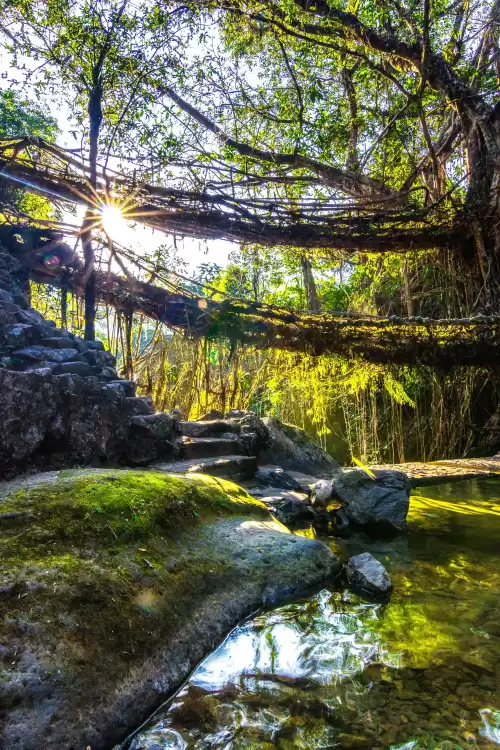
Visitors interested in nature-based travel often combine Cherrapunji's caves with the famous Living Root Bridges near Nongriat, creating an itinerary that highlights both Meghalaya's geological wonders and its remarkable bioengineering traditions. After exploring Mawsmai or Arwah Cave, travelers can continue toward Tyrna Village before beginning the trek to Nongriat, where centuries-old living root bridges demonstrate how Khasi communities have guided the growth of rubber tree roots to create natural bridges across mountain streams.
The journey to Nongriat passes through dense rainforest, suspension bridges, waterfalls, and scenic viewpoints, complementing the underground experiences of Cherrapunji's caves. Travelers planning this combination should allow sufficient time because the Living Root Bridge trek requires several hours of walking, unlike the relatively short cave visits. Spending a night in Nongriat further enriches the experience by allowing visitors to explore Rainbow Falls and village life at a relaxed pace.
Combining caves with the Living Root Bridges allows visitors to experience two of Meghalaya's most extraordinary natural achievements within a single journey, blending geology, rainforest, and indigenous engineering traditions.
The cave regions of Meghalaya are surrounded by some of the state's finest natural landscapes, allowing travelers to combine underground exploration with waterfalls, forests, valleys, and scenic viewpoints throughout the same itinerary. Around Cherrapunji, attractions such as Seven Sisters Falls, Dainthlen Falls, Kynrem Falls, Eco Park, Mawkdok Dympep Valley Viewpoint, and numerous forest trails complement cave exploration while showcasing the diversity of the Khasi Hills.
Visitors exploring the Jaintia Hills or Garo Hills also encounter beautiful countryside, limestone plateaus, rivers, waterfalls, and protected forests that extend the journey far beyond the caves themselves. Rather than viewing caves as isolated attractions, planning broader nature circuits allows travelers to appreciate the geological, ecological, and cultural connections that define Meghalaya's remarkable landscapes. Flexible itineraries help accommodate changing weather while allowing enough time to fully experience each destination.
Meghalaya's cave regions offer far more than underground exploration alone. Combining caves with forests, waterfalls, and panoramic viewpoints creates a complete nature experience that showcases the extraordinary diversity of the state's landscapes.
Meghalaya offers cave experiences suitable for a wide range of travelers, from casual tourists visiting developed limestone caves to experienced adventure enthusiasts seeking remote underground expeditions. Visitors should select caves according to their physical fitness, available time, comfort level, and previous experience rather than attempting technically demanding caves without adequate preparation. Mawsmai Cave and Arwah Cave remain the most suitable choices for first-time visitors because they provide safe access, clearly defined pathways, and impressive geological features without requiring specialized equipment.
Adventure travelers interested in more challenging underground exploration may consider destinations such as Liat Prah Cave, Krem Um Ladaw, Krem Syndai, or selected cave systems in the Garo Hills. These expeditions require experienced guides, safety equipment, physical fitness, and careful weather planning. Choosing the right cave according to personal ability allows every visitor to enjoy Meghalaya's remarkable underground landscapes while maintaining appropriate safety throughout the journey.
Selecting the appropriate cave creates a safer and more enjoyable experience while allowing visitors to appreciate Meghalaya's underground landscapes according to their individual interests and adventure level.
A well-planned Meghalaya itinerary combines cave exploration with waterfalls, viewpoints, forests, rivers, and indigenous cultural experiences rather than focusing exclusively on underground attractions. Travelers visiting Cherrapunji can comfortably combine Mawsmai Cave, Arwah Cave, Nohkalikai Falls, Seven Sisters Falls, Dainthlen Falls, Eco Park, and Mawkdok Dympep Valley Viewpoint within one or two days depending on their travel pace. Those continuing toward Nongriat can include the Double Decker Living Root Bridge and Rainbow Falls for a more adventurous itinerary.
Visitors with additional time should consider extending their journey to the Jaintia Hills for advanced cave exploration or toward the Garo Hills to experience Siju Cave alongside Nokrek National Park and other natural attractions. Planning overnight stays instead of rushed day trips allows greater flexibility during changing weather conditions while providing more opportunities to appreciate Meghalaya's diverse landscapes. Maintaining a relaxed schedule results in a much richer travel experience than attempting to cover every destination within a limited timeframe.
A balanced itinerary allows visitors to experience Meghalaya's caves within the wider context of its forests, waterfalls, rivers, villages, and mountain landscapes, creating a rewarding and well-rounded journey across the state.
Preparing properly before visiting Meghalaya's caves ensures a safer, more comfortable, and environmentally responsible journey. Visitors should carry sturdy trekking shoes, lightweight quick-drying clothing, rain protection, drinking water, energy snacks, a flashlight or headlamp for natural caves, a fully charged mobile phone, power bank, small first-aid kit, and any necessary personal medication. Travelers planning adventure cave expeditions should additionally arrange helmets, gloves, waterproof bags, and appropriate safety gear through experienced guides.
Before departing, visitors should check weather forecasts because heavy rainfall may temporarily affect cave accessibility and underground water conditions. Informing companions about travel plans, starting explorations early in the day, respecting all safety instructions, avoiding litter, protecting fragile cave formations, and supporting responsible local tourism contribute to a successful visit. Careful preparation allows travelers to focus entirely on appreciating Meghalaya's internationally renowned underground landscapes while minimizing unnecessary risks.
Good preparation is the foundation of every successful cave exploration in Meghalaya. By combining proper equipment, careful planning, and responsible travel practices, visitors can safely experience one of India's most remarkable underground natural environments while helping preserve it for future generations.


Get customized Meghalaya tour planning designed around rainfall patterns, road connectivity, seasonal visibility, and realistic hill travel timing. Whether you are visiting for waterfalls, cave exploration, scenic drives, village experiences, or nature-fo
⚡ Quick Response | 💰 Free consultation | 🕒 24×7 expert support