What is Meghalaya Famous For?
Meghalaya is famous for its living root bridges, waterfalls, caves, hills, tribal culture, clean villages, crystal clear rivers, and unique natural landscapes that attract travellers throughout the year.
+91 9910402252
admin@chalbanjare.com


Meghalaya is one of India’s top adventure destinations, offering rainforest treks, cave exploration, river activities, camping, cliffside viewpoints, and unique outdoor experiences across its hills and valleys.
The trek to Nongriat Village is one of Meghalaya's most rewarding outdoor experiences, taking visitors through dense subtropical rainforest, traditional Khasi settlements, flowing mountain streams, and thousands of stone steps. Beginning from Tyrna Village, the trail gradually descends into a lush valley where modern roads disappear and ancient walking paths remain the primary connection between villages. Every section of the route introduces a different landscape, making the journey itself just as memorable as the final destination.
Throughout the trek, visitors experience changing elevations, shaded forest corridors, bamboo groves, and natural viewpoints overlooking deep valleys. Small tea stalls and resting points appear at intervals, allowing trekkers to recover before continuing. Although the downhill journey feels comfortable initially, trekkers should remember that every step must be climbed again while returning. Carrying only essential items, maintaining a steady pace, and taking regular hydration breaks greatly improve the overall trekking experience.
Reaching Nongriat is far more than simply completing a hike. The trail introduces visitors to Meghalaya's forests, streams, village life, and remarkable natural surroundings while gradually building anticipation for the famous Double Decker Living Root Bridge waiting at the end of the journey.
One of the most enjoyable aspects of the Nongriat trek is crossing multiple suspension bridges that span clear mountain streams flowing through the rainforest. These bridges connect different sections of the valley and provide panoramic views of rivers, boulders, and dense vegetation below. Walking across them adds variety to the trek while offering excellent photography opportunities throughout the route.
Between the bridges, trekkers follow forest pathways lined with tropical trees, bamboo, ferns, orchids, and moss-covered rocks. The shaded environment remains pleasantly cool despite the physical effort required for trekking. Bird calls, flowing water, and the quiet atmosphere create an immersive rainforest experience that feels completely different from roadside sightseeing.
The bridges and rainforest paths transform the trek into an immersive adventure where every section feels different. Rather than simply walking toward a destination, visitors experience Meghalaya's natural landscape step by step through forests, streams, and traditional village routes.
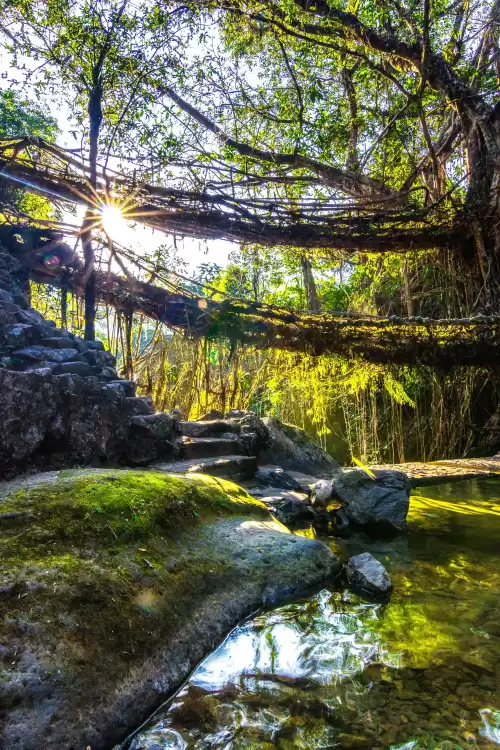
After several hours of trekking, visitors finally reach the famous Double Decker Living Root Bridge at Nongriat. This remarkable structure has been formed over generations by guiding the aerial roots of rubber fig trees across a stream until they became strong enough to function as a bridge. The two-level construction is exceptionally rare and represents centuries of Khasi knowledge and sustainable engineering.
Visitors usually spend time relaxing beside the nearby stream, exploring the surrounding rainforest, and appreciating the peaceful atmosphere before beginning the return journey. Many continue further to Rainbow Falls, while others simply enjoy the bridge from different viewpoints. Spending enough time here allows travelers to appreciate the cultural and ecological importance of this living structure rather than treating it only as a photography stop.
The Double Decker Living Root Bridge represents one of Meghalaya's greatest natural and cultural achievements. The combination of rainforest trekking, traditional village life, and living architecture makes this adventure one of the most memorable experiences anywhere in Northeast India.
Mawsmai Cave is Meghalaya's best-known limestone cave and provides an excellent introduction to the state's remarkable underground landscapes. Located near Cherrapunji, the cave is easily accessible and allows visitors to walk through naturally formed limestone chambers, narrow passages, and impressive rock formations without requiring technical caving skills. Artificial lighting inside selected sections highlights the textures, curves, and mineral deposits created over thousands of years.
The cave route includes narrow openings, low ceilings, and uneven rock surfaces that require careful movement. Although the walk is relatively short, visitors should wear shoes with good grip because moisture keeps many sections damp throughout the year. Exploring Mawsmai Cave offers a fascinating contrast to Meghalaya's waterfalls and forests by revealing another side of the state's geological history.
Mawsmai Cave is ideal for travelers wanting a safe and accessible cave experience while exploring Cherrapunji. Its combination of geological beauty and easy access makes it one of Meghalaya's most popular natural attractions.
Arwah Cave offers a quieter and more natural cave experience than Mawsmai while introducing visitors to fascinating geological formations and visible marine fossils embedded within limestone walls. The walk to the cave itself passes through scenic landscapes overlooking valleys and forests, adding another layer of enjoyment before entering the underground passages.
Inside the cave, visitors observe naturally sculpted rock formations, damp limestone walls, and fossil remains that provide evidence of the region's ancient geological history. The cave remains relatively undeveloped compared to Mawsmai, creating a stronger sense of exploration while still remaining suitable for general visitors willing to walk carefully through uneven terrain.
Arwah Cave combines geology, history, and natural scenery into a rewarding underground experience. Visitors interested in understanding Meghalaya's ancient landscapes often consider it one of the region's most fascinating cave destinations.
Liat Prah in the Jaintia Hills and Siju Cave in the Garo Hills represent Meghalaya's more adventurous cave systems. Unlike Mawsmai, these caves are associated with longer underground passages and are better suited for experienced explorers or visitors accompanied by knowledgeable local guides. Their remote settings add to the sense of adventure while highlighting Meghalaya's reputation as one of India's most significant cave regions.
Exploring these caves requires greater preparation because conditions vary with weather, underground water flow, and accessibility. Visitors should never attempt unguided exploration inside unfamiliar cave systems. Proper planning, suitable equipment, and local expertise ensure that these remarkable geological formations can be experienced safely while respecting the fragile underground environment.
Liat Prah and Siju demonstrate the remarkable diversity of Meghalaya's underground landscapes. For travelers interested in geology, adventure, and offbeat destinations, these caves provide an exciting extension beyond the state's more accessible tourist attractions.
The Umngot River at Dawki is one of Meghalaya's most iconic natural attractions and is widely known for its exceptionally clear water during the dry season. Boat rides allow visitors to experience the river from water level while enjoying uninterrupted views of the surrounding green hills, rocky riverbed, suspension bridge, and peaceful riverside landscape. During winter and the early months of the year, the transparency of the water often creates the illusion that boats are floating in the air, making this one of the state's most photographed experiences.
Most boat rides begin from the designated boating points near Dawki and are operated by experienced local boatmen. The duration of the ride depends on the selected route, river conditions, and visitor preference. During weekends and holiday seasons, the boating area becomes considerably busier, so arriving early in the morning usually results in shorter waiting times and a quieter experience. Visitors should also remember that water clarity changes with rainfall, meaning the famous transparent appearance is best enjoyed outside the peak monsoon period.
Boating on the Umngot River is one of Meghalaya's most relaxing experiences because it combines spectacular natural scenery with a peaceful atmosphere. Choosing the right season and allowing enough time to enjoy the river without rushing makes the experience far more rewarding than a quick sightseeing stop.
Kayaking offers a more active way to explore the Umngot River compared to traditional boating. Instead of following a fixed route with a boatman, visitors paddle through calm sections of the river while experiencing the surrounding landscape at a slower and more personal pace. The peaceful water, forested hills, and quiet atmosphere create an ideal environment for beginners as well as travelers looking for a gentle outdoor adventure.
Local adventure operators generally provide kayaks, paddles, life jackets, and basic safety instructions before the activity begins. Weather and water conditions play an important role in determining whether kayaking is suitable on a particular day. During the dry season, the calmer river makes paddling easier, while stronger currents during or immediately after heavy rainfall may lead operators to suspend activities for safety reasons.
Kayaking allows visitors to appreciate the Umngot River from a unique perspective while enjoying a peaceful outdoor activity. Responsible participation and attention to safety instructions ensure that the experience remains enjoyable regardless of previous kayaking experience.
Located a short distance upstream from Dawki, Shnongpdeng has become Meghalaya's main destination for river-based adventure activities. Unlike Dawki, which is primarily known for boating, Shnongpdeng offers a wider range of outdoor experiences including kayaking, snorkeling, swimming, cliff jumping, ziplining, and riverside camping. The village has developed into an adventure tourism hub while still maintaining its peaceful natural surroundings.
Most activities are organized by local operators who monitor river conditions before allowing visitors to participate. Travelers should understand that activities may be limited or suspended during heavy rainfall because changing water levels affect safety. Spending an entire day at Shnongpdeng allows visitors to combine multiple activities with relaxation beside the river, making it an excellent addition to a Meghalaya itinerary.
Shnongpdeng provides a balanced mix of adventure and relaxation, allowing visitors to spend more time exploring the Umngot River instead of limiting the experience to a short boat ride. Its combination of outdoor activities and peaceful riverside scenery makes it one of Meghalaya's finest adventure destinations.
Camping beside the Umngot River at Shnongpdeng offers visitors the opportunity to experience Meghalaya's natural beauty beyond daytime sightseeing. After most tourists leave in the evening, the riverside becomes remarkably peaceful, allowing campers to enjoy the sound of flowing water, cool mountain air, and uninterrupted views of the surrounding hills. The calm atmosphere makes this one of the state's most popular overnight outdoor experiences.
Most camps are operated by local tourism providers and include tents, bedding, basic washroom facilities, and simple meals. While the accommodation remains comfortable, visitors should expect a nature-focused experience rather than luxury facilities. Carrying warm clothing is advisable because temperatures drop noticeably after sunset, particularly during winter.
Camping beside the Umngot River allows visitors to experience Meghalaya at a slower pace while enjoying peaceful surroundings that are difficult to experience during a short daytime visit.
An overnight stay in Meghalaya's riverside camps allows travelers to disconnect from busy schedules and spend more time appreciating the state's forests, rivers, and mountain landscapes. Unlike hotels located inside towns, camps place visitors directly within natural surroundings where birds, flowing streams, and forest sounds replace traffic and urban noise.
Many camps also organize bonfire evenings, local meals, and guided outdoor activities depending on weather conditions. Since facilities remain intentionally simple, visitors should carry essential personal items, power banks, and reusable water bottles. Respecting campsite rules and maintaining quiet surroundings helps preserve the peaceful atmosphere for everyone.
Overnight camping provides a deeper connection with Meghalaya's natural environment by allowing visitors to experience sunrise, sunset, and nighttime landscapes that are rarely seen during ordinary sightseeing tours.
During clear winter nights, the riverside around Shnongpdeng offers peaceful conditions for relaxing beneath an open sky filled with stars. With very little urban lighting nearby, visitors can enjoy a quiet evening listening to the flowing river while observing the surrounding hills gradually disappear into the darkness. This calm environment creates a memorable contrast to the busy daytime activity around the Umngot River.
Although cloud cover may occasionally reduce visibility, particularly during the monsoon and post-monsoon months, winter generally provides the best opportunity for clear nighttime skies. Visitors should avoid walking too close to the river after dark and instead remain within designated camping areas where safety measures are maintained by camp operators.
Relaxing beside the Umngot River after sunset is one of Meghalaya's simplest yet most rewarding experiences. The combination of fresh air, quiet surroundings, and clear night skies creates lasting memories that perfectly complement the state's adventurous daytime activities.
Rainbow Falls is the most popular extension beyond the Double Decker Living Root Bridge and is recommended for trekkers who still have sufficient energy after reaching Nongriat Village. Instead of ending the journey at the famous living root bridge, the trail continues deeper into the rainforest through additional suspension bridges, narrow forest paths, rocky sections, and streams before reaching one of Meghalaya's most beautiful waterfalls. This extension is considerably less crowded because many visitors return after visiting the bridge, allowing trekkers to experience a quieter side of the rainforest.
The additional trek requires careful planning because it increases both the walking distance and the total time needed before returning to Tyrna. Visitors attempting Rainbow Falls as part of a single-day trek should begin very early in the morning. Those staying overnight in Nongriat can enjoy a more relaxed schedule by visiting Rainbow Falls the following morning before beginning the uphill return. Carrying sufficient drinking water, light snacks, and wearing proper trekking shoes becomes even more important during this extended section.
Continuing to Rainbow Falls transforms the Nongriat trek into a complete full-day rainforest adventure. Visitors willing to cover the extra distance are rewarded with quieter trails, richer natural scenery, and one of Meghalaya's most picturesque waterfall destinations.
The route to Rainbow Falls passes through some of the most scenic rainforest landscapes in the East Khasi Hills. Dense tree cover, flowing streams, bamboo groves, moss-covered rocks, and wooden or suspension bridges create a constantly changing environment that keeps the trek interesting throughout the journey. Unlike roadside attractions, every viewpoint must be earned by walking through the valley, making the experience feel much more immersive.
Several natural pools appear along the route where clear water flows over smooth rock formations. During favorable weather, these pools become peaceful resting places before continuing toward the waterfall. Visitors should always assess water conditions before entering because depth, current, and slippery rocks can vary depending on recent rainfall. Even without swimming, these pools provide excellent locations for photography and short breaks while surrounded by untouched rainforest.
The journey to Rainbow Falls is equally rewarding as the destination itself. The peaceful forest, flowing streams, and clear natural pools create a trekking experience that showcases Meghalaya's rainforest ecosystem in its purest form.
Rainbow Falls is widely regarded as one of Meghalaya's most rewarding trekking destinations because reaching it requires genuine effort beyond the already demanding Nongriat trek. The waterfall flows into an exceptionally clear blue pool surrounded by forested cliffs, creating a landscape that feels remarkably untouched. Since relatively few visitors continue this far, the atmosphere remains calm even during busy travel seasons.
During sunny weather, fine mist rising from the waterfall may occasionally create rainbow effects that inspired its popular name. Visitors often spend time relaxing beside the pool before preparing for the return trek. Although the temptation to swim is understandable, water conditions should always be evaluated carefully because seasonal rainfall affects both water depth and current. Spending enough time here allows trekkers to fully appreciate one of Meghalaya's finest natural settings before beginning the long climb back toward Tyrna.
Rainbow Falls represents the perfect reward for trekkers willing to continue beyond Nongriat. The combination of crystal-clear water, peaceful rainforest, and relatively uncrowded surroundings creates one of Meghalaya's most memorable trekking experiences.
Shnongpdeng has become Meghalaya's leading destination for cliff jumping because of its calm stretches of the Umngot River and organized adventure tourism facilities. Designated jumping points allow visitors to experience the excitement of entering the clear river from elevated platforms under the supervision of trained local operators. Unlike unregulated natural cliff jumping, organized activities are conducted only after assessing water depth, river current, and weather conditions to ensure participant safety.
First-time participants receive a safety briefing before attempting the jump, and life jackets are normally compulsory throughout the activity. Visitors should never attempt cliff jumping independently or from unknown locations because river depth varies across different sections. Weather also plays an important role, and activities may be suspended after heavy rainfall when water conditions become unpredictable.
Cliff jumping offers an exciting way to experience the Umngot River, but safety should always remain the highest priority. Choosing certified operators and respecting changing river conditions allows visitors to enjoy the activity responsibly.
The exceptionally clear water of the Umngot River makes snorkeling one of the most enjoyable outdoor activities at Shnongpdeng. During suitable seasons, visitors can observe the rocky riverbed beneath the surface while floating through calm sections of the river. Local operators provide basic equipment, including masks, life jackets, and safety guidance before the activity begins.
Swimming is also popular in designated areas where water conditions remain suitable for recreational use. Visitors should avoid entering unknown sections because river depth and current can change significantly after rainfall. Even confident swimmers are advised to remain within approved activity zones where local supervision is available. The combination of calm water and excellent visibility creates an experience that is quite different from swimming in typical lakes or reservoirs.
Snorkeling and swimming allow visitors to experience the Umngot River from within its clear waters while appreciating the surrounding natural beauty. Following local guidance ensures that these activities remain both enjoyable and safe.
Adventure tourism around the Umngot River has developed around carefully selected activity zones where local operators conduct kayaking, boating, snorkeling, cliff jumping, ziplining, and other outdoor experiences. These designated areas are chosen because they offer more suitable water conditions and easier supervision compared to remote sections of the river. Visitors should always use these organized activity zones instead of attempting independent adventures elsewhere along the river.
Weather, rainfall, and seasonal water levels influence the availability of every activity. Operators regularly assess river conditions before allowing visitors to participate, and temporary closures should be viewed as safety precautions rather than inconveniences. Carrying lightweight clothing, waterproof bags, towels, and spare footwear helps visitors remain comfortable while moving between different adventure activities during the day.
The organized adventure zones around the Umngot River allow visitors to enjoy Meghalaya's outdoor activities with greater confidence. Careful planning, proper equipment, and responsible participation help create memorable experiences while preserving the safety and natural beauty of one of the state's most celebrated river destinations.
Wei Sawdong Falls is one of Meghalaya's most rewarding waterfall treks, offering visitors a combination of forest walking, steep staircases, rocky trails, and breathtaking natural scenery. Located near Cherrapunji, the waterfall is hidden below the roadside plateau, meaning visitors must descend through a well-defined but physically demanding trail before reaching the viewing area. Unlike waterfalls that can be viewed directly from roadside viewpoints, Wei Sawdong requires effort, making the experience feel much more adventurous and satisfying.
The trail passes through dense vegetation, bamboo groves, exposed rocks, and narrow staircases before opening to the famous three-tiered waterfall. The turquoise pools and layered rock formations create one of Meghalaya's most photographed landscapes. During the monsoon the waterfall becomes more powerful, but the trail also becomes considerably more slippery. Visitors should wear trekking shoes with good grip and avoid rushing while descending or climbing back to the parking area.
Wei Sawdong Falls combines adventure with exceptional natural beauty. The effort required to reach the waterfall makes the experience feel far more immersive than roadside sightseeing, rewarding trekkers with one of Meghalaya's most spectacular hidden landscapes.
Cherrapunji is home to numerous waterfalls connected by scenic roads, walking trails, and valley viewpoints. Visitors can easily combine famous waterfalls such as Nohkalikai Falls, Seven Sisters Falls, Dainthlen Falls, and Wei Sawdong Falls into a multi-stop sightseeing route. While some waterfalls are visible from dedicated viewpoints, others require short walks or moderate treks through forested terrain before revealing their full beauty.
The changing landscape around Cherrapunji ensures that every waterfall offers a different experience. Some plunge dramatically into deep limestone valleys, while others spread across wide cliffs during the monsoon. Road conditions are generally good, but weather changes quickly, and dense fog may temporarily reduce visibility. Keeping a flexible itinerary allows travelers to enjoy clearer conditions whenever clouds begin to lift.
Exploring Cherrapunji's waterfall trails provides a complete understanding of why Meghalaya is known as one of India's premier waterfall destinations. Every route offers a different combination of forests, cliffs, streams, and dramatic valley scenery.
Beyond the popular tourist circuit, Jaintia Hills contains several lesser-known waterfalls that remain relatively untouched by mass tourism. Many of these waterfalls are reached through village roads, forest trails, and short hikes guided by local residents. Unlike developed tourist sites, these locations often have minimal infrastructure, making them ideal for travelers who enjoy exploring quieter natural landscapes.
The surrounding forests, limestone formations, and flowing streams create peaceful environments where visitors can spend time away from larger crowds. Since some hidden waterfalls are seasonal, recent rainfall influences both water flow and accessibility. Hiring local guides is recommended because many trails are not clearly marked, and weather conditions can change rapidly in the hills.
Exploring Jaintia Hills allows visitors to discover Meghalaya's quieter side, where waterfalls flow through untouched forests and traditional villages. These hidden locations reward patient travelers seeking peaceful scenery beyond the state's famous attractions.
Laitkynsew is one of the best places in Meghalaya for travelers wanting to experience traditional Khasi villages while walking through forest trails rather than following busy tourist roads. The surrounding area connects several small settlements through old footpaths that have been used for generations. These trails pass through farmland, bamboo groves, forest sections, and open viewpoints overlooking the valleys of the East Khasi Hills.
Walking through these villages provides opportunities to observe traditional Khasi homes, local farming practices, community life, and peaceful countryside landscapes. Unlike major tourist attractions, the emphasis here is on slow exploration and understanding rural Meghalaya. Visitors should remain respectful while passing through villages because these are active communities rather than tourism-only destinations.
Trekking around Laitkynsew offers a peaceful alternative to Meghalaya's busier attractions, allowing visitors to combine nature with authentic village experiences while appreciating the traditional lifestyle of the Khasi Hills.
The countryside surrounding Mawphlang offers enjoyable walking routes through rolling hills, grasslands, pine forests, and traditional Khasi settlements. These trails are less physically demanding than the Nongriat trek and are suitable for travelers who prefer relaxed nature walks instead of long mountain hikes. The famous Mawphlang Sacred Forest also serves as a starting point for exploring nearby rural landscapes.
Walking through this region allows visitors to experience open meadows, forest edges, grazing land, and quiet countryside scenery. Seasonal flowers, native plants, and birdlife add interest throughout the route, while the cool climate makes walking comfortable during much of the year. Local guides often explain traditional land use, cultural practices, and the ecological importance of the surrounding forests.
Mawphlang combines beautiful countryside with Khasi heritage, creating one of Meghalaya's most rewarding destinations for travelers interested in gentle trekking and nature exploration away from busy tourist routes.
Several remote villages across Meghalaya remain connected by traditional walking paths that receive very few outside visitors. These routes pass through forests, streams, farmland, and hills where local communities continue using footpaths for daily travel. Walking these lesser-known trails offers a genuine opportunity to experience rural Meghalaya beyond its famous attractions.
Since facilities remain limited, proper planning is important before attempting remote village walks. Carrying drinking water, basic supplies, and traveling with local guides improves both safety and navigation. Visitors should also allow extra time because these routes are intended for slow exploration rather than covering large distances quickly.
Remote village trekking highlights a quieter side of Meghalaya where natural landscapes and traditional communities remain closely connected. Travelers seeking authentic experiences often find these lesser-known routes among the most memorable parts of their journey through the state.
Meghalaya offers one of the most diverse photography environments in Northeast India because waterfalls, caves, forests, rivers, valleys, and mountain landscapes can all be explored within a relatively compact region. From the towering cliffs of Cherrapunji to the limestone caves hidden beneath the hills, every destination presents different lighting conditions and natural scenery. Photographers often combine several locations into a single itinerary, allowing them to document the changing landscapes across the Khasi, Jaintia, and Garo Hills.
Waterfalls such as Nohkalikai Falls, Seven Sisters Falls, Krang Suri, and Wei Sawdong each require different photographic approaches because of their height, surrounding terrain, and seasonal flow. Cave photography at Mawsmai and Arwah requires patience because of limited natural light and uneven underground surfaces. Wide landscape viewpoints overlooking valleys, forests, and distant hills complete the experience, making Meghalaya suitable for both landscape and nature photography throughout the year.
Photography in Meghalaya rewards patience rather than speed. Cloud movement, changing sunlight, rainfall, and mist continuously transform the scenery, allowing photographers to capture different moods at the same location throughout the day. Visitors who slow down and observe these changes often return with the most memorable images.
The forests and river valleys of Meghalaya provide outstanding opportunities for nature photography beyond the state's famous waterfalls. Dense rainforest around Nongriat, Mawphlang Sacred Forest, Nokrek National Park, and numerous countryside trails offers beautiful compositions featuring towering trees, moss-covered rocks, bamboo groves, and rich tropical vegetation. Seasonal mist drifting through the forests creates dramatic scenes, particularly during the early morning hours.
The Umngot River near Dawki and Shnongpdeng adds another dimension to photography with its exceptionally clear water, suspension bridges, riverside forests, and surrounding hills. During the dry season, the transparent river allows photographers to capture reflections, underwater rocks, and boats appearing to float in the air. Throughout the valleys, changing weather frequently creates layers of clouds moving across the hills, adding depth and atmosphere to landscape photographs.
Forest and river photography allows visitors to experience Meghalaya beyond its famous tourist attractions. Quiet trails, hidden streams, mist-covered valleys, and untouched woodland landscapes often produce some of the state's most memorable photographs for patient nature enthusiasts.
Sunrise and golden-hour expeditions provide some of the finest photography opportunities across Meghalaya because soft natural light enhances the state's forests, waterfalls, valleys, and rivers. Viewpoints such as Shillong Peak, Laitlum Canyon, Mawkdok Dympep Valley, and elevated sections around Cherrapunji become especially attractive during the first and last hours of daylight. Early departures also allow photographers to avoid larger crowds while enjoying quieter natural surroundings.
Golden-hour photography around Dawki, Shnongpdeng, and the Umngot River highlights gentle reflections across the water, while sunrise in the Khasi Hills often reveals rolling clouds moving through deep valleys. Weather remains unpredictable throughout the year, so photographers should remain flexible and allow additional time at viewpoints because visibility can improve dramatically within a short period. Carrying lightweight equipment makes it easier to move between different photography locations during these changing conditions.
Planning photography around sunrise and sunset allows visitors to experience Meghalaya's landscapes at their most peaceful and visually striking. The combination of soft light, drifting clouds, and quiet surroundings creates ideal conditions for capturing the state's remarkable natural beauty.
Meghalaya offers adventure experiences suitable for a wide range of travelers, but selecting activities according to fitness level is important for both safety and enjoyment. Visitors looking for relaxed sightseeing can focus on Dawki boating, major waterfalls, caves, viewpoints, and village visits. Travelers with moderate fitness may comfortably include Nongriat, Rainbow Falls, kayaking, and countryside walks, while experienced adventure enthusiasts can combine longer treks, remote cave exploration, river activities, and multi-day outdoor itineraries.
Understanding personal physical ability helps create a balanced itinerary without unnecessary fatigue. Long stairway treks such as Nongriat require endurance, while activities like cliff jumping and kayaking demand confidence in outdoor environments. Keeping one lighter sightseeing day between physically demanding activities also allows better recovery during longer Meghalaya trips.
Matching adventure plans with personal fitness creates a safer and more enjoyable experience. Instead of attempting every activity, travelers should prioritize experiences that suit their interests, available time, and physical comfort.
A well-planned Meghalaya itinerary usually begins in Shillong before continuing towards Cherrapunji, Nongriat, Dawki, Shnongpdeng, and the Jaintia Hills. Shillong serves as a convenient base for nearby viewpoints and waterfalls, while Cherrapunji provides access to living root bridges, caves, and rainforest trekking. Dawki and Shnongpdeng add river activities and camping, while Jaintia Hills introduces hidden waterfalls and limestone cave systems.
Travelers with additional days can extend the journey to the Garo Hills for wildlife, forests, and remote cave experiences. Since average driving speeds remain relatively low on hill roads, it is better to cover nearby attractions together instead of attempting long-distance travel every day. Starting early each morning allows more time for sightseeing while reducing travel during evening hours.
Organizing destinations according to geography rather than popularity reduces travel fatigue and creates a smoother journey. Careful planning allows visitors to spend more time exploring Meghalaya's forests, rivers, villages, and waterfalls instead of remaining on the road.
Preparation plays an important role in making outdoor travel across Meghalaya comfortable and safe. Visitors should carry waterproof clothing, trekking shoes with strong grip, reusable water bottles, energy snacks, insect repellent, sunscreen, basic medicines, and lightweight rain protection because weather changes quickly across the hills. Mobile connectivity may be limited in remote valleys, making offline maps and advance planning useful throughout the journey.
Responsible travel is equally important. Visitors should remain on designated trails, avoid littering forests and rivers, respect village customs, and support community-based tourism wherever possible. Adventure activities should only be undertaken through experienced local operators using proper safety equipment. Leaving enough flexibility in the itinerary for changing weather ensures a more enjoyable and less stressful travel experience.
With thoughtful planning and responsible travel practices, Meghalaya offers one of India's most diverse adventure destinations. From rainforest trekking and living root bridges to rivers, caves, waterfalls, and peaceful villages, careful preparation ensures every experience remains safe, enjoyable, and memorable while protecting the state's remarkable natural heritage.

Get customized Meghalaya tour planning designed around rainfall patterns, road connectivity, seasonal visibility, and realistic hill travel timing. Whether you are visiting for waterfalls, cave exploration, scenic drives, village experiences, or nature-fo
⚡ Quick Response | 💰 Free consultation | 🕒 24×7 expert support