
How to Travel Around Kerala
Travelling around Kerala is convenient with trains, buses, taxis, rental vehicles, and local transport options connecting beaches, backwaters, hill stations, wildlife areas, and cultural destinations.
+91 9910402252
admin@chalbanjare.com


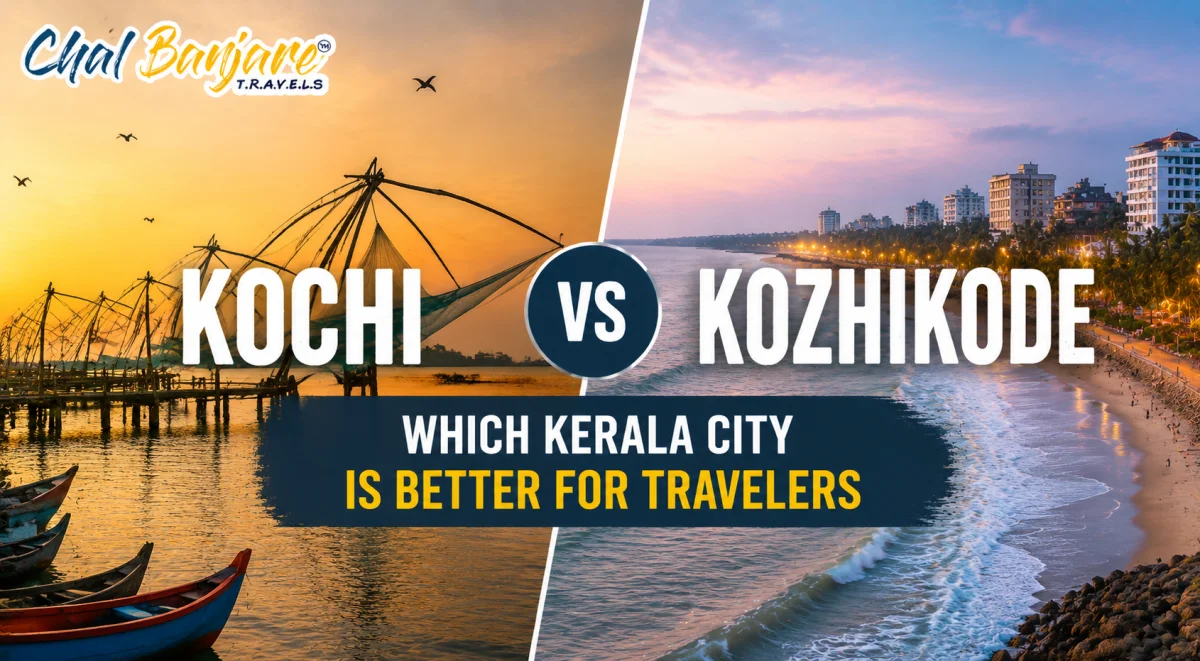
Kochi and Kozhikode are two of Kerala's most popular coastal cities, offering heritage attractions, beaches, local cuisine and cultural experiences with distinctly different travel atmospheres.
Kochi and Kozhikode are two of Kerala’s most culturally rich coastal cities, but each offers a distinct travel atmosphere. Kochi is more cosmopolitan and globally influenced, shaped by its colonial past, modern infrastructure, and vibrant arts scene. It blends heritage streets with contemporary cafés, waterfronts, and urban experiences.
Kozhikode, on the other hand, carries a stronger sense of traditional Malabar culture. It feels more rooted in local life, with bustling markets, historic neighborhoods, and a deep connection to Kerala’s trading history. The city moves at a slightly slower, more authentic rhythm compared to Kochi.
Both cities reflect Kerala’s coastal identity in different cultural forms.
Travelers choose Kochi and Kozhikode because both cities offer a strong blend of history, culture, and coastal beauty. Kochi attracts visitors interested in art, architecture, cafés, and curated heritage experiences, making it one of Kerala’s most tourist-friendly urban destinations.
Kozhikode appeals to those seeking authentic cultural immersion, especially through its food, traditional markets, and historical trade connections. It offers a more grounded experience of Kerala’s Malabar region.
Both cities are gateways to understanding Kerala’s coastal heritage.
The key difference between Kochi and Kozhikode lies in how their heritage is presented. Kochi focuses on curated heritage charm with museums, restored buildings, and artistic neighborhoods that appeal to modern travelers.
Kozhikode offers a more organic cultural experience where history blends naturally with daily life, markets, and traditional food culture. It feels less curated and more authentic in its presentation.
Your preference for curated or raw cultural experiences defines the better destination.
Kochi’s Fort Kochi area is the heart of its colonial heritage, featuring Portuguese, Dutch, and British influences that are still visible in its architecture and streets. The waterfront area offers scenic views of Chinese fishing nets, historic buildings, and calm sea breezes.
Walking through Fort Kochi feels like stepping into a living museum, where every street corner reflects centuries of cultural exchange and maritime trade history. The blend of old-world charm and coastal scenery makes it one of Kerala’s most iconic destinations.
Fort Kochi represents the historical soul of the city.
Kochi is one of Kerala’s most vibrant cultural hubs, blending traditional art forms with modern creative expressions. The city hosts festivals, art exhibitions, and cultural events that attract both local and international audiences throughout the year.
The presence of cultural centers and heritage zones makes Kochi a dynamic destination where travelers can experience Kerala’s evolving identity. It is not just a historical city but also a living cultural ecosystem.
Kochi offers a balanced mix of tradition and modern culture.
Kochi has developed a strong café culture, especially around Fort Kochi and Mattancherry, where travelers can enjoy boutique cafés, art galleries, and creative spaces. These areas attract artists, photographers, and travelers seeking a relaxed urban experience.
Coastal attractions like Marine Drive and the backwater edges further enhance the city’s appeal, offering sunset views and peaceful walking areas. The combination of food, art, and waterfront experiences makes Kochi highly versatile.
Kochi is ideal for culturally rich urban exploration.
Kozhikode, also known as Calicut, is a historic coastal city with deep roots in Kerala’s spice trade history. The city offers a mix of beaches, traditional markets, and old neighborhoods that reflect its long-standing cultural and commercial significance.
Places like Kozhikode Beach provide a simple yet charming coastal experience, while local markets showcase spices, sweets, and traditional goods that define the region’s identity.
Kozhikode offers an authentic blend of history and coastal life.
Kozhikode is deeply rooted in Malabar culture, which is reflected in its traditions, cuisine, and historical significance. The city played a key role in ancient trade routes, especially in spices, which attracted merchants from across the world.
This cultural depth is still visible today through local festivals, traditional arts, and community life. Kozhikode feels less commercial and more connected to its historical identity.
The city preserves Kerala’s authentic Malabar heritage.
Coastal life in Kozhikode is closely tied to fishing communities, local markets, and traditional food culture. Visitors can experience the daily rhythm of the city through its beaches, street food, and cultural interactions.
Unlike highly curated tourist zones, Kozhikode offers a more natural and everyday travel experience where visitors observe how locals live, work, and celebrate their traditions.
Kozhikode provides an authentic and grounded cultural journey.
Kochi offers a wide range of structured sightseeing experiences that combine colonial heritage, modern attractions, and waterfront views. Fort Kochi remains the centerpiece, where travelers can explore Chinese fishing nets, historic streets, and colonial-era architecture that reflects centuries of global influence.
Beyond Fort Kochi, attractions like Mattancherry Palace, Jew Town, and Marine Drive add depth to the sightseeing experience. The city also offers curated art spaces and cultural districts that make exploration smooth and diverse for travelers with limited time.
Kochi is ideal for well-planned and diverse urban sightseeing.
Kozhikode offers a more relaxed and culturally immersive sightseeing experience compared to Kochi. The city is centered around its beach, traditional markets, and historical landmarks that reflect its Malabar heritage and trade history.
Key attractions include Kozhikode Beach, Mananchira Square, SM Street, and nearby cultural spots that showcase local lifestyle and commerce. The experience is less structured but more connected to everyday life.
Kozhikode is ideal for slow and culturally rich exploration.
The choice between Kochi and Kozhikode for sightseeing depends on how structured or relaxed a traveler wants their experience to be. Kochi is better suited for travelers with limited time who want multiple attractions in one place with easy connectivity.
Kozhikode is better for travelers who prefer slow exploration, local interaction, and a more grounded cultural experience. Both cities offer meaningful sightseeing, but with different pacing and structure.
Your travel style and time availability define the better choice.
Kochi stands out for its strong colonial heritage, shaped by Portuguese, Dutch, and British influences. This history is visible in its architecture, museums, churches, and restored heritage buildings that form the core of Fort Kochi and surrounding areas.
The city has preserved many of these structures while integrating them into a modern cultural environment, making it a curated heritage destination. Museums, art galleries, and heritage walks provide structured ways to explore its history.
Kochi offers a well-curated colonial heritage experience.
Kozhikode’s heritage is deeply rooted in the Malabar region’s trade history and cultural traditions. Unlike Kochi’s curated heritage spaces, Kozhikode’s history is more naturally embedded in daily life, markets, and traditional neighborhoods.
The city reflects its past through living traditions, old trading streets, and cultural practices that continue to shape local identity. It feels less like a museum and more like a living historical city.
Kozhikode offers a naturally preserved cultural heritage experience.
The decision between Kochi and Kozhikode for heritage experiences depends on whether a traveler prefers curated historical presentations or living cultural environments. Kochi offers structured heritage tourism with museums and preserved landmarks.
Kozhikode provides a more organic cultural experience where history blends with everyday life, food, and traditions. Both destinations are rich in heritage but differ in presentation style.
Your preference for structured or natural history defines the choice.
Kochi is one of Kerala’s most diverse food destinations, offering a blend of traditional Kerala cuisine, international dishes, and modern café culture. Fort Kochi and Mattancherry are particularly known for their stylish cafés, waterfront dining spots, and artistic food spaces.
The city’s multicultural history is reflected in its cuisine, with influences from Portuguese, Arab, and European traders shaping its food culture. Travelers can enjoy everything from seafood platters to global fusion dishes in scenic café settings.
Kochi offers a vibrant and global food experience.
Kozhikode is widely known as the heart of Malabar cuisine, offering rich, flavorful, and traditional Kerala dishes. The city’s food culture is deeply rooted in local traditions, with specialties such as biryani, seafood preparations, and unique snacks that define the region.
Local eateries and street food stalls play a major role in Kozhikode’s food identity, offering authentic and affordable dining experiences that reflect everyday life in the city.
Kozhikode is ideal for authentic traditional food experiences.
The choice between Kochi and Kozhikode for food experiences depends on whether travelers prefer modern fusion dining or traditional regional cuisine. Kochi offers a cosmopolitan food scene with cafés and global influences.
Kozhikode focuses on authentic Malabar flavors and traditional eateries that reflect local culture. Both cities offer excellent food experiences but cater to different tastes.
Your food preference determines the better destination.
Kochi offers a unique coastal experience that blends urban life with scenic waterfronts rather than traditional beach tourism. Marine Drive is the most popular spot for evening walks, where travelers can enjoy sunset views over the backwaters and observe the calm movement of boats along the harbor.
Fort Kochi also provides a quieter coastal atmosphere, with historic fishing nets along the shoreline and peaceful sea breezes. However, the beaches in Kochi are more about views and cultural atmosphere rather than swimming or beach recreation.
Kochi is best for waterfront experiences and scenic coastal walks.
Kozhikode offers a more traditional beach experience centered around Kozhikode Beach, which is a popular local gathering spot. The beach is known for its long shoreline, local food stalls, and vibrant evening atmosphere where families and travelers come to relax.
Unlike Kochi, Kozhikode provides a more open and direct beach experience where visitors can enjoy sea views, walk along the shore, and experience the rhythm of local coastal life. The beach is less curated and more naturally integrated with daily city life.
Kozhikode is ideal for relaxed and authentic beach experiences.
The choice between Kochi and Kozhikode for coastal experiences depends on whether travelers prefer urban waterfronts or traditional beaches. Kochi offers structured scenic viewpoints like Marine Drive and heritage coastal areas.
Kozhikode provides a more natural beach experience with open shorelines and local interactions. Both destinations offer coastal beauty, but the experience style is significantly different.
Your preference for urban views or beach relaxation defines the better destination.
Kochi is highly suitable for family travel due to its wide range of organized attractions, museums, waterfronts, and cultural spaces. The city offers easy connectivity between sightseeing spots, making it convenient for families with children or elderly members.
Attractions like Marine Drive, Fort Kochi, and local museums provide educational and leisure experiences combined. The presence of cafés, restaurants, and shopping areas further enhances convenience for family trips.
Kochi offers a structured and comfortable family travel experience.
Kozhikode also offers a comfortable family travel experience but with a more relaxed and culturally immersive approach. The city’s beaches, parks, and markets provide simple yet engaging experiences suitable for all age groups.
Families can enjoy evening walks at Kozhikode Beach, explore local food stalls, and visit cultural landmarks at a slower pace. The overall environment is less crowded and more laid-back compared to Kochi.
Kozhikode is ideal for relaxed and simple family outings.
The choice between Kochi and Kozhikode for family travel depends on whether travelers prefer structured city tourism or relaxed cultural exploration. Kochi offers more organized sightseeing with better connectivity and variety.
Kozhikode provides a slower, more local experience where families can enjoy beaches and culture without rush. Both destinations are safe and comfortable but differ in travel intensity.
Your family’s travel style determines the better destination.
Kochi offers a wide range of accommodation options, from luxury hotels to boutique heritage stays, especially in areas like Fort Kochi and Marine Drive. Many heritage properties are restored colonial buildings that provide a unique blend of history and modern comfort.
The city also features international hotel chains and waterfront resorts, making it suitable for all types of travelers. The stay experience is generally more premium and curated compared to smaller cities.
Kochi focuses on diverse and premium accommodation experiences.
Kozhikode offers a more modest yet comfortable range of accommodations, including beachside hotels, mid-range stays, and budget-friendly options. Many hotels are located near Kozhikode Beach, allowing easy access to the shoreline and city attractions.
The focus here is more on convenience and local comfort rather than luxury or curated heritage experiences. It suits travelers who prefer simple and functional stays during their visit.
Kozhikode provides practical and relaxed accommodation options.
When comparing accommodations, Kochi offers more variety, luxury, and curated heritage stays, while Kozhikode focuses on simple, affordable, and convenient lodging options near key attractions.
Kochi is better for travelers seeking premium experiences and diverse choices, while Kozhikode suits those looking for straightforward stays with easy access to beaches and local culture.
The decision depends on comfort expectations and travel style.
Kochi is often the preferred starting point for first-time travelers to Kerala because it offers a well-balanced introduction to the state’s culture, history, and modern lifestyle. The city is easy to navigate, well-connected, and packed with a variety of experiences ranging from heritage streets in Fort Kochi to modern cafés and waterfront promenades.
For travelers who want a structured and diverse introduction, Kochi provides multiple layers of experiences in a single destination. From colonial architecture and art districts to shopping areas and coastal viewpoints, everything is relatively accessible and well-organized.
Kochi is ideal for a smooth and well-rounded first Kerala experience.
Kozhikode appeals more to travelers who want an authentic and less commercialized introduction to Kerala’s Malabar region. The city is deeply rooted in tradition, with strong connections to history, local cuisine, and everyday coastal life.
Unlike more curated tourist destinations, Kozhikode offers a raw and natural experience where travelers can observe local markets, traditional food culture, and community-based coastal living without heavy tourism influence.
Kozhikode is ideal for an authentic cultural immersion.
The choice between Kochi and Kozhikode for first-time Kerala travelers depends on the kind of experience they want. Kochi is better suited for travelers who prefer structured sightseeing, curated attractions, and a mix of modern and historical experiences.
Kozhikode is better for those who prefer cultural depth, local interaction, and a slower pace of exploration. Both cities offer meaningful introductions to Kerala, but through very different travel styles.
Your travel expectations define the better first destination.
The final choice between Kochi and Kozhikode depends entirely on travel style rather than which destination is better overall. Kochi is ideal for travelers who want a structured, diverse, and visually rich urban experience with heritage, cafés, and waterfront attractions.
Kozhikode is better suited for those who prefer authentic cultural immersion, traditional food experiences, and a slower travel rhythm connected to local life. Both cities offer unique insights into Kerala’s coastal identity.
Your travel personality determines the better city experience.
If you are drawn to colonial architecture, curated heritage walks, and cosmopolitan cafés, Kochi will feel more aligned with your expectations. It offers a polished and well-developed tourism experience with multiple layers of history and modernity.
If you prefer traditional Malabar culture, authentic cuisine, and everyday local life, Kozhikode provides a more grounded and culturally rich experience. It feels less curated and more naturally connected to Kerala’s heritage.
The choice depends on whether you prefer curated history or living culture.
Before finalizing your Kerala city trip, it is important to consider travel duration, accommodation preferences, and sightseeing priorities. Kochi requires some planning if you want to cover heritage zones, museums, and waterfront areas efficiently.
Kozhikode works best with a flexible itinerary that allows time for beaches, markets, and cultural exploration at a relaxed pace. Booking accommodations in advance during peak season ensures better options in both cities.
A well-planned itinerary ensures a smooth and enriching Kerala experience.


Get customized Kerala tour planning designed around monsoon seasons, backwater cruising routes, hill travel timing, and comfortable coastal stays. Whether you are visiting for houseboat experiences, beach relaxation, wildlife reserves, cultural heritage,
⚡ Quick Response | 💰 Free consultation | 🕒 24×7 expert support