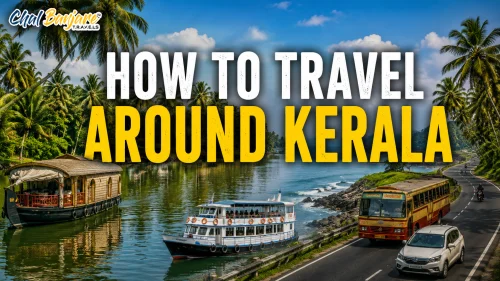
How to Travel Around Kerala
Travelling around Kerala is convenient with trains, buses, taxis, rental vehicles, and local transport options connecting beaches, backwaters, hill stations, wildlife areas, and cultural destinations.
+91 9910402252
admin@chalbanjare.com


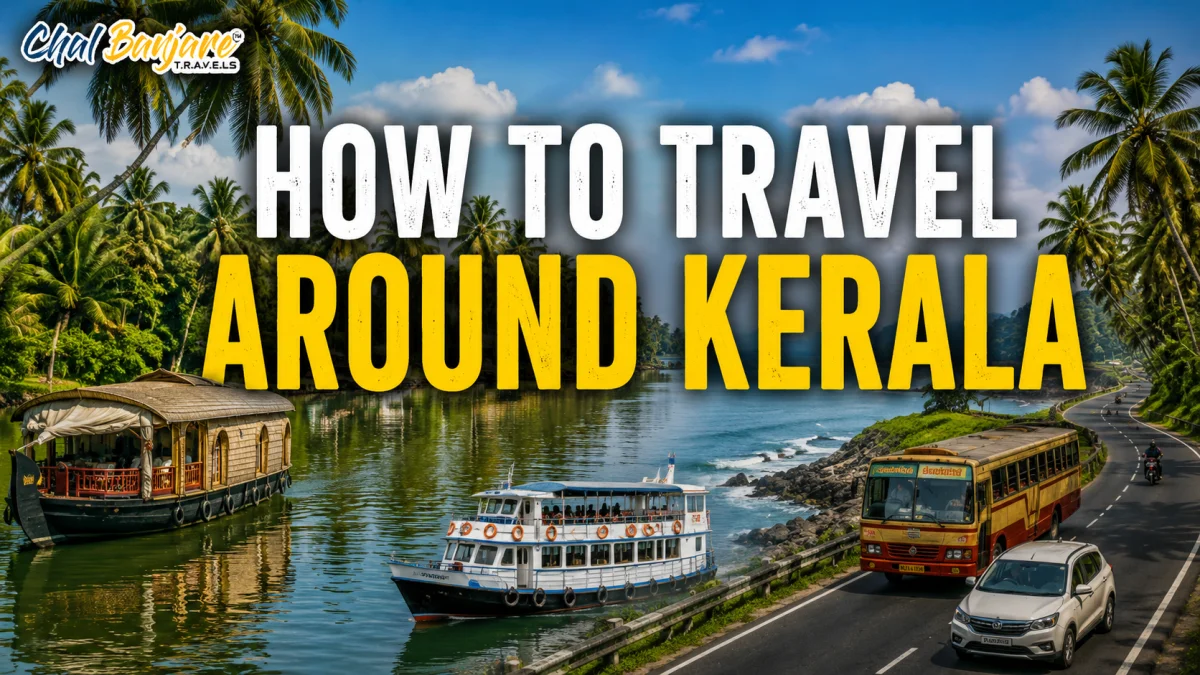
Travelling around Kerala is convenient with trains, buses, taxis, rental vehicles, and local transport options connecting beaches, backwaters, hill stations, wildlife areas, and cultural destinations.
Kerala offers one of the most organised and accessible transportation networks in South India, making it relatively easy for travellers to move between beaches, hill stations, wildlife reserves, heritage cities, backwaters, and plantation regions. Since tourist destinations are spread across different districts, most visitors use a combination of transport modes rather than relying on a single option throughout the journey. Flights help travellers reach the state, but once inside Kerala, trains, buses, taxis, rental vehicles, ferries, and local transport become the primary means of travelling between destinations. Understanding how each mode fits into your itinerary is essential for planning an efficient and comfortable holiday.
Unlike compact destinations where attractions are located close together, Kerala stretches for several hundred kilometres from north to south. Travelling from Wayanad in the north to Kovalam in the south requires an entirely different travel plan compared to exploring only central Kerala. Similarly, destinations such as Munnar and Thekkady are located in the Western Ghats and require mountain road journeys, whereas Alleppey, Kumarakom, Kochi, and Varkala are connected through relatively flat highways. Because every region has different terrain and transport facilities, selecting the appropriate mode of travel for each leg of the journey helps reduce unnecessary fatigue while allowing more time for sightseeing.
Most successful Kerala itineraries combine several transport modes according to the destinations being visited. Travellers may arrive by flight, continue by private taxi to a hill station, use a train to reach another city, explore local attractions using auto-rickshaws, and finish the holiday with a scenic ferry ride through the backwaters. Planning transportation according to geography rather than convenience alone allows visitors to experience Kerala more comfortably while avoiding unnecessary travel time between destinations.
Kerala offers both public and private transportation, each serving different travel needs. Public transport mainly includes Kerala State Road Transport Corporation buses, private buses, passenger trains, express trains, suburban services in selected areas, ferries, and shared local transport. These options are economical and widely used by residents as well as budget-conscious travellers. They provide good connectivity between cities and towns, although reaching remote tourist attractions often requires additional taxi or auto-rickshaw rides.
Private transportation includes chauffeur-driven taxis, app-based cab services where available, self-drive rental vehicles, premium tourist coaches, and hotel-arranged transfers. These options offer greater comfort, flexibility, and time savings, particularly for travellers carrying luggage, visiting multiple attractions in one day, or travelling with children or elderly family members. Private transport also becomes particularly useful in destinations such as Munnar, Thekkady, and Wayanad, where sightseeing locations are spread across mountainous terrain and public transport does not always reach every attraction conveniently.
| Transport Type | Main Advantages | Best Suitable For |
|---|---|---|
| Public Transport | Affordable Wide Coverage | Budget Travellers Backpackers |
| Private Taxi | Flexible Comfortable Direct Travel | Families Couples Senior Travellers |
| Rental Car | Independent Travel | Experienced Drivers |
| Train | Comfortable Long Distance Travel | Intercity Journeys |
The right choice depends on your holiday style rather than simply your budget. Travellers who wish to explore several destinations at a relaxed pace generally benefit from private transport, while those focusing mainly on major cities and towns can comfortably combine trains and buses with occasional taxi rides whenever required.
Every Kerala itinerary is different, and transportation should always be planned around the destinations you intend to visit rather than chosen independently. Travellers covering only Kochi, Alleppey, and Kumarakom can comfortably combine trains, buses, ferries, and taxis because these destinations are well connected. On the other hand, visitors travelling to Munnar, Thekkady, Vagamon, or Wayanad should allow additional time for road journeys through mountain terrain. These destinations are best reached by private taxis or rental vehicles after arriving at the nearest airport or railway station.
Holiday duration also influences transportation choices. Visitors spending only four or five days in Kerala generally benefit from quicker transport options that maximise sightseeing time, whereas longer holidays allow travellers to enjoy scenic train journeys and leisurely road trips. Budget travellers can significantly reduce expenses by using trains for intercity travel and buses for shorter routes, while families often find that private taxis provide better value because they reduce transfers and improve overall convenience.
Good transportation planning is one of the most important parts of a successful Kerala holiday. Selecting the appropriate combination of trains, buses, taxis, rental vehicles, and ferries according to your destinations, travel companions, and available time creates a smoother journey and allows you to experience more of Kerala without feeling rushed.
Travelling by train is one of the most comfortable and scenic ways to explore Kerala, especially for visitors covering multiple cities along the state's coastline. Kerala's railway network connects nearly every major district, allowing tourists to travel efficiently between destinations such as Thiruvananthapuram, Kollam, Alappuzha, Kottayam, Ernakulam, Thrissur, Kozhikode, Kannur, Palakkad, and Kasaragod. Since trains operate throughout the day in different categories, travellers can select services that match both their schedules and budgets.
The railway journey itself is often an enjoyable part of the holiday. Depending on the route, passengers travel past coconut groves, rivers, backwaters, paddy fields, villages, plantations, and coastal landscapes that cannot easily be experienced while flying. Many long-distance express trains continue beyond Kerala to major Indian cities, making rail travel convenient for visitors arriving from neighbouring states as well as distant regions of the country. Stations are generally located close to city centres, reducing transfer time after arrival.
Travellers should remember that while trains connect Kerala's major cities very well, destinations such as Munnar, Thekkady, Vagamon, and Wayanad still require road transfers after reaching the nearest railway station. Combining rail travel with taxis or buses creates one of the most practical ways to explore the state comfortably.
Because Kerala extends over a considerable distance from north to south, trains provide an efficient solution for travellers covering multiple regions during a single holiday. Instead of spending long hours driving through traffic, visitors can relax during train journeys while avoiding the fatigue associated with continuous road travel. Overnight trains are particularly useful because they save valuable daytime hours that can instead be used for sightseeing.
Travellers exploring both northern and southern Kerala often use trains to move between major cities before hiring local taxis for nearby attractions. Premium trains offer faster travel with fewer stops, while express trains provide wider coverage across smaller towns. Air-conditioned coaches remain popular among families and senior travellers, whereas sleeper coaches continue to be an economical choice for budget-conscious visitors.
Travellers planning long itineraries across Kerala should consider incorporating train journeys wherever practical. Doing so not only reduces transportation costs but also provides a more relaxed travel experience while covering significant distances efficiently.
Not every tourist destination in Kerala has direct railway access, making itinerary planning particularly important. Cities such as Kochi, Kozhikode, Kannur, Thrissur, Kollam, and Thiruvananthapuram are easily accessible by train, while destinations like Munnar, Thekkady, Athirappilly, Kumarakom, and Wayanad require additional road journeys from nearby stations. Selecting the appropriate arrival station before booking tickets helps minimise transfer time and creates a more logical sightseeing route.
Many experienced travellers combine railway travel with private taxis or rental vehicles after reaching their destination city. This approach provides the comfort of long-distance rail travel while maintaining flexibility during local sightseeing. Planning arrival times during daylight also makes transfers easier, especially for travellers visiting hill stations or remote attractions where road travel continues for several hours.
| Tourist Destination | Nearest Railway Access | Final Journey |
|---|---|---|
| Kochi | Ernakulam Junction | Taxi Metro Bus |
| Alleppey | Alappuzha Station | Taxi Auto |
| Kumarakom | Kottayam Station | Taxi Bus |
| Munnar | Ernakulam Junction | Taxi Tourist Bus |
| Wayanad | Kozhikode Station | Taxi Bus |
Understanding railway accessibility before finalising your itinerary helps avoid unnecessary detours and long transfers. A carefully planned combination of rail and road travel allows visitors to explore Kerala efficiently while enjoying comfortable journeys between the state's diverse tourist destinations.
Kerala has one of the most extensive bus transportation networks in India, making buses an important travel option for both residents and tourists. Government-operated Kerala State Road Transport Corporation buses, commonly known as KSRTC buses, connect almost every district, town, village, hill station, and tourist destination throughout the state. Alongside KSRTC, numerous private bus operators provide frequent services on popular intercity routes, giving travellers a wide range of choices based on budget, travel time, and comfort preferences. Since many tourist destinations do not have railway stations or airports, buses often become the final mode of transport after reaching a nearby city.
Tourists travelling between Kochi, Munnar, Alleppey, Thekkady, Kozhikode, Kannur, Thrissur, Wayanad, and Thiruvananthapuram can generally find multiple bus departures throughout the day. While government buses focus on widespread connectivity, private operators often provide faster services on busy routes with better seating and air-conditioned coaches. Hill stations such as Munnar and Wayanad are also connected by regular bus services, although travel takes longer because of winding mountain roads and changing elevations. Travellers should remember that journey duration depends not only on distance but also on traffic, weather, and road conditions.
For travellers planning economical holidays, buses provide excellent value while offering extensive coverage across Kerala. Although road journeys may take longer than flights or trains, buses allow visitors to reach destinations where railway connectivity is unavailable, making them an important part of most Kerala itineraries.
Bus travel remains one of the most budget-friendly ways to explore Kerala. Government buses offer economical fares for almost every destination, making them particularly popular among backpackers, solo travellers, students, and visitors planning extended holidays. Even on longer routes, bus fares are generally much lower than private taxi charges, allowing travellers to allocate a larger portion of their budget towards accommodation, sightseeing, or local experiences.
Private buses offer additional comfort through better seating, faster services, and in some cases air-conditioned coaches. Overnight buses connect major cities with northern and southern Kerala, allowing travellers to save valuable daytime hours. Although premium buses cost slightly more than ordinary services, they remain considerably cheaper than hiring private taxis over long distances. Travellers should compare departure timings, travel duration, and onboard facilities before selecting the most suitable service.
| Bus Type | Main Advantage | Best Suitable For |
|---|---|---|
| KSRTC Ordinary | Lowest Travel Cost | Budget Travellers |
| KSRTC Fast Services | Fewer Stops Faster Journey | Intercity Travel |
| Private Bus | Improved Comfort | Families Couples |
| Luxury Coach | Air Conditioned Seating | Long Distance Journeys |
Budget travellers can comfortably explore large parts of Kerala using buses without compromising destination choices. Selecting the appropriate service according to travel distance and comfort requirements helps achieve the right balance between affordability and convenience.
Planning bus travel in advance is especially important when visiting Kerala during the peak tourism season between October and March. Although buses operate frequently on major routes, services to remote destinations may have fewer departures each day. Travellers heading towards Munnar, Thekkady, Vagamon, or Wayanad should check departure timings carefully because missing one bus may require waiting for the next scheduled service. Starting long journeys early in the day also helps avoid arriving in unfamiliar destinations late at night.
Families with children, elderly passengers, and travellers carrying heavy luggage may find premium buses or shorter travel segments more comfortable than long continuous journeys. Those planning multiple destinations should arrange routes logically to reduce unnecessary backtracking. Combining buses with trains or taxis where appropriate often creates the most efficient itinerary while keeping transportation costs under control.
Careful planning transforms bus travel into a comfortable and practical way of exploring Kerala. Understanding routes, travel duration, and bus categories allows visitors to move efficiently between destinations while enjoying one of the state's most affordable transportation systems.
Private taxi services are among the most preferred transportation options for tourists visiting Kerala because they provide flexibility, comfort, and direct access to destinations that are not easily reached by public transport. Unlike buses and trains that follow fixed routes and schedules, taxis allow travellers to move according to their own itinerary. This flexibility becomes particularly valuable when visiting destinations such as Munnar, Thekkady, Wayanad, Athirappilly, Vagamon, and other attractions where sightseeing locations are spread across large geographical areas.
Private taxis are widely available from airports, railway stations, hotels, and major tourist towns throughout Kerala. Visitors can hire vehicles for airport transfers, intercity travel, full-day sightseeing, or complete multi-day tours. Professional drivers familiar with local roads, weather conditions, and tourist attractions also make travelling easier for first-time visitors. Instead of worrying about route planning or changing buses, travellers can enjoy the journey while stopping at viewpoints, waterfalls, tea plantations, cafés, and local markets whenever they wish.
Although private taxis cost more than buses or trains, the convenience they provide often justifies the expense, especially for travellers visiting multiple attractions in a limited time. Flexible travel schedules and direct transportation significantly improve the overall holiday experience.
Families travelling with children, senior citizens, or large amounts of luggage often find private taxis to be the most practical transport option in Kerala. The ability to travel directly between hotels and attractions without changing vehicles reduces fatigue and makes long journeys much more comfortable. Travellers can also stop whenever required for meals, rest breaks, photography, or shopping without worrying about fixed departure schedules.
For honeymoon couples, private taxis provide a peaceful and relaxed travel experience while moving between scenic destinations such as Munnar, Alleppey, Kumarakom, and Thekkady. First-time visitors particularly benefit from drivers who understand local roads and can recommend suitable sightseeing routes according to available time. Instead of navigating unfamiliar transport systems, tourists can concentrate entirely on enjoying Kerala's landscapes and attractions.
Private taxis offer convenience that becomes especially valuable during longer holidays or when travelling between destinations with limited public transport. They allow visitors to experience Kerala at a comfortable pace while maintaining complete control over daily sightseeing plans.
Many Kerala itineraries include destinations located several hours apart, making taxis particularly useful for multi-city holidays. Travellers often begin in Kochi before continuing to Munnar, Thekkady, Alleppey, Kumarakom, or Varkala. A private cab allows these journeys to be completed comfortably while also providing opportunities to visit attractions located along the route. Scenic waterfalls, spice plantations, viewpoints, tea gardens, and local villages can easily be included without making separate travel arrangements.
Booking taxis for complete travel circuits instead of individual transfers can also simplify itinerary planning. Many operators offer vehicles for several consecutive days, allowing travellers to use the same driver throughout the journey. This reduces coordination, improves convenience, and helps maintain a consistent travel schedule while exploring different regions of Kerala.
| Taxi Service | Suitable For | Main Benefit |
|---|---|---|
| Airport Transfer | Arrival Departure | Direct Hotel Access |
| Intercity Transfer | Between Destinations | Comfortable Long Distance Travel |
| Full Day Sightseeing | Local Exploration | Flexible Stops |
| Multi Day Tour | Complete Kerala Holiday | Continuous Travel Convenience |
Private taxi services remain one of the most efficient ways to explore Kerala's diverse landscapes. Careful planning, selecting the appropriate vehicle, and organising sightseeing according to geography help travellers enjoy a relaxed holiday with minimal transportation-related stress.
Self-drive travel has become an increasingly popular way to explore Kerala, particularly among travellers who value flexibility and prefer travelling at their own pace. Rental cars are available in major cities such as Kochi, Thiruvananthapuram, Kozhikode, and Kannur, allowing visitors to begin their journey immediately after arriving at the airport or railway station. A self-drive holiday gives travellers complete freedom to decide when to start the day, where to stop, how long to spend at each attraction, and whether to modify the itinerary based on weather or personal interests. Unlike fixed tour schedules, independent travel allows spontaneous detours to waterfalls, spice plantations, viewpoints, cafés, local markets, beaches, and small villages that may not be included in organised tours.
Kerala offers a wide variety of driving experiences. Coastal highways connect major cities through scenic stretches lined with coconut groves and villages, while inland routes pass through plantations, forests, rivers, and agricultural landscapes. Hill station roads leading towards Munnar, Wayanad, Vagamon, and Thekkady provide spectacular mountain scenery with tea gardens, valleys, and viewpoints throughout the journey. Self-drive travellers can comfortably combine several destinations during one trip, making it easier to experience Kerala beyond the usual tourist circuit. Since accommodation, restaurants, and fuel stations are available across most major routes, independent travel is practical for both short holidays and extended road trips.
Travellers who enjoy independent exploration often find self-drive holidays highly rewarding because they are not restricted by public transport schedules or pre-planned sightseeing routes. With proper preparation and realistic daily driving plans, a self-drive trip offers one of the most immersive ways to experience Kerala's diverse landscapes, local culture, and hidden attractions.
Driving in Kerala is generally comfortable, but visitors should understand the varying road conditions across different regions before beginning their journey. National highways connecting major cities are well maintained and suitable for long-distance travel, although traffic can become heavy near urban centres such as Kochi, Thiruvananthapuram, Kozhikode, and Thrissur. Roads through villages are usually narrower and may experience slower traffic because of local vehicles, pedestrians, and frequent junctions. Travellers should therefore estimate journey times according to road conditions rather than relying only on the distance shown on navigation applications.
Hill stations require additional preparation because roads include continuous curves, steep gradients, and numerous hairpin bends. Routes towards Munnar, Wayanad, and Thekkady demand patient driving, particularly during the monsoon season when rain, mist, and reduced visibility are common. Drivers should carry a valid driving licence, ensure the vehicle is in good condition, check tyre pressure and fuel levels before entering remote areas, and avoid driving late at night on unfamiliar mountain roads. Parking is generally available near most major attractions, although it may become crowded during weekends and holiday seasons.
Understanding Kerala's driving conditions helps travellers enjoy a safer and more relaxed road trip. Careful planning, moderate driving speeds, and allowing sufficient travel time between destinations contribute significantly to a comfortable self-drive experience throughout the state.
Self-drive holidays are best suited to travellers who are comfortable driving on unfamiliar roads and are confident handling different traffic conditions. Those who regularly drive in Indian cities usually adapt quickly to Kerala's highways and urban roads, while mountain routes require slightly more experience because of frequent bends and elevation changes. Travellers visiting only cities and coastal destinations generally find driving straightforward, whereas itineraries covering multiple hill stations require greater patience and concentration.
Families, groups of friends, photographers, and travellers planning extended road trips often benefit most from self-drive travel because they can stop whenever they wish without depending on organised tours. On the other hand, visitors who are unfamiliar with mountain driving, travelling alone for the first time, or planning a honeymoon may find chauffeur-driven taxis more relaxing. Before making a decision, compare the convenience of independent driving with the comfort of hiring a local driver, particularly for routes involving long hours behind the wheel.
| Travel Style | Recommended Option | Reason |
|---|---|---|
| Independent Explorer | Self Drive | Maximum Flexibility |
| Family Holiday | Self Drive or Taxi | Comfort and Convenience |
| Mountain Travel Beginner | Private Taxi | Local Driving Experience |
| Photography Road Trip | Self Drive | Freedom to Stop Frequently |
The best choice depends on your confidence, driving experience, itinerary, and travel priorities. Self-drive travel rewards visitors with unmatched flexibility, but selecting it only when you are comfortable with the planned routes ensures a safer, smoother, and far more enjoyable Kerala holiday.
Most Kerala holidays involve visiting multiple destinations rather than staying in a single location, making intercity transportation an important part of the overall itinerary. Popular travel circuits often begin in Kochi before continuing towards Munnar, Thekkady, Alleppey, Kumarakom, Wayanad, or the beaches of southern Kerala. Each destination is connected through well-maintained highways, although travel duration varies depending on terrain and traffic conditions. While coastal destinations are connected by relatively smooth highways, hill stations require longer drives through winding mountain roads and forested landscapes.
Kochi serves as the primary transportation hub for central Kerala because it has an international airport, major railway stations, and excellent road connectivity. From Kochi, travellers can comfortably reach Munnar through scenic plantation roads, continue towards Thekkady through spice-growing regions, or head to Alleppey for a backwater experience. Visitors travelling towards northern Kerala generally proceed to Kozhikode before continuing to Wayanad or Kannur. Understanding these geographical connections allows travellers to arrange destinations in a logical sequence instead of repeatedly travelling between the same regions.
Organising destinations according to their geographical location reduces travel fatigue and avoids unnecessary backtracking. A logical route also allows visitors to spend more time enjoying Kerala's attractions instead of repeatedly covering the same roads.
Although Kerala appears compact on a map, travelling between destinations often takes longer than expected because of varying road conditions and terrain. Coastal cities are generally connected through faster highways, whereas mountain destinations require slower driving speeds. Travellers should therefore estimate journeys according to expected travel time rather than distance alone. Airport transfers, railway station pickups, and hotel check-ins should also be included while planning each day's schedule.
Many destinations require multiple transport modes. For example, travellers may arrive at Kochi Airport, continue to Munnar by taxi, later travel by road to Thekkady, and finally reach Alleppey before boarding a houseboat. Such combinations are completely normal in Kerala and should be considered while preparing an itinerary. Keeping realistic expectations regarding transfer durations helps avoid rushed sightseeing and unnecessary stress during the holiday.
| Route | Approximate Travel Time | Preferred Transport |
|---|---|---|
| Kochi to Munnar | 4 to 5 Hours | Taxi Tourist Bus |
| Munnar to Thekkady | 3 to 4 Hours | Taxi |
| Thekkady to Alleppey | 4 to 5 Hours | Taxi Bus |
| Kochi to Alleppey | 2 Hours | Taxi Train Bus |
| Kozhikode to Wayanad | 3 to 4 Hours | Taxi Bus |
Including realistic transfer times between destinations makes the itinerary much more practical. Travellers who avoid overloading each day with excessive driving generally enjoy a far more relaxed and memorable Kerala holiday.
One of the easiest ways to improve a Kerala itinerary is to arrange destinations in geographical order. Instead of repeatedly returning to the same city after each excursion, travellers should move progressively from one region to another. For example, a central Kerala itinerary may begin in Kochi, continue to Munnar, proceed to Thekkady, then finish in Alleppey before departing from Kochi or travelling south. Northern Kerala holidays can similarly move from Kozhikode towards Wayanad and Kannur without reversing the route.
Open-jaw travel is another practical strategy for longer holidays. Visitors can arrive through one airport, travel across Kerala in a single direction, and depart from another airport without returning to their original entry point. This approach saves several hours of travel, reduces transportation costs in many cases, and allows visitors to explore more destinations within the same number of holiday days.
Efficient route planning is one of the simplest ways to improve a Kerala holiday. Travellers who organise destinations logically spend less time on the road, reduce travel fatigue, and gain more opportunities to experience Kerala's beaches, hill stations, wildlife, culture, and backwaters at a comfortable pace.
Kochi has one of the most developed urban transport systems in Kerala, making it convenient for tourists to explore both modern city areas and historic neighbourhoods. Visitors can choose from city buses, auto-rickshaws, taxis, app-based cab services where available, water ferries, metro services, and rental vehicles depending on their itinerary and travel preferences. Since Kochi combines commercial districts, heritage attractions, beaches, islands, and waterfront areas, different transport modes often complement each other during sightseeing rather than a single option covering every attraction.
City buses connect major neighbourhoods at economical fares and are widely used by residents. Auto-rickshaws are suitable for short-distance travel between hotels, markets, ferry terminals, metro stations, and nearby attractions. Private taxis remain the preferred option for visitors travelling with luggage, families, or senior citizens because they provide direct transportation without waiting for scheduled services. Kochi is also unique because its ferry network forms an important part of the city's transportation system, allowing travellers to enjoy scenic water crossings while avoiding road congestion in certain areas.
Unlike many large Indian cities where traffic can significantly delay sightseeing, Kochi offers several alternative transport choices that help visitors move efficiently between different parts of the city. Combining metro services with ferries or taxis often creates the fastest and most enjoyable way to explore the city while experiencing both its modern infrastructure and traditional waterfront culture.
Travellers planning two or more days in Kochi often benefit from using different transport modes depending on the day's sightseeing route. Public transport works well for central city exploration, while taxis remain more convenient for attractions located farther apart or for visitors travelling with family members.
Fort Kochi is one of Kerala's most visited heritage areas and can be reached using several transportation options from different parts of the city. Visitors staying near Ernakulam often travel by ferry, which not only provides a convenient connection but also offers beautiful views of Kochi Harbour. Road access through taxis, buses, and auto-rickshaws is equally popular, particularly for families carrying luggage or travellers arriving directly from hotels. Depending on traffic conditions and starting location, both ferry and road transport remain practical choices.
After reaching Fort Kochi, many attractions are located within walking distance of one another. The Chinese Fishing Nets, St. Francis Church, Santa Cruz Basilica, Dutch Cemetery, heritage streets, cafés, art galleries, and colonial buildings can comfortably be explored on foot. Mattancherry, Jew Town, the Paradesi Synagogue area, and the spice market are located nearby and are easily reached using auto-rickshaws or short taxi rides. Travellers often combine these attractions into one full-day sightseeing itinerary without requiring long-distance transportation.
Visitors arriving by cruise ships or spending only one day in Kochi frequently choose private taxis because they minimise transfer time between attractions. Travellers with additional time may enjoy combining ferries, walking tours, and local transport for a more immersive experience of the city's heritage and waterfront atmosphere.
Planning Fort Kochi sightseeing according to attraction locations reduces unnecessary travel and allows visitors to spend more time exploring the city's architecture, museums, waterfront, and cultural landmarks instead of moving repeatedly between different transport modes.
Efficient transport planning helps travellers cover more of Kochi without feeling rushed. Visitors interested in heritage attractions can dedicate one day to Fort Kochi and Mattancherry, while another day may include Marine Drive, Lulu Mall, museums, backwater cruises, or nearby beaches. Organising attractions according to geographical proximity reduces travel time and allows more opportunities to experience local food, shopping streets, and cultural activities throughout the city.
Travellers staying in central Ernakulam have excellent access to buses, metro stations, taxis, and ferries, making movement around the city relatively simple. Families with children often prefer taxis because they reduce walking distances between attractions, while solo travellers frequently combine ferries, buses, and walking to experience Kochi more economically. Evening traffic around commercial districts may increase travel time, so planning sightseeing during the morning and early afternoon often provides a smoother experience.
Those continuing towards Munnar, Alleppey, Athirappilly, or Thekkady after exploring Kochi should also consider their departure point while selecting accommodation. Staying near transport hubs or major roads can make onward travel more convenient and reduce early morning transfer times.
Kochi is best explored through a combination of walking and local transportation. A thoughtfully planned sightseeing route allows visitors to experience the city's heritage, waterfront, modern districts, cultural landmarks, and local lifestyle comfortably while making the most of every day spent in Kerala's historic port city.
Munnar's transportation system is very different from that of Kerala's larger cities because it is located high in the Western Ghats. Public transport exists, but sightseeing attractions are spread across valleys, tea estates, mountain roads, waterfalls, dams, and viewpoints located several kilometres apart. For this reason, most visitors depend on private taxis, local sightseeing vehicles, or hotel-arranged transportation instead of relying entirely on scheduled buses. Rental vehicles are also available for experienced drivers, although mountain roads require confidence and careful driving.
Government and private buses connect Munnar with Kochi, Thekkady, Aluva, Kottayam, and nearby towns, making them useful for reaching the hill station. However, once inside Munnar, buses mainly serve local residents and connect villages rather than tourist attractions. Visitors planning to explore places such as Eravikulam National Park, Top Station, Echo Point, Mattupetty Dam, Kundala Lake, Tea Museum, Pothamedu Viewpoint, Lockhart Gap, and Blossom Park generally find taxis far more practical because they allow multiple stops throughout the day.
Many hotels also arrange local sightseeing packages covering major attractions in logical geographical order. These services reduce the effort of planning individual routes while ensuring travellers can comfortably experience several viewpoints and attractions during a single day.
Because sightseeing locations are widely distributed, visitors should plan transportation before arriving in Munnar. Choosing the right vehicle according to the number of travellers and sightseeing priorities makes exploring the hill station far more comfortable and efficient.
Travelling around Munnar requires additional planning because mountain roads differ considerably from highways found in Kerala's coastal districts. Roads include steep gradients, sharp bends, changing elevations, and occasional narrow stretches where vehicles move slowly. Although these roads are generally well maintained, driving speeds remain lower than expected, particularly during weekends and holiday seasons when tourist traffic increases significantly.
The monsoon season brings heavy rainfall, mist, and reduced visibility, requiring drivers to exercise greater caution. During winter mornings and evenings, fog may also reduce visibility around higher viewpoints. Travellers planning sunrise visits or early morning photography should allow extra travel time because mountain conditions can change rapidly. Motion-sensitive passengers may also benefit from carrying suitable medication before long drives through winding roads.
Despite these challenges, the mountain routes themselves are among the highlights of a Munnar holiday. Tea gardens, forests, valleys, waterfalls, and panoramic viewpoints accompany travellers throughout the journey, making road travel an enjoyable experience rather than simply a means of reaching attractions.
Understanding mountain driving conditions helps visitors plan realistic sightseeing schedules. Allowing adequate travel time between attractions ensures a relaxed experience while providing opportunities to enjoy Munnar's natural beauty without rushing from one location to another.
Munnar's attractions are best explored by dividing them into geographical sightseeing circuits rather than attempting to visit every location in a single day. Many visitors dedicate one day to Eravikulam National Park, Tea Museum, Mattupetty Dam, Echo Point, and Kundala Lake because these attractions are located along the same route. Another day may focus on Top Station, Lockhart Gap, tea plantations, waterfalls, or nearby villages depending on personal interests and available time.
Planning routes according to location reduces repeated driving across the same roads and allows more time for photography, nature walks, tea plantation visits, and local cafés. Families travelling with children or senior citizens should also keep reasonable daily schedules because mountain travel naturally requires more time than sightseeing in cities. Early departures help avoid traffic near popular attractions while offering clearer weather conditions for panoramic views.
Visitors spending two or three nights in Munnar generally enjoy a much more relaxed experience compared to those attempting a rushed day trip. A well-planned transport schedule allows travellers to appreciate the peaceful atmosphere, cool climate, and spectacular landscapes that make Munnar one of Kerala's most famous hill stations.
Carefully organised local transportation greatly improves the Munnar experience. By planning sightseeing according to attraction locations, road conditions, and available daylight, visitors can comfortably enjoy tea plantations, wildlife, waterfalls, viewpoints, and mountain landscapes without spending unnecessary hours travelling between destinations.
One of the most common mistakes first-time visitors make while travelling in Kerala is assuming that destinations located close together on a map can be covered within a short period. Although Kerala is relatively narrow from east to west, it stretches for several hundred kilometres from north to south, and many popular attractions are separated by mountain roads, forests, rivers, or coastal highways. Travelling between destinations such as Kochi, Munnar, Thekkady, Wayanad, Varkala, or Kannur often requires considerably more time than expected because road conditions, traffic, and terrain influence journey duration more than the actual distance.
Many travellers attempt to include too many destinations in a single itinerary without considering the hours spent travelling between them. This results in rushed sightseeing, frequent hotel check-ins and check-outs, and very little time to actually experience each destination. Instead of enjoying tea plantations in Munnar, wildlife activities in Thekkady, or a peaceful houseboat cruise in Alleppey, visitors often spend a significant portion of the holiday inside vehicles simply because the itinerary was not planned realistically.
A well-planned route should always be based on practical travel time rather than map distance alone. Grouping nearby destinations together and avoiding repeated journeys through the same region creates a smoother itinerary while allowing travellers to spend more time enjoying Kerala's attractions instead of constantly moving between locations.
Realistic route planning is one of the most important aspects of a successful Kerala holiday. Travellers who understand actual travel durations enjoy a far more relaxed experience while reducing fatigue and making better use of their available holiday days.
Another frequent mistake is underestimating the time required for transfers between airports, railway stations, hotels, sightseeing attractions, and activity locations. Many visitors calculate only the driving duration and forget to include hotel check-ins, meal breaks, luggage handling, traffic delays, fuel stops, photography breaks, or waiting time before scheduled activities. These small delays accumulate throughout the day and can significantly affect sightseeing plans.
Hill stations require even more careful planning because winding roads naturally reduce average driving speeds. Travellers often expect to visit several viewpoints, waterfalls, tea gardens, and parks within one afternoon, only to realise that reaching each attraction itself takes considerable time. Wildlife activities in Thekkady, houseboat check-ins in Alleppey, or ferry departures in Kochi also follow fixed schedules, making punctual arrivals especially important. Leaving adequate buffer time between activities prevents unnecessary stress if unexpected delays occur during the journey.
Experienced travellers usually keep flexible schedules rather than planning every hour of the day. This approach allows sufficient time to enjoy attractions naturally while adapting easily to weather conditions, local traffic, or spontaneous sightseeing opportunities that may appear along the route.
Realistic journey timing helps travellers enjoy Kerala without constantly worrying about reaching the next destination. A comfortable schedule improves the overall holiday experience while allowing greater flexibility throughout the trip.
Many visitors assume that transportation facilities remain equally available throughout Kerala, but remote destinations often have fewer services compared to major cities. Hill stations, wildlife reserves, plantation regions, and rural villages may have limited bus frequencies, fewer taxis during busy periods, or restricted transportation after evening hours. Travellers who arrive without advance planning sometimes experience longer waiting times before finding suitable transport to their accommodation or sightseeing attractions.
This becomes particularly important in destinations such as Munnar, Thekkady, Wayanad, and remote backwater villages where attractions are spread across large areas. Depending entirely on finding transport at the last minute may reduce sightseeing time or require expensive alternatives. Visitors should therefore confirm local transportation with hotels, arrange taxis in advance when necessary, and understand the operating hours of buses, ferries, or wildlife activities before beginning the day's journey.
Preparing transportation beforehand does not reduce flexibility—it actually improves it by ensuring that travellers can focus on exploring Kerala rather than spending valuable holiday time arranging vehicles in unfamiliar locations.
| Common Mistake | Possible Impact | Better Approach |
|---|---|---|
| Ignoring Travel Distance | Rushed Itinerary | Plan According to Driving Time |
| No Buffer Time | Missed Activities | Keep Flexible Schedule |
| Late Transport Booking | Limited Availability | Reserve During Peak Season |
| Depending Only On Local Transport | Long Waiting Time | Arrange Transport In Advance |
Avoiding these common transportation mistakes helps travellers enjoy a smoother Kerala holiday from beginning to end. Careful planning, realistic expectations, and advance preparation allow visitors to spend more time exploring beaches, hill stations, wildlife reserves, and backwaters instead of solving transportation problems during the trip.
The ideal transportation plan for Kerala depends entirely on the destinations included in your itinerary, the duration of your holiday, your travel companions, and the type of experience you wish to have. There is no single transport option that suits every traveller because Kerala offers beaches, hill stations, wildlife sanctuaries, backwaters, heritage cities, and remote villages that each require slightly different travel arrangements. Understanding these differences before beginning the trip helps create a smooth and enjoyable travel experience from arrival until departure.
Travellers focusing on major cities such as Kochi, Kozhikode, and Thiruvananthapuram can comfortably combine trains, buses, metro services, ferries, and auto-rickshaws. Visitors exploring hill stations such as Munnar or wildlife destinations like Thekkady often benefit from private taxis because attractions are spread across mountain roads. Alleppey requires a combination of road and water transportation, while northern Kerala destinations may involve longer train or highway journeys. Matching transportation to geography instead of following the same travel method everywhere improves efficiency throughout the holiday.
Families, honeymoon couples, backpackers, photographers, solo travellers, and senior citizens all have different priorities. Selecting transportation according to comfort, flexibility, budget, and available time ensures that every traveller enjoys Kerala in a way that matches their individual expectations.
Thoughtful transportation planning provides the foundation for a successful Kerala holiday. Choosing suitable travel options according to the itinerary allows visitors to spend more time experiencing the state's attractions and less time dealing with unnecessary travel complications.
Preparing a transportation plan before arriving in Kerala greatly improves the overall holiday experience. Travellers should identify arrival airports or railway stations, estimate travel times between destinations, book accommodation according to sightseeing priorities, and decide where private taxis, trains, buses, or ferries will be most useful. Organising these details in advance reduces uncertainty and allows visitors to enjoy a relaxed journey from the first day onwards.
Transfers between airports, railway stations, hotels, and sightseeing locations should always be planned with sufficient buffer time. It is equally important to avoid scheduling multiple long journeys on consecutive days because this often leads to unnecessary fatigue. Instead, travellers should spend adequate time at each destination before continuing to the next. Organising attractions according to their location also helps reduce repeated driving while creating more opportunities to experience local culture, cuisine, markets, viewpoints, and nature without constantly moving between regions.
Visitors travelling during holidays or the peak tourist season should reserve important transport services early, especially flights, trains, houseboats, and private taxis. Early planning provides greater flexibility while reducing the possibility of last-minute changes affecting the itinerary.
Advance preparation allows travellers to explore Kerala more confidently and comfortably. Well-organised transportation reduces travel stress while creating additional time to enjoy the state's landscapes, cultural experiences, and natural beauty.
Before beginning your Kerala holiday, review every aspect of your transportation plan to ensure a smooth journey. Confirm flight or train bookings, verify hotel locations, arrange airport transfers where necessary, and understand the travel time between each destination. Travellers visiting remote areas should check local transport availability before arrival, while those planning self-drive holidays should review road conditions, weather forecasts, and vehicle requirements. Keeping both digital and printed copies of important bookings also helps avoid unnecessary inconvenience during travel.
Pack according to your chosen transportation mode and destination. Comfortable clothing, drinking water, power banks, mobile chargers, umbrellas during the monsoon, light snacks for long journeys, and offline navigation maps can make travel considerably easier. Visitors should also remain flexible because weather, traffic, or operational changes occasionally affect travel schedules, particularly in mountainous or coastal regions.
Most importantly, remember that transportation is not simply a means of reaching destinations in Kerala. Scenic road journeys, peaceful ferry rides, comfortable train travel, mountain drives, and backwater cruises are all valuable experiences that contribute to the overall character of the holiday. Enjoying the journey itself often becomes one of the most memorable parts of visiting Kerala.
A carefully planned transportation strategy transforms a good Kerala holiday into an exceptional one. By combining realistic route planning, suitable transport choices, seasonal awareness, and comfortable daily schedules, travellers can confidently explore every corner of Kerala while making the most of their time, budget, and travel experience.

Get customized Kerala tour planning designed around monsoon seasons, backwater cruising routes, hill travel timing, and comfortable coastal stays. Whether you are visiting for houseboat experiences, beach relaxation, wildlife reserves, cultural heritage,
⚡ Quick Response | 💰 Free consultation | 🕒 24×7 expert support