Quick Facts About Bokar Ngedhon Choekhor Ling Monastery
Bokar Ngedhon Choekhor Ling Monastery, West Bengal Quick Facts
| Entry Fee | No entry fee |
| Timings | Generally open from 7:00 AM to 5:00 PM; timings may vary during prayer sessions and festivals |
| Altitude (m) | Approximately 1,250–1,300 m above sea level |
| Ideal Visit Duration | 45 minutes to 1.5 hours |
| Best Time of Day | Morning for prayer chants and clearer mountain views |
| Crowd Level | Low; moderate during Buddhist festivals and special ceremonies |
| Distance from City Centre (km) | Approximately 2–3 km from Kalimpong town centre |
| Walking Difficulty | Easy to moderate; short uphill walk within monastery premises |
| Parking Available | Yes, limited parking available near the entrance |
| Last Mile Access | Accessible by road followed by a short walk into the monastery complex |
| Suitable for Kids | Yes, with supervision during prayer areas |
| Suitable for Seniors | Yes, though some steps may require assistance |
| Wheelchair Friendly | Partially accessible; main courtyard is accessible but some inner sections have steps |
Why Visit Bokar Ngedhon Choekhor Ling Monastery, West Bengal
Visitors come to Bokar Ngedhon Choekhor Ling Monastery to experience a serene Tibetan Buddhist monastery known for its disciplined monastic life and spiritual practices. It is visited by travelers exploring the Mirik and Kurseong region for cultural and religious tourism.
The on-ground atmosphere is peaceful and contemplative, with prayer flags, chanting monks, and quiet courtyards surrounded by green hills. The setting encourages slow exploration and time spent in reflection away from busy tourist spots.
What makes Bokar Monastery distinct is its strong connection to Tibetan Buddhist traditions combined with its hilltop location overlooking the surrounding valleys. Its calm environment and active monastic community make it a meaningful stop for travelers seeking spiritual experiences in West Bengal’s hill regions.
History of Bokar Ngedon Chokhor Ling Monastery, West Bengal
Bokar Ngedon Chokhor Ling Monastery is a Tibetan Buddhist monastery located in the Mirik region of West Bengal. It was established in 1984 under the guidance of Kyabje Bokar Rinpoche as part of the spread of the Kagyu tradition of Tibetan Buddhism in the eastern Himalayan region.
The monastery serves as a center for Buddhist study, meditation, and monastic training, reflecting the teachings of the Kagyu lineage. It houses traditional prayer halls, scriptures, and religious art that support daily monastic practices.
Today, the monastery remains an active spiritual institution and a peaceful retreat for devotees and visitors exploring the Buddhist cultural heritage of the Darjeeling–Mirik region.
Best Time to Visit Bokar Ngedon Chokhor Ling Monastery, West Bengal
Bokar Ngedon Chokhor Ling Monastery is best visited during the drier and clearer months when the serene hill surroundings of Mirik and nearby Darjeeling hills offer calm conditions for meditation, monastery visits, and cultural exploration.
- Ideal Months: October to April is the most suitable period for visiting the monastery and exploring the surrounding hill region.
- Weather Conditions: These months generally bring cool to pleasantly cold temperatures, clear to partly cloudy skies, and a peaceful environment ideal for spiritual visits and photography.
- Periods to Avoid: June to September should be avoided due to heavy monsoon rainfall, fog, and occasional landslides in the Darjeeling hills that can affect road travel and visibility.
How to Reach Bokar Ngedhon Choekhor Ling Monastery, West Bengal
- By Air: The nearest airport is Bagdogra Airport, located approximately 90–100 km from the monastery. From the airport, taxis are available to reach Siliguri and further travel towards the monastery location in the Darjeeling hills region.
- By Train: New Jalpaiguri (NJP) Railway Station is the nearest major railhead, situated about 85–95 km away. Siliguri Junction is another nearby option. From these stations, visitors can hire taxis or shared vehicles to reach the Darjeeling–Ghoom–Bokar area depending on the exact route.
- By Road: Bokar Ngedhon Choekhor Ling Monastery is located in the Darjeeling hill region and is accessible via road from Darjeeling town (approximately 5–7 km, depending on exact location within Ghoom area). Local taxis and shared jeeps are commonly used for last-mile connectivity. The approach involves narrow hill roads with sharp bends, and travel time may increase during monsoon due to fog, landslides, or traffic congestion in peak tourist season.
What to Expect When You Visit Baba Harbhajan Singh Temple, Gangtok, Sikkim
- Baba Harbhajan Singh Temple is located on the road between Gangtok and Nathula Pass at a high-altitude military-managed site surrounded by rugged mountains, sparse vegetation, and cold alpine conditions.
- The environment is extremely cold for most of the year, with strong winds, thin air, and frequent fog or snowfall depending on the season. Weather conditions can change rapidly, affecting visibility and comfort.
- Facilities are very basic, with limited shelter, drinking water points, and small resting areas. The site is maintained under army supervision, and commercial amenities are minimal or absent.
- Access is by road through a regulated permit route from Gangtok. Visitors usually stop at designated parking areas and walk short distances to reach the temple complex and memorial structures.
- Visitors typically spend a short time offering prayers, observing the shrine and memorial, and learning about the local military folklore associated with Baba Harbhajan Singh.
- Crowd levels vary depending on tourist season and permit traffic toward Nathula Pass, with brief waiting times possible during peak daytime hours when multiple vehicles arrive together.
- Visitors should expect high-altitude conditions, limited oxygen levels, and basic infrastructure. Warm clothing, slow movement, and adherence to army guidelines and photography restrictions are essential.
Important Visitor Information for Bokar Ngedhon Choekhor Ling Monastery, West Bengal
- The monastery remains generally peaceful throughout the year, with slightly higher visitor activity during Buddhist festival days and weekend pilgrim visits from nearby regions.
- Early morning hours offer the quietest environment for prayer, meditation, and photography, while afternoons may see small groups of visitors.
- The region experiences cool to mild weather for most of the year, with monsoon rains (June–September) making pathways wet and occasionally slippery.
- Visitors should wear modest clothing suitable for a place of worship, and remove footwear before entering prayer halls and restricted monastic areas.
- Silence must be maintained inside the monastery, especially during prayers and ritual sessions, to respect monastic discipline.
- Care should be taken while walking on stone steps and sloped areas, particularly during or after rainfall when surfaces may become damp.
Photography and Viewpoints at Bokar Ngedhon Choekhor Ling Monastery, West Bengal
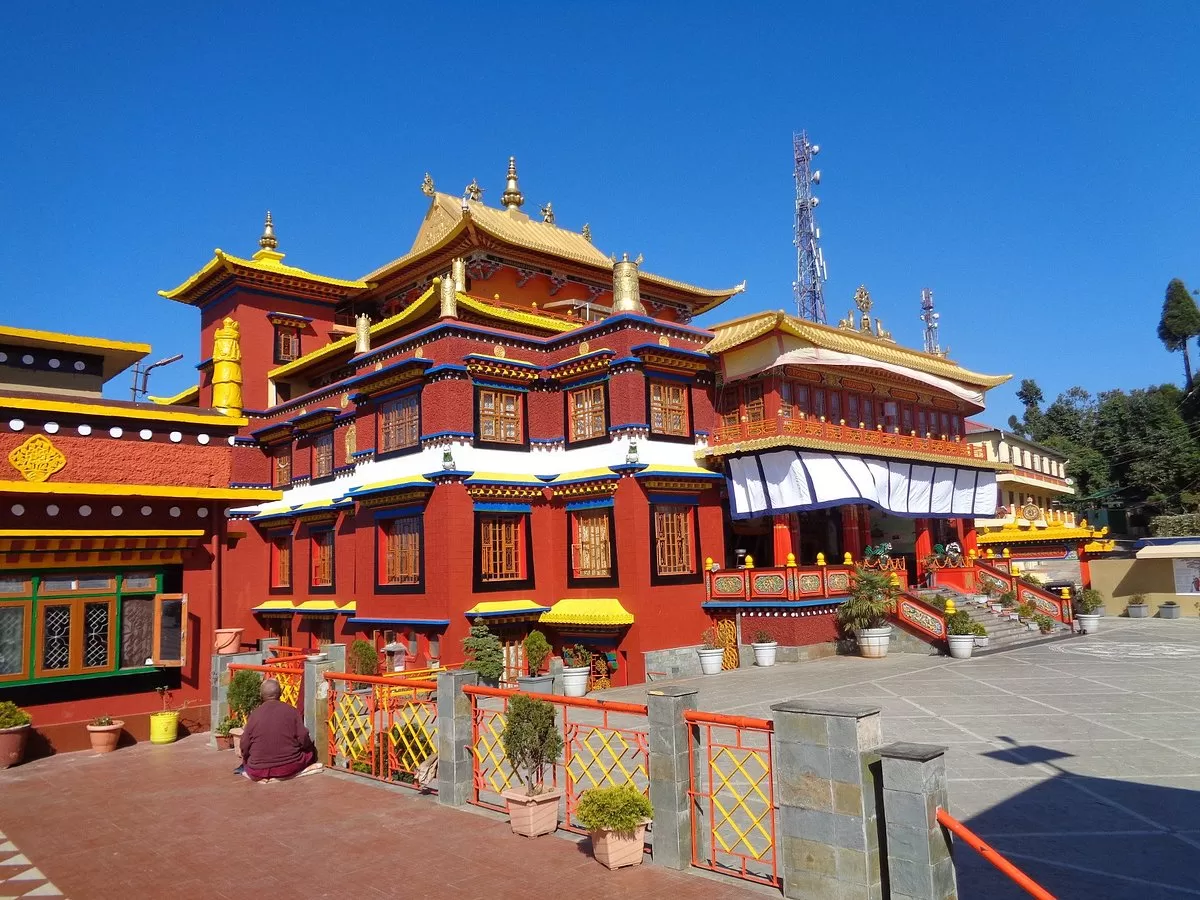
- The main monastery courtyard provides the most balanced composition, capturing the golden-roofed prayer hall, central Buddha statue, and surrounding prayer flags in a single frame.
- Elevated edges of the complex offer wide-angle views of the monastery set against the Siliguri–Darjeeling foothill landscape, especially clear on days with low haze.
- Early morning light enhances the golden detailing of the monastery roof and provides softer illumination across the prayer courtyard before daily rituals begin.
- Photography is generally allowed in outdoor areas, but visitors must seek permission for interior prayer halls and avoid flash during chanting or meditation sessions.
- Weekend visits and Buddhist festival days bring increased footfall, which can limit unobstructed framing around the main courtyard and statue area.
- Seasonal mist in the Darjeeling foothills may reduce long-distance visibility, while post-monsoon months offer the clearest conditions for landscape-oriented shots.
- Access within the monastery is straightforward via paved pathways, with designated open spaces around the courtyard serving as the primary photography zones.