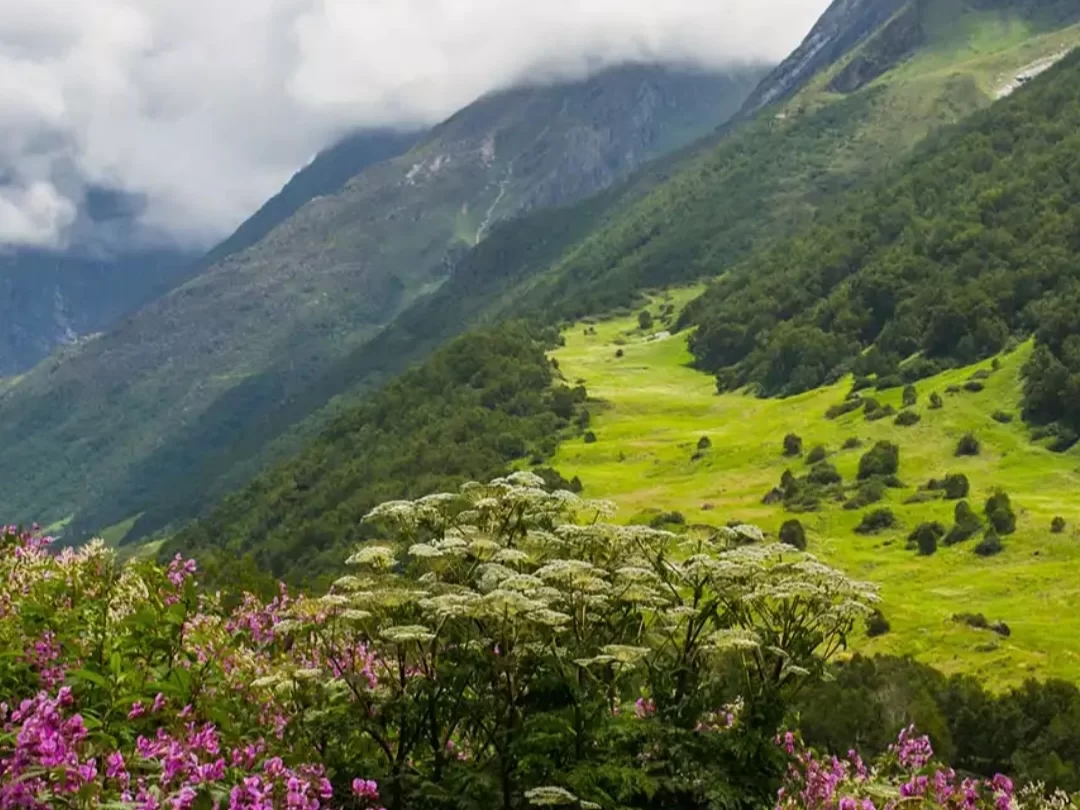
Valley of Flowers National Park Ghangharia, Uttarakhand, India

Valley of Flowers National Park , Ghangharia
Visitors trek from Ghangharia to see seasonal alpine meadows that bloom with endemic Himalayan flora during the monsoon months. The park is part of the Nanda Devi Biosphere Reserve, is a UNESCO World Heritage Site, and remains open to visitors only during the designated seasonal window.

Quick Facts About Valley of Flowers National Park

Entry Fee Yes
Timings 07:00 - 14:00
Altitude (m) 3650
Ideal Visit Duration (hrs) 6
Best Time of Day Morning
Crowd Level High
Distance from Ghangharia (km) 4
Walking Difficulty Moderate
Parking Available No
Last Mile Access Trek
Suitable for Kids No
Suitable for Seniors No
Wheelchair Friendly No

Why Visit Valley of Flowers National Park, Ghangharia

Valley of Flowers National Park near Ghangharia attracts visitors for its high-altitude Himalayan meadow that blooms with alpine flowers during the monsoon season. Recognized as a UNESCO World Heritage Site, it draws trekkers, botanists, and nature travelers who come to witness seasonal wildflower carpets spread across the valley floor.

The atmosphere inside the park is natural and regulated, as entry is controlled by forest authorities and overnight stays are not permitted within the core zone. The trek from Ghangharia follows a defined mountain trail alongside the Pushpawati River, with changing weather conditions common during July and August.

What makes Valley of Flowers distinct is its concentrated alpine biodiversity within a protected Himalayan landscape. Unlike garden-style floral attractions, the blooms here are entirely seasonal and naturally occurring, offering travelers a rare opportunity to walk through a high-altitude ecosystem that transforms dramatically during peak flowering months.

History of Valley of Flowers National Park, Ghangharia

Valley of Flowers National Park is located near Ghangharia in Chamoli district, Uttarakhand, within the Nanda Devi Biosphere Reserve of the Western Himalayas. Although the alpine valley had long been known to local inhabitants, it gained international attention in 1931 when British mountaineer Frank S. Smythe and his team encountered the flower-filled meadow while returning from a mountaineering expedition.

Smythe later published the book “The Valley of Flowers” in 1938, which brought global recognition to the region’s rich alpine flora. Scientific interest and ecological studies followed, leading to increased awareness of its unique biodiversity and fragile ecosystem.

The area was officially declared a national park in 1982 under the Wildlife Protection Act, 1972, to ensure long-term conservation. In 2005, it was included as part of the UNESCO World Heritage Site designation for the Nanda Devi and Valley of Flowers National Parks. Its historical significance lies in its rediscovery in the 20th century and its transition into a protected ecological reserve rather than in ancient architectural or dynastic heritage.

Best Time to Visit – Valley of Flowers National Park Ghangharia

Valley of Flowers National Park near Ghangharia is accessible only during the snow-free months, and the experience depends heavily on bloom cycles, monsoon timing, and trekking conditions in this high-altitude Himalayan valley.
  • Ideal months: Mid-July to mid-August for peak flower bloom; late June and September for fewer crowds with partial blooms.
  • Weather during the best season: During peak bloom (July–August), daytime temperatures generally range between 10–17°C at valley altitude (around 3,500 meters). The landscape is carpeted with alpine flowers following monsoon showers, though mornings offer clearer visibility before afternoon cloud buildup. Trails remain active but can be damp.
  • Periods to avoid (and why): October to May sees heavy snowfall, and the park remains officially closed. Late June may have limited bloom variety as flowering gradually begins. During intense monsoon spells (July–August), trekking paths can become slippery and landslide risk may affect the Govindghat–Ghangharia approach route.

How to Reach Valley of Flowers National Park Ghangharia

  • Nearest Airport: Jolly Grant Airport, Dehradun (approximately 290–300 km from Govindghat, the roadhead). The airport has regular connectivity to Delhi and select Indian cities. From Dehradun, taxis to Govindghat typically take 9–10 hours depending on mountain road and weather conditions.
  • Nearest Railway Station: Rishikesh Railway Station (approximately 270 km from Govindghat) has limited connectivity, while Haridwar Railway Station (around 295 km away) offers broader train services. From either station, buses and taxis operate toward Joshimath/Govindghat.
  • Road Access & Last-Mile Connectivity: Motorable access is available up to Govindghat on NH 7. From Govindghat, visitors must trek approximately 13 km to reach Ghangharia (Govind Dham), the base village for the Valley of Flowers. From Ghangharia, the park entrance is about 3–4 km on a well-defined trekking trail. The park is open seasonally, generally from June to October, and remains closed during winter due to snowfall. Helicopter services operate between Govindghat and Ghangharia during the season, subject to weather conditions. The route is prone to landslides during the monsoon.

What to Expect When You Visit Valley of Flowers National Park Ghangharia

  • Environment and Surroundings: Valley of Flowers National Park is located near Ghangharia in Chamoli district, Uttarakhand, at an altitude ranging roughly between 3,200 and 3,600 metres. The park is part of the Nanda Devi Biosphere Reserve and is known for alpine meadows that bloom with seasonal wildflowers during the monsoon months (July to September). Snow-covered peaks, glacial streams, and rocky terrain define the landscape. The park remains closed during winter due to heavy snowfall and typically opens from June to October. Weather conditions can change quickly, with rain and mist common during peak bloom season.
  • Facilities and Amenities: There are no accommodation or food facilities inside the national park. All lodging, restaurants, and basic medical aid are located at Ghangharia, the base village. Entry to the park requires a valid permit issued at the forest check post. Public toilets inside the park are minimal and basic near the entrance area only. Visitors must carry drinking water and packed food and are required to bring back all waste.
  • Accessibility and Movement: Access begins by road up to Govindghat, followed by a 13 km trek to Ghangharia. From Ghangharia, the Valley of Flowers is about 3–4 km one way on a defined trekking trail. The path includes gradual ascents, stone steps, and rocky sections. At high altitude, visitors may experience breathlessness. Movement is strictly on designated trails; venturing off-route is prohibited. During monsoon, sections of the trail may be slippery or affected by landslides.
  • Typical Visitor Behavior and Conditions: The park attracts trekkers, botanists, and nature enthusiasts, especially between mid-July and late August when flower bloom is at its peak. Daily entry is regulated, and visitors must exit by late afternoon as overnight stay inside the park is not permitted. A typical visit takes 4–6 hours depending on walking pace and weather. Visibility of distant peaks may be limited due to cloud cover during the blooming season.

Important Visitor Information – Valley of Flowers National Park Ghangharia

  • Crowd & Weather Notes: The park is open seasonally, typically from 1 June to 31 October, subject to weather conditions. Peak bloom occurs from mid-July to mid-August, which also sees the highest visitor footfall. Monsoon (July–September) brings frequent rain, slippery trails, and occasional landslides on approach routes, but this is when floral diversity is at its peak.
  • Peak / Quiet Hours: Entry begins in the morning from the forest check post near Ghangharia, with most trekkers starting between 7:00 AM and 10:00 AM. Mid-morning to early afternoon is the busiest period inside the valley. Early entry offers clearer views before cloud cover builds.
  • Dress Code: No formal dress code applies, but trekking-appropriate clothing is essential. Waterproof jackets, layered warm clothing, and sturdy hiking shoes with good grip are necessary due to changing weather and uneven terrain.
  • Safety Notes: Valley of Flowers is a UNESCO World Heritage Site under strict forest regulations; entry permits are mandatory and camping inside the park is prohibited. The trek from Ghangharia is approximately 3–4 km one way on a gradual but rocky trail. Staying on designated paths is compulsory to protect fragile alpine flora. Weather can change quickly at high altitude, and mobile network coverage is extremely limited.

Photography and Viewpoints – Valley of Flowers National Park Ghangharia

  • Best viewpoints/angles: The main valley floor along the designated trekking trail offers expansive compositions of alpine meadows framed by snow-clad peaks; sections near Pushpawati River provide strong foreground elements with flowers against flowing water; slightly elevated bends in the trail allow wider meadow panoramas with layered mountain backdrops.
  • Lighting & time-of-day: Morning hours provide clearer visibility before clouds build over the valley; mid-season bloom (typically July–August) offers peak floral density; overcast monsoon conditions create diffused light ideal for capturing flower colors without harsh shadows, though distant peaks may be obscured.
  • Rules/restrictions: As a UNESCO World Heritage Site and protected national park, photography is permitted on marked trails only; stepping into flower beds, plucking plants, camping inside the valley, and drone usage are strictly prohibited; follow Forest Department entry timings and guidelines.
  • Crowd & access factors: The park operates seasonally (generally June to October, subject to weather); peak bloom months attract high visitor numbers, limiting uninterrupted foreground space; access involves a moderate trek from Ghangharia, and trails can be slippery during monsoon, affecting stable positioning.

Near By Attraction

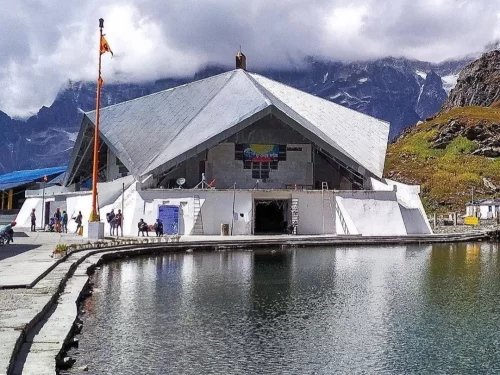
Gurdwara Hemkund Sahib in Ghangharia, Uttarakhand set beside the glacial lake with snow-clad Himalayan peaks in the backdrop, a revered Sikh pilgrimage site included in Uttarakhand tour packages Gurudwara

Gurdwara Hemkund Sahib

Gurdwara Hemkund Sahib is a high-altitude Sikh pilgrimage shrine located near Ghangharia in Chamoli district, Uttarakhand, India.

Frequently Asked Questions About Valley of Flowers National Park

Valley of Flowers National Park is located near Ghangharia in Chamoli district of Uttarakhand, nestled in the Himalayan region.
Valley of Flowers National Park is open to visitors from June to October, depending on weather conditions in Uttarakhand. The park remains closed during winter months due to heavy snowfall.
Visitors must pay an entry fee to access Valley of Flowers National Park. The fee varies for Indian and foreign tourists and is issued at the forest check post near Ghangharia.
Visitors can reach Valley of Flowers National Park by traveling to Govindghat in Uttarakhand by road, trekking to Ghangharia, and then continuing on foot to the park entrance.
Trekking is required to explore Valley of Flowers National Park. The main trail from Ghangharia to the valley is about 3 to 4 kilometers one way on a well defined path.
The best time to visit Valley of Flowers National Park is between July and September when flowers are in full bloom and the landscape is vibrant in Uttarakhand.
Most travelers spend 4 to 6 hours inside Valley of Flowers National Park on a day visit, depending on walking pace and photography stops.
Accommodation options such as guesthouses and lodges are available in Ghangharia near Valley of Flowers National Park in Uttarakhand. There are no stay options inside the park itself.
Basic restroom facilities are available near the entry gate of Valley of Flowers National Park, but food stalls are not allowed inside. Visitors should carry water and light snacks.
Valley of Flowers National Park is suitable for beginners with moderate fitness levels, as the trail is gradual but involves continuous walking at high altitude.

Loved this place ? Let’s Plan Your Uttarakhand Trip

Get customized Uttarakhand tour planning designed around seasonal weather changes, hill road travel timing, pilgrimage flow, and comfort-based pacing. Whether you are visiting for spiritual journeys, Himalayan views, wildlife reserves, river valleys, or p

⚡ Quick Response | 💰 Free consultation | 🕒 24×7 expert support

×

Plan Your Trip