Quick Facts About Tera Manzil Temple
| Entry Fee | Free |
| Timings | 06:00 - 20:00 |
| Altitude (m) | 372 |
| Ideal Visit Duration (hrs) | 1.5 |
| Best Time of Day | Morning |
| Crowd Level | Moderate |
| Distance from City Centre (km) | 2 |
| Walking Difficulty | Hard |
| Parking Available | No |
| Last Mile Access | Walk |
| Suitable for Kids | Yes |
| Suitable for Seniors | No |
| Wheelchair Friendly | No |
Why Visit Tera Manzil Temple
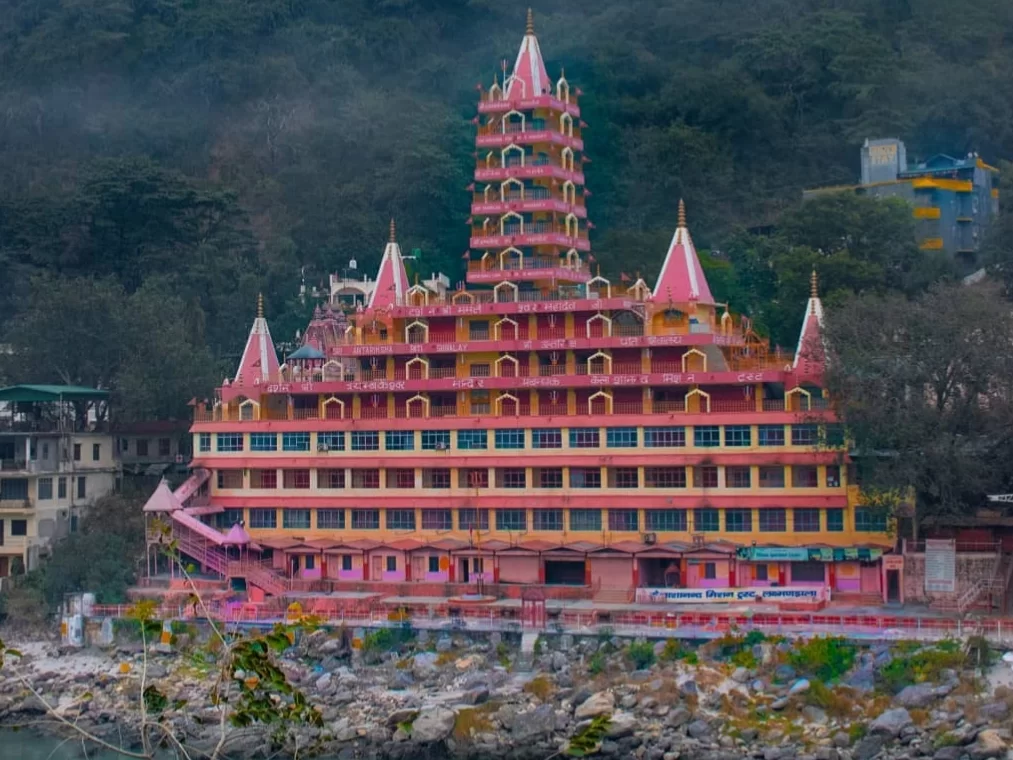
Tera Manzil Temple is a must-visit for those interested in spiritual exploration and panoramic views of Rishikesh. Each of its 13 floors houses different Hindu deities, offering a unique opportunity to experience multiple forms of worship in a single structure.
The atmosphere inside the temple is serene yet vibrant, with the sound of bells, chants, and prayers filling the air. Devotees ascend the floors slowly, creating a calm but dynamic spiritual rhythm. From the upper levels, visitors can enjoy sweeping views of the Ganga River, the surrounding hills, and Rishikesh town.
What makes Tera Manzil special is its vertical layout combined with its riverside location. Unlike typical temples, the multi-storey design provides both a spiritual journey through the floors and a physical perspective over the town and river, making it appealing for both devotees and photographers.
The temple also serves as a central landmark along the Rishikesh riverfront, connecting other popular temples and attractions nearby, which allows visitors to explore the spiritual circuit efficiently.
Religious Significance
Tera Manzil Temple, also known as Trimbakeshwar Temple, holds significant importance in Hindu worship in Rishikesh. Each of its 13 floors is dedicated to a different deity, including Lord Shiva, Goddess Durga, Lord Ganesha, and Lord Vishnu, allowing devotees to offer prayers to multiple gods in one location.
The temple’s riverside location on the Ganga adds to its spiritual relevance, as the river is considered sacred in Hinduism. Pilgrims often combine temple visits with ritual bathing in the Ganga, enhancing the spiritual experience. The temple is also a popular site for festival celebrations, such as Maha Shivratri and Navratri, when devotees from across India come to offer prayers.
Its vertical design encourages devotees to ascend gradually, symbolizing a spiritual journey from the earthly level to higher planes of devotion and meditation. The presence of multiple shrines within one structure is unique in Rishikesh, making it both a religious and architectural landmark.
Best Time to Visit Tera Manzil Temple
The best time to visit Tera Manzil Temple is from October to March when Rishikesh experiences cool and pleasant weather. These months make climbing the 13 floors comfortable and allow visitors to enjoy clear views of the Ganga River and surrounding hills.
Early mornings and late afternoons are ideal for a visit. Mornings offer quieter conditions for peaceful prayers, while late afternoons provide soft light for photography and scenic river views. Summers can be hot, making midday climbs tiring, and monsoon months bring slippery stairs and occasional restricted access to upper floors.
- October to March is the most comfortable period for climbing and sightseeing
- Early mornings are quiet for spiritual reflection and minimal crowds
- Late afternoons provide scenic lighting for photography
- Summer mornings and evenings are manageable, but avoid midday heat
- Monsoon months require caution due to wet and slippery stairs
How to Reach Tera Manzil Temple
- By Air: The nearest airport is Jolly Grant Airport in Dehradun, approximately 22 km from the temple. Taxis and private cabs are available and the drive takes around 45-60 minutes depending on traffic.
- By Train: Rishikesh Railway Station is about 2 km from the temple and well-connected to Haridwar and Dehradun. Auto-rickshaws or taxis can easily reach the temple from the station.
- By Road: Rishikesh is connected via state and private buses from Delhi, Haridwar, and Dehradun. Private taxis and cabs can drop visitors near the temple entrance.
- Local Transport: Auto-rickshaws, cycle rickshaws, and e-rickshaws are common modes of local transport. Short walks may be needed from drop-off points to reach the temple entrance.
- On Foot: Visitors staying near Swargashram or Tapovan can walk to Tera Manzil Temple along the Ganga riverfront. The path is paved but involves stairs at the temple itself.
What to Expect When You Visit Tera Manzil Temple
- A multi-storey temple with 13 floors, each dedicated to different Hindu deities, offering a diverse spiritual experience.
- Moderate physical activity required due to climbing multiple floors; visitors should be prepared for stairs and some narrow passageways.
- Vibrant devotional atmosphere with chanting, bells, and the presence of pilgrims and tourists on each floor.
- Panoramic views of the Ganga River, nearby temples, and surrounding hills from higher floors, ideal for photography.
- Basic facilities inside, including small seating areas on some floors; no elevators or wheelchair access.
- Opportunities to participate in daily rituals and offer prayers at different shrines on each floor.
- Moderate crowd levels; weekends and festival days attract more devotees, making upper floors busier.
Important Visitor Information
- Crowd & Weather Notes: Weekdays are moderately crowded, while weekends and religious festivals can be very busy. October to March offers comfortable weather; summers can be hot, and monsoon months make stairs slippery.
- Peak / Quiet Hours: Early mornings (6 AM to 9 AM) are the quietest for climbing and prayers. Peak visiting times are late morning to late afternoon, especially during festivals.
- Dress Code: Modest clothing is recommended. Comfortable footwear is essential for climbing stairs and navigating narrow passageways.
- Safety Notes: The temple involves climbing multiple floors via stairs. Visitors should supervise children and seniors, watch for uneven steps, and avoid overcrowding on higher floors for safety.
Photography and Viewpoint
- The upper floors of Tera Manzil Temple provide excellent panoramic views of the Ganga River, Rishikesh town, and surrounding hills, making them ideal for landscape and cityscape photography.
- Early morning light creates soft, warm tones and fewer visitors, perfect for capturing the temple interior, deities, and calm river scenes.
- Late afternoon and sunset offer vibrant lighting, especially for photographing the river and the bustling ghats nearby.
- Wide-angle shots from higher floors capture the multi-storey layout of the temple, including staircases, devotees, and prayer halls, giving a sense of its vertical design.
- Close-up photography of individual shrines, bells, and carvings provides insight into the religious and artistic details of each floor.
- Photography is best done during weekdays to avoid crowded floors, while weekends and festivals may limit space for unobstructed shots.
- Night photography is limited due to minimal lighting inside the temple; most captures are recommended during daytime.