Quick Facts About Maa Nanda Devi Temple
| Entry Fee | Free |
| Timings | 06:00 - 20:00 |
| Altitude (m) | 1650 |
| Ideal Visit Duration (hrs) | 1 |
| Best Time of Day | Evening |
| Crowd Level | High |
| Distance from Almora (km) | 1 |
| Walking Difficulty | Easy |
| Parking Available | No |
| Last Mile Access | Walk |
| Suitable for Kids | Yes |
| Suitable for Seniors | Yes |
| Wheelchair Friendly | No |
Why Visit Maa Nanda Devi Temple, Almora
Maa Nanda Devi Temple in Almora attracts devotees for its central role in the town’s religious life and its association with the revered Kumaoni deity Nanda Devi. Visitors often include it in their walking route through the old market area, especially during the annual Nanda Devi Mahotsav when the temple becomes a focal point of celebrations.
The atmosphere around the temple is devotional and closely integrated with Almora’s traditional bazaar setting. The structure is relatively compact, and daily worship rituals take place in a steady, organized manner, with increased activity during festival periods.
What makes Maa Nanda Devi Temple distinct is its strong cultural connection to the Kumaon region rather than a pan-Indian pilgrimage circuit. Unlike large hilltop shrines, it sits within the town’s lived-in environment, offering travelers insight into local faith practices woven into everyday life in Almora.
History of Maa Nanda Devi Temple, Almora
Maa Nanda Devi Temple is a historic shrine located in Almora town in Uttarakhand, dedicated to Goddess Nanda Devi, the presiding deity of the Kumaon region. The temple is believed to have been established during the rule of the Chand dynasty, which governed Kumaon between the 16th and 18th centuries and significantly shaped Almora’s religious and urban landscape.
The temple reflects traditional Kumaoni wooden and stone architectural elements adapted to the Himalayan climate. Goddess Nanda Devi is revered as a regional guardian deity, and her worship is deeply embedded in local cultural identity, distinct from pan-Indian Shakti traditions.
The temple is closely associated with the annual Nanda Devi Mahotsav, a major cultural and religious festival in Almora that has been celebrated for generations. Its continued ritual importance and strong connection to Kumaoni heritage make it one of the central religious landmarks of the town.
Best Time to Visit – Maa Nanda Devi Temple, Almora
Maa Nanda Devi Temple in Almora town is accessible throughout the year, but the overall experience depends on seasonal weather and festival footfall, as the temple is located within the old market area and sees peak crowds during major religious events.
- Ideal months: March to June and October to November offer the most comfortable climate for darshan and exploring Almora town.
- Weather during the best season: Spring and early summer bring mild temperatures (approximately 12–28°C) with clearer skies, making it easier to walk through the surrounding bazaar lanes. Autumn months provide crisp air and stable weather after the monsoon.
- Periods to avoid (and why): July to September sees monsoon rainfall in Almora, which can make narrow market streets wet and slippery. December to February can be quite cold, especially during early morning visits. The Nanda Devi Mahotsav (usually August–September) draws very high local footfall, resulting in longer waiting times for darshan.
How to Reach Maa Nanda Devi Temple, Almora
- Nearest Airport: Pantnagar Airport (approximately 115–120 km from Almora). The airport has limited domestic connectivity. From Pantnagar, taxis to Almora typically take 4–5 hours depending on hill road conditions. Indira Gandhi International Airport, Delhi (around 370–380 km away), is commonly used for wider connectivity, followed by an 8–10 hour road journey.
- Nearest Railway Station: Kathgodam Railway Station (approximately 85–90 km from Almora) is the nearest major railhead with regular train services from Delhi and other North Indian cities. From Kathgodam, shared taxis and private cabs to Almora operate daily and take around 3–4 hours via the hill route.
- Road Access & Last-Mile Connectivity: Maa Nanda Devi Temple is located in central Almora town near Lala Bazaar and is directly accessible by taxi, local bus, or private vehicle. Parking in the immediate market area is limited, and visitors may need to park at designated town parking zones and walk through narrow pedestrian lanes to reach the temple entrance. Roads are steep and winding, and traffic congestion increases during festivals such as Nanda Devi Mahotsav.
What to Expect When You Visit Maa Nanda Devi Temple Almora
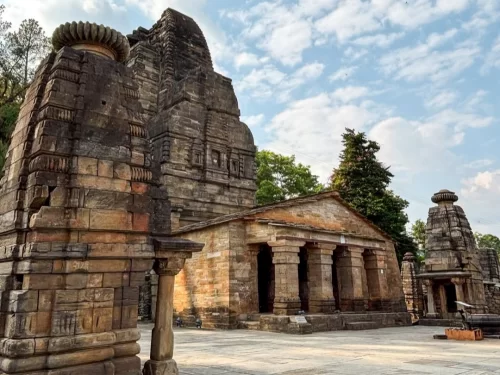
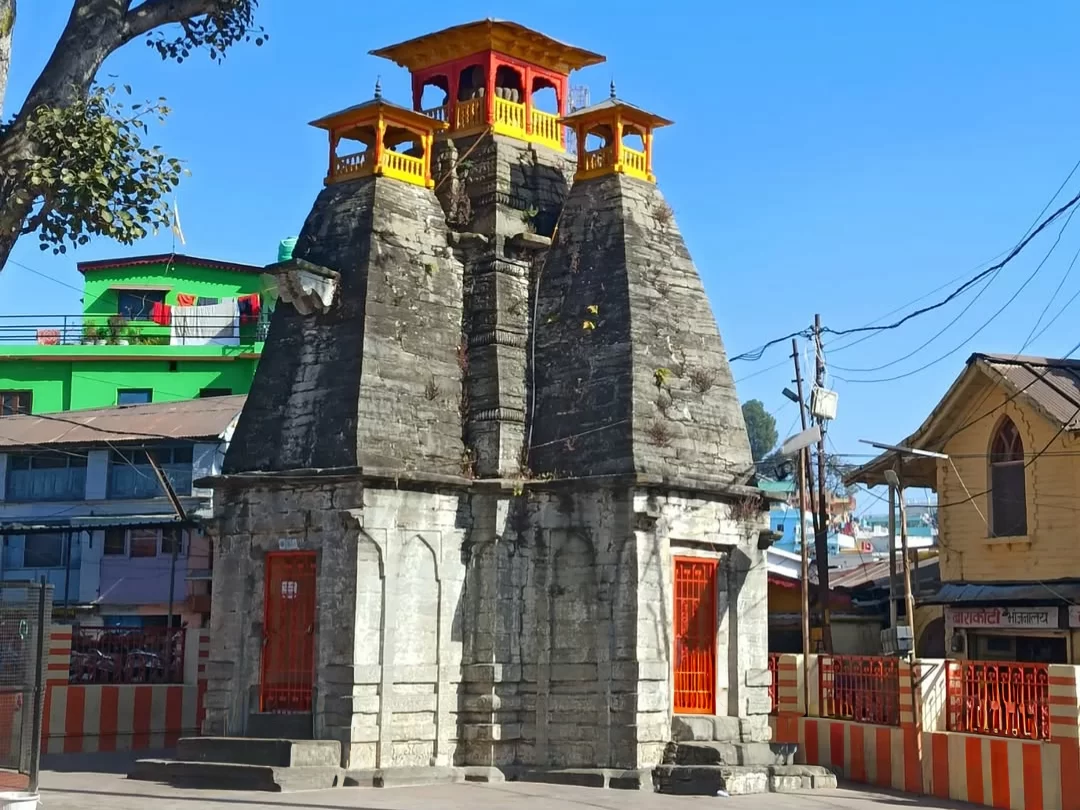
- Environment and Surroundings: Maa Nanda Devi Temple is located in the central Lal Bazaar area of Almora town in Uttarakhand. The temple sits within a traditional Kumaoni urban setting, surrounded by narrow market lanes and old wooden shopfronts. The structure reflects regional hill temple architecture with a modest courtyard and carved wooden elements. Being in the main town area, the surroundings are active during market hours. During the annual Nanda Devi Mahotsav (usually held in September), the area becomes densely crowded.
- Facilities and Amenities: Basic facilities such as small prasad shops and flower vendors are available near the entrance. Public toilet facilities are not directly within the compact temple premises but may be available in nearby public areas. Seating space inside the temple courtyard is limited. Drinking water facilities are minimal, and visitors generally rely on nearby shops for refreshments.
- Accessibility and Movement: The temple is easily accessible on foot from most parts of Almora town. Vehicles can reach nearby roads, but parking space in the Lal Bazaar area is limited, often requiring visitors to park at designated town parking zones and walk. Entry into the temple involves a few steps, and the internal area is compact. Footwear must be removed before entering the shrine area.
- Typical Visitor Behavior and Conditions: The temple receives steady daily footfall from local devotees, with higher crowds during Navratri and the Nanda Devi festival. On regular days, visitors typically spend 15–30 minutes for darshan. During festival periods, long queues form and movement becomes slow due to the narrow market lanes and limited open space within the temple complex.
Important Visitor Information – Maa Nanda Devi Temple Almora
- Crowd & Weather Notes: The temple experiences heavy footfall during the Nanda Devi Mahotsav (usually August–September) and Navratri, when large numbers of devotees gather in Almora town. Regular weekends also see steady visitors. Winters (December to February) can be cold in the mornings and evenings, while monsoon brings occasional rain but does not usually disrupt darshan.
- Peak / Quiet Hours: Morning hours between 8:00 AM and 11:00 AM and evening aarti time are typically the busiest. Weekday afternoons outside festival periods are comparatively quieter.
- Dress Code: Modest attire is expected inside the temple premises. Footwear must be removed before entering the shrine area. Conservative clothing covering shoulders and knees is advisable.
- Safety Notes: The temple is located within Almora town and accessed via narrow market lanes that can become congested during festivals. Stone flooring inside the complex may be slippery during monsoon. Visitors should follow queue arrangements during major events, as crowd density increases significantly.
Photography and Viewpoints – Maa Nanda Devi Temple, Almora
- Best viewpoints/angles: The temple’s traditional Kumaoni wooden façade and carved doorway are best photographed from the main courtyard, allowing a full-frontal frame of the sloping roof and entrance; slight diagonal positioning highlights the intricate woodwork and layered rooflines; the surrounding Almora townscape can be included from the outer edge of the complex for contextual hill-town compositions.
- Lighting & time-of-day: Early morning provides softer light on the wooden carvings and fewer shadows in the courtyard; late afternoon enhances texture on the façade with warmer tones; overcast conditions reduce contrast and help capture detail in darker wooden elements.
- Rules/restrictions: Photography inside the sanctum (garbhagriha) is generally not permitted; always follow temple signage and instructions during active ???? (worship); flash photography near the deity or devotees is discouraged, and drone use may require local administrative permission.
- Crowd & access factors: The temple experiences higher footfall during Nanda Devi Mahotsav and festival periods, limiting uninterrupted courtyard framing; early weekday mornings provide clearer access; the surrounding bazaar lanes are narrow and busy, affecting exterior composition space.