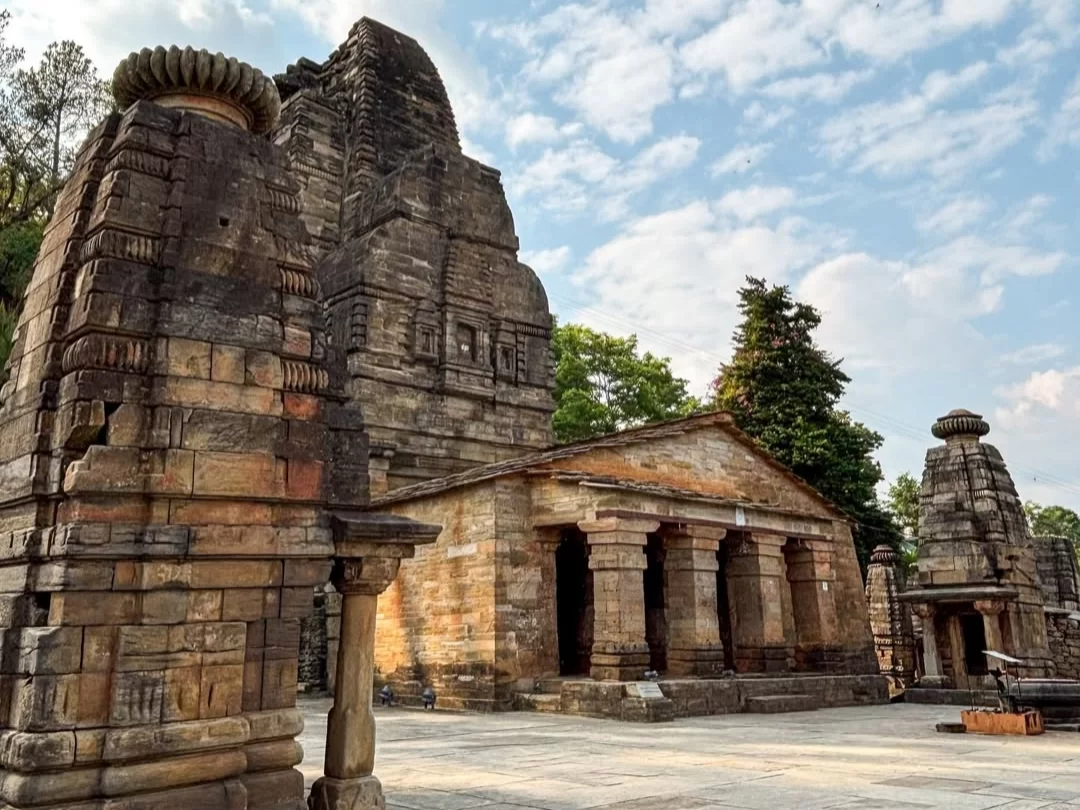
Katarmal Sun Temple Almora, Uttarakhand, India

Katarmal Sun Temple , Almora
Tourists visit the site for its 9th-century Katyuri-era stone architecture, elevated hilltop setting, and panoramic Himalayan views. The complex includes the main Surya shrine and multiple subsidiary temples, and is protected as a monument of national importance.

Quick Facts About Katarmal Sun Temple

Entry Fee Yes
Timings 06:00 - 18:00
Altitude (m) 2116
Ideal Visit Duration (hrs) 1
Best Time of Day Morning
Crowd Level Moderate
Distance from Almora (km) 17
Walking Difficulty Moderate
Parking Available No
Last Mile Access Walk
Suitable for Kids Yes
Suitable for Seniors No
Wheelchair Friendly No

Why Visit Katarmal Sun Temple, Almora

Katarmal Sun Temple in Almora attracts visitors for its rare dedication to the Sun God and its elevated location overlooking the Kumaon hills. Travelers interested in early medieval temple architecture visit to see the main shrine and the surrounding cluster of smaller stone temples set against a Himalayan backdrop.

The atmosphere at the site is quiet and open, reached by a short uphill walk from the nearest motorable point. The stone structures stand on a ridge with clear valley views, and the setting remains less crowded than central town attractions, allowing time to observe carvings and layout details.

What makes Katarmal Sun Temple distinct is its architectural layout as one of the few surviving Sun temples in northern India, combined with its hilltop placement. Unlike active urban temples, it functions primarily as a protected heritage site, offering travelers both archaeological value and expansive landscape views in a single visit.

History of Katarmal Sun Temple, Almora

Katarmal Sun Temple is a medieval temple complex located near Almora in Uttarakhand and is one of the few surviving Sun temples in North India. The temple is dated to the 9th century CE and is attributed to the Katyuri dynasty, which ruled parts of the Kumaon region during the early medieval period.

The complex is dedicated to Surya, the Sun God, and originally comprised a main shrine surrounded by numerous smaller subsidiary shrines. Built in stone using traditional Himalayan temple architecture, the structure reflects the regional Nagara style adapted to mountain terrain. The original idol of Surya is no longer in the sanctum, and the Archaeological Survey of India now protects the monument.

Katarmal Sun Temple is historically significant for representing early medieval temple construction in the Kumaon Himalayas and for illustrating the prominence of solar worship in the region during the Katyuri period. Today, it stands as a protected heritage monument rather than an active major pilgrimage center.

Best Time to Visit – Katarmal Sun Temple Almora

Katarmal Sun Temple near Almora is best visited when skies are clear and the uphill walking trail is dry, as the temple complex sits on an exposed ridge and requires a short but steady climb from the roadhead.

  • Ideal months: October to November and March to June provide the most reliable weather and clear Himalayan views.
  • Weather during the best season: Spring and autumn bring mild daytime temperatures (approximately 10–25°C), clearer skies, and better visibility of surrounding valleys and distant snow peaks. The stone pathways remain dry, making exploration of the 9th-century temple cluster more comfortable.
  • Periods to avoid (and why): July to September brings monsoon rainfall in the Almora region, which can make the uphill trail slippery and reduce mountain visibility due to cloud cover. December to February can be quite cold, with chilly winds on the exposed ridge and occasional frost in early mornings.

How to Reach Katarmal Sun Temple Almora

  • Nearest Airport: Pantnagar Airport (approximately 120–125 km from Katarmal). The airport has limited domestic connectivity. From Pantnagar, taxis to Almora/Katarmal typically take 4–5 hours depending on hill road conditions. Indira Gandhi International Airport, Delhi (around 380 km away), is often used for wider connectivity, followed by an 8–10 hour road journey.
  • Nearest Railway Station: Kathgodam Railway Station (approximately 90–95 km from Katarmal Sun Temple) is the nearest major railhead with regular connectivity to Delhi and other North Indian cities. From Kathgodam, shared taxis and private cabs to Almora operate daily and take around 3–4 hours via the hill route.
  • Road Access & Last-Mile Connectivity: Katarmal Sun Temple is located about 17–19 km from Almora town near Kosi village. Private vehicles and taxis can reach the designated parking area via a narrow hill road branching from the Almora–Ranikhet route. From the parking point, visitors must walk approximately 1 km uphill on a paved but moderately steep pathway to reach the temple complex. The approach road is narrow and may be slippery during the monsoon season, requiring careful driving.

What to Expect When You Visit Katarmal Sun Temple Almora

  • Environment and Surroundings: Katarmal Sun Temple is located about 17–20 km from Almora in Uttarakhand, situated on a hilltop at an altitude of approximately 2,100 metres. The temple complex overlooks the Kumaon valley and is surrounded by terraced fields and pine forests. The site consists of the main Sun Temple shrine and several smaller subsidiary temples built in stone. The setting is quiet and rural, with panoramic views on clear days. During winter, mornings can be cold and windy, while monsoon months (July to September) bring lush greenery but slippery pathways.
  • Facilities and Amenities: Visitor facilities at the site are minimal. There is a basic entry area managed under archaeological protection, but no extensive commercial infrastructure. Small local stalls may operate seasonally near the approach road, though food and drinking water options are not consistently available at the temple itself. Public toilets are generally not available within the immediate complex. Informational signage is limited.
  • Accessibility and Movement: The temple is accessible by motorable road from Almora up to a parking point, followed by a walk of approximately 1–2 km uphill to reach the complex. The walking path includes stone steps and uneven terrain. The climb is moderate and may require effort, particularly for elderly visitors. During monsoon, the pathway can become muddy and slippery, requiring careful footing.
  • Typical Visitor Behavior and Conditions: The site attracts history enthusiasts, photographers, and pilgrims, with moderate footfall compared to larger temples in the region. Visitors typically spend 45–75 minutes exploring the main shrine and subsidiary structures. Weekends and holiday periods see higher numbers, but the site generally remains less crowded. Early morning visits offer clearer valley views when weather conditions permit.

Important Visitor Information – Katarmal Sun Temple Almora

  • Crowd & Weather Notes: Katarmal Sun Temple receives moderate visitor flow, with slightly higher footfall during winter (October to February) when skies are clearer and Himalayan views are visible. Summers (April to June) are pleasant but can feel warm during the uphill walk. During monsoon (July to September), the stone pathway and temple steps may become slippery due to rain and moss.
  • Peak / Quiet Hours: Late mornings between 10:30 AM and 1:30 PM are generally the busiest, especially on weekends. Early mornings on weekdays are comparatively quiet and offer better lighting for viewing the temple carvings.
  • Dress Code: No strict dress code applies as it is a protected heritage site, but modest attire is advisable. Comfortable walking shoes are essential due to the uphill trek from the parking area.
  • Safety Notes: The temple complex is an ASI-protected monument with uneven stone floors, loose slabs, and stepped platforms; visitors should move carefully and avoid climbing on fragile structures. Facilities are limited at the site, and visitors must walk approximately 1–2 km uphill from the nearest motorable point. Carry drinking water, as shops near the temple are minimal.

Photography and Viewpoints – Katarmal Sun Temple Almora

  • Best viewpoints/angles: The main Surya temple is best captured from the slightly lower stone courtyard to frame the shikhara against the open sky; diagonal angles along the cluster of subsidiary shrines highlight the temple complex layout; elevated edges of the site offer valley backdrops, especially on clear days when distant Himalayan ridgelines are visible.
  • Lighting & time-of-day: Early morning light enhances the stone carvings with soft directional illumination, particularly on the east-facing façade; late afternoon provides warm tones across the temple cluster; winter months typically offer clearer Himalayan visibility compared to summer haze.
  • Rules/restrictions: Photography is generally allowed in the outer temple complex; avoid photographing inside restricted sanctum areas; as an ASI-protected monument, do not climb on temple structures or disturb carvings; drone use may require prior permission from authorities.
  • Crowd & access factors: The site remains relatively quiet compared to central Almora temples, allowing uninterrupted architectural compositions on most weekdays; access involves a short uphill walk from the parking area, which can be uneven and slippery during monsoon.

Near By Attraction

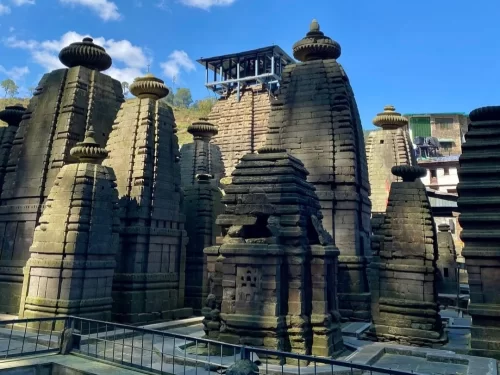
Ancient stone temples at Jageshwar Dham in Almora, Uttarakhand surrounded by cedar forests, a revered pilgrimage site included in Uttarakhand tour packages Temple

Jageshwar Dham

Jageshwar Dham is an ancient temple complex dedicated primarily to Lord Shiva, located in the Jageshwar valley of Almora district, Uttarakhand, India.
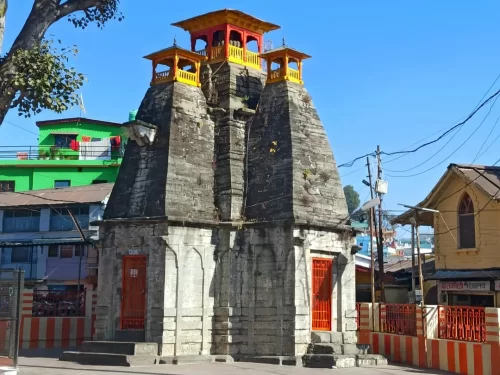
Maa Nanda Devi Temple in Almora, Uttarakhand featuring its tall stone structure and vibrant red doors, a revered cultural landmark included in Uttarakhand tour packages Temple

Maa Nanda Devi Temple

Maa Nanda Devi Temple is a historic Hindu temple dedicated to Goddess Nanda Devi, located in Almora town, Uttarakhand, India.

Chitai Golu Devta Temple in Almora, Uttarakhand adorned with thousands of prayer letters and bells, a revered shrine included in Uttarakhand tour packages Adventure Park

Chitai Golu Devta Temple

Chitai Golu Devta Temple is a regional Hindu temple dedicated to Golu Devta, located near Almora town in Uttarakhand, India.

Frequently Asked Questions About Katarmal Sun Temple

Katarmal Sun Temple is located near Almora in Uttarakhand, situated on a hilltop about 17 kilometers from the main town.
Katarmal Sun Temple is generally open from morning until late afternoon, typically between 9 am and 5 pm, as managed by the Archaeological Survey authorities in Uttarakhand.
A small entry fee is usually charged to visit Katarmal Sun Temple. The ticket is issued at the entrance and helps maintain the protected monument.
Visitors can reach Katarmal Sun Temple by road from Almora in Uttarakhand up to the base parking area, followed by a short uphill walk to the temple complex.
A short uphill walk of around 1 to 2 kilometers is required to reach Katarmal Sun Temple from the parking point. The path includes stone steps and uneven sections.
The best time to visit Katarmal Sun Temple is between March and June and September to November when the weather in Uttarakhand is clear and comfortable for walking.
Most travelers spend about 45 minutes to 1.5 hours exploring Katarmal Sun Temple and enjoying panoramic views of the surrounding hills near Almora, Uttarakhand.
Food stalls are usually not available directly at Katarmal Sun Temple, so visitors should carry water and light snacks. Basic facilities are available in Almora town in Uttarakhand.
Katarmal Sun Temple can be visited by senior citizens, but the uphill walk and uneven stone paths may require slow and careful movement.
Visitors should carry drinking water, comfortable walking shoes, and sun protection when visiting Katarmal Sun Temple. Mobile network coverage may be limited near the hilltop.

Loved this place ? Let’s Plan Your Uttarakhand Trip

Get customized Uttarakhand tour planning designed around seasonal weather changes, hill road travel timing, pilgrimage flow, and comfort-based pacing. Whether you are visiting for spiritual journeys, Himalayan views, wildlife reserves, river valleys, or p

⚡ Quick Response | 💰 Free consultation | 🕒 24×7 expert support

×

Plan Your Trip