Quick Facts About Bhalu Dam
| Entry Fee | Yes |
| Timings | 09:00 - 17:00 |
| Altitude (m) | 1840 |
| Ideal Visit Duration (hrs) | 1 |
| Best Time of Day | Morning |
| Crowd Level | Moderate |
| Distance from Ranikhet (km) | 3 |
| Walking Difficulty | Moderate |
| Parking Available | No |
| Last Mile Access | Walk |
| Suitable for Kids | Yes |
| Suitable for Seniors | No |
| Wheelchair Friendly | No |
Why Visit Bhalu Dam, Ranikhet
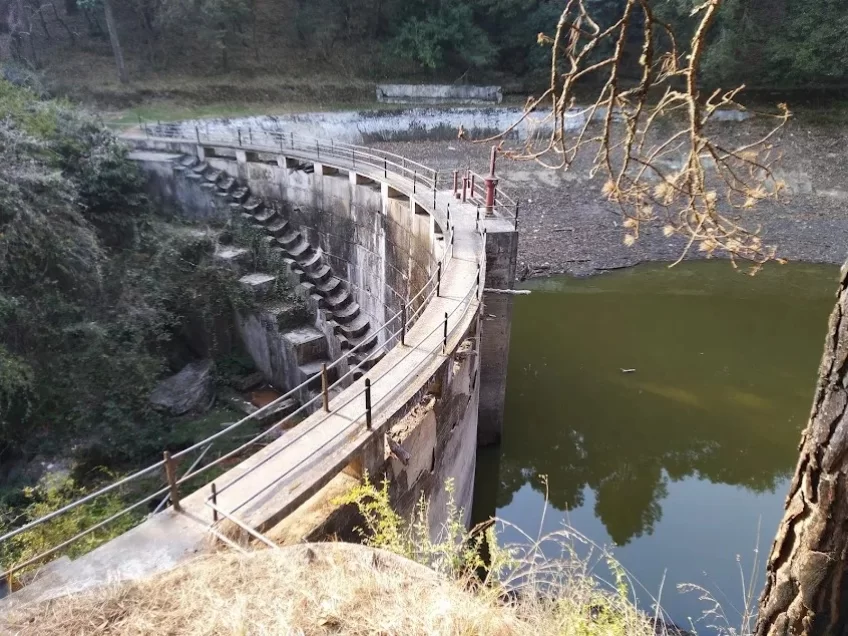
Bhalu Dam in Ranikhet attracts visitors looking for a quiet forest-side walk away from the main town center. Originally built as a small water reservoir, the area is now visited for short nature walks, birdwatching, and a peaceful outdoor stop within the cantonment’s green zone.
The atmosphere around Bhalu Dam is calm and shaded, with pine and oak trees lining the walking path that leads to the water body. The trail involves a gentle downhill and uphill walk, and the setting remains relatively less crowded compared to Ranikhet’s central attractions.
What makes Bhalu Dam distinct is its simple, forest-focused setting rather than a panoramic viewpoint or major monument. It offers travelers a low-key natural environment suited for relaxed walks and short outdoor breaks within Ranikhet’s cooler hill climate.
History of Bhalu Dam, Ranikhet
Bhalu Dam is a small artificial reservoir located near Ranikhet in Uttarakhand, constructed during the British colonial period. Ranikhet was developed as a cantonment town in the 19th century, and the dam was built to serve as a water supply source for the military settlement and surrounding areas.
The structure was engineered to collect rainwater from the surrounding forested catchment of the Kumaon hills. Its location amidst dense pine and oak forests reflects the typical hill-station approach of creating compact reservoirs to ensure a stable water supply in elevated terrain.
Bhalu Dam’s historical importance lies in its functional role within the colonial-era infrastructure of Ranikhet rather than in monumental architecture. Today, it remains a preserved water body and walking area, reflecting the planned utility systems established during the town’s early cantonment phase.
Best Time to Visit – Bhalu Dam Ranikhet
Bhalu Dam near Ranikhet is best visited when the forest trail is dry and the reservoir holds sufficient water, as access involves a short walk through wooded paths that can become slippery during the monsoon.
- Ideal months: March to June and October to November offer the most balanced conditions for visiting the dam.
- Weather during the best season: Spring and early summer bring mild temperatures (approximately 10–25°C) with clear skies, making the forest walk comfortable and the reservoir area pleasant for short stops. Autumn months provide crisp air and stable weather after the monsoon, with improved trail conditions.
- Periods to avoid (and why): July to September sees monsoon rainfall in Ranikhet, making the trail muddy and slippery and reducing water clarity due to runoff. December to February can be quite cold, with chilly winds around the open reservoir and occasional frost affecting early morning visits.
How to Reach Bhalu Dam Ranikhet
- Nearest Airport: Pantnagar Airport (approximately 115–120 km from Ranikhet). The airport has limited domestic connectivity. From Pantnagar, taxis to Ranikhet typically take 4–5 hours depending on hill road conditions. Indira Gandhi International Airport, Delhi (around 350–360 km away), is commonly used for wider connectivity, followed by an 8–9 hour road journey.
- Nearest Railway Station: Kathgodam Railway Station (approximately 75–80 km from Ranikhet) is the nearest major railhead with regular train services from Delhi and other North Indian cities. From Kathgodam, shared taxis and private cabs to Ranikhet operate daily and take around 2.5–3.5 hours via the hill route.
- Road Access & Last-Mile Connectivity: Bhalu Dam is located about 3–4 km from Ranikhet town center near Chaubatia Gardens. Private vehicles and taxis can reach the designated parking area via internal hill roads. From the parking point, visitors must walk approximately 1 km through a forested trail to reach the dam. The pathway is uneven in sections and can become slippery during the monsoon season. Public transport does not operate directly to the dam, so taxi or self-drive is the most reliable option.
What to Expect When You Visit Bhalu Dam Ranikhet
- Environment and Surroundings: Bhalu Dam is located about 3–4 km from Ranikhet town in Uttarakhand, set within a forested area surrounded by pine and oak trees. The dam forms a small reservoir that supplies water to the cantonment area. The setting is quiet and relatively less commercial, with natural surroundings and walking trails leading through the forest. During monsoon (July to September), the area becomes lush and green, though pathways may be muddy and slippery. Winters can be cold, especially in the morning hours.
- Facilities and Amenities: Visitor facilities are minimal. There may be a small entry gate with a nominal fee depending on local management. Basic seating areas and open space are available near the reservoir, but structured amenities such as large restrooms or food stalls are generally absent. Visitors are advised to carry drinking water and manage waste responsibly, as bins may be limited.
- Accessibility and Movement: Bhalu Dam is accessible by motorable road up to a certain point, followed by a short forest walk to reach the reservoir area. The walking path includes uneven ground and natural terrain. The route is manageable for most visitors with basic fitness, but elderly visitors may find the forest path slightly challenging. During the rainy season, extra caution is required due to wet soil and stones.
- Typical Visitor Behavior and Conditions: The dam attracts nature walkers, small family groups, and visitors seeking a quiet outdoor setting. Footfall is moderate, with slightly higher numbers during summer and holiday periods. Visitors typically spend 30–60 minutes walking around the reservoir or sitting in the shaded areas. The site remains relatively calm compared to more prominent tourist viewpoints in Ranikhet.
Important Visitor Information – Bhalu Dam Ranikhet
- Crowd & Weather Notes: Bhalu Dam receives moderate visitor flow during summer (April to June) and weekends, as it is a short forest walk from Ranikhet town. Winters (December to February) can be cold in the early mornings. During monsoon (July to September), the forest trail may become muddy and leech-prone, though the dam reservoir appears fuller.
- Peak / Quiet Hours: Late mornings between 10:00 AM and 1:00 PM are typically busier, especially on weekends. Early mornings on weekdays are comparatively quieter for a peaceful visit.
- Dress Code: No formal dress code applies. Sturdy walking shoes are recommended, as reaching the dam involves a forest trail with uneven ground.
- Safety Notes: The dam area is not designated for swimming, and entering the water is discouraged. The forest approach trail can be slippery during monsoon, and mobile network coverage may be limited. Visitors should carry water, as facilities near the dam are minimal.
Photography and Viewpoints – Bhalu Dam Ranikhet
- Best viewpoints/angles: The earthen dam embankment provides the widest frame of the reservoir surrounded by dense pine forest; position near the center of the dam wall for symmetrical water-and-tree compositions; walking along the lake edge allows low-angle shots with still water reflections, especially when the surface is calm.
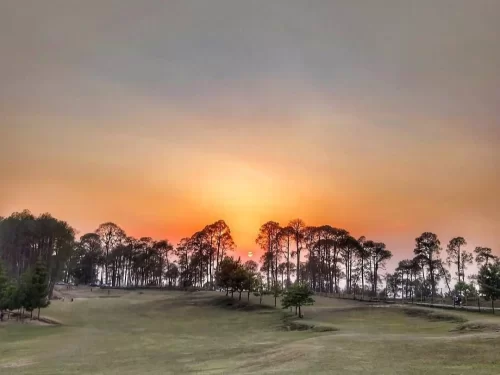
- Lighting & time-of-day: Early morning offers the smoothest water surface for reflections and clearer forest tones; late afternoon adds warm light across the treeline and subtle highlights on the water; overcast conditions during monsoon create evenly lit scenes but may reduce distant clarity.
- Rules/restrictions: Photography is permitted around the reservoir and dam area; avoid entering the water or crossing restricted sections of the embankment; drone usage may require prior permission due to environmental and local administrative regulations.
- Crowd & access factors: The site is relatively quiet compared to central Ranikhet attractions, though weekends attract local visitors; early visits provide unobstructed lake-edge compositions; access involves a forested walking trail from the parking area, which can be uneven and slippery during monsoon.