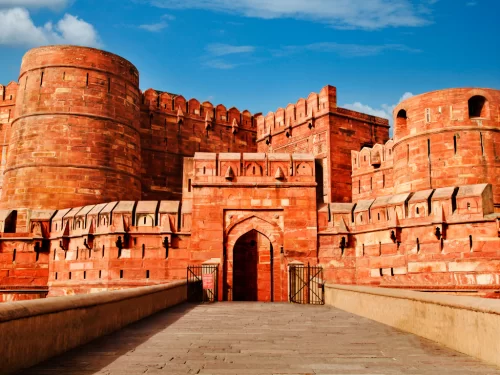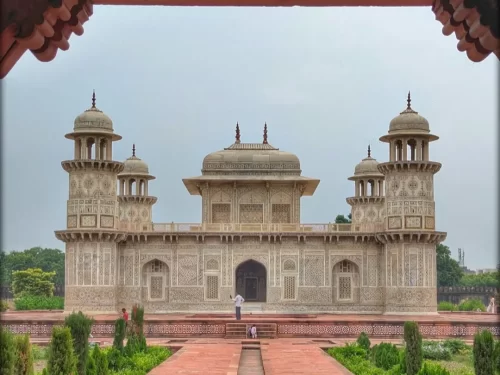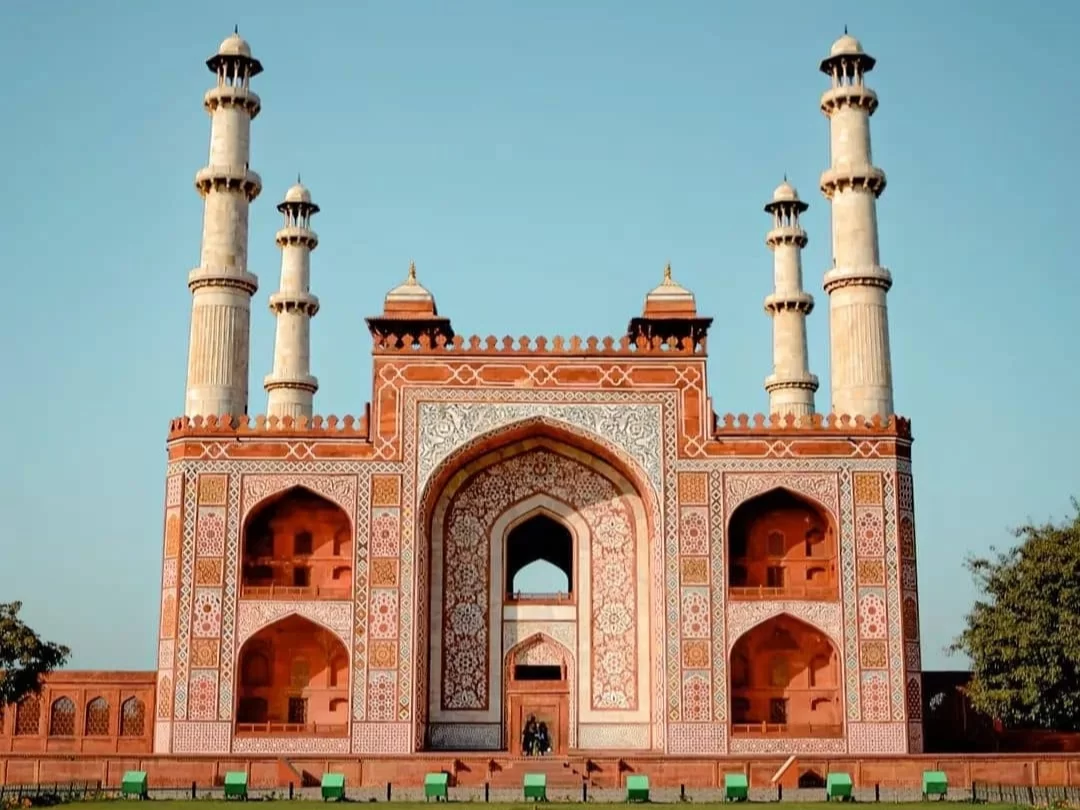
Quick Facts About Sikandra Fort
| Entry Fee | 40 |
| Timings | 06:00 - 18:00 |
| Altitude (m) | 169 |
| Ideal Visit Duration (hrs) | 2 |
| Best Time of Day | Morning |
| Crowd Level | Moderate |
| Distance from City Centre (km) | 8 |
| Walking Difficulty | Easy |
| Parking Available | Yes |
| Last Mile Access | Walk |
| Suitable for Kids | Yes |
| Suitable for Seniors | Yes |
| Wheelchair Friendly | No |
Why Visit
Why Visit: Sikandra Fort is renowned for being the mausoleum of Emperor Akbar and showcases the grandeur and innovation of Mughal architecture.
Atmosphere: The complex exudes a serene and majestic ambiance with its expansive gardens, grand gateways, and tranquil surroundings, offering a peaceful retreat from the city.
What Makes it Special: The fort combines Islamic, Hindu, and Persian architectural styles, featuring intricate carvings, ornamental arches, and a harmonious garden layout, making it a masterpiece of Mughal design and historical significance.
History
Sikandra Fort is the final resting place of Mughal Emperor Akbar, constructed between 1600 and 1613 AD. The mausoleum was commissioned by Akbar himself and completed by his son Jahangir.
The fort and tomb exemplify a blend of Islamic, Hindu, and Persian architectural elements, reflecting Akbar’s vision of religious tolerance and cultural synthesis. Its large gateways, decorative carvings, and symmetrical gardens were designed to symbolize imperial authority and aesthetic sophistication.
Visitors today can witness the architectural genius of the Mughal era, with the tomb serving as a focal point of historical and cultural significance in Agra.
Best Time to Visit
The best time to visit Sikandra Fort is between October and March when Agra experiences pleasant weather. Summers can be extremely hot, while the monsoon season brings humidity and occasional rain, making outdoor exploration challenging.
- October to March: Ideal for sightseeing, photography, and comfortable walking in the fort complex
- Early mornings: Quieter hours with soft sunlight highlighting the intricate carvings
- Late afternoons: Cooler temperatures and warm golden light for photography
- Weekdays: Less crowded compared to weekends and public holidays
- During festivals: Cultural vibrancy can be observed, though crowds may increase
How to Reach
- By Air: The nearest airport is Agra Airport (~12 km); Delhi IGI Airport (~220 km) offers wider domestic and international connectivity.
- By Train: Agra Cantt Railway Station (~10 km) is well connected to major cities like Delhi, Jaipur, and Mumbai.
- By Road: Sikandra Fort is accessible via NH-44 and local roads from Agra city; taxis, buses, and private vehicles are commonly used.
- From Agra City: Auto-rickshaws and taxis provide direct access to the fort entrance.
- Local Transport: Walking within the fort complex is required to explore the mausoleum, gates, and gardens; guided tours are available.
What to Expect When You Visit
- Grand mausoleum of Emperor Akbar with intricate carvings and impressive architectural design
- Expansive gardens and courtyards designed in traditional Mughal charbagh style
- Massive gateways showcasing decorative patterns and historical inscriptions
- Moderate walking required to explore the full fort and tomb complex
- Peaceful and serene ambiance, ideal for photography and historical appreciation
- Insight into Mughal architecture, Akbar’s legacy, and cultural heritage of 16th-century India
Important Visitor Information
- Crowd & Weather Notes: Moderate crowds throughout the day; winters are pleasant, summers are hot, and monsoons bring occasional rain.
- Peak / Quiet Hours: Peak visiting hours are 10:00 AM – 2:00 PM; early mornings and late afternoons are quieter for exploration and photography.
- Dress Code: Comfortable clothing and footwear recommended; modest attire is suggested while exploring the mausoleum.
- Safety Notes: Watch your step on stone floors and stairs, supervise children, and follow designated pathways inside the fort complex.
Photography and Viewpoint
- Photography is allowed in the outer areas and gardens of Sikandra Fort; avoid restricted zones near the mausoleum interior.
- Best viewpoints include the main gateway, central courtyard, and elevated terraces for panoramic shots of the tomb and surrounding gardens.
- Early morning or late afternoon provides soft lighting for capturing red sandstone, marble inlays, and intricate carvings.
- Festivals and cultural events add vibrant colors and activity for more dynamic photography opportunities.
- Respect visitors’ privacy and security restrictions while photographing inside the complex.