Quick Facts About Shri Dwarkadhish Temple
| Entry Fee | Free |
| Timings | 06:30 - 21:30 |
| Altitude (m) | 170 |
| Ideal Visit Duration (hrs) | 1 |
| Best Time of Day | Morning |
| Crowd Level | High |
| Distance from City Centre (km) | 1 |
| Walking Difficulty | Moderate |
| Parking Available | No |
| Last Mile Access | Walk |
| Suitable for Kids | Yes |
| Suitable for Seniors | Yes |
| Wheelchair Friendly | No |
Why Visit
Why Visit: Shri Dwarkadhish Temple is one of Mathura’s most sacred Krishna temples, offering powerful darshan, vibrant aartis, and an authentic experience of Braj devotional traditions.
Atmosphere: The temple is lively and deeply spiritual, filled with continuous chanting, ringing bells, incense fragrance, and the devotion of pilgrims from across India, especially during festival days.
What Makes it Special: Known for its richly decorated sanctum, traditional seva rituals, and grand celebrations of Janmashtami, Holi, and Jhulan Yatra, the temple stands as a major centre of Krishna worship in Mathura.
History
Shri Dwarkadhish Temple was originally built in the early 19th century by Seth Gokuldas Parikh, the treasurer of the Scindia dynasty of Gwalior. The temple was established as a major centre of Krishna worship in Mathura, reflecting the city’s deep Vaishnav heritage.
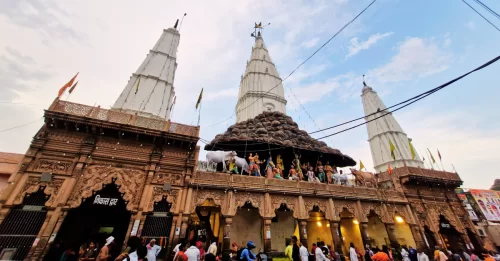
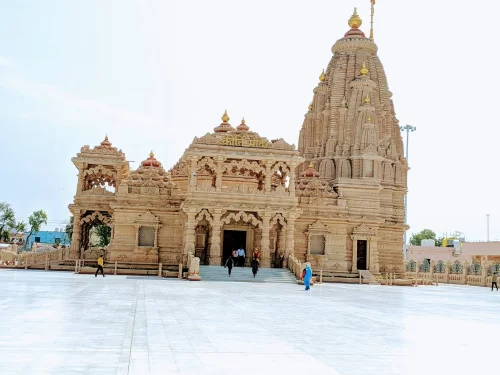
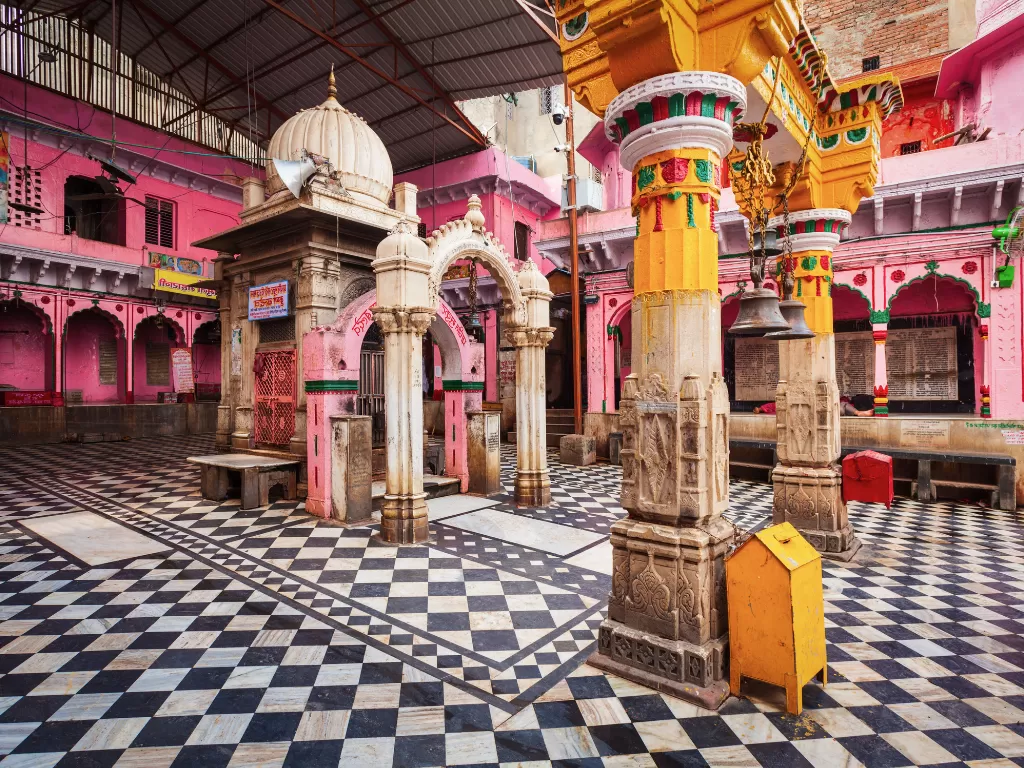
The temple architecture combines Rajasthani and Mughal styles, with intricately carved pillars, arched gateways, and richly adorned interiors. Over time, it became one of the most prominent pilgrimage destinations in Braj Bhoomi.
Today, the temple remains spiritually significant for its traditional seva rituals, grand festival observances, and continuous devotional practices dedicated to Lord Dwarkadhish (Krishna in his royal form).
Best Time to Visit
The best time to visit Shri Dwarkadhish Temple is from October to March when Mathura’s weather is pleasant for darshan and walking through the old city lanes. Summers are very hot, while monsoon months bring humidity and larger festival crowds.
- October to March: Comfortable climate for temple visits and nearby sightseeing
- August–September: Janmashtami celebrations with grand rituals and heavy pilgrim turnout
- March: Holi festival brings vibrant traditions and festive energy
- Early mornings: Best for peaceful darshan with fewer crowds
- Weekdays: Less crowded than weekends and major festival dates
How to Reach
- By Air: Nearest airport is Agra Airport (~60 km); Delhi IGI Airport (~160 km) offers better flight connectivity.
- By Train: Mathura Junction (2 km) is the nearest major railway station, well connected to Delhi, Agra, Jaipur, and major cities.
- By Road: Mathura is connected via NH-19 and state highways; regular buses and taxis operate from Delhi and Agra.
- From Mathura Station: Cycle-rickshaws and e-rickshaws reach the temple in 10–15 minutes through old city lanes.
- Local Transport: Private vehicles are restricted near the temple due to narrow streets; walking is common.
What to Expect When You Visit
- Powerful darshan of Lord Dwarkadhish in a richly decorated sanctum
- Energetic aartis with bells, chanting, and devotional singing
- Narrow bustling lanes filled with flower vendors, sweets shops, and pilgrims
- Traditional temple rituals and seva performed multiple times daily
- Heavy crowds during festivals like Janmashtami, Holi, and Jhulan Yatra
- Deep spiritual atmosphere reflecting Mathura’s living Krishna traditions
Important Visitor Information
- Crowd & Weather Notes: Heavy crowds daily, especially during festivals; summers are extremely hot, winters pleasant.
- Peak / Quiet Hours: Peak hours are 7:00–10:00 AM and 6:00–9:00 PM; mid-afternoons are quieter.
- Dress Code: Modest clothing covering shoulders and knees is required; footwear must be removed before entry.
- Safety Notes: Secure belongings in crowded areas, follow queue systems, and watch your footing on stairs.
Photography and Viewpoint
- Photography is not permitted inside the sanctum or main prayer halls
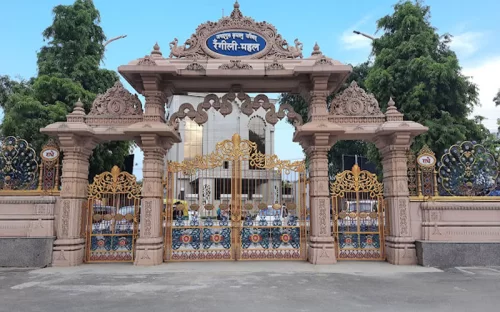
- Best photo opportunities are outside the temple entrance, courtyard, and nearby old city streets
- Early morning light captures the temple façade and surrounding architecture beautifully
- Festival days offer vibrant scenes of decorations, crowds, and devotional processions outside the temple
- Always follow temple signage and respect devotees while taking photographs