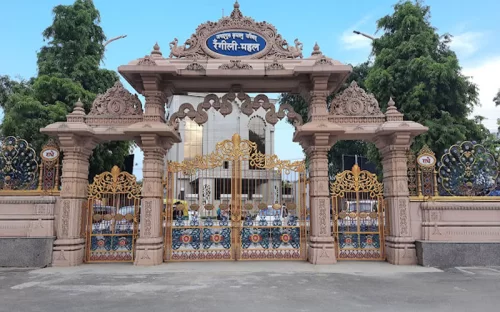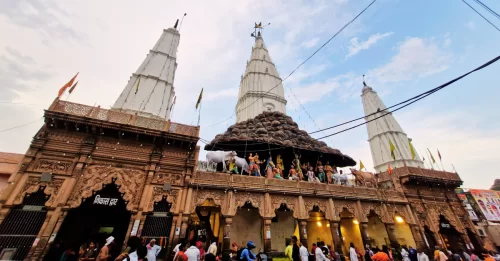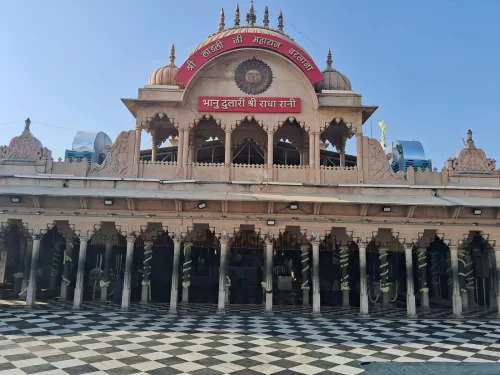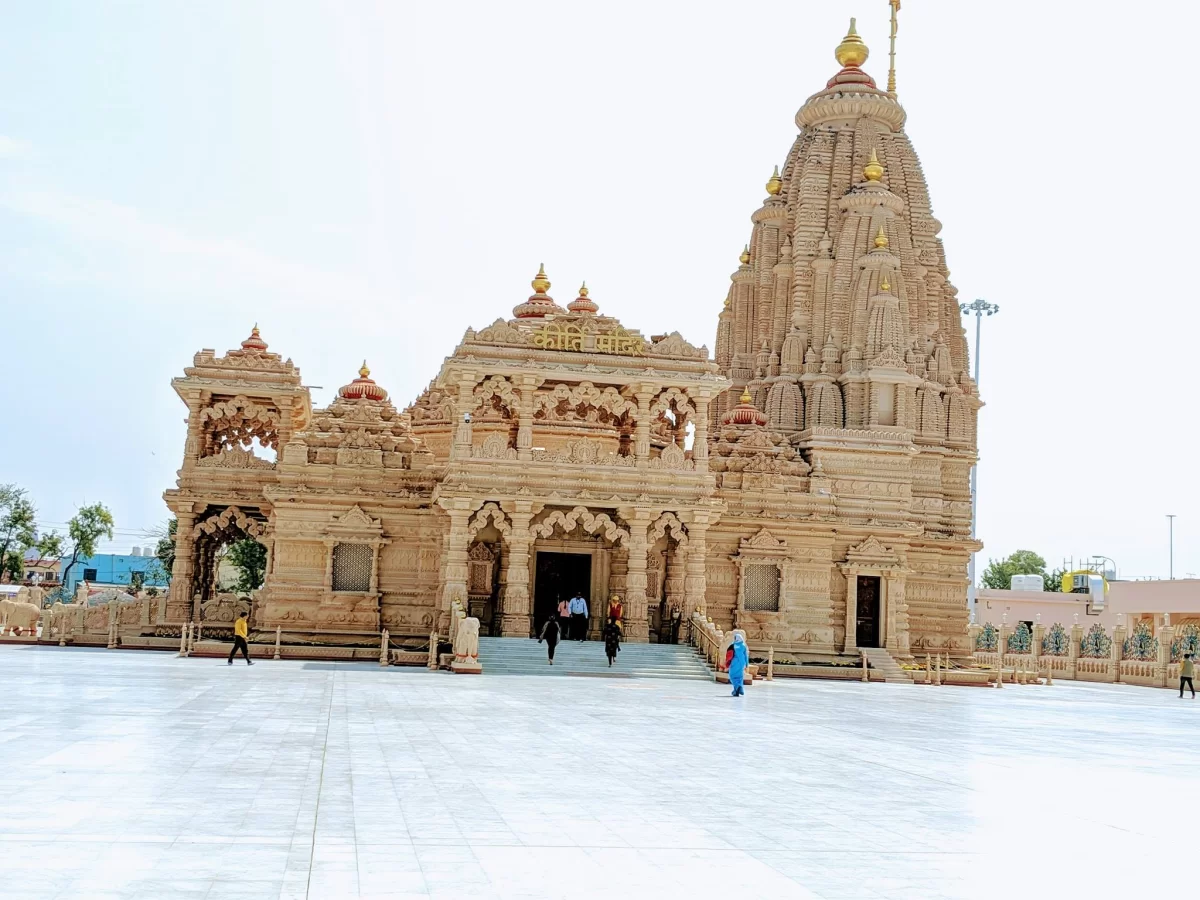
Quick Facts About Kirti Mandir Barsana
Kirti Mandir, Barsana, Uttar Pradesh Quick Facts
| Entry Fee | No entry fee |
| Timings | Generally open daily from 5:00 AM to 12:00 PM and 4:00 PM to 8:30 PM; timings may vary on festivals |
| Altitude (m) | Approximately 183 m above sea level |
| Ideal Visit Duration | 30 minutes to 1 hour |
| Best Time of Day | Morning or evening during aarti |
| Crowd Level | Moderate; high during Radhashtami, Lathmar Holi, and major Vaishnav festivals |
| Distance from City Centre (km) | Approximately 1 km from Barsana town centre |
| Walking Difficulty | Easy |
| Parking Available | Yes, parking is available near the temple complex |
| Last Mile Access | Accessible by road followed by a short walk from the parking area |
| Suitable for Kids | Yes |
| Suitable for Seniors | Yes |
| Wheelchair Friendly | Partially accessible; the main premises are accessible, though some areas may have steps |
Why Visit Kirti Mandir, Barsana, Uttar Pradesh
Visitors come to Kirti Mandir to pay homage to Mata Kirti, the mother of Shri Radha Rani, and to experience a temple that holds special significance within the Braj pilgrimage circuit. It is often visited alongside nearby sacred sites in Barsana.
The on-ground atmosphere is peaceful and devotional, with pilgrims offering prayers, participating in aarti, and spending time in quiet reflection. The temple's spacious interiors and well-maintained surroundings provide a calm setting for worship throughout the day.
What makes Kirti Mandir distinct is its dedication to Mata Kirti, a rare feature among temples in the Braj region. The temple's white marble architecture, serene environment, and close connection to Radha devotion offer visitors a different spiritual perspective within Barsana's sacred landscape.
History of Kirti Mandir, Barsana, Uttar Pradesh
Kirti Mandir is a Hindu temple dedicated to Kirti Maiya, the mother of Radha Rani, in Barsana, the sacred town associated with Radha's life. The temple was envisioned by Jagadguru Shri Kripalu Ji Maharaj, with its foundation stone laid in 2006 and the temple inaugurated in 2019.
The temple holds religious significance for enshrining the unique depiction of young Radha Rani seated in the lap of her mother, Kirti Maiya. According to local tradition, the temple stands at the site associated with Radha Rani's childhood in Barsana.
Today, Kirti Mandir is an important pilgrimage destination in the Braj region, where devotees visit to honor Kirti Maiya and Radha Rani while experiencing a distinctive aspect of the area's Krishna-Radha devotional heritage.
Best Time to Visit Kirti Mandir, Barsana, Uttar Pradesh
Kirti Mandir is most enjoyable during the cooler months, when visitors can comfortably explore the temple, its landscaped surroundings, and other important pilgrimage sites in Barsana without the discomfort of extreme summer temperatures.
- Ideal Months: October to March is the best period for visiting Kirti Mandir, with pleasant conditions for sightseeing and spiritual visits.
- Weather Conditions: Mild to cool temperatures during these months make it easier to walk around the temple complex, enjoy its architecture, and visit nearby attractions in Barsana.
- Periods to Avoid: April to June can be very hot during daytime hours. If visiting during Lathmar Holi in February or March, expect exceptionally large crowds and longer waiting times despite the festive atmosphere.
How to Reach Kirti Mandir, Barsana, Uttar Pradesh
- By Air: The nearest airport is Indira Gandhi International Airport, Delhi, approximately 170–180 km from Barsana. Agra Airport, around 90 km away, also serves the region with limited flight connectivity. Taxis and private cabs are available from both airports for direct travel to Barsana.
- By Train: Mathura Junction is the nearest major railway station, located about 45–50 km from Kirti Mandir. The station has regular rail connectivity with Delhi, Agra, Jaipur, Mumbai, and other major cities. From Mathura, visitors can hire taxis, shared vehicles, or buses to reach Barsana.
- By Road: Kirti Mandir is situated in Barsana and is easily accessible by road from Mathura, Vrindavan, Govardhan, and Delhi via NH 19 and connecting state highways. Regular UPSRTC buses, private buses, taxis, and self-drive vehicles operate to Barsana. The temple is located within the town and is accessible by local roads, with a short walk from nearby parking areas. Traffic congestion and limited parking are common during Lathmar Holi, Radhashtami, and other major pilgrimage events.
What to Expect When You Visit Kirti Mandir, Barsana, Uttar Pradesh
- Kirti Mandir is a modern temple dedicated to Kirti Maiya, the mother of Radha, located in Barsana amid the sacred Braj pilgrimage region. The surroundings are peaceful, with landscaped grounds and a devotional atmosphere.
- The temple is known for its spacious marble architecture, well-maintained premises, and large prayer halls. Visitors can expect a clean and organized environment compared to many older pilgrimage sites in the area.
- Basic visitor facilities such as drinking water, restrooms, seating areas, and shoe storage are available within or near the temple complex. Shops selling religious offerings and refreshments can be found nearby.
- The temple is easily accessible by road from Barsana town, with parking available close to the entrance. Most areas within the complex are connected by level pathways, making movement relatively comfortable for visitors.
- Devotees typically spend time attending darshan, participating in aarti, and admiring the temple's intricate carvings and sculptures. Visitor numbers increase during Radhashtami, Holi, Janmashtami, and other major religious occasions.
- The atmosphere remains calm on regular days, while festival periods bring larger crowds, longer waiting times, and increased activity throughout the temple premises.
- Visitors are expected to remove footwear before entering the temple, dress modestly, and follow temple guidelines. Photography may be restricted inside the main sanctum during worship or special ceremonies.
Important Visitor Information for Kirti Mandir, Barsana, Uttar Pradesh
- Kirti Mandir receives the highest number of visitors during Radhashtami, Lathmar Holi, and other major Braj festivals, while weekday mornings are generally quieter for darshan.
- Morning hours provide a peaceful atmosphere for prayer and exploring the temple interiors, whereas evenings become busier during aarti and devotional gatherings.
- Barsana experiences very hot weather from April to June, making early morning or late afternoon visits more comfortable, while winter offers pleasant conditions for sightseeing.
- Visitors are expected to wear modest attire appropriate for a Hindu temple, with clothing that respectfully covers the shoulders and knees.
- Footwear must be removed before entering the temple, and visitors should maintain silence and follow temple customs during prayers and religious ceremonies.
- During festival periods, the temple complex can become crowded, so visitors should move carefully through queues and remain attentive on steps and polished floor surfaces.
Photography and Viewpoints at Kirti Mandir, Barsana, Uttar Pradesh
- The temple forecourt offers the best frontal perspective of Kirti Mandir, showcasing its white marble façade, ornate pillars, and grand entrance in a balanced composition.
- Wide-angle views from the landscaped pathways surrounding the temple capture the full height of the structure along with its gardens, making them ideal for architectural photography.
- Morning sunlight softly illuminates the white marble carvings and domes, while the golden light before sunset enhances the temple's intricate detailing without harsh reflections.
- Photography is generally permitted in the temple's exterior and open courtyard areas, but restrictions may apply inside the main prayer hall or sanctum during worship, depending on temple management guidelines.
- The temple receives larger crowds during Radhashtami, Lathmar Holi, weekends, and other Braj festivals, which can make unobstructed views around the entrance and central courtyard more difficult.
- The spacious temple complex provides multiple accessible viewpoints without steep climbs, allowing visitors to photograph both the temple architecture and surrounding landscaped grounds comfortably.
- During devotional programs and aarti, gathering areas become busy with worshippers, creating vibrant cultural scenes while limiting clear architectural shots near the main shrine.