Quick Facts About Valluvar Kottam
Quick Facts About Valluvar Kottam
| Entry Fee | No entry fee (free for all visitors) |
|---|---|
| Timings | 8:00 AM to 8:00 PM (daily) |
| Altitude (m) | Approx. 6 m above sea level |
| Ideal Visit Duration | 30–60 minutes |
| Best Time of Day | Morning or late afternoon for pleasant weather and photography |
| Crowd Level | Moderate on weekdays; high during weekends and public holidays |
| Distance from City Centre (km) | Approx. 4 km from Chennai city centre (Anna Salai area) |
| Walking Difficulty | Easy; flat paved areas around the monument |
| Parking Available | Yes, limited public parking near the entrance |
| Last Mile Access | Accessible via taxis, auto-rickshaws, and city buses up to the monument |
| Suitable for Kids | Yes, suitable for short educational visits and photography |
| Suitable for Seniors | Yes, flat pathways and benches available for resting |
| Wheelchair Friendly | Partially; main area accessible, but some ramps may be steep |
Why Visit Valluvar Kottam, Chennai
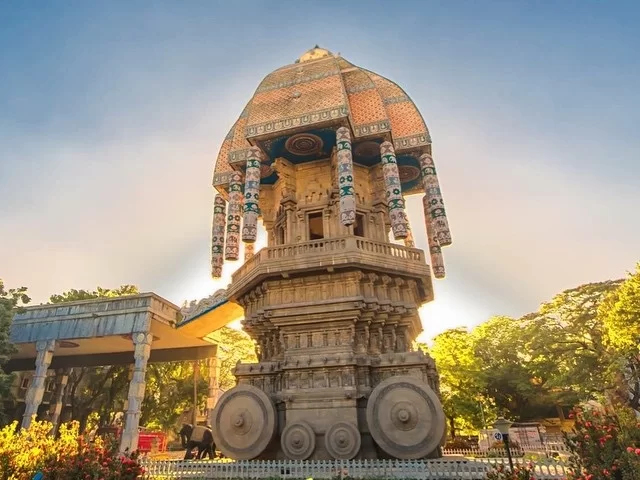
Visitors come to Valluvar Kottam to view the chariot-shaped monument dedicated to the Tamil poet and philosopher Thiruvalluvar. The engraved Thirukkural couplets and the detailed stone architecture attract tourists interested in literature, art, and cultural heritage.
The on-ground atmosphere is spacious and serene, with open paved areas for walking and benches for resting. Visitors can observe the monument from multiple angles, take photographs, and enjoy the well-maintained surroundings without heavy crowds, especially on weekdays.
What makes Valluvar Kottam distinct for travelers is its monumental chariot design and large-scale engraved inscriptions that are unique among city landmarks. Unlike other cultural sites, it combines literature, architecture, and public space in a single accessible urban location.
History of Valluvar Kottam, Chennai
Valluvar Kottam was inaugurated in 1976 to honor the classical Tamil poet and philosopher Thiruvalluvar. The monument was designed as a massive stone chariot to house engraved couplets from the Thirukkural, reflecting Tamil literary and cultural heritage.
The site also serves as a venue for cultural events, literary gatherings, and educational visits, maintaining its significance as a center for promoting the study and appreciation of Tamil literature in Chennai.
Best Time to Visit Valluvar Kottam, Chennai
Valluvar Kottam is best visited during cooler months when outdoor exploration and walking around the monument are comfortable. Seasonal festivals and weekdays offer different crowd levels, affecting the visitor experience.
- Ideal months: November to February, when temperatures are moderate and comfortable for walking and photography.
- Weather conditions during the best season: Pleasant mornings and late afternoons, suitable for viewing inscriptions and exploring open areas.
- Periods to avoid: June to September due to heavy monsoon rains that may make outdoor areas slippery and less enjoyable.
- Additional note: April to May afternoons can be hot; early morning or late evening visits are preferable during these months.
How to Reach Valluvar Kottam, Chennai
- Nearest Airport: Chennai International Airport (MAA), approximately 16 km from the monument. Taxis and app-based cabs provide direct access in 30–45 minutes depending on traffic.
- Nearest Railway Station: Chennai Central Railway Station, about 4 km away. Auto-rickshaws, taxis, and local buses offer convenient last-mile connectivity.
- By Road: Valluvar Kottam is located on Anna Salai (Mount Road) and is easily accessible by private vehicles, city buses, and taxis. Traffic can be heavy during peak hours, especially weekdays morning and evening.
- Last-Mile Access: Road access leads up to the monument entrance. Limited parking is available, and visitors may need to walk short distances on paved pathways to reach viewing areas.
What to Expect When You Visit Valluvar Kottam, Chennai
- Environment and surroundings: The monument is set in a spacious urban area with well-maintained paved pathways, open courtyards, and landscaped gardens around the chariot-shaped structure.
- Facilities and amenities: Visitors have access to benches, shaded areas, basic restrooms, and limited parking near the entrance. Signage provides information about the Thirukkural inscriptions.
- Accessibility and movement: Walking is easy on flat paved surfaces, but some areas near steps or raised platforms may require careful movement. Wheelchair access is partially available.
- Typical visitor behavior and conditions: The site attracts families, students, and cultural enthusiasts. Weekdays are less crowded, while weekends and holidays may see higher visitor traffic.
- Practical limitations: Photography is allowed, but visitors should avoid stepping onto restricted areas or climbing the monument. During busy periods, movement near the inscriptions may be slower.
Important Visitor Information for Valluvar Kottam, Chennai
- Crowd and weather notes: Moderate crowds on weekdays; higher visitor numbers during weekends and public holidays. Best visited during cooler months (November to February) for comfort while exploring the monument.
- Peak and quiet visiting hours: Morning hours (8:00–10:00 AM) and late afternoon (5:00–7:00 PM) are quieter, allowing better access to inscriptions and viewing areas.
- Dress code: Casual and comfortable attire is appropriate. Closed footwear is recommended for walking on paved surfaces and steps.
- Safety notes: Watch for steps and raised platforms near the chariot structure. Children should be supervised, and visitors should follow signage to avoid restricted areas.
- Practical cautions: Limited parking may require walking from nearby lots. Photography is allowed, but avoid climbing or leaning on the monument for safety.
Photography and Viewpoints at Valluvar Kottam, Chennai
- Best viewpoints: The front plaza and surrounding open courtyards offer clear views of the chariot-shaped monument and engraved Thirukkural inscriptions for wide-angle shots.
- Lighting conditions: Early morning and late afternoon provide soft natural light, enhancing details of the stone carvings and reducing harsh shadows for photography.
- Photography restrictions: Photography is allowed in outdoor and public areas. Avoid entering restricted zones or stepping onto raised platforms when capturing images.
- Crowd and access impact: Weekdays and off-peak hours allow unobstructed shots. Weekends and public holidays can result in crowded plazas, making clear photography more challenging.
- Special considerations: Some pathways are narrow near inscriptions; large tripods may not be practical. Respect guides and signage when photographing educational displays or cultural events.