+91 9910402252
admin@chalbanjare.com


| Entry Fee | Free |
|---|---|
| Timings | Generally open daily from 6:00 AM–6:00 PM. |
| Altitude (m) | Approximately 10 m |
| Ideal Visit Duration | 45 minutes–1.5 hours |
| Best Time of Day | Early morning or late afternoon for comfortable weather and softer light for photography. |
| Crowd Level | Low to moderate on weekdays; higher during weekends and public holidays. |
| Distance from City Centre (km) | Approximately 55 km from Chennai city centre (near Saluvankuppam on East Coast Road). |
| Walking Difficulty | Easy; the monument and surrounding grounds require only short walks. |
| Parking Available | Yes, parking is available near the entrance. |
| Last Mile Access | Accessible by East Coast Road (ECR), followed by a short walk from the parking area to the rock-cut monument. |
| Suitable for Kids | Yes |
| Suitable for Seniors | Yes |
| Wheelchair Friendly | Partially; the landscaped grounds are accessible, but the rock-cut monument area has uneven stone surfaces. |
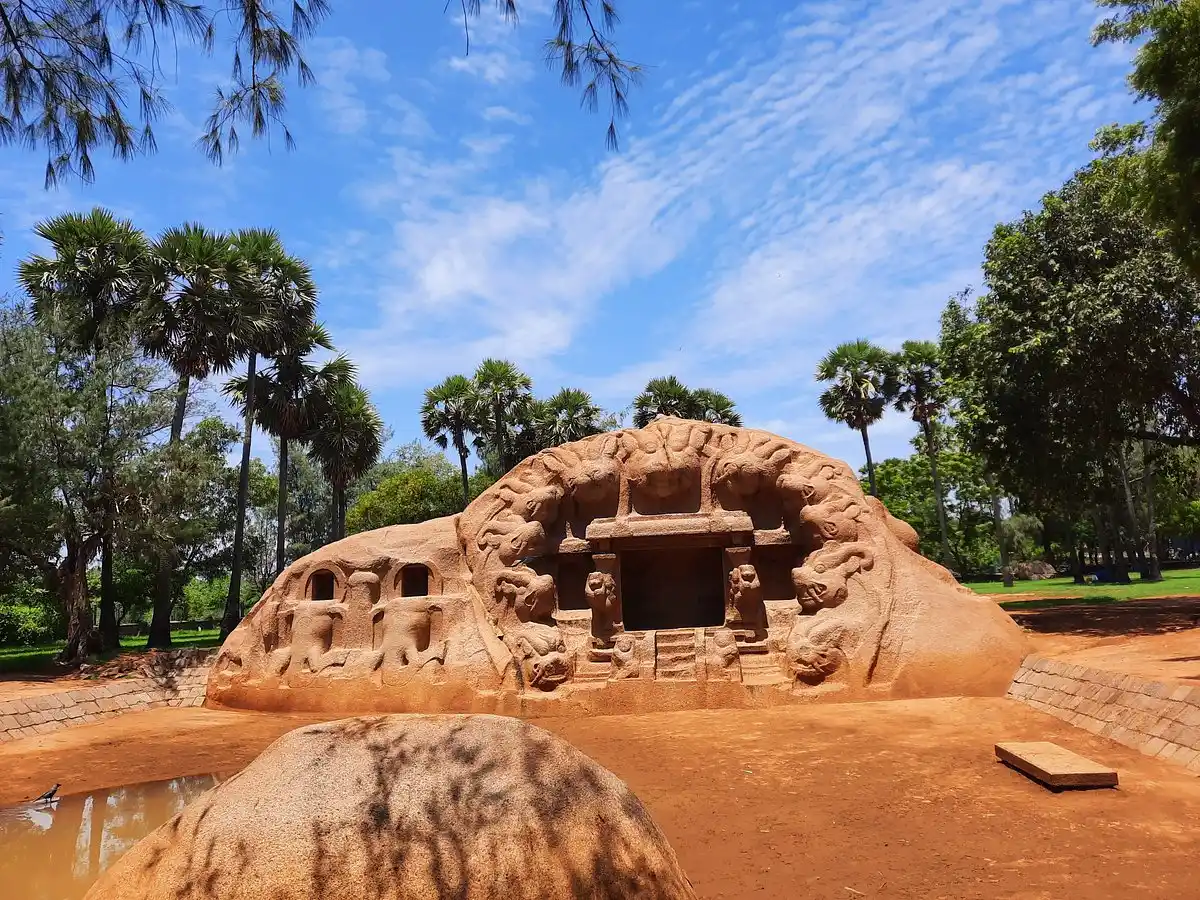
Visitors come to Tiger Cave to explore a unique Pallava-era rock-cut monument known for its carved tiger-head motifs and its setting near the Bay of Bengal. Located at Saluvankuppam, close to Mahabalipuram, it appeals to travelers interested in archaeology, architecture, and coastal landscapes.
The atmosphere is peaceful, with open lawns, granite outcrops, and sea breezes creating a relaxed environment. The monument is less crowded than many nearby heritage sites, allowing visitors to explore the carvings and surrounding grounds at a comfortable pace.
What makes Tiger Cave distinct is its open-air rock-cut shrine featuring sculpted yali (mythical lion-like creature) heads, commonly referred to as tiger heads, carved into the granite. Its blend of Pallava craftsmanship, coastal location, and proximity to Mahabalipuram's UNESCO-listed monuments makes it a rewarding stop for heritage travelers.
Tiger Cave is a historic rock-cut monument located at Saluvankuppam, near Chennai on the East Coast Road. It was built during the 8th century CE under the Pallava dynasty, most likely during the reign of King Narasimhavarman II (Rajasimha), a period known for the creation of several rock-cut temples and monuments in the Mamallapuram region.
Despite its name, Tiger Cave was not a natural cave or a tiger's habitat. The monument derives its name from the carved yali (mythical lion-like creatures) surrounding the entrance, which resemble tiger heads. Historians believe it may have functioned as a ceremonial pavilion or an open-air shrine associated with Pallava religious and royal activities.
Today, Tiger Cave is a protected monument maintained by the Archaeological Survey of India. As part of the historic landscape surrounding the UNESCO World Heritage Site of Mamallapuram, it attracts visitors interested in Pallava architecture, ancient rock-cut art, and South India's early medieval history.
The best time to visit Tiger Cave is from November to February, when the weather along the Coromandel Coast is pleasant for exploring the rock-cut monument and nearby beach. The site can be visited throughout the year, but cooler months provide a more comfortable experience for outdoor sightseeing.
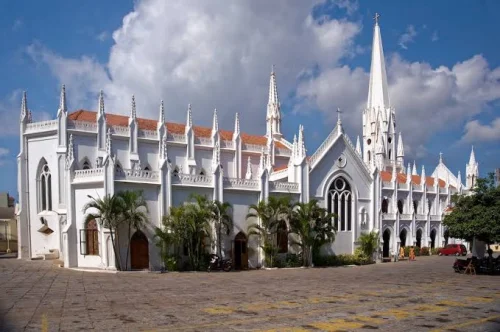 Church
Santhome Cathedral Basilica is a historic Roman Catholic church built over the tomb of Saint Thomas, located in Chennai, Tamil Nadu.
 Beach
Beach
Chennai Lighthouse is an operational lighthouse located on Marina Beach in Chennai, Tamil Nadu.
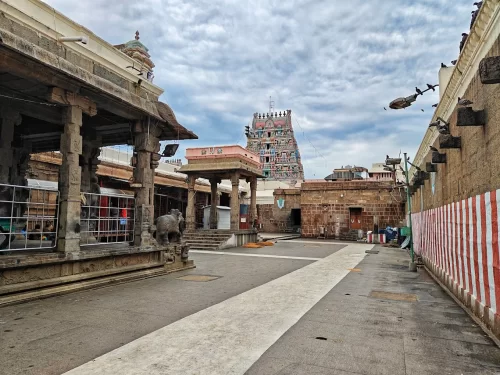 Temple
Arulmigu Sri Parthasarathyswamy Temple is a Hindu temple dedicated to Lord Vishnu located in the Triplicane area of Chennai, India.
Get customized Tamil Nadu tour planning designed around temple visit timing, seasonal weather comfort, road travel distances, and realistic pacing across regions. Whether you are visiting for architectural heritage, spiritual journeys, coastal relaxation,
⚡ Quick Response | 💰 Free consultation | 🕒 24×7 expert support

