Quick Facts About Triveni Sangam Kanyakumari
Quick Facts About Triveni Sangam, Kanyakumari
| Entry Fee | No entry fee (open to all visitors) |
|---|---|
| Timings | Open 24 hours; best visited during daylight |
| Altitude (m) | Sea level (0 m) |
| Ideal Visit Duration | 30 – 60 minutes |
| Best Time of Day | Early morning or late afternoon for sunrise/sunset views |
| Crowd Level | Moderate, higher during sunrise, sunset, and festivals |
| Distance from City Centre (km) | Approx. 0.5 km from central Kanyakumari |
| Walking Difficulty | Easy; flat open areas and paved pathways along the coast |
| Parking Available | Yes, near the coastal promenade and parking zones |
| Last Mile Access | Short walk from parking areas; accessible by auto-rickshaw and taxis |
| Suitable for Kids | Yes, open coastal areas are safe with supervision |
| Suitable for Seniors | Yes, walking is minimal and paths are even |
| Wheelchair Friendly | Partially; paved coastal paths are accessible but some uneven sections near the water |
Why Visit Triveni Sangam, Kanyakumari
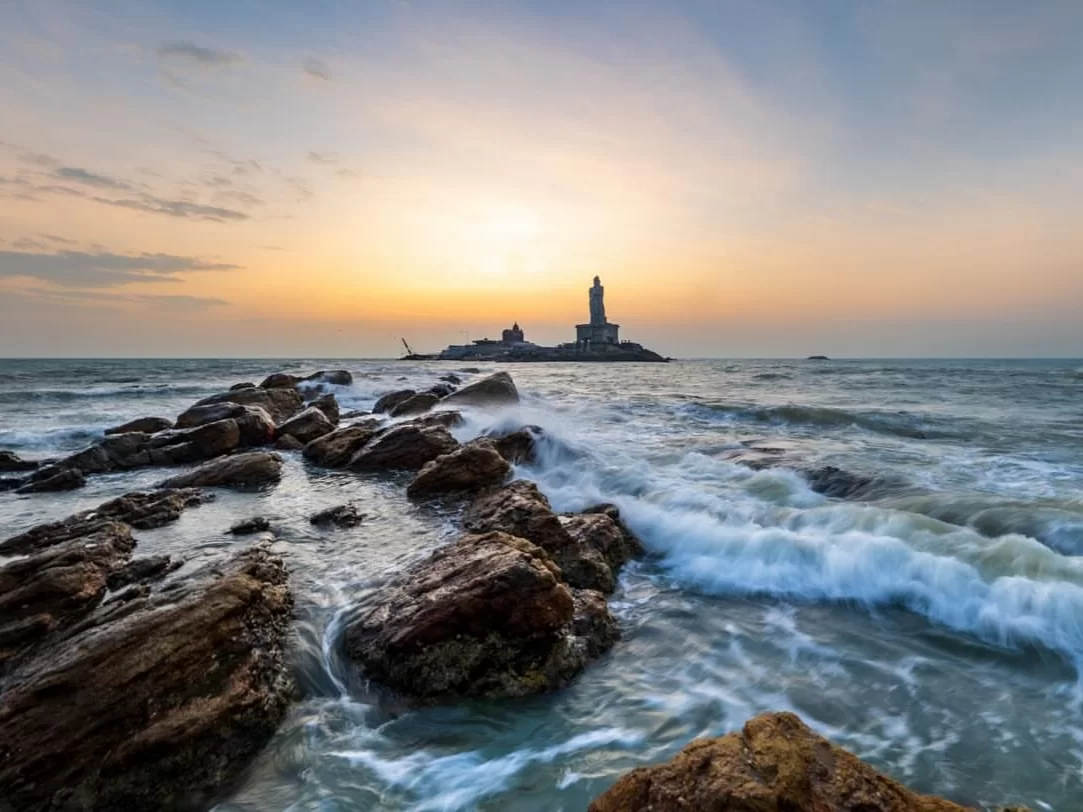
Visitors come to Triveni Sangam to witness the rare confluence of the Arabian Sea, Bay of Bengal, and Indian Ocean. The site is notable for its geographical significance and offers scenic views that attract tourists and photographers.
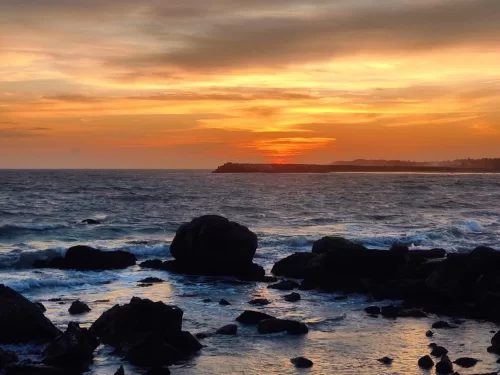
The on-ground atmosphere is tranquil with the sound of waves and open coastal vistas. Visitors can enjoy walking along the paved pathways, taking in the sea breeze, and observing the unique meeting point of three oceans.
What makes Triveni Sangam distinct is its combination of natural beauty and spiritual importance. It provides an unobstructed view of the ocean confluence, offering a unique experience for sightseeing, photography, and contemplative observation.
History of Triveni Sangam, Kanyakumari
Triveni Sangam holds cultural and religious significance as a sacred confluence point in Hindu tradition. Devotees consider the meeting of the three seas to be auspicious for ritual bathing and spiritual reflection.
The site has been visited for centuries by pilgrims and travelers who come to observe the natural confluence and participate in ceremonial practices, making it an enduring part of Kanyakumari’s spiritual and cultural heritage.
Best Time to Visit Triveni Sangam, Kanyakumari
Triveni Sangam can be visited year-round, but the most comfortable and visually clear experience occurs during cooler and drier months when sea conditions are calm and the viewing areas are pleasant.
- Ideal months: November to February for mild temperatures and calm seas.
- Weather during best season: Pleasant sea breeze, lower humidity, and clear skies enhance sightseeing and photography.
- Periods to avoid: April to June due to high heat and humidity; June to September during the monsoon season when rough seas may restrict access and reduce comfort.
How to Reach Triveni Sangam, Kanyakumari
- Nearest airport: Trivandrum International Airport (TRV), approximately 90 km from Kanyakumari. Travel by road takes around 2.5 to 3 hours depending on traffic.
- Nearest railway station: Kanyakumari Railway Station, about 1 km from the coastal viewing area at Triveni Sangam.
- By road: Accessible via local roads and the coastal promenade. Taxis, auto-rickshaws, and private vehicles are available from Kanyakumari town center.
- Last-mile connectivity: Short walk from parking areas or town roads to the viewing platform. Paved pathways make it easy to reach the confluence point safely.
- Travel note: Coastal winds can be strong; visitors should plan visits during calmer weather for safety and comfort.
What to Expect When You Visit Triveni Sangam, Kanyakumari
- Environment and surroundings: Open coastal area with panoramic views of the confluence of three oceans. Gentle sea breeze and sound of waves create a serene atmosphere.
- Facilities and amenities: Limited facilities including seating along the promenade and basic washrooms. Nearby food stalls and shops available in Kanyakumari town.
- Accessibility and movement: Flat, paved pathways make it easy to walk around the viewing area. Short distance from parking or transport drop-off points.
- Typical visitor behavior and conditions: Visitors include tourists and pilgrims observing the confluence. Higher footfall occurs during sunrise, sunset, weekends, and festivals.
- Safety considerations: Coastal winds can be strong; visitors should exercise caution near edges and supervise children, especially during high tide or rough seas.
Important Visitor Information for Triveni Sangam, Kanyakumari
- Crowd and weather notes: Moderate crowds, higher during sunrise, sunset, weekends, and festivals. Sea breeze and occasional high winds can affect comfort along the promenade.
- Peak visiting hours: Early morning (5:30 AM – 7:30 AM) and late afternoon (4:30 PM – 6:30 PM) are the busiest periods for sightseeing and photography.
- Quiet visiting hours: Mid-morning (8:00 AM – 10:00 AM) and mid-afternoon (2:00 PM – 4:00 PM) are generally less crowded and ideal for relaxed observation.
- Dress code: No formal dress code; comfortable clothing suitable for sun and wind exposure is recommended.
- Safety notes: Stay on paved paths, supervise children near the water, and exercise caution during high tide or strong wind conditions.
Photography and Viewpoints at Triveni Sangam, Kanyakumari
- Best viewpoints: Coastal promenade and viewing platforms provide unobstructed angles to capture the confluence of the Arabian Sea, Bay of Bengal, and Indian Ocean.
- Scenic angles: Sunrise and sunset offer dramatic lighting for photographs, with reflections on the water enhancing visual appeal.
- Lighting conditions: Early morning (sunrise) and late afternoon (sunset) provide soft, warm light ideal for photography. Midday light may be harsh and less flattering.
- Photography rules: Photography is allowed in public areas. Visitors should not enter restricted zones and should respect other tourists and pilgrims.
- Crowd and access factors: Weekends, holidays, and sunrise/sunset periods can be crowded, limiting clear shots. Mid-morning or mid-afternoon visits are preferable for unobstructed photography.