Arulmigu Sri Parthasarathyswamy Temple, Chennai, Tamil Nadu, India

Arulmigu Sri Parthasarathyswamy Temple , Chennai
The temple is known for its association with Lord Krishna in the form of Parthasarathy and has historical significance dating back several centuries. It is an active place of worship with daily rituals and attracts devotees and visitors throughout the year.

Quick Facts About Arulmigu Sri Parthasarathyswamy Temple

Arulmigu Sri Parthasarathy Swamy Temple, Chennai Quick Facts

Entry Fee No entry fee
Timings 06:00 AM – 12:30 PM and 04:00 PM – 09:00 PM; timings may vary slightly on festival days and special rituals
Altitude (m) Approximately 5–10 m above sea level (Triplicane coastal plain)
Ideal Visit Duration 1–2 hours
Best Time of Day Early morning during darshan or evening during temple aarti hours
Crowd Level High; especially during weekends, Vaishnava festivals, and special puja days
Distance from City Centre (km) Approximately 4 km from Chennai Central Railway Station
Walking Difficulty Easy; flat temple complex with short walking distances inside
Parking Available Limited roadside parking available around Triplicane area; often congested
Last Mile Access Direct road access; short walk from nearby streets to temple entrance
Suitable for Kids Yes
Suitable for Seniors Yes, though crowd density may be challenging during peak hours
Wheelchair Friendly Partially accessible; main pathways are usable but crowding and narrow sections may restrict movement

Why Visit Arulmigu Sri Parthasarathyswamy Temple, Chennai, Tamil Nadu

Visitors come to Arulmigu Sri Parthasarathyswamy Temple in Triplicane to worship Lord Vishnu in his Parthasarathy form, making it one of the important Vaishnavite temples in Chennai. It attracts devotees as well as travelers exploring the heritage stretch near Marina Beach.

The atmosphere is devotional and well-structured, with continuous rituals, temple bells, and steady movement of worshippers through its courtyards. Despite its location in a busy urban area, the temple maintains a distinct sense of order and spiritual focus within its precincts.

What makes this temple distinct is its long-standing role as a major Vaishnavite center in Chennai and its proximity to the coastal corridor of Triplicane. The combination of active worship, traditional Dravidian architecture, and easy access from the city center makes it a key cultural and religious landmark.

History of Arulmigu Sri Parthasarathyswamy Temple, Chennai, Tamil Nadu

Arulmigu Sri Parthasarathyswamy Temple, located in Triplicane, Chennai, is one of the oldest Vaishnavite temples in the city and is dedicated to Lord Krishna as Parthasarathy, the charioteer of Arjuna in the Mahabharata. The temple’s origins are associated with early medieval Tamil devotional traditions.

The temple is closely linked to the Alvar saints of the Bhakti movement, particularly Thirumangai Alvar, whose hymns mention the deity of Parthasarathy, establishing its significance in Vaishnavite religious history in Tamil Nadu.

Over time, the temple received expansions and patronage from various South Indian rulers, contributing to its present structure. It remains an active pilgrimage site and an important center of Sri Vaishnavism in Chennai.

Best Time to Visit Arulmigu Sri Parthasarathyswamy Temple, Chennai, Tamil Nadu

Arulmigu Sri Parthasarathyswamy Temple in Triplicane is best visited during cooler months when temple queues, heritage exploration, and walking around the historic coastal neighborhood can be managed comfortably.
  • Ideal Months: November to February is the most suitable period for visiting, especially for smooth darshan and exploring the temple’s historic surroundings.
  • Weather Conditions: These months generally bring milder coastal temperatures and reduced humidity, making it easier to navigate crowds and spend time inside the temple complex.
  • Periods to Avoid: April to June can be hot and humid, making daytime visits tiring. Monsoon months may also bring intermittent heavy rain that affects movement in the Triplicane area and nearby streets.

How to Reach Arulmigu Sri Parthasarathyswamy Temple, Chennai, Tamil Nadu

  • By Air: Chennai International Airport is the nearest airport, located about 20 km from Arulmigu Sri Parthasarathyswamy Temple in Triplicane. It is well connected to major domestic and international destinations. From the airport, taxis, app-based cabs, and metro-linked routes provide convenient access to the temple area.
  • By Train: Chennai Egmore Railway Station is the nearest major railhead, situated around 3 km away, while Chennai Central Railway Station is about 4 km away. Both stations offer excellent connectivity across India. From either station, taxis, auto-rickshaws, and city buses are easily available for last-mile travel.
  • By Road: The temple is located in Triplicane near Marina Beach in Chennai and is well connected via major city roads such as Kamarajar Salai and Anna Salai. Regular MTC buses, taxis, and auto-rickshaws operate frequently to the area. The locality experiences heavy traffic and limited parking, especially during festival days, weekends, and match days due to its proximity to Chepauk Stadium and Marina Beach.

What to Expect When You Visit Arulmigu Sri Parthasarathyswamy Temple, Chennai, Tamil Nadu

  • is a historic Vaishnavite temple located in the dense urban neighborhood of Triplicane, surrounded by residential lanes, small shops, and active city traffic.
  • The temple environment is traditional and continuously active, with daily rituals and a steady flow of devotees. Crowd levels increase significantly during festivals such as Vaikunta Ekadasi and other important Vaishnavite observances.
  • Access is via narrow city streets, and visitors often approach the temple on foot from nearby roads due to limited parking. Internal movement is organized but can feel congested during peak visiting hours.
  • Basic facilities include shops selling puja items, drinking water points, nearby eateries, and essential urban services within walking distance. However, space inside the temple premises is limited for large gatherings.
  • Visitors primarily come for darshan, participation in rituals, and brief temple visits. Waiting times can vary depending on crowd density, especially during weekends and festival days.
  • The temple follows strict traditional customs, including dress codes, footwear removal, and behavior guidelines inside sanctum areas. Photography may be restricted in inner prayer zones.
  • Overall, the experience is deeply devotional and urban in nature, with limited open space and high local footfall, reflecting its role as an active heritage temple within a busy city setting.

Important Visitor Information for Arulmigu Sri Parthasarathyswamy Temple, Chennai, Tamil Nadu

  • The temple experiences its highest visitor numbers during Vaikunta Ekadasi, Brahmotsavam, and weekends, while weekday mornings generally remain less crowded for darshan.
  • Early morning hours provide a calmer environment for worship and temple exploration, whereas evening aarti timings and festival days attract larger devotee gatherings.
  • Chennai’s coastal climate remains hot and humid for most of the year, with monsoon rains between October and December occasionally affecting movement around temple streets and queue areas.
  • Traditional attire is expected inside the temple, with clothing that respectfully covers shoulders and knees in accordance with Vaishnavite temple customs; footwear must be removed before entry.
  • The temple is located in the busy Triplicane area, where narrow streets can become heavily congested during peak hours, especially on festival days and weekends.
  • Visitors should remain cautious on stone flooring and crowded queue passages, particularly during peak darshan periods when movement near the sanctum becomes tightly packed.

Photography and Viewpoints at Arulmigu Sri Parthasarathyswamy Temple, Chennai, Tamil Nadu

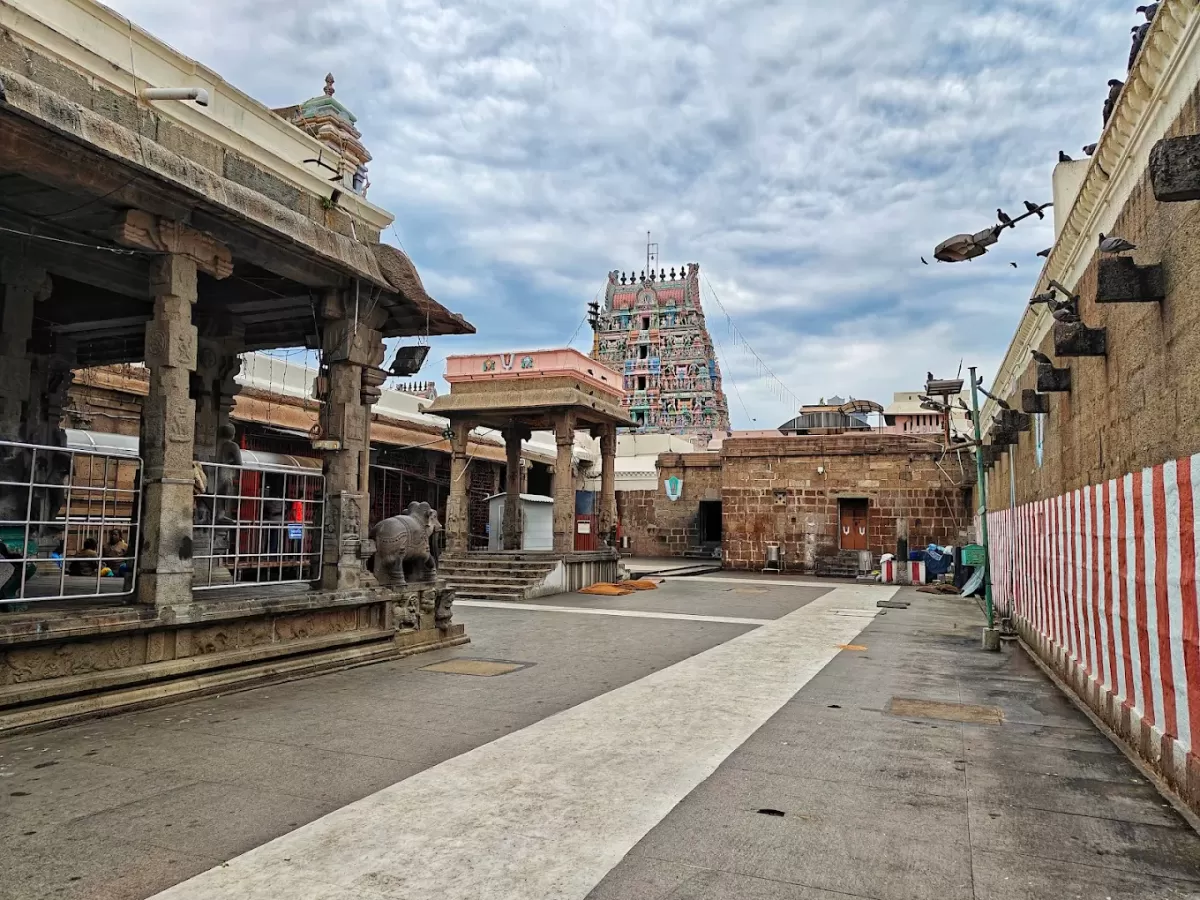
  • The main gopuram-facing courtyard provides the most structured framing, capturing the tall entrance tower, traditional Dravidian carvings, and the steady flow of devotees into the temple complex.
  • Side angles from the narrow Triplicane streets highlight the temple’s historic urban setting, where the gopuram rises above tightly packed heritage buildings and local activity.
  • The inner mandapam-facing corridor offers direct compositions of the sanctum approach, especially during non-peak hours when movement is minimal and architectural details are unobstructed.
  • Early morning darshan hours provide softer natural light on the gopuram and reduce crowd density, allowing clearer shots of the entrance façade before temple activity intensifies.
  • Evening aarti periods create a dense devotional atmosphere with lamps, chanting, and congregations, though crowd movement can limit stable framing near the central axis.
  • Photography inside the sanctum sanctorum is strictly restricted, and visitors are expected to follow temple rules regarding camera use and avoid flash during worship rituals.
  • Festival days such as Vaikunta Ekadasi and Brahmotsavam significantly increase footfall, often restricting access to the main courtyard viewpoints and surrounding streets.

Near By Attraction

Kandhakottam Arulmigu Muthukumarasamy Temple Temple

Kandhakottam Arulmigu Muthukumarasamy Temple

Kandhakottam Arulmigu Muthukumarasamy Temple is a Hindu temple dedicated to Lord Murugan located in the George Town area of Chennai, India.

Dr.M.G.R. and Dr.J.Jayalalitha Memorial Memorial

Dr.M.G.R. and Dr.J.Jayalalitha Memorial

Dr. M.G.R. & Dr. J. Jayalalithaa Memorial is a public memorial site located at the Marina Beach complex in Chennai, India.

Sri Anantha Padmanabha Swamy Temple, iconic golden gopuram temple in Thiruvananthapuram with sacred temple pond view Temple

Sri Anantha Padmanabha Swamy Temple

Historic Hindu temple dedicated to Lord Vishnu located in the heart of Chennai.

Frequently Asked Questions About Arulmigu Sri Parthasarathyswamy Temple

Arulmigu Sri Parthasarathyswamy Temple is one of Chennai's oldest Vaishnavite temples dedicated to Lord Krishna as Parthasarathy. It attracts devotees, heritage enthusiasts, and travelers interested in traditional Dravidian architecture, active rituals, and the historic Triplicane neighborhood.
The most comfortable period is from November to February when Chennai experiences relatively pleasant weather. Early morning darshan and evening aarti are ideal for a peaceful visit while avoiding the hotter part of the day.
The temple is generally open from 6:00 AM to 12:30 PM and again from 4:00 PM to 9:00 PM. Timings may change slightly during festivals and special religious ceremonies.
No entry fee is charged for visiting the temple. Devotees and tourists can enter freely for darshan, while voluntary donations and offerings may be made according to personal preference.
Most visitors spend around one to two hours exploring the temple, attending darshan, admiring the architecture, and experiencing the spiritual atmosphere before visiting nearby attractions in Chennai.
Limited roadside parking is available around the Triplicane area. Since the locality becomes congested during weekends and festivals, arriving early or using public transport is often more convenient.
Yes, the temple is generally suitable for senior citizens because walking distances are short and mostly flat. However, large festival crowds can make movement slower and more challenging.
The temple is partially wheelchair accessible through the main pathways. Some narrow areas and heavy crowds during peak periods may reduce ease of movement for wheelchair users.
Yes, children can comfortably visit the temple with their families. Parents should supervise younger children, especially during busy darshan hours when visitor movement becomes more crowded.
Photography is generally possible in permitted outdoor areas, but photography inside the sanctum and certain prayer areas is restricted. Visitors should always follow temple rules and staff instructions.
Visitors should wear modest clothing that respectfully covers the shoulders and knees. Footwear must be removed before entering the temple, following the traditional customs observed at the shrine.
Nearby attractions include Kandhakottam Arulmigu Muthukumarasamy Temple, Dr M G R and Dr J Jayalalithaa Memorial, Marina Beach area, and Sri Anantha Padmanabha Swamy Temple, making it easy to plan a broader Chennai sightseeing trip.

Loved this place ? Let’s Plan Your Tamil Nadu Trip

Get customized Tamil Nadu tour planning designed around temple visit timing, seasonal weather comfort, road travel distances, and realistic pacing across regions. Whether you are visiting for architectural heritage, spiritual journeys, coastal relaxation,

⚑ Quick Response | πŸ’° Free consultation | πŸ•’ 24Γ—7 expert support

×

Plan Your Trip