Quick Facts About Thiruvalluvar Statue
Quick Facts About Thiruvalluvar Statue, Kanyakumari
| Entry Fee | ?30 for Indian adults, ?20 for children, ?300 for foreign tourists |
|---|---|
| Timings | 8:30 AM to 4:30 PM (daily) |
| Altitude (m) | Approx. 133 m above sea level at the base platform |
| Ideal Visit Duration | 1 – 2 hours, including climb and viewing |
| Best Time of Day | Morning or late afternoon for clear views and cooler temperatures |
| Crowd Level | High during weekends, holidays, and sunrise/sunset hours |
| Distance from City Centre (km) | Approx. 7 km from Kanyakumari town centre |
| Walking Difficulty | Moderate; requires climbing stairs to reach the viewing platform |
| Parking Available | Yes, limited parking near the ferry and access pier |
| Last Mile Access | Accessible via ferry from the mainland pier; short walk and stairs from boat landing |
| Suitable for Kids | Yes, with supervision due to stairs and open platforms |
| Suitable for Seniors | Partially; stairs may be challenging, resting areas available at intervals |
| Wheelchair Friendly | No; access involves multiple steps and steep platforms |
Why Visit Thiruvalluvar Statue, Kanyakumari
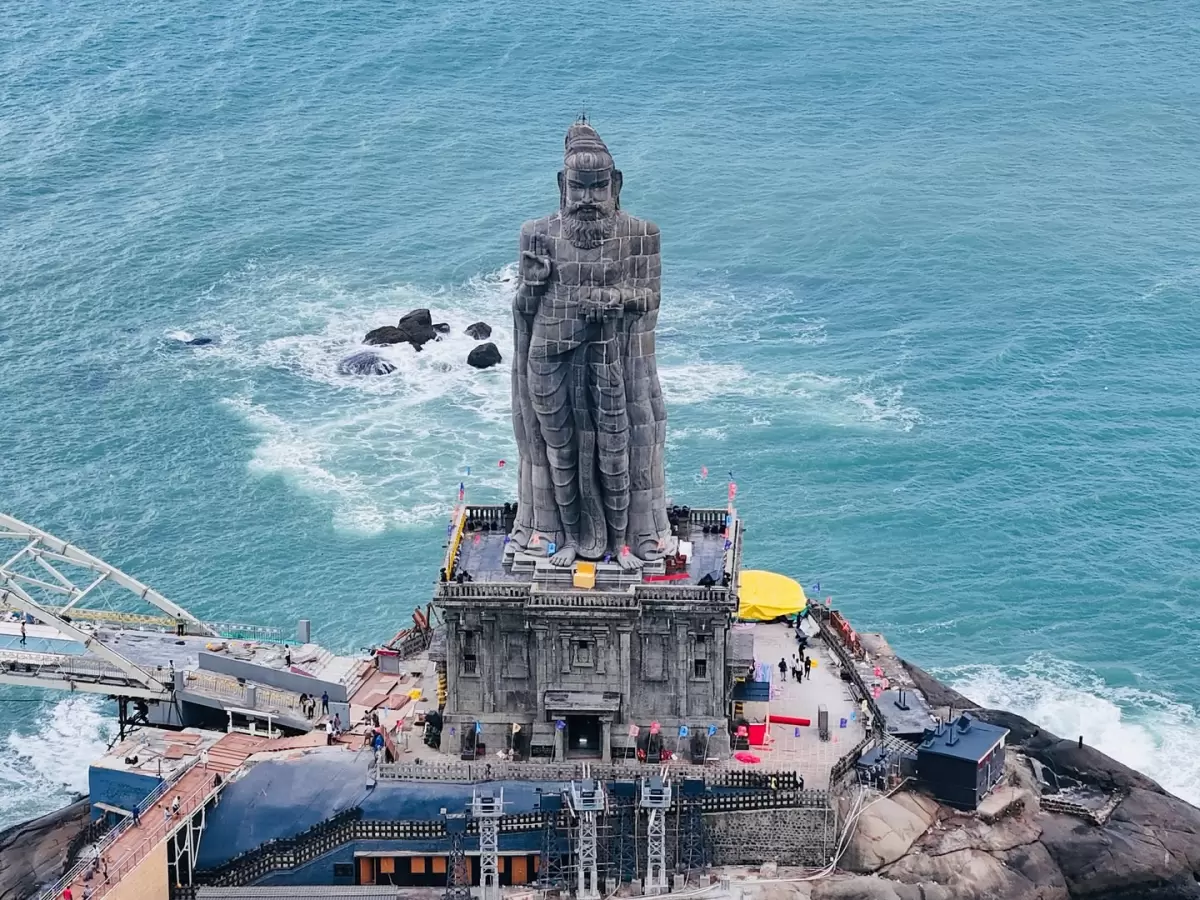
Visitors come to Thiruvalluvar Statue to witness the impressive 133-foot monument dedicated to the Tamil poet and philosopher, and to enjoy panoramic views of the meeting point of the Arabian Sea, Bay of Bengal, and Indian Ocean.
The on-ground atmosphere is serene and inspiring, with the statue situated on a small island accessed by ferry. Gentle sea breezes, open viewing platforms, and structured pathways enhance the visitor experience while providing safe observation points.
What makes this attraction distinct is its combination of cultural significance, architectural scale, and scenic location. The towering statue alongside the surrounding ocean vistas offers a unique photographic and educational experience for tourists.
History of Thiruvalluvar Statue, Kanyakumari
Thiruvalluvar Statue was conceived to honor the 2,000-year-old legacy of Tamil poet and philosopher Thiruvalluvar, author of the Tirukkural. Construction began in 1990 and the statue was inaugurated in 2000.
The monument symbolizes Tamil literary and philosophical heritage, with the 133-foot height representing the 133 chapters of the Tirukkural. It serves as a cultural landmark and an educational point of interest for visitors.
Best Time to Visit Thiruvalluvar Statue, Kanyakumari
Thiruvalluvar Statue can be visited year-round, but the most comfortable experience is during cooler months when ferry rides and outdoor viewing are pleasant and less affected by heat or rain.
- Ideal months: November to February for cooler temperatures and clear skies.
- Weather during best season: Mild winds, low humidity, and calm seas make ferry access and sightseeing enjoyable.
- Periods to avoid: April to June due to high heat and humidity; June to September during monsoon season with rough seas and occasional ferry service disruptions.
How to Reach Thiruvalluvar Statue, Kanyakumari
- Nearest airport: Trivandrum International Airport (TRV), approximately 95 km from Kanyakumari. Road travel takes about 2.5 to 3 hours depending on traffic.
- Nearest railway station: Kanyakumari Railway Station, around 7 km from the ferry point for Thiruvalluvar Statue access.
- By road: The statue is accessed via ferry from the mainland pier in Kanyakumari. Taxis, auto-rickshaws, and private vehicles connect the town to the ferry terminal.
- Last-mile connectivity: Ferries operate regularly to the island where the statue is located. Walkways and stairs lead visitors from the pier to the viewing platform. Crowds during peak hours may slow boarding.
- Travel note: Ferry service can be affected by high winds or rough seas, especially during monsoon months; plan visits accordingly.
What to Expect When You Visit Thiruvalluvar Statue, Kanyakumari
- Environment and surroundings: The statue is situated on a small island with open sea views on all sides, providing panoramic vistas of the confluence of three oceans.
- Facilities and amenities: Basic facilities are available at the ferry terminal, including seating and washrooms. Viewing platforms around the statue provide structured pathways for visitors.
- Accessibility and movement: Access requires a short ferry ride followed by climbing stairs to reach the viewing platform. Movement may be limited during peak crowd periods.
- Typical visitor behavior and conditions: The site attracts tourists and photography enthusiasts, with increased crowd density during mornings, evenings, and weekends. Visitors are expected to follow safety guidelines on stairways and platforms.
- Safety considerations: Strong sea winds, open platforms, and stairways require careful walking, especially for children and seniors. Ferry operations may be temporarily suspended during rough sea conditions.
Important Visitor Information for Thiruvalluvar Statue, Kanyakumari
- Crowd and weather notes: The site experiences high visitor numbers during weekends, holidays, and sunrise/sunset hours. Strong coastal winds and summer heat may affect comfort on open platforms.
- Peak visiting hours: Early morning (5:30 AM – 7:30 AM) and late afternoon (4:30 PM – 6:30 PM) are busiest due to ferry traffic and ideal lighting for views and photography.
- Quiet visiting hours: Mid-morning (8:00 AM – 10:00 AM) and mid-afternoon (2:00 PM – 4:00 PM) are generally less crowded for relaxed observation and photography.
- Dress code: No formal dress code, but comfortable, wind-resistant clothing is recommended due to open sea exposure.
- Safety notes: Stay on designated pathways and viewing platforms, supervise children, and avoid leaning over railings. Ferry operations may be suspended during rough seas or high winds.
Photography and Viewpoints at Thiruvalluvar Statue, Kanyakumari
- Best viewpoints: The main island platform and surrounding pier offer wide-angle views of the statue and the confluence of the Arabian Sea, Bay of Bengal, and Indian Ocean.
- Scenic angles: Approaching via ferry provides unique perspectives of the statue against the backdrop of the sea, ideal for capturing its full height and scale.
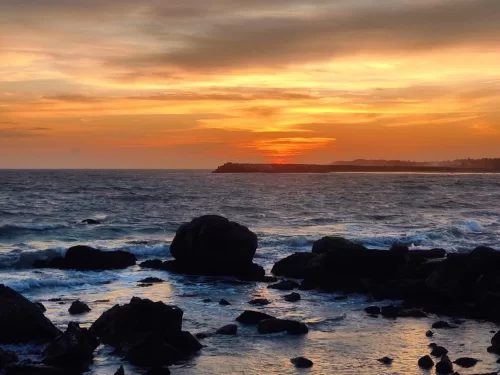
- Lighting conditions: Early morning (sunrise) and late afternoon (sunset) provide soft, directional light, enhancing shadows and textures on the statue and ocean backdrop.
- Photography rules: Photography is allowed on the island and pier, but visitors should not enter restricted areas or disrupt other tourists. No drone usage without authorization.
- Crowd impact: Weekends, holidays, and sunrise/sunset times can be crowded, making unobstructed shots challenging. Mid-morning or mid-afternoon visits are preferable for clearer photography.
- Access considerations: Stairs and ferry boarding areas limit use of tripods; handheld cameras or smartphones are recommended for safe and stable shots.