Quick Facts About Sri Vaikunta Perumal Temple
Sri Vaikunta Perumal Temple, Kanchipuram Quick Facts
| Entry Fee | Free |
|---|---|
| Timings | Generally open from 8:00 AM–12:30 PM and 4:00 PM–8:30 PM; timings may vary on festivals and special occasions. |
| Altitude (m) | Approximately 85 m |
| Ideal Visit Duration | 45 minutes–1 hour |
| Best Time of Day | Morning for peaceful darshan and better exploration of the temple architecture. |
| Crowd Level | Low to moderate on regular days; higher during Vaishnavite festivals and special temple events. |
| Distance from City Centre (km) | Approximately 2 km from Kanchipuram bus stand. |
| Walking Difficulty | Easy; the temple complex has mostly level pathways with minimal walking. |
| Parking Available | Limited parking is available near the temple streets. |
| Last Mile Access | Accessible by road, auto-rickshaw, taxi, and local buses, followed by a short walk to the entrance. |
| Suitable for Kids | Yes |
| Suitable for Seniors | Yes; the temple can be explored with minimal physical effort. |
| Wheelchair Friendly | Partially; the entrance area is accessible, but some inner sections may have steps due to the historic temple structure. |
Why Visit Sri Vaikunta Perumal Temple, Kanchipuram, Tamil Nadu
Visitors come to Sri Vaikunta Perumal Temple to explore one of Kanchipuram's important Vaishnavite temples dedicated to Lord Vishnu. The temple is especially valued for its Pallava-era architecture, detailed stone carvings, and its significance among the Divya Desams, the sacred Vishnu temples praised in Tamil devotional literature.
The atmosphere is peaceful and devotional, with visitors moving through the ancient stone corridors, pillared halls, and shrine areas while observing regular worship practices. The temple's quiet surroundings allow travelers to appreciate its architectural details and spiritual environment without the crowds found at some larger temples.
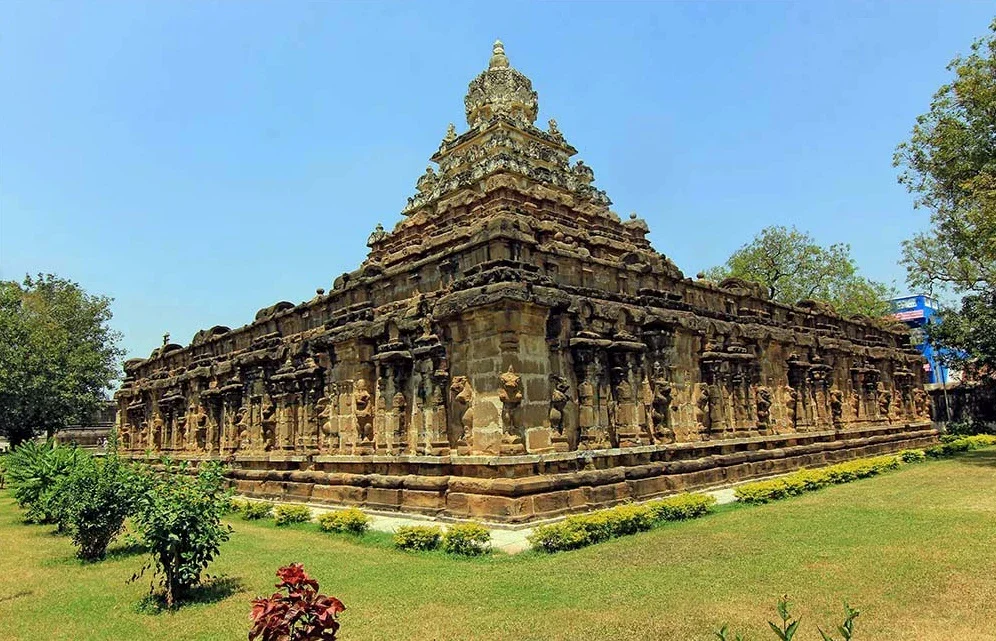
What makes Sri Vaikunta Perumal Temple distinct is its rare three-tiered sanctum design and extensive Pallava-period sculptural panels depicting religious and royal themes. Its combination of architectural innovation, religious importance, and historical artistry makes it a notable heritage site in Kanchipuram.
History of Sri Vaikunta Perumal Temple, Kanchipuram, Tamil Nadu
Sri Vaikunta Perumal Temple is an ancient Hindu temple dedicated to Lord Vishnu, located in Kanchipuram, Tamil Nadu. The temple was built in the 8th century CE by the Pallava king Nandivarman II (Pallavamalla) and is one of the finest examples of early Dravidian temple architecture.
The temple holds special importance in Vaishnavite tradition and is one of the 108 Divya Desams, the sacred Vishnu temples revered by the Alvars, the Tamil poet-saints of the Bhakti movement. The temple's stone inscriptions provide valuable information about the Pallava dynasty, including details of royal lineage and historical events.
Today, Sri Vaikunta Perumal Temple remains an important pilgrimage site and a protected heritage monument. Visitors come to admire its distinctive architectural features, sculpted panels depicting Pallava history, and its role in the religious and cultural heritage of Kanchipuram.
Best Time to Visit Sri Vaikunta Perumal Temple, Kanchipuram
The best time to visit Sri Vaikunta Perumal Temple is from November to February, when the weather in Kanchipuram is cooler and more comfortable for exploring the historic temple architecture. The temple remains open throughout the year, with special significance during Vaishnavite festivals and religious occasions.
- Ideal months: November to February for comfortable sightseeing, photography, and detailed exploration of the temple's Pallava-era architecture.
- Best season conditions: Mild temperatures and lower humidity make it easier to spend time observing the intricate stone carvings, sculptures, and historic features of the temple complex.
- Periods to avoid: April to June due to high temperatures, which can make daytime temple visits uncomfortable. October to December may experience rainfall from the northeast monsoon, which can occasionally affect outdoor travel plans.
How to Reach Sri Vaikunta Perumal Temple, Kanchipuram, Tamil Nadu
- Nearest Airport: The nearest airport is Chennai International Airport, approximately 75 km from Sri Vaikunta Perumal Temple. Taxis and app-based cabs are available from the airport to Kanchipuram. Public transport options are also available from Chennai.
- Nearest Railway Station: Kanchipuram Railway Station, about 3 km away, is the nearest railway station. It has local train connectivity with Chennai and nearby towns. Visitors can use auto-rickshaws, taxis, or local buses to reach the temple.
- By Road: Sri Vaikunta Perumal Temple is located in Kanchipuram town and is easily accessible by road from Chennai, Vellore, and other nearby cities. Government buses, private buses, taxis, and self-drive vehicles connect Kanchipuram regularly. The temple is located near the town centre and can be reached by auto-rickshaw or a short walk from nearby parking areas. Traffic can be heavier during weekends and major festival days.
What to Expect When You Visit Sri Vaikunta Perumal Temple, Kanchipuram, Tamil Nadu
- Sri Vaikunta Perumal Temple is an ancient Pallava-era temple dedicated to Lord Vishnu and is known for its stone architecture, historical inscriptions, and sculptural panels depicting aspects of Pallava history and Vaishnavite traditions.
- The temple is an active place of worship, where devotees perform prayers and rituals. Visitors can expect a peaceful religious atmosphere along with opportunities to observe traditional temple practices.
- The temple complex is compact and can be explored on foot. The stone floors and pathways are generally easy to navigate, but some areas may have uneven surfaces due to the age of the structure.
- Basic facilities such as footwear storage and limited visitor amenities are available near the temple. Restaurants, parking options, accommodation, and other services are easily accessible in Kanchipuram town.
- Visitors must remove footwear before entering the temple premises, dress modestly, and maintain silence inside the prayer areas. Respecting ongoing rituals and devotees is expected.
- Photography rules may vary within different sections of the temple. Visitors should follow instructions from temple authorities, especially near the sanctum and protected architectural features.
- The temple generally has fewer crowds compared with Kanchipuram's major pilgrimage sites, though visitor numbers increase during Vaishnavite festivals and special religious occasions.
- As the temple is a protected heritage monument, visitors should avoid touching carvings, damaging stonework, or using the premises in ways that may affect conservation efforts.
Important Visitor Information for Sri Vaikunta Perumal Temple, Kanchipuram
- Crowd and weather: Sri Vaikunta Perumal Temple generally has a peaceful atmosphere, with higher visitor numbers during Vaishnavite festivals, Vaikunta Ekadashi, weekends, and public holidays. Kanchipuram experiences hot summers, while the cooler months from November to February are more comfortable for temple visits.
- Peak and quiet visiting hours: Early morning hours are usually quieter and suitable for exploring the temple architecture peacefully. Festival days and late mornings often attract more devotees and heritage visitors.
- Dress code: As an active Hindu temple, visitors should wear modest and respectful clothing covering shoulders and knees. Footwear must be removed before entering the temple premises, and visitors should follow temple rules regarding photography and conduct.
- Safety and practical cautions: The temple has ancient stone structures and uneven flooring, which may become slippery during rainy weather. Visitors should avoid touching sculptures or carved surfaces, respect restricted areas, and maintain silence near worship areas. Photography restrictions should be followed as instructed by temple authorities.
Photography and Viewpoints at Sri Vaikunta Perumal Temple, Kanchipuram, Tamil Nadu
- The outer courtyard and entrance area provide the best viewpoints for capturing the temple's Pallava-era architecture, stone pillars, and traditional Dravidian design.
- Morning and late afternoon offer the most suitable lighting conditions, helping highlight the detailed carvings and structural features of the sandstone temple.
- Photography is generally permitted in the outer areas of the temple. Visitors should follow Archaeological Survey of India (ASI) guidelines and avoid photography in restricted areas or during worship activities if instructed.
- The pillared halls, sculpted panels, and inner corridors offer unique architectural photography opportunities, though visitors should move carefully due to the heritage nature of the monument.
- The temple usually remains quieter during weekday mornings, making it easier to capture architectural details. Larger crowds may be seen during festivals and peak pilgrimage hours, affecting access to some viewpoints.