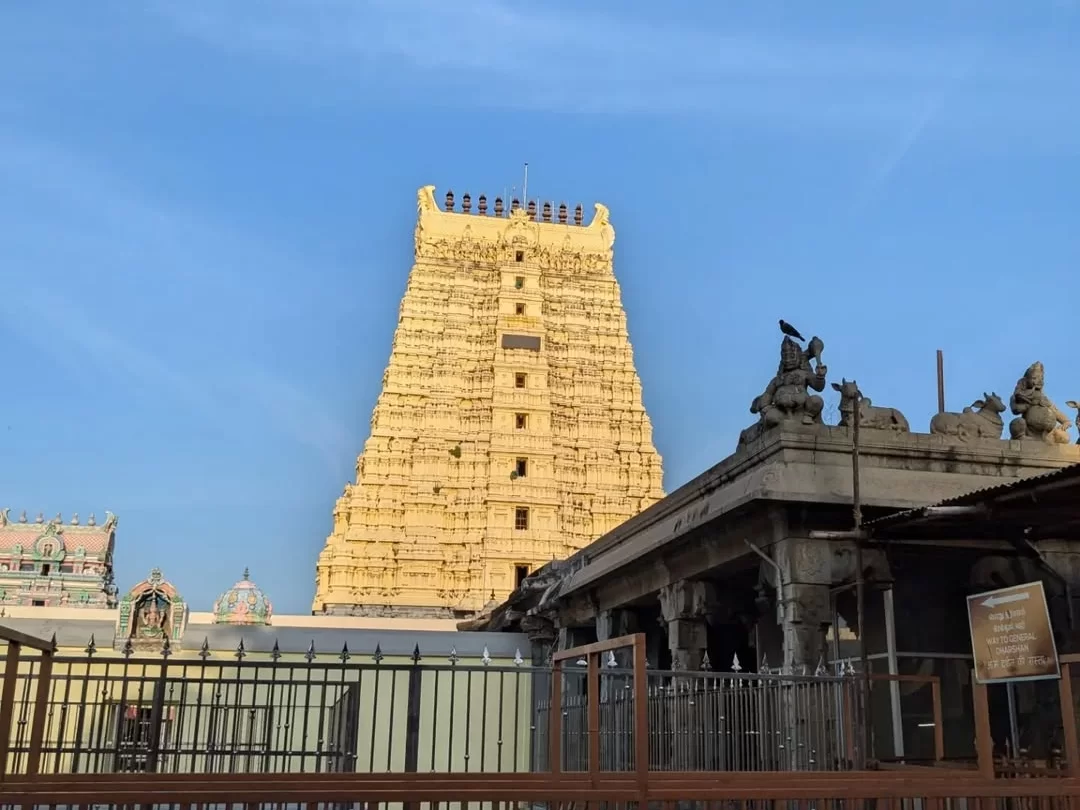
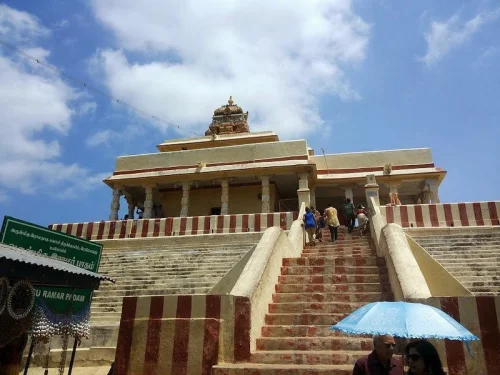
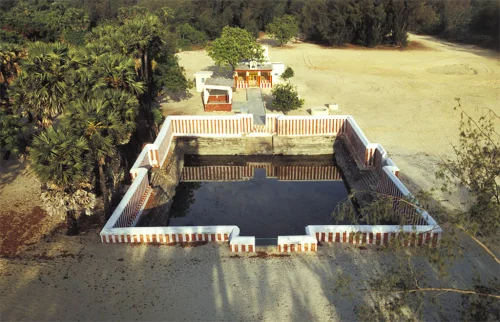
Sri Arulmigu Ramanathaswamy Temple, Rameswaram (Tamil Nadu, India)

Sri Arulmigu Ramanathaswamy Temple , Rameswaram
Tourists visit this temple for its spiritual importance, elaborate Dravidian architecture, and sacred corridors, which are considered among the longest in India. The temple is a key pilgrimage and heritage destination in the Kanyakumari region.

Quick Facts About Sri Arulmigu Ramanathaswamy Temple

Quick Facts About Sri Arulmigu Ramanathaswamy Temple, Rameswaram

Entry Fee No entry fee (free for all visitors)
Timings 5:30 AM to 12:30 PM and 4:00 PM to 9:00 PM (daily)
Altitude (m) Approx. 5 m above sea level
Ideal Visit Duration 2 – 3 hours
Best Time of Day Early morning or evening for rituals and cooler weather
Crowd Level High during festivals and weekends; moderate on weekdays
Distance from City Centre (km) Located in central Rameswaram town, within 1 km of the main bus stand
Walking Difficulty Moderate (long corridors and stone floors require extended walking)
Parking Available Yes, temple-managed parking available outside the main entrance
Last Mile Access Accessible via auto-rickshaw, taxi, and local buses from Rameswaram town
Suitable for Kids Yes (open courtyards and structured corridors allow safe exploration)
Suitable for Seniors Yes, but extended walking may be tiring; seating available in some areas
Wheelchair Friendly Partially accessible; long stone corridors and steps may limit full wheelchair access

Why Visit Sri Arulmigu Ramanathaswamy Temple, Rameswaram

Visitors come to Sri Arulmigu Ramanathaswamy Temple to participate in religious rituals, witness the sacred Shiva lingam, and experience one of the most important Char Dham pilgrimage sites in India. The temple’s long corridors and detailed stone carvings attract devotees and heritage enthusiasts alike.

The on-ground atmosphere is devotional and bustling, with priests performing poojas, pilgrims offering prayers, and ceremonial bells marking ritual times. The expansive corridors and mandapams provide structured pathways for smooth movement, even during busy periods.

What makes this temple distinct is its combination of spiritual significance and architectural scale. The temple’s long stone corridors, musical pillars, and extensive mandapams create a unique visitor experience compared to other South Indian temples, making it a key destination for both religious and cultural exploration.

History of Sri Arulmigu Ramanathaswamy Temple, Rameswaram

Sri Arulmigu Ramanathaswamy Temple is believed to have been established during the 12th century, with contributions from the Pandya and later the Nayak rulers. It has long been a significant center for Shaivite worship and pilgrimage in South India.

The temple is renowned for its long stone corridors, sculpted pillars, and musical pillars, which were developed and enhanced over successive centuries. These features reflect both the religious devotion and the architectural innovation of the period.

As one of the Char Dham pilgrimage sites, the temple continues to hold immense religious importance, attracting devotees for rituals, festivals, and ceremonial observances that preserve centuries-old Hindu traditions.

Best Time to Visit Sri Arulmigu Ramanathaswamy Temple, Rameswaram

Sri Arulmigu Ramanathaswamy Temple can be visited throughout the year, but the most comfortable experience is during cooler and drier months when walking through the long corridors and attending rituals is easier.
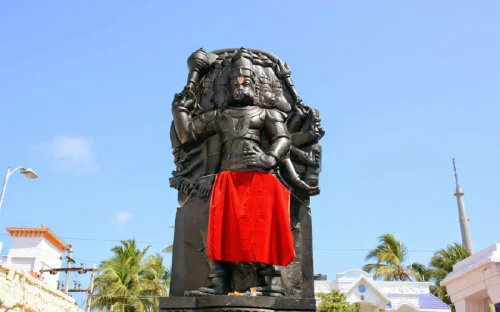
  • Ideal months: November to February (pleasant temperatures and lower humidity, suitable for exploring the temple complex).
  • Weather during best season: Mild mornings and evenings allow comfortable movement across courtyards, corridors, and mandapams without heat fatigue.
  • Good alternative months: October and early March (generally manageable weather, though afternoons can feel warmer).
  • Periods to avoid: April to June due to high heat and humidity, which can make long walks and outdoor waiting uncomfortable.
  • Monsoon caution: October to December can have heavy rains and occasional flooding in surrounding roads, affecting travel and access.

How to Reach Sri Arulmigu Ramanathaswamy Temple, Rameswaram

  • Nearest airport: Madurai Airport (IXM), approximately 170 km away. Travel time by road is around 3.5 to 4.5 hours depending on traffic and weather conditions.
  • Nearest railway station: Rameswaram Railway Station, about 1 km from the temple, providing convenient access for visitors arriving by train.
  • By road: The temple is well-connected by NH87 and local roads. Regular state-run and private buses operate from Nagercoil, Madurai, and other nearby cities to Rameswaram.
  • Last-mile connectivity: Auto-rickshaws, taxis, and local cabs are available from the railway station and bus stand. During festivals and peak pilgrimage periods, road congestion near the temple may cause minor delays.
  • Travel note: Roads leading to the temple are generally in good condition, but visitors should plan for possible delays during peak tourist season or special religious events.

What to Expect When You Visit Sri Arulmigu Ramanathaswamy Temple, Rameswaram

  • Temple environment: The complex features long stone corridors, open courtyards, mandapams, and towering gopurams, creating a devotional and structured atmosphere for visitors and pilgrims.
  • Walking and accessibility: Visitors should expect extended walking along stone-paved corridors and steps inside the temple. Most areas are flat, but mobility may be challenging for seniors or those with physical limitations.
  • Facilities: Basic amenities including drinking water, rest areas, and temple-managed parking are available. Food options are limited to nearby local shops outside the temple complex.
  • Visitor behavior: The temple sees a mix of devotees and tourists. Crowds increase during prayer times, weekends, and festivals, which can affect movement through narrow corridors and around the sanctum.
  • Atmosphere during rituals: Chanting, temple bells, and pooja ceremonies create an immersive spiritual environment. Visitors are expected to maintain respect and avoid disrupting ongoing rituals.
  • Photography: Photography is allowed in courtyards and exterior areas, but some interior halls and sanctum zones may have restrictions. Visitors should follow posted guidelines and temple staff instructions.

Important Visitor Information for Sri Arulmigu Ramanathaswamy Temple, Rameswaram

  • Crowd and weather notes: The temple can be crowded during festivals, weekends, and holidays. Summers are hot and humid, which can affect comfort in open courtyards and long corridors.
  • Peak visiting hours: Late morning to early afternoon (10:00 AM to 1:00 PM) and evening (5:00 PM to 8:00 PM) see the highest number of devotees and tourists.
  • Quiet visiting hours: Early morning just after opening (5:30 AM to 7:30 AM) provides a less crowded experience for exploring corridors and viewing rituals.
  • Dress code: Modest clothing is expected; visitors should avoid sleeveless tops, short skirts, or revealing attire inside the temple premises.
  • Footwear rules: Shoes must be removed before entering the inner temple areas. Visitors should be prepared for barefoot walking on stone flooring.
  • Safety notes: Stone steps, uneven flooring, and crowded corridors require careful walking. Visitors should also keep personal belongings secure during peak hours.
  • Access considerations: Narrow passages and long corridors during festival times can restrict movement. Plan visits accordingly if mobility or timing is a concern.

Photography and Viewpoints at Sri Arulmigu Ramanathaswamy Temple, Rameswaram

  • Best exterior viewpoints: The main entrance and temple courtyard provide wide-angle views of the towering gopuram and surrounding structures, ideal for capturing the full scale of the temple.
  • Interior photography: The long stone corridors and mandapams with musical pillars are key features, though lighting is dim and may require low-light camera settings.
  • Lighting considerations: Morning (5:30 AM – 8:30 AM) offers soft exterior lighting, while late afternoon (4:30 PM – 6:30 PM) reduces harsh shadows in courtyards.
  • Photography restrictions: Some sanctum and ritual areas restrict photography. Visitors must follow on-site signage and instructions from temple staff.
  • Crowd impact: Weekends, festivals, and ritual times can create crowded corridors, limiting clear photography opportunities. Early morning visits are ideal for unobstructed shots.
  • Access considerations: Narrow corridors and stone steps make tripods impractical; handheld cameras are recommended for interior and corridor shots.

Near By Attraction

Adam's Bridge (Rama Setu), scenic aerial view of the historic limestone shoals connecting India and Sri Lanka Tourist Attraction

Adam's Bridge Rama Setu

Adam's Bridge, also known as Rama Setu, is a chain of limestone shoals connecting Rameswaram in India to Mannar Island in Sri Lanka.

Arichal Munai Beach Dhanushkodi: Drone top-down Pamban road roundabout sandbar turquoise seas rock walls vehicles; India's lands end Ram Setu view. Beach

Arichal Munai Beach

Arichal Munai Beach is a remote coastal point near Dhanushkodi, known as the land’s edge where the Bay of Bengal and the Gulf of Mannar meet.

Kodanda Ramar Temple featuring the ornate gopuram, sacred tank, and shrines of Rama, Sita, and Lakshmana in Rameswaram. Temple

Kodanda Ramar Temple

Kodanda Ramar Temple is a historic Hindu temple in Rameswaram dedicated to Lord Rama, reflecting traditional Dravidian architecture.

Frequently Asked Questions About Sri Arulmigu Ramanathaswamy Temple

The best time to visit Sri Arulmigu Ramanathaswamy Temple is from October to March when the weather is more comfortable for temple visits. Early morning hours are usually less crowded.
Sri Arulmigu Ramanathaswamy Temple is generally open from early morning until late evening with specific breaks between rituals. Timings may vary slightly on special religious days.
There is no major entry fee for general darshan at Sri Arulmigu Ramanathaswamy Temple. Special entry tickets for quicker access may have separate charges.
Sri Arulmigu Ramanathaswamy Temple can be reached easily by taxi auto bus or private vehicle as it is well connected by road and rail. The temple is located close to the main town area.
Most visitors spend one to two hours at Sri Arulmigu Ramanathaswamy Temple depending on crowd levels. Additional time may be needed for special rituals and holy water baths.
Sri Arulmigu Ramanathaswamy Temple conducts daily poojas and special rituals throughout the day. Devotees often participate in sacred water bathing ceremonies within the temple premises.
Visitors to Sri Arulmigu Ramanathaswamy Temple should wear modest traditional attire. Footwear must be removed before entering the temple complex.
Special darshan tickets are available at Sri Arulmigu Ramanathaswamy Temple for those who prefer shorter waiting times. Availability may vary during peak pilgrimage periods.
Sri Arulmigu Ramanathaswamy Temple can be visited during festival season for a more elaborate spiritual experience. Visitors should expect larger crowds during major celebrations.
Sri Arulmigu Ramanathaswamy Temple can be combined with nearby beaches pilgrimage sites and coastal viewpoints. These attractions are usually accessible within short travel distance.

Loved this place ? Let’s Plan Your Tamil Nadu Trip

Get customized Tamil Nadu tour planning designed around temple visit timing, seasonal weather comfort, road travel distances, and realistic pacing across regions. Whether you are visiting for architectural heritage, spiritual journeys, coastal relaxation,

⚡ Quick Response | 💰 Free consultation | 🕒 24×7 expert support

×

Plan Your Trip