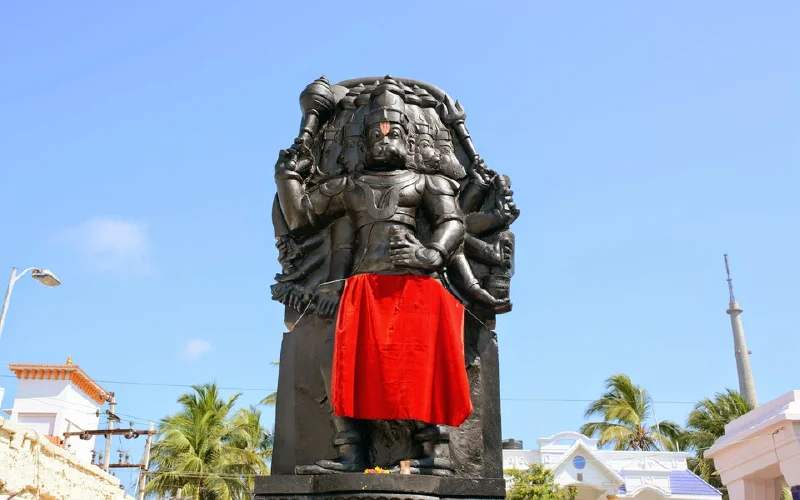
Sri Panchmukhi Hanuman Temple and Floating Stones, Rameswaram, Tamil Nadu, India

Sri Panchmukhi Hanuman temple and Floating Stones , Rameswaram
The temple is an important religious site in the Rameswaram pilgrimage circuit and houses a five-faced Hanuman idol along with stones believed by devotees to have been used in the construction of the Ram Setu. Visitors come for prayers, religious beliefs, and to explore a site connected with local traditions.

Quick Facts About Sri Panchmukhi Hanuman temple and Floating Stones

Sri Panchmukhi Hanuman Temple and Floating Stones, Rameswaram Quick Facts

Entry Fee Free
Timings Generally 6:00 AM–8:00 PM; timings may vary during festivals and special occasions.
Altitude (m) Approximately 10 m
Ideal Visit Duration 30 minutes–1 hour
Best Time of Day Morning or evening for a comfortable visit and less heat.
Crowd Level Moderate; higher during weekends, holidays, and peak pilgrimage periods.
Distance from City Centre (km) Approximately 2 km from Rameswaram town centre.
Walking Difficulty Easy; the temple can be accessed with a short walk from the parking area.
Parking Available Yes, limited parking is available near the temple.
Last Mile Access Accessible by motorable road, followed by a short walk to the temple entrance.
Suitable for Kids Yes
Suitable for Seniors Yes; minimal walking is required, but care should be taken during crowded periods.
Wheelchair Friendly Partially; the approach area is accessible, but some sections inside may have steps or uneven surfaces.

Why Visit Sri Panchmukhi Hanuman Temple and Floating Stones, Rameswaram

Visitors come to Sri Panchmukhi Hanuman Temple to see the five-faced form of Lord Hanuman and to explore its connection with the religious traditions of Rameswaram. The temple is also known for displaying stones that are locally associated with the construction of the Ram Setu mentioned in the Ramayana.

The atmosphere is devotional and simple, with pilgrims offering prayers and viewing the sacred objects preserved inside the temple. The temple area is located near other important Rameswaram attractions, making it a common stop during local pilgrimage tours.

What makes Sri Panchmukhi Hanuman Temple distinct is the combination of a unique Hanuman shrine and the display of floating stones connected with local beliefs. It offers visitors an opportunity to explore the religious stories, traditions, and cultural practices that are closely linked with Rameswaram.

History of Sri Panchmukhi Hanuman Temple and Floating Stones, Rameswaram

Sri Panchmukhi Hanuman Temple is a revered Hindu shrine located near the Ramanathaswamy Temple in Rameswaram, Tamil Nadu. The temple is dedicated to Lord Hanuman in his five-faced form (Panchmukhi Hanuman) and has been an important place of worship for devotees visiting the Rameswaram pilgrimage circuit.

According to Hindu tradition, the Panchmukhi form of Lord Hanuman is associated with an episode from the Ramayana in which Hanuman assumed five faces to defeat the demon Mahiravana. The temple also displays porous stones believed by devotees to be connected with the construction of the Ram Setu (bridge) built by Lord Rama's army. These religious beliefs are part of local tradition and are not verified historical records.

Today, Sri Panchmukhi Hanuman Temple is visited by pilgrims who come to seek blessings and view the floating stones displayed within the shrine. The temple remains a notable stop for visitors exploring the sacred sites and Ramayana-associated locations of Rameswaram.

Best Time to Visit Sri Panchmukhi Hanuman Temple and Floating Stones, Rameswaram

The best time to visit Sri Panchmukhi Hanuman Temple and Floating Stones is from October to March, when the weather in Rameswaram is more comfortable for temple visits and local sightseeing. The temple remains open throughout the year and is an important stop for pilgrims visiting the Ramanathapuram region.
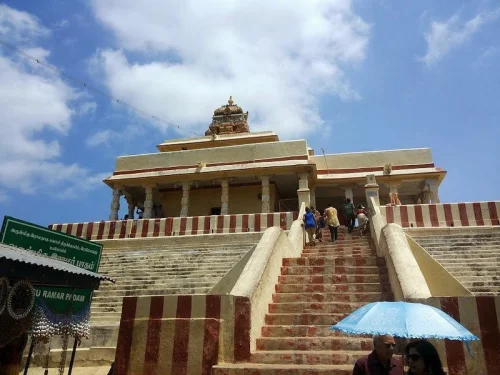
  • Ideal months: October to March for pleasant temperatures and comfortable exploration of the temple and nearby pilgrimage attractions.
  • Best season conditions: Cooler mornings and evenings make it easier to spend time at the temple, view the Panchmukhi Hanuman idol, and see the preserved floating stones displayed at the shrine.
  • Periods to avoid: April to June due to high temperatures and humidity, which can make daytime visits uncomfortable. October to December may receive occasional northeast monsoon showers, so checking weather conditions before outdoor visits is advisable.

How to Reach Sri Panchmukhi Hanuman Temple and Floating Stones, Rameswaram

  • Nearest Airport: The nearest airport is Madurai Airport, approximately 175 km from Sri Panchmukhi Hanuman Temple. Taxis and buses are available from Madurai to Rameswaram, followed by local transport to the temple.
  • Nearest Railway Station: Rameswaram Railway Station, around 2 km away, is the nearest railhead with regular train connectivity to Madurai, Chennai, and other major cities. Auto-rickshaws, taxis, and local buses are easily available from the station.
  • By Road: Sri Panchmukhi Hanuman Temple is located near the main temple area of Rameswaram and is easily accessible by road. Visitors can reach the temple by private vehicle, taxi, auto-rickshaw, or local buses from Rameswaram town. The temple is close to other major attractions, and the final approach requires only a short walk from the parking area. Roads remain accessible throughout the year, though crowd levels are higher during weekends, festivals, and pilgrimage seasons.

What to Expect When You Visit Sri Panchmukhi Hanuman Temple and Floating Stones, Rameswaram

  • Sri Panchmukhi Hanuman Temple is a small but significant Hindu temple in Rameswaram, known for the five-faced form of Lord Hanuman and the display of stones traditionally associated with the Ramayana.
  • The temple has a simple layout with a main shrine, prayer area, and a section where visitors can see the floating stone display. The atmosphere is generally devotional, with pilgrims offering prayers and viewing the exhibits.
  • The temple is located within Rameswaram town and can be easily reached by road. Visitors need to walk a short distance from nearby parking areas, especially during busy hours when vehicle access may be restricted.
  • Basic facilities such as parking, drinking water, small shops selling flowers and puja items, and local eateries are available in the surrounding area. Facilities inside the temple complex are limited.
  • Visitors should remove footwear before entering the temple premises, dress modestly, and respect ongoing religious activities. The temple is an active place of worship rather than only a sightseeing location.
  • The temple generally receives a steady number of devotees, with larger crowds during weekends, festivals, and pilgrimage seasons connected with Rameswaram temple visits.
  • Photography rules may vary inside the shrine area and around religious displays. Visitors should follow instructions from temple authorities before taking photographs.
  • The temple visit usually requires limited walking and can be completed within a short duration. Summer afternoons can be hot in Rameswaram, so morning or evening visits are more comfortable.

Important Visitor Information for Sri Panchmukhi Hanuman Temple and Floating Stones, Rameswaram

  • Crowd and weather: The temple receives more visitors during weekends, public holidays, and major Hindu festivals, especially during peak pilgrimage seasons in Rameswaram. The region has a hot and humid climate for most of the year, while the northeast monsoon (October–December) may bring rain and occasional travel disruptions.
  • Peak and quiet visiting hours: Early morning is generally the most comfortable time for darshan with fewer crowds and cooler temperatures. Late morning and evening hours often see increased visitor movement, particularly during holiday periods.
  • Dress code: Sri Panchmukhi Hanuman Temple is an active Hindu shrine. Visitors should wear modest clothing suitable for temple visits, and footwear must be removed before entering the temple premises.
  • Safety and practical cautions: The temple area can become crowded during peak pilgrimage days, so visitors should keep personal belongings secure and follow the queue system. Handle religious exhibits, including the floating stones displayed at the temple, only as permitted by temple authorities. Carry water during summer visits due to the hot coastal climate.

Photography and Viewpoints at Sri Panchmukhi Hanuman Temple and Floating Stones, Rameswaram

  • The temple entrance, Panchmukhi Hanuman shrine area, and the display area of the floating stones are the main locations for photography, showcasing the religious significance and unique exhibits of the temple.
  • Morning hours are suitable for photography as the temple premises are usually less crowded and natural light is softer for capturing the exterior structure and surroundings.
  • Photography is generally allowed in the outer temple areas and around the floating stone display. Visitors should follow temple instructions, as photography may be restricted near certain prayer areas or during rituals.
  • The temple can become crowded during weekends, festivals, and peak pilgrimage seasons, which may limit clear photographs of the shrine and floating stone display.
  • The entrance area and nearby open spaces provide better angles for capturing the temple architecture, while close-up photographs of religious objects should be taken respectfully and according to local guidelines.

Near By Attraction

Gandhamadhana Parvatham Temple

Gandhamadhana Parvatham

Gandhamadhana Parvatham is the highest natural point on Rameswaram Island, located in Rameswaram, Tamil Nadu.
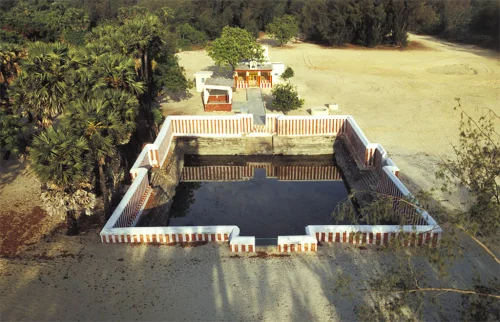
Jada Theertham Sivan Temple Temple

Jada Theertham Sivan Temple

Jada Theertham Sivan Temple is a sacred Hindu temple located near Rameswaram in Tamil Nadu, associated with the Ramayana.
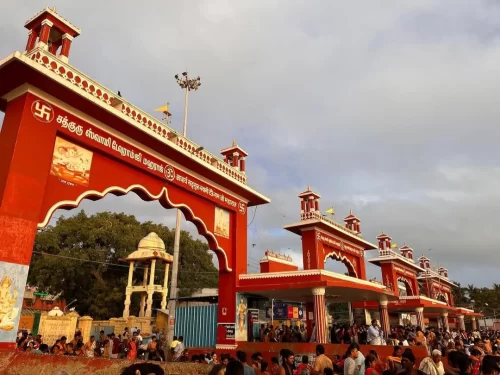
Agni Teertham Rameshwaram Tamil Nadu red Tamil arch gateway devotees temple entrance cloudy sky trees, perfect South India temple pilgrimage tour package. Sacred River Ghat

Agni Teertham

Agni Teertham is a sacred beach located in Rameswaram, Tamil Nadu, along the Bay of Bengal, considered one of the most important holy bathing sites in Hindu tradition.

Frequently Asked Questions About Sri Panchmukhi Hanuman temple and Floating Stones

Sri Panchmukhi Hanuman Temple and Floating Stones is famous for its spiritual significance, devotion to Lord Hanuman, and the legendary floating stones associated with the Ramayana. It attracts devotees and visitors interested in mythology and religious heritage.
Visitors come to Sri Panchmukhi Hanuman Temple and Floating Stones to seek the blessings of Lord Hanuman, witness the sacred floating stones, and learn about the site's connection with the Ramayana.
The special features of Sri Panchmukhi Hanuman Temple and Floating Stones include the Panchmukhi Hanuman idol, the display of floating stones believed to be linked to Ram Setu, and its peaceful spiritual atmosphere.
The best time to visit Sri Panchmukhi Hanuman Temple and Floating Stones is from October to March when the weather is pleasant. Festival periods are also ideal for experiencing special prayers and religious celebrations.
Sri Panchmukhi Hanuman Temple and Floating Stones is generally open during morning and evening hours for devotees. Visitors should check the latest darshan timings before planning their visit, especially during festivals and special occasions.
No entry fee is required to visit Sri Panchmukhi Hanuman Temple and Floating Stones. Visitors can enter the temple premises free of charge, while donations and special poojas are optional.
Parking facilities are available near Sri Panchmukhi Hanuman Temple and Floating Stones. Visitors can park their private vehicles in designated parking areas and walk a short distance to reach the temple entrance.
Visitors can reach Sri Panchmukhi Hanuman Temple and Floating Stones by private car, local cab, auto rickshaw, or tourist vehicle. The temple is well connected by road and easily accessible from nearby attractions.
The nearest airport to Sri Panchmukhi Hanuman Temple and Floating Stones is Madurai Airport, located around 175 km away. Visitors can hire a private car, local cab, auto rickshaw, or tourist vehicle for convenient travel.
The nearest railway station to Sri Panchmukhi Hanuman Temple and Floating Stones is Rameswaram Railway Station, located around 3 km away. Visitors can continue by local cab, auto rickshaw, private car, or tourist vehicle.
Visitors should wear modest and traditional clothing while visiting Sri Panchmukhi Hanuman Temple and Floating Stones. Avoid wearing shorts, sleeveless outfits, or revealing clothes to respect temple customs and religious practices.
Mobile phones and cameras may have restrictions inside certain areas of Sri Panchmukhi Hanuman Temple and Floating Stones. Visitors should follow temple guidelines and avoid photography where it is prohibited.
Visitors should maintain cleanliness and respect religious traditions before visiting Sri Panchmukhi Hanuman Temple and Floating Stones. Avoiding non vegetarian food, alcohol, smoking, and tobacco is recommended before entering the temple premises.
Sri Panchmukhi Hanuman Temple and Floating Stones is suitable for families and senior citizens. The temple offers a peaceful spiritual environment with convenient access for visitors of all age groups.
Visitors should maintain silence, respect temple rituals, follow queue arrangements, keep the premises clean, and follow the instructions issued by temple authorities throughout their visit.
Nearby attractions from Sri Panchmukhi Hanuman Temple and Floating Stones include Ramanathaswamy Temple, Agni Theertham, Gandhamadhana Parvatham, Dhanushkodi, and other popular sightseeing places.

Loved this place ? Let’s Plan Your Tamil Nadu Trip

Get customized Tamil Nadu tour planning designed around temple visit timing, seasonal weather comfort, road travel distances, and realistic pacing across regions. Whether you are visiting for architectural heritage, spiritual journeys, coastal relaxation,

⚑ Quick Response | πŸ’° Free consultation | πŸ•’ 24Γ—7 expert support

×

Plan Your Trip