Quick Facts About Moir Point
Quick Facts About Moir Point, Kodaikanal
| Entry Fee | Paid entry (usually collected as part of the forest/check-post route fee; charges may vary depending on permit rules) |
|---|---|
| Timings | Accessible during daytime hours (typically covered on Berijam Lake route; entry depends on forest check-post timings) |
| Altitude (m) | Approx. 2,300 m above sea level |
| Ideal Visit Duration | 10 minutes – 25 minutes |
| Best Time of Day | Morning for clearer valley visibility; late afternoon can be misty |
| Crowd Level | Moderate (higher during peak season and when forest-route taxis arrive in groups) |
| Distance from City Centre (km) | Approx. 10–12 km from Kodaikanal town centre |
| Walking Difficulty | Easy (short walk from roadside to viewpoint area) |
| Parking Available | Limited roadside parking available (space depends on traffic on the Berijam route) |
| Last Mile Access | Accessible by forest-route taxi and private vehicles (subject to permit/check-post entry rules) |
| Suitable for Kids | Yes (requires supervision near open edges) |
| Suitable for Seniors | Yes (minimal walking required) |
| Wheelchair Friendly | Partially (surface may be uneven and space is limited near the viewing edge) |
Why Visit Moir Point, Kodaikanal
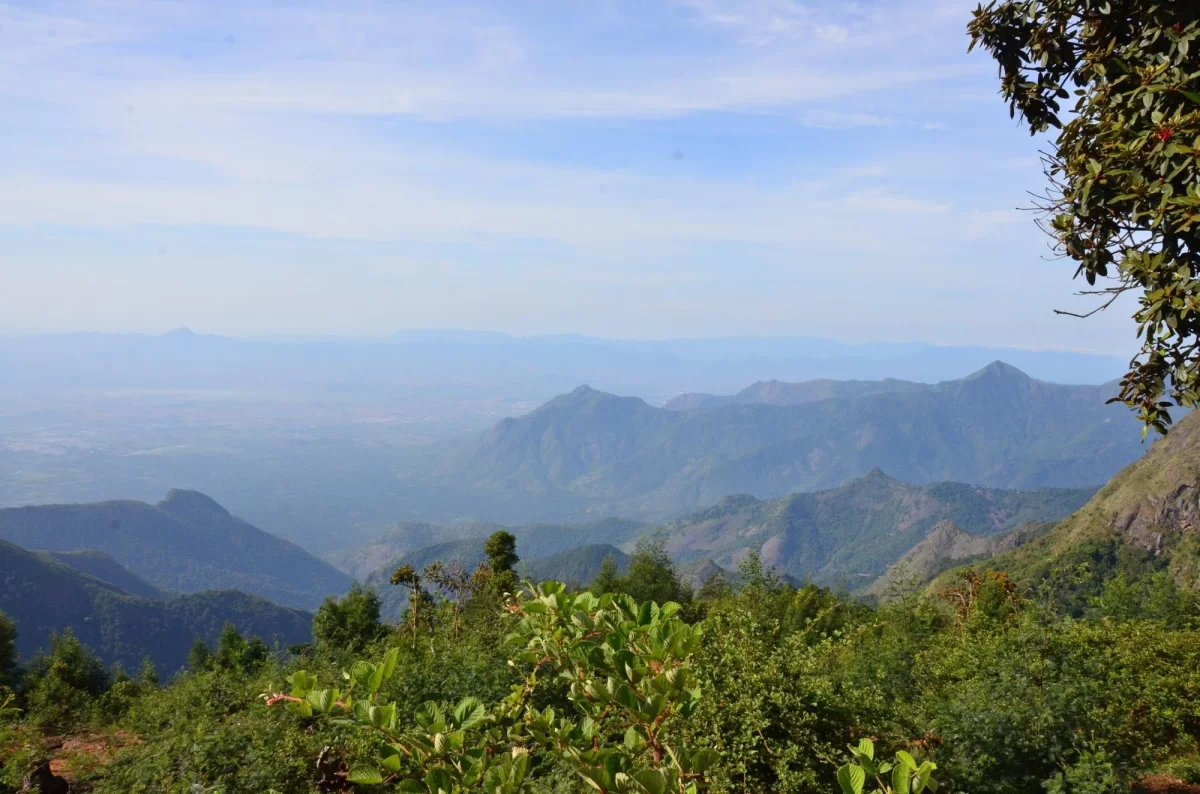
Visitors come to Moir Point for its open valley views and as a quick stop on the Berijam Lake forest route. It is mainly visited for short sightseeing breaks and photography while traveling through the higher-altitude side of Kodaikanal.
The on-ground atmosphere is cool and windy, with forested surroundings and changing mist conditions that are common on this route. Since it is a roadside viewpoint, the experience is brief, and the area often feels active when sightseeing taxis stop together.
What makes Moir Point distinct is its wide-angle visibility over the hills without requiring any trek or long walking. The viewpoint offers a different landscape feel compared to central Kodaikanal attractions, with higher elevation air and a clearer sense of the Palani hill slopes when weather is open.
History of Moir Point, Kodaikanal
Moir Point is named after Sir Thomas Moir, a former British administrator associated with the early development period of Kodaikanal as a hill station. The viewpoint became a marked stop on the forest-side route leading toward Berijam Lake and nearby scenic points.
Unlike monuments or heritage structures, Moir Point is primarily a designated natural viewpoint created for travelers to pause and observe the surrounding Palani hill landscape. Its importance is linked to the established sightseeing circuit of Kodaikanal rather than any cultural or religious significance.
Best Time to Visit Moir Point, Kodaikanal
Moir Point is best visited when the Berijam route has clearer skies, as the viewpoint experience depends mainly on visibility over the valley and hill slopes. During monsoon months, mist and rain can reduce the view and make roadside stopping less comfortable.
- Ideal months: October to March for clearer weather and comfortable temperatures; April to early June is also suitable before heavy monsoon mist becomes frequent.
- Best-season weather: Cool and windy conditions with better long-distance visibility across the hills, especially in the morning hours.
- Periods to avoid: July to September due to frequent rain, slippery roadside conditions, and dense fog that often blocks the valley view.
How to Reach Moir Point, Kodaikanal
- Nearest airport: Madurai Airport (IXM), approx. 120–130 km from Kodaikanal. From Madurai, travelers typically reach Kodaikanal by taxi or private cab via the ghat road route.
- Nearest railway station: Kodai Road Railway Station is the closest railhead, located around 80–90 km from Kodaikanal town. From Kodai Road, taxis and buses are available for the uphill journey to Kodaikanal.
- By road: Moir Point is located on the forest-side route leading toward Berijam Lake and other viewpoints. It is reached by road from Kodaikanal town through established hill roads.
- Last-mile connectivity: The viewpoint is accessible by local sightseeing taxis and private vehicles, but entry on the Berijam route may be subject to forest check-post timing and permit rules.
- Travel conditions to note: The route includes narrow forest stretches, sharp bends, and frequent fog, so daytime travel is safer, and stopping space near the viewpoint is limited during peak traffic.
What to Expect When You Visit Moir Point, Kodaikanal
- Roadside viewpoint stop: Moir Point is a quick stop attraction where visitors pause briefly to view the valley and surrounding hill slopes from the roadside viewing area.
- Cool and windy environment: The area often feels colder than central Kodaikanal, with strong wind and frequent mist, especially during morning hours.
- Forest-route surroundings: The viewpoint is located along the Berijam Lake forest route, so the drive includes dense greenery and narrow hill roads rather than town-style access.
- Minimal walking required: Movement is limited to short walking near the viewpoint edge, making it suitable for travelers who want scenic views without trekking.
- Limited facilities: There are usually no major facilities like restrooms or food outlets at the viewpoint itself, and visitors depend on stops available elsewhere on the route.
- Photography-focused visitor behavior: Most visitors spend time taking quick photos and moving on, so the area can feel crowded for short periods when multiple taxis arrive together.
- Parking and traffic constraints: Parking is limited and roadside stopping space is small, which can create brief congestion during peak season.
- Visibility changes quickly: Fog can appear suddenly and reduce the view, so the experience depends heavily on weather conditions at the time of arrival.
Important Visitor Information for Moir Point, Kodaikanal
- Crowd and weather notes: Moir Point becomes busy during peak tourist season because it is a common stop on the Berijam Lake route. Mist and fog are frequent here and can reduce visibility even on clear days in town.
- Peak visiting hours: 10:30 AM to 2:30 PM is usually the most crowded period due to sightseeing taxi schedules and group stops.
- Quiet visiting hours: Early morning visits are generally calmer and offer a better chance of clear valley visibility before heavy traffic begins.
- Dress code: No dress code applies, but warm layers are recommended as the viewpoint is often windy and colder than central Kodaikanal.
- Safety notes: The viewpoint is close to the roadside and open edges, so visitors should be careful while taking photos, especially when the ground is wet or slippery.
- Parking caution: Stopping space is limited and vehicles may park along narrow road sections, so visitors should watch for moving traffic while crossing or standing near the roadside.
- Forest route access: Travel depends on forest check-post entry rules and timings on the Berijam route, so late-day visits may be restricted.
Photography and Viewpoints at Moir Point, Kodaikanal
- Main viewpoint angle: The best photographs are taken from the roadside viewing edge where the valley opens up, giving wide frames of the Palani hill slopes and distant layered ridges.
- Landscape depth shots: On clear days, Moir Point offers strong depth-based landscape photography, with visible hill layers stretching far beyond the immediate forest route.
- Best time for lighting: Morning hours usually provide clearer visibility and softer natural light, while afternoon conditions often become hazier due to mist buildup.
- Fog and mist effect: Mist is common and can either block the valley view completely or create low-cloud frames, making photography results unpredictable.
- Crowd and vehicle impact: The viewpoint gets crowded when multiple sightseeing taxis stop together, and parked vehicles can enter the background in wide-angle shots.
- Photography restrictions: Personal photography is generally allowed, but access is limited to public roadside points since the location is part of a forest-route zone with controlled movement.
- Safety while shooting: Since the viewpoint is close to the road and open edges, visitors should avoid stepping into unsafe roadside sections, especially during wet weather or strong wind.