Quick Facts About Kodanda Ramar Temple
Quick Facts About Kodanda Ramar Temple, Rameswaram
| Entry Fee | No entry fee (open to all visitors) |
|---|---|
| Timings | 5:30 AM to 12:00 PM and 4:00 PM to 8:00 PM (daily) |
| Altitude (m) | Approx. 5 m above sea level |
| Ideal Visit Duration | 30 – 60 minutes |
| Best Time of Day | Early morning or evening to observe rituals and avoid midday heat |
| Crowd Level | Moderate, increasing during festivals and temple special days |
| Distance from City Centre (km) | Approx. 1 km from central Rameswaram town |
| Walking Difficulty | Easy; short distances with mostly flat pathways |
| Parking Available | Limited parking near the temple entrance |
| Last Mile Access | Accessible via auto-rickshaw, taxi, or short walk from Rameswaram bus stand |
| Suitable for Kids | Yes, safe and short walking paths |
| Suitable for Seniors | Yes, mostly flat and easy to navigate |
| Wheelchair Friendly | Partially; flat areas accessible but some sections have steps |
Why Visit Kodanda Ramar Temple, Rameswaram
Visitors come to Kodanda Ramar Temple to participate in religious rituals, offer prayers to Lord Rama, and experience the spiritual significance associated with the Ramayana. It is a key stop for pilgrims exploring Rameswaram’s sacred sites.
The on-ground atmosphere is devotional and serene, with regular poojas, temple bells, and chanting creating a spiritual environment. Courtyards and short pathways allow visitors to move comfortably while observing rituals.
What makes this temple distinct is its proximity to other major Rameswaram temples and its focus on Lord Rama worship. Travelers can experience an intimate devotional setting combined with traditional Dravidian architectural elements, making it unique among local pilgrimage sites.
History of Kodanda Ramar Temple, Rameswaram
Kodanda Ramar Temple is historically significant as a shrine dedicated to Lord Rama, reflecting the religious traditions of Rameswaram. It has been an integral part of the town’s spiritual landscape for centuries.
The temple holds cultural importance for devotees performing pilgrimage rituals, especially those visiting nearby Ramanathaswamy Temple. Ritual practices here are closely linked with the Ramayana and the broader devotional practices of the region.
Best Time to Visit Kodanda Ramar Temple, Rameswaram
Kodanda Ramar Temple can be visited year-round, but the most comfortable period is during the cooler months when walking around the temple and observing rituals is easier.
- Ideal months: November to February (pleasant temperatures and lower humidity).
- Weather during best season: Mild mornings and evenings provide a comfortable environment for rituals and temple exploration.
- Periods to avoid: April to June due to high heat and humidity, which can make visiting outdoor areas uncomfortable.
- Monsoon caution: October to December may experience occasional heavy rainfall, affecting access and comfort around the temple premises.
How to Reach Kodanda Ramar Temple, Rameswaram
- Nearest airport: Madurai Airport (IXM), approximately 170 km from Rameswaram. Road travel typically takes 3.5 to 4.5 hours depending on traffic conditions.
- Nearest railway station: Rameswaram Railway Station, about 1 km from Kodanda Ramar Temple, providing convenient rail access for visitors.
- By road: The temple is accessible via local roads from central Rameswaram. Buses, taxis, and auto-rickshaws operate regularly from the town and nearby cities.
- Last-mile connectivity: Short walking distance from the main town area and Ramanathaswamy Temple. Auto-rickshaws and taxis are available for those coming from farther points.
- Travel note: During festival days and peak pilgrimage periods, roads and pathways near the temple may be crowded, affecting movement and access.
What to Expect When You Visit Kodanda Ramar Temple, Rameswaram
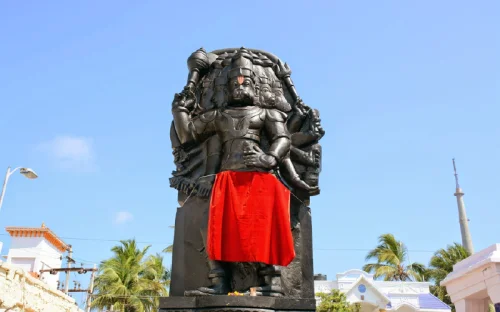
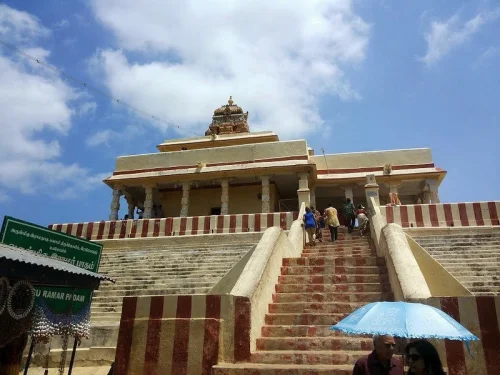
- Environment and surroundings: The temple features traditional Dravidian architecture with stone mandapams, open courtyards, and a serene devotional setting adjacent to other temple complexes.
- Facilities and amenities: Basic facilities such as seating, shaded areas, and nearby restrooms are available. Visitors can also access food and refreshments from nearby shops outside the temple.
- Accessibility and movement: Short, flat walking paths make the temple easy to navigate. Some areas have steps and thresholds that may require caution, especially for seniors and children.
- Typical visitor behavior and conditions: Pilgrims and tourists frequent the temple for prayers and rituals. Crowd density increases during festivals and weekends, while weekdays are relatively quieter.
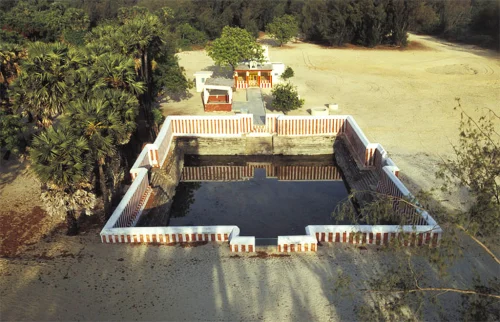
- Safety considerations: Visitors should walk carefully near steps, observe temple rules, and supervise children around open courtyards and water features.
Important Visitor Information for Kodanda Ramar Temple, Rameswaram
- Crowd and weather notes: The temple is moderately crowded, with higher visitor numbers during festivals, weekends, and public holidays. Summers can be hot and humid, affecting comfort while moving around the temple.
- Peak visiting hours: Late morning to early afternoon (10:00 AM – 1:00 PM) and evening (5:00 PM – 7:30 PM) experience the most visitors due to regular poojas and rituals.
- Quiet visiting hours: Early morning soon after opening (5:30 AM – 7:30 AM) is the least crowded period, allowing easier movement and observation of rituals.
- Dress code: Modest clothing is required. Visitors should cover shoulders and avoid revealing attire, especially when participating in rituals.
- Safety notes: Exercise caution on stone steps and thresholds. Children and seniors should be supervised, and visitors should follow temple rules regarding restricted or ritual areas.
Photography and Viewpoints at Kodanda Ramar Temple, Rameswaram
- Best viewpoints: The temple entrance and open courtyards provide clear angles to capture the Dravidian architecture, mandapams, and temple towers.
- Lighting conditions: Early morning (5:30 AM – 7:30 AM) offers soft light with minimal shadows, while late afternoon (4:30 PM – 6:30 PM) provides warm tones and favorable illumination for exterior shots.
- Photography rules: Photography is allowed in general areas, but restrictions apply inside the sanctum and during certain rituals. Visitors should follow temple signage and staff instructions.
- Crowd and access factors: Weekends, festivals, and ritual times can increase crowd density, limiting clear photography. Mid-morning and mid-afternoon are best for unobstructed shots.
- Access considerations: Narrow corridors and steps make tripod use difficult; handheld cameras or smartphones are recommended for safe and stable photography.