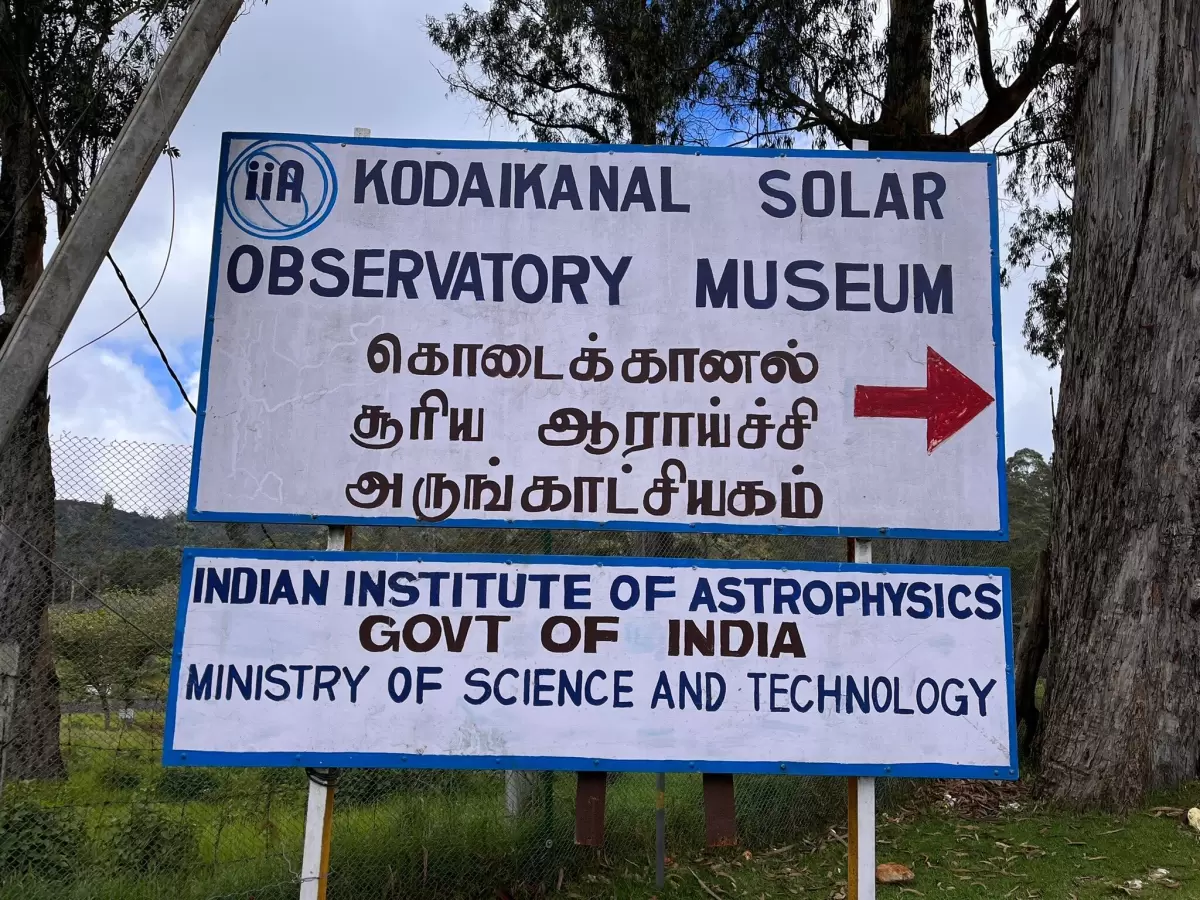
Kodaikanal Solar Observatory Museum, Kodaikanal (Tamil Nadu, India)

Kodaikanal Solar Observatory Museum , Kodaikanal
Tourists visit this museum to learn about Kodaikanal’s role in solar observation, see educational displays, and understand how scientific observations are carried out in a hill-station environment. It is mainly visited by students, families, and travelers interested in astronomy-related attractions.

Quick Facts About Kodaikanal Solar Observatory Museum

Quick Facts About Kodaikanal Solar Observatory Museum

Entry Fee Entry policy may vary (some sections may have restricted access as it is part of a functioning observatory)
Timings Limited public visiting hours (timings can change based on institutional rules and working days)
Altitude (m) Approx. 2,100–2,200 m above sea level
Ideal Visit Duration 30 minutes – 1 hour
Best Time of Day Late morning to early afternoon (better road visibility and comfortable visit conditions)
Crowd Level Low to moderate (higher during school trips and peak tourist season)
Distance from City Centre (km) Approx. 3–5 km from Kodaikanal town centre (depends on starting point)
Walking Difficulty Easy to moderate (short walking inside the campus; approach roads may include slopes)
Parking Available Limited parking may be available near the entry area
Last Mile Access Accessible by taxi and local vehicles; entry depends on visitor permission and open hours
Suitable for Kids Yes (especially for school-age children interested in science)
Suitable for Seniors Yes (short visit; may require mild walking on slopes)
Wheelchair Friendly Partially (depends on building access and internal path conditions)

Why Visit Kodaikanal Solar Observatory Museum

Visitors come to the Kodaikanal Solar Observatory Museum to understand how solar observation and basic astronomy research are carried out in Kodaikanal. It is mainly visited by tourists who want a science-based stop beyond lakes and viewpoints, especially families and student groups.

The on-ground atmosphere is quiet and institutional, as the museum is associated with a working observatory campus rather than a commercial tourist spot. The surroundings are usually calm, with forested hill-station roads leading to the site and limited crowd movement compared to central Kodaikanal attractions.

What makes this place distinct is its connection to real scientific observation work and the long-term solar research conducted from Kodaikanal’s high-altitude location. For travelers interested in astronomy, it offers a rare chance to see an educational science facility within a popular hill station setting.

History of Kodaikanal Solar Observatory Museum

The Kodaikanal Solar Observatory was established in 1899 and became one of India’s important centres for solar observation and astrophysical research. Its location in the Palani Hills was selected for clearer atmospheric conditions and high-altitude visibility needed for consistent solar studies.

The museum component is linked to this long-running research institution and presents simplified educational material related to solar observations, instruments, and scientific work carried out at the observatory. Unlike typical hill-station attractions, the site remains connected to active scientific research and institutional operations.

Best Time to Visit Kodaikanal Solar Observatory Museum

The Kodaikanal Solar Observatory Museum is best visited during seasons when Kodaikanal has clearer skies and comfortable daytime temperatures, as road access and visibility are better. During heavy monsoon periods, fog and rain can reduce travel comfort and may affect open access depending on institutional conditions.
  • Ideal months: October to March for cooler weather and clearer daytime conditions; April to early June is also suitable before peak monsoon rainfall begins.
  • Best-season weather: Mild daytime temperatures with lower fog frequency, making the drive and museum visit more comfortable.
  • Periods to avoid: July to September due to frequent monsoon rain, slippery hill roads, and higher chances of fog that can affect travel and campus access.

How to Reach Kodaikanal Solar Observatory Museum

  • Nearest airport: Madurai Airport (IXM), approx. 120–130 km from Kodaikanal. From the airport, taxis and private cabs are the most practical option to reach Kodaikanal via hill roads.
  • Nearest railway station: Kodai Road Railway Station is the closest railhead, located around 80–90 km from Kodaikanal town. From Kodai Road, visitors typically travel by taxi or bus up to Kodaikanal.
  • By road: Kodaikanal is connected by road from Madurai, Dindigul, and Palani. The observatory museum is located a short drive from Kodaikanal town centre on hill-station roads.
  • Last-mile connectivity: Local taxis and private vehicles can reach the museum entry area, but access may depend on visitor permission and open hours as it is part of an active observatory campus.
  • Travel conditions to note: The approach roads include steep climbs and sharp bends, and fog is common in early mornings, so daytime travel is generally more comfortable for first-time visitors.

What to Expect When You Visit Kodaikanal Solar Observatory Museum

  • Science-focused museum setting: Expect a small educational museum environment with displays related to astronomy, solar observation, and scientific instruments connected to the observatory.
  • Institutional campus atmosphere: The site feels like a research facility rather than a typical tourist attraction, with quieter surroundings and limited commercial activity.
  • Limited visitor access: Public entry may be restricted to specific hours or days, and some observatory areas may not be open to tourists because the campus is used for ongoing research work.
  • Short and structured visit: Most visitors spend limited time reading exhibits and viewing the available displays, making it suitable as a short stop during Kodaikanal sightseeing.
  • Minimal amenities: Expect basic visitor facilities only, with no large food courts or shopping areas like central town attractions.
  • Road-based access: The museum is reached by a short drive from town on hill roads, and the visit usually involves some walking within the campus area.
  • Quiet crowd pattern: Crowds are usually low, but the museum may get busier when student groups or educational tours arrive.
  • Photography limitations: Photography may be allowed in public areas, but restrictions can apply inside certain sections depending on institutional rules and signage.

Important Visitor Information for Kodaikanal Solar Observatory Museum

  • Crowd and weather notes: The museum is generally less crowded than central Kodaikanal attractions, but fog and sudden rain are common in the area and can affect travel comfort to the observatory campus.
  • Peak visiting hours: Late morning to early afternoon is usually the busiest period, especially when school groups and educational visitors arrive.
  • Quiet visiting hours: Early visiting hours are typically calmer, with fewer visitors and better movement inside the museum area.
  • Dress code: No dress code applies, but warm clothing is recommended because the observatory area can feel colder and windier than the town centre.
  • Entry and access caution: Since the observatory is an active research institution, visitor entry rules may change, and certain sections may remain closed to the public without prior notice.
  • Safety notes: Roads leading to the museum include hill bends and steep stretches, and walking areas may feel damp during monsoon months, so careful movement is required.
  • Photography caution: Visitors should follow signage for photography restrictions, as some equipment or research-related areas may not allow camera use.

Photography and Viewpoints at Kodaikanal Solar Observatory Museum

  • Best photography areas: The exterior campus surroundings and observatory approach roads offer good frames of the forested Palani hill landscape, especially where the building structures appear against the hillside backdrop.
  • Museum exhibit photography: Photography inside the museum may be allowed only in selected public display areas, and restrictions can apply near scientific equipment or sensitive sections depending on signage.
  • Best time for outdoor lighting: Late morning provides clearer natural light and reduced fog compared to early morning, making it better for photographing the campus surroundings and exterior structures.
  • Fog and mist impact: The observatory area frequently experiences mist and cloud cover, which can reduce visibility and soften background detail in photographs, especially during monsoon and winter months.
  • Low crowd advantage: Since the museum usually has lighter tourist footfall compared to Kodaikanal’s main attractions, it is easier to capture cleaner frames without heavy crowd interference.
  • Access-based limitations: Photography opportunities depend on which sections are open to visitors on the day of travel, as some areas may be restricted due to research activity or institutional controls.
  • Practical caution: If photographing outdoors, visitors should be careful on damp pathways and sloped road edges, especially after rainfall.

Near By Attraction

Bryant Park at Kodaikanal during rainy day, featuring flower gardens, rose arches, hedges, misty hills, perfect romantic experience Tamil Nadu tour packages. Botanical Garden

Bryant Park

Bryant Park is a landscaped botanical park located near Kodaikanal Lake, known for its flower beds, lawns, and seasonal horticulture displays.

Kodai Lake in Kodaikanal during misty day, featuring colorful pedal and row boats with tourists, lakeside boat house and pine-covered hills, perfect family Tamil Nadu tour package Lake

Kodaikanal Lake

Kodaikanal Lake is a man-made star-shaped lake located in the centre of Kodaikanal hill station.

Pillar Rocks at Kodaikanal during sunny afternoon, featuring dramatic cliffs, lush forests, valley views, perfect adventure experience Tamil Nadu tour packages. Viewpoint

Pillar Rocks

Pillar Rocks is a famous viewpoint in Kodaikanal known for its three tall vertical rock formations visible from a fenced observation area.

Frequently Asked Questions About Kodaikanal Solar Observatory Museum

The best time to visit Kodaikanal Solar Observatory Museum is from October to March when the weather is clear and pleasant. Clear skies improve the overall experience of learning about solar observations.
Kodaikanal Solar Observatory Museum is generally open during standard daytime hours on working days and remains closed on certain holidays. Visitors should verify timings before planning.
Kodaikanal Solar Observatory Museum usually charges a nominal entry fee for visitors. Ticket policies may vary for students and research groups.
Kodaikanal Solar Observatory Museum can be reached easily by taxi or private vehicle as it is located on a hill road within driving distance from the main town area.
Most travelers spend one to two hours at Kodaikanal Solar Observatory Museum. The visit includes exploring exhibits and reading informational displays.
Kodaikanal Solar Observatory Museum features telescopes solar research instruments and educational panels explaining astronomical studies. Displays focus on the history of solar research and observation techniques.
Kodaikanal Solar Observatory Museum is suitable for families and students interested in science and astronomy. The calm campus setting makes it ideal for educational visits.
Photography inside Kodaikanal Solar Observatory Museum may be restricted in certain sections. Visitors should follow posted guidelines and staff instructions.
Kodaikanal Solar Observatory Museum can be visited during monsoon although cloudy skies may limit outdoor viewing experiences. Rain may affect travel comfort along hill roads.
Kodaikanal Solar Observatory Museum can be combined with nearby lakes viewpoints and botanical gardens. These attractions are usually accessible within short travel distance.

Loved this place ? Let’s Plan Your Tamil Nadu Trip

Get customized Tamil Nadu tour planning designed around temple visit timing, seasonal weather comfort, road travel distances, and realistic pacing across regions. Whether you are visiting for architectural heritage, spiritual journeys, coastal relaxation,

⚡ Quick Response | 💰 Free consultation | 🕒 24×7 expert support

×

Plan Your Trip