Quick Facts About Kanyakumari Beach
Quick Facts About Kanyakumari Beach, Tamil Nadu
| Entry Fee | No entry fee (public beach and promenade access) |
|---|---|
| Timings | Open 24 hours (best visited early morning and evening for safe viewing) |
| Altitude (m) | Approx. 5 m above sea level (coastal shoreline) |
| Ideal Visit Duration | 1 to 2 hours (longer during sunrise/sunset or boat ticket hours) |
| Best Time of Day | Sunrise (5:30 AM – 6:30 AM) and sunset (5:30 PM – 6:30 PM) |
| Crowd Level | Very high in evenings, weekends, and holiday seasons; moderate in mornings |
| Distance from City Centre (km) | 0 km (located within Kanyakumari town centre) |
| Walking Difficulty | Easy (flat promenade and beach-side walking areas) |
| Parking Available | Yes, paid parking available near the beach and main viewing areas (often full during peak hours) |
| Last Mile Access | Well connected by auto-rickshaw, taxi, and local buses; short walk from main parking zones |
| Suitable for Kids | Yes, but close supervision needed due to waves, rocks, and heavy crowd movement |
| Suitable for Seniors | Yes, promenade areas are walkable, but crowd density may be challenging in peak hours |
| Wheelchair Friendly | Partially (main promenade is accessible, but sandy and rocky beach sections are not wheelchair-friendly) |
Why Visit Kanyakumari Beach, Tamil Nadu
Kanyakumari Beach is visited mainly for its sunrise and sunset viewpoints and its location at the southern tip of mainland India. Tourists come here to experience the sea-facing promenade and to access nearby attractions such as the ferry point for Vivekananda Rock Memorial and the Thiruvalluvar Statue.
The on-ground atmosphere is lively and crowded, especially during evenings when families, tour groups, and local visitors gather along the walkway. The beach area is known for strong sea wind and a rocky shoreline, with constant movement around the main viewpoint zones and vendor-lined pathways.
What makes Kanyakumari Beach distinct is the visible convergence of major sea bodies and the direct viewing line toward iconic offshore monuments. Unlike typical sandy beaches, it is more of a coastal viewing and walking experience, with dramatic ocean horizon views and high visitor activity throughout the day.
History of Kanyakumari Beach, Tamil Nadu
Kanyakumari Beach holds long-standing religious significance due to its association with the Bhagavathi Amman Temple located near the shore, which has been an important pilgrimage site in the region. The coastal area has traditionally been visited by devotees and travelers because of its sacred location at India’s southern tip.
The beach gained wider national recognition with the development of major landmarks offshore, including the Vivekananda Rock Memorial and the Thiruvalluvar Statue, which strengthened its role as a central tourist viewing point. Today, the beach remains one of the most visited public spaces in Kanyakumari town due to its cultural importance and monument access routes.
Best Time to Visit Kanyakumari Beach, Tamil Nadu
Kanyakumari Beach is best visited during the cooler tourist season when the sea breeze is comfortable and visibility is clearer for sunrise, sunset, and monument views. Since the beach is mainly a rocky shoreline viewing area, pleasant weather and clear skies make a noticeable difference to the experience.
- Ideal months: October to March for comfortable temperatures and better coastal visibility.
- Weather during the best season: Cooler mornings and evenings with steady sea wind, suitable for long walks along the promenade and viewpoint areas.
- Best period for sunrise and sunset views: November to February, when skies are often clearer and humidity is lower.
- Periods to avoid (if possible): April to June afternoons, as heat and heavy crowd movement can make the promenade uncomfortable.
- Monsoon limitation: June to September can bring rain and rough sea conditions, which may reduce visibility and limit ferry operations to nearby monuments.
How to Reach Kanyakumari Beach, Tamil Nadu
- Nearest airport: Trivandrum International Airport (Thiruvananthapuram, TRV), approx. 90–95 km away. Regular taxis and private cabs operate from the airport to Kanyakumari.
- Nearest railway station: Kanyakumari Railway Station (CAPE), approx. 1–2 km away. The beach and main promenade can be reached quickly by auto-rickshaw or short road travel.
- Road access: Kanyakumari town is well connected by highways from Nagercoil, Tirunelveli, and Thiruvananthapuram. Tourist buses and private vehicles can reach the main beach entry areas directly.
- Last-mile connectivity: Local autos, taxis, and short-distance walking routes connect the beach with the railway station, bus stand, and nearby hotels in the town centre.
- Travel conditions to note: Traffic congestion is common in the evening near the beach road and ferry ticket area, especially during weekends and peak tourist season.
What to Expect When You Visit Kanyakumari Beach, Tamil Nadu
- Expect a rocky shoreline with strong sea waves and wind, as the main beach area is more suitable for viewing and walking than for typical sand-based beach activities.
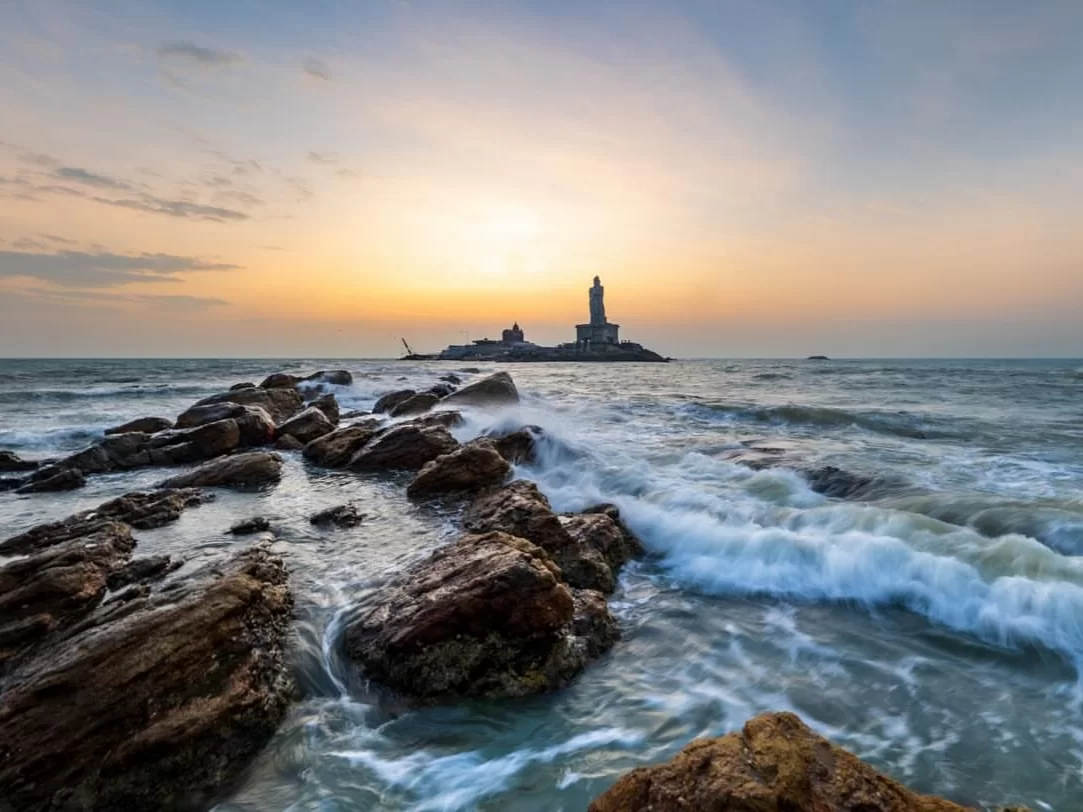
- The promenade and viewing platforms are the most active areas, where visitors gather for sunrise and sunset views and for the direct sightline toward Vivekananda Rock Memorial and the Thiruvalluvar Statue.
- Swimming is generally not recommended due to rough sea conditions, sharp rocks, and strong currents near the shore.
- The area is busy with tourists, local families, and group travelers, especially in the evening, with continuous movement near the ferry ticket counters and main entry points.
- Basic facilities such as snack stalls, souvenir shops, public seating areas, and walking paths are available around the beach road and promenade zone.
- Visitors should expect crowd management and queue systems near ferry-related points, particularly during holidays and peak tourist season.
- Movement is mostly easy on paved pathways, but reaching the rock edges for sea views may involve uneven surfaces and slippery sections during high tide or rainy weather.
- Photography is common throughout the beach promenade, and many visitors spend time at the viewpoint railings for wide sea and monument frames.
Important Visitor Information for Kanyakumari Beach, Tamil Nadu
- Crowd and weather notes: Kanyakumari Beach is one of the busiest public areas in the town, with heavy crowds during evenings, weekends, and tourist season months. Strong wind and sea spray are common near the shoreline.
- Peak visiting hours: 5:00 PM to 7:30 PM is the most crowded period due to sunset viewing and ferry-related tourist movement.
- Quiet visiting hours: 5:30 AM to 7:30 AM is generally calmer and preferred for sunrise views with fewer crowds.
- Dress code: No official dress code applies for the beach promenade, but modest clothing is commonly followed due to nearby religious sites and public crowd environment.
- Safety notes: The shoreline is rocky with strong waves and currents, and visitors should avoid stepping onto wet rocks or moving too close to the water during high tide.
- Walking caution: Certain viewing edges can become slippery due to sea spray, especially during windy evenings and monsoon periods.
- Monsoon limitation: During rough sea conditions, ferry services to Vivekananda Rock Memorial and Thiruvalluvar Statue may be temporarily suspended, affecting sightseeing plans.
- Crowd management note: During peak season, expect slow movement near the main entrance, viewpoint railings, and ferry ticket zones due to continuous crowd flow.
Photography and Viewpoints at Kanyakumari Beach, Tamil Nadu
- Best monument viewpoint: The main promenade railing area offers the clearest photography angles toward Vivekananda Rock Memorial and the Thiruvalluvar Statue across the sea.
- Sunrise photography spot: Early morning views from the open shoreline-facing promenade are preferred for sunrise frames, especially when the horizon is clear.
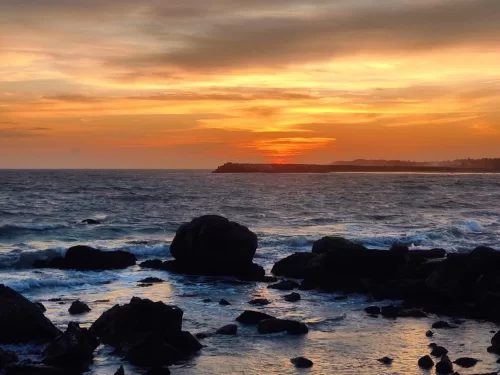
- Sunset photography spot: The western-facing sections near the main viewing platforms are popular for sunset shots, with silhouettes of visitors and sea waves in the foreground.
- Best time for lighting: 5:30 AM to 7:00 AM and 5:30 PM to 6:45 PM provide the most usable natural lighting for sea and monument photography.
- Weather impact: Wind and sea spray can affect camera visibility and lens clarity, especially in the evening when waves are stronger near the rocks.
- Crowd impact: Sunset hours and holiday evenings are heavily crowded, making it difficult to get uninterrupted wide-angle frames from the main railing areas.
- Restricted access areas: Some rock edges may be blocked during rough sea conditions for safety, limiting close-up wave photography.
- Photography rules: Photography is generally allowed in the public promenade area, but drone usage may be restricted near crowded zones and coastal security points.