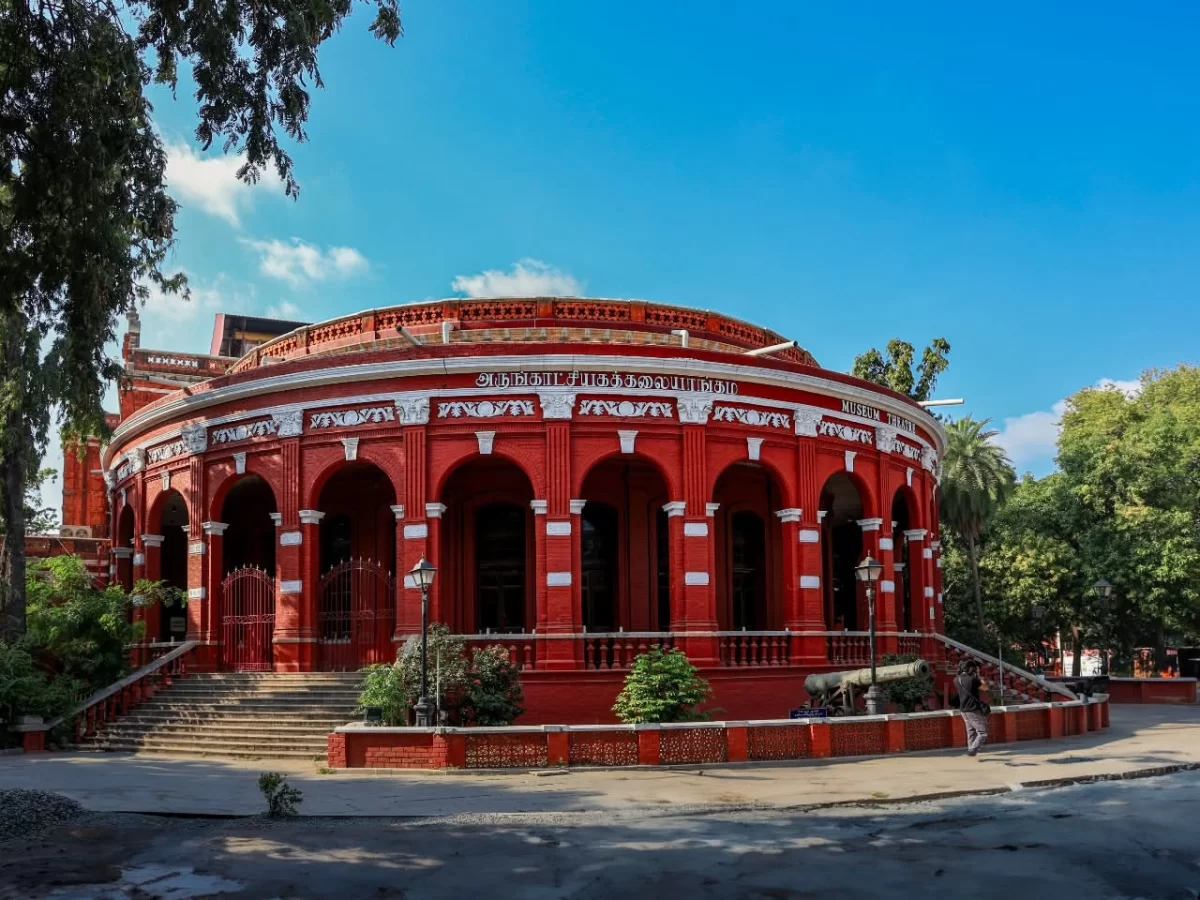
Government Museum Chennai, Egmore, Chennai, Tamil Nadu, India

Government Museum Chennai , Chennai
Tourists visit this museum to explore Tamil Nadu’s historical artefacts, Chola bronzes, ancient inscriptions, and museum galleries spread across multiple buildings. It is also a key educational stop for travelers interested in South Indian heritage, anthropology, and colonial-era museum architecture.

Quick Facts About Government Museum Chennai

Quick Facts About Government Museum Chennai, Egmore

Entry Fee ?15 per person (Indian citizens); ?250 per person (foreign nationals)
Timings 9:30 AM to 5:00 PM (Tuesday to Sunday); Closed on Mondays
Altitude (m) Approx. 6 m above sea level
Ideal Visit Duration 2 to 3 hours (longer if visiting all galleries)
Best Time of Day Late morning to early afternoon (10:00 AM – 1:00 PM)
Crowd Level Moderate on weekdays; high on weekends and school holiday periods
Distance from City Centre (km) Approx. 3 km from Chennai Central Railway Station
Walking Difficulty Easy to moderate (large campus with multiple galleries and indoor walking)
Parking Available Yes, limited parking available inside/near the museum campus
Last Mile Access Well connected by metro (Egmore), local buses, auto-rickshaws, and taxis
Suitable for Kids Yes, suitable for educational and family visits
Suitable for Seniors Yes, but long walking between galleries may require breaks
Wheelchair Friendly Partially (main access is manageable, but some older galleries may have limited wheelchair-friendly layout)

Why Visit Government Museum Chennai, Egmore

Government Museum Chennai is visited for its extensive collection of South Indian archaeology, ancient bronzes, stone sculptures, coins, and historical artefacts displayed across multiple galleries. Tourists come here to explore museum exhibits that cover Tamil Nadu’s heritage in a structured and well-documented format.

The on-ground atmosphere is quiet and academic, with large indoor halls and shaded museum buildings spread across a campus-style layout. The museum usually feels calm on weekday mornings, while weekends and school holidays bring more visitors, especially in popular sculpture and bronze sections.

What makes this museum distinct for travelers is its scale and the presence of rare collections such as Chola bronzes and detailed archaeological exhibits that are not commonly seen in smaller city museums. Its location in Egmore also makes it a practical stop for visitors exploring central Chennai’s heritage circuit.

History of Government Museum Chennai, Egmore

Government Museum Chennai is one of India’s oldest public museums, established during the British period and developed as a major institution for preserving archaeological and cultural collections from South India. Over time, it expanded into a large museum campus in Egmore with multiple specialised galleries covering art, anthropology, and natural history.

The museum is especially known for its long-term role in collecting and documenting Tamil Nadu’s archaeological finds, including bronze idols, stone sculptures, coins, and inscriptions sourced from temple sites and excavation regions. Today, it continues to function as a key state heritage repository and a public research-oriented museum space in Chennai.

Best Time to Visit Government Museum Chennai, Egmore

Government Museum Chennai is an indoor attraction and can be visited throughout the year, but the overall experience is more comfortable during cooler months because the museum involves walking across a large campus between multiple gallery buildings.
  • Ideal months: November to February for pleasant temperatures and easier movement between museum blocks.
  • Weather during the best season: Cooler daytime conditions with lower humidity, making long gallery visits and campus walking more comfortable.
  • Best time of day to visit: 9:30 AM to 12:30 PM for quieter galleries and uninterrupted viewing of key collections.
  • Periods to avoid (if possible): April to June afternoons, as Chennai heat can make walking between buildings tiring.
  • Monsoon limitation: October to December may bring heavy rain, which can affect movement across open campus sections between galleries.

How to Reach Government Museum Chennai, Egmore

  • Nearest airport: Chennai International Airport (MAA), approx. 16–18 km away. Taxi and app-based cab services are the most convenient way to reach Egmore.
  • Nearest railway station: Chennai Egmore Railway Station (MS), approx. 1 km away. The museum is easily reachable by auto-rickshaw or a short local commute from Egmore station.
  • Road access: The museum is located in central Chennai near Pantheon Road and is well connected by city buses, taxis, and autos from major areas like T. Nagar, Anna Salai, and Marina.
  • Last-mile connectivity: Visitors can also use Chennai Metro (Egmore area connectivity via nearby stations) and reach the museum by a short auto ride or walk depending on the drop point.
  • Travel conditions to note: Traffic congestion is common during office hours and weekends in Egmore, and parking space inside the museum campus may be limited during peak visitor days.

What to Expect When You Visit Government Museum Chennai, Egmore

  • Expect a large museum campus with multiple gallery buildings, including archaeology, bronze sculpture, anthropology, and natural history sections spread across different halls.
  • The museum experience involves indoor walking through long exhibit corridors and display rooms, along with short outdoor movement between buildings inside the compound.
  • Visitors typically spend time in the Bronze Gallery and archaeology sections, where artefacts such as Chola bronzes, stone sculptures, coins, and inscriptions are displayed with labels.
  • The atmosphere is generally quiet and study-focused, but weekends and school holidays can bring heavy student groups, making some galleries crowded and noisy.
  • Facilities are basic but functional, usually including ticket counters, restrooms, and seating areas in certain sections of the campus.
  • Photography may be restricted in specific galleries, and some exhibits may not allow flash or close-up photography depending on museum rules.
  • Walking inside the museum is easy, but the overall visit can feel long due to the size of the campus, so visitors should plan breaks if covering all galleries.
  • The museum is located in a busy Egmore zone, but inside the compound the environment feels quieter and separated from city traffic.

Important Visitor Information for Government Museum Chennai, Egmore

  • Crowd and weather notes: Visitor numbers are higher on weekends, public holidays, and school vacation periods. Since the museum includes walking between buildings, hot weather can affect comfort in summer months.
  • Peak visiting hours: 11:00 AM to 3:00 PM is usually the busiest time, especially when student groups arrive.
  • Quiet visiting hours: 9:30 AM to 11:00 AM on weekdays is generally calmer and better for uninterrupted gallery viewing.
  • Dress code: No formal dress code is required, but comfortable clothing and footwear are recommended due to extended indoor walking.
  • Photography rules: Photography restrictions may apply in certain galleries, and flash photography may not be allowed near protected artefacts.
  • Safety notes: Visitors should avoid touching artefacts or leaning on display cases, as many exhibits are protected and monitored.
  • Campus walking note: The museum campus is large, and covering all sections may require significant walking, so seniors and families may prefer prioritising key galleries.
  • Closure note: The museum is typically closed on Mondays, so visitors should plan their itinerary accordingly.

Photography and Viewpoints at Government Museum Chennai, Egmore

  • Best photography areas: The outdoor museum campus sections and heritage-style building exteriors in Egmore are suitable for architectural photography, especially near the main entrance blocks.
  • Gallery photography focus: Visitors commonly take photos of bronze sculptures, stone artefacts, and archaeology displays where photography is permitted, particularly in open display halls.
  • Lighting conditions: Indoor gallery lighting is controlled but can create reflections on glass display cases, especially when photographing coins, jewellery, and small artefacts.
  • Best time for fewer obstructions: Morning hours (9:30 AM – 11:00 AM) are best for photography as galleries are less crowded and exhibit visibility is clearer.
  • Crowd impact: Weekends and school group hours can make photography difficult in narrow exhibit corridors due to crowd clustering around popular displays.
  • Photography restrictions: Some galleries may restrict photography or flash usage to protect artefacts, and visitors should follow museum signage and staff instructions.
  • Outdoor photo advantage: The museum’s shaded compound paths and old building corridors provide good angles for capturing the colonial-era museum setting without heavy visitor blockage.
  • Access factor: Tripods and large camera setups may not be practical inside crowded gallery spaces, particularly during peak visiting hours.

Near By Attraction

Sri Anantha Padmanabha Swamy Temple, iconic golden gopuram temple in Thiruvananthapuram with sacred temple pond view Temple

Sri Anantha Padmanabha Swamy Temple

Historic Hindu temple dedicated to Lord Vishnu located in the heart of Chennai.

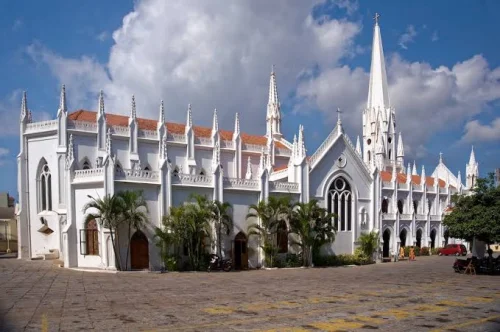
Santhome Cathedral Basilica Chennai during cloudy overcast day, featuring white Gothic arches spires, red tiled roofs, wet plaza reflections palm trees, perfect cultural experience Chennai tour package Church

St. Thomas Cathedral Basilica

St. Thomas Cathedral Basilica is a historic Roman Catholic church in Chennai, built over the traditional burial site of Saint Thomas the Apostle.

Kapaleeshwarar Temple gopuram in Mylapore Chennai during clear sunny day, featuring vibrant multicolored sculptures, intricate carvings, flocking birds, perfect cultural heritage experience Chennai temple tour package. Temple

Kapaleeshwarar Temple

Arulmigu Kapaleeshwarar Temple is a major Hindu temple in Mylapore, Chennai, dedicated to Lord Shiva (Kapaleeshwarar) and Goddess Karpagambal.

Frequently Asked Questions About Government Museum Chennai

The best time to visit Government Museum Chennai is from November to February when the weather is relatively pleasant for city travel. Morning hours allow a quieter indoor exploration experience.
Government Museum Chennai is generally open during standard daytime hours and remains closed on certain weekly holidays. Visitors should confirm official timings before planning.
Government Museum Chennai charges an entry fee for visitors. Separate charges may apply for cameras and access to specific galleries.
Government Museum Chennai can be reached easily by taxi auto bus metro or private vehicle as it is located in a central urban area. The museum is accessible from major city roads.
Most travelers spend two to three hours at Government Museum Chennai. The visit includes exploring multiple galleries and themed exhibition halls.
Government Museum Chennai features archaeological artifacts bronze sculptures numismatic collections and natural history exhibits displayed across different buildings. Informational panels provide context for each section.
Government Museum Chennai is suitable for families students and history enthusiasts due to its structured layout and educational displays. The indoor setting allows relaxed exploration at a steady pace.
Guided tours may be available at Government Museum Chennai depending on staff schedules. Visitors can also explore independently using exhibit descriptions and gallery maps.
Government Museum Chennai can be visited during monsoon as it is primarily an indoor attraction. Rain may affect travel conditions but not the museum experience.
Government Museum Chennai can be combined with nearby heritage buildings parks and shopping areas. These attractions are usually accessible within short travel distance.

Loved this place ? Let’s Plan Your Tamil Nadu Trip

Get customized Tamil Nadu tour planning designed around temple visit timing, seasonal weather comfort, road travel distances, and realistic pacing across regions. Whether you are visiting for architectural heritage, spiritual journeys, coastal relaxation,

⚡ Quick Response | 💰 Free consultation | 🕒 24×7 expert support

×

Plan Your Trip