Quick Facts About Brihadeeswarara Temple
Brihadeeswarar Temple Quick Facts
| Entry Fee | No entry fee |
| Timings | Generally open from 6:00 AM to 12:30 PM and 4:00 PM to 8:30 PM daily. |
| Altitude (m) | Approximately 60 m above sea level |
| Ideal Visit Duration | 2–3 hours |
| Best Time of Day | Early morning for peaceful darshan and better photography of the temple architecture |
| Crowd Level | High during weekends, festivals, and special pujas; moderate on weekdays |
| Distance from City Centre (km) | Approximately 3 km from Thanjavur city centre |
| Walking Difficulty | Easy; large open complex with stone pathways |
| Parking Available | Yes, ample parking available near temple entrances |
| Last Mile Access | Direct road access to temple complex followed by short walking distance |
| Suitable for Kids | Yes |
| Suitable for Seniors | Yes |
| Wheelchair Friendly | Partially; main courtyard is accessible but some inner areas have steps |
Why Visit Brihadeeswarar Temple Thanjavur
Visitors come to Brihadeeswarar Temple to witness one of the greatest achievements of Chola architecture and experience a living UNESCO World Heritage monument dedicated to Lord Shiva.
The atmosphere is grand and devotional, with continuous temple rituals, pilgrims, and visitors exploring the vast courtyards, towering vimana, and intricately carved stone structures.
What makes Brihadeeswarar Temple distinct is its massive granite vimana, exceptional Chola-era engineering, and its historical importance as a masterpiece of South Indian temple architecture.
History of Brihadeeswarar Temple
Brihadeeswarar Temple, also known as the Big Temple, is located in Thanjavur, Tamil Nadu, and was built in 1010 CE by the Chola emperor Raja Raja Chola I. Dedicated to Lord Shiva, it stands as one of the greatest achievements of Dravidian temple architecture and a symbol of the Chola dynasty’s power and cultural excellence.
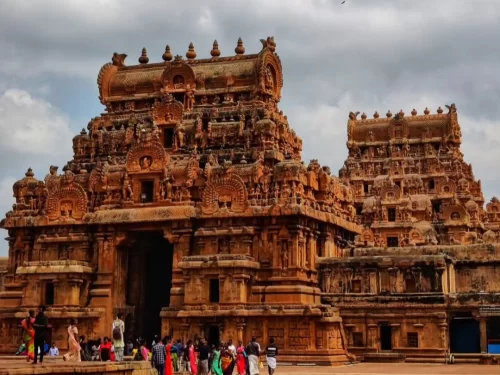
The temple is part of the UNESCO World Heritage Site known as the “Great Living Chola Temples.” It is renowned for its massive vimana (temple tower), intricately carved sculptures, and inscriptions that document the administrative, religious, and artistic achievements of the Chola period.
Today, Brihadeeswarar Temple remains an active place of worship and one of India’s most important heritage monuments, attracting devotees, historians, and tourists from around the world who come to witness its architectural grandeur and historical significance.
Best Time to Visit Brihadeeswarar Temple
Brihadeeswarar Temple in Thanjavur is best visited from November to February when Tamil Nadu experiences pleasant weather, making it comfortable to explore this UNESCO World Heritage monument and its magnificent Chola architecture.
- Ideal months: November to February is the most favorable period to visit Brihadeeswarar Temple, offering comfortable temperatures and excellent conditions for sightseeing and photography.
- Weather conditions during the best season: Mild temperatures, lower humidity, and pleasant mornings provide ideal conditions for exploring the massive temple complex, its towering vimana, detailed carvings, and surrounding courtyards.
- Periods to avoid: March to May can be hot and humid in Thanjavur, making daytime exploration less comfortable. The monsoon season from June to September brings periodic rainfall, which may affect travel conditions, though temple visits remain possible throughout the year.
How to Reach Brihadeeswarar Temple (Thanjavur)
- Nearest Airport: Tiruchirappalli International Airport, located approximately 60 km from Brihadeeswarar Temple, is the nearest airport. Taxis and private vehicles are readily available for the onward journey to Thanjavur.
- Nearest Railway Station: Thanjavur Junction Railway Station, about 4 km away, is the nearest railway station and offers excellent connectivity to major cities across Tamil Nadu and India.
- Road Access and Last-Mile Connectivity: Brihadeeswarar Temple is situated in the heart of Thanjavur city and is easily accessible by private vehicle, taxi, auto-rickshaw, or local bus. The final approach is fully motorable, with parking facilities available near the temple complex. A short walk leads to the main temple entrance. The site remains accessible throughout the year and is one of the most important Chola-era UNESCO heritage monuments in India.
What to Expect When You Visit Brihadeeswarar Temple
- Environment and Surroundings: Brihadeeswarar Temple (also known as Periya Kovil) in Thanjavur is a UNESCO World Heritage Chola temple dedicated to Lord Shiva. Visitors can expect a grand Dravidian architectural masterpiece with a massive vimana (tower), spacious courtyards, stone sculptures, and a deeply spiritual atmosphere.
- Facilities and Amenities: Basic visitor facilities such as shoe storage areas, drinking water points, prasadam counters, guide services, and seating areas are available near the temple. Additional restaurants, hotels, and transport services can be found throughout Thanjavur city.
- Accessibility and Movement: The temple is easily accessible by road and can be explored on foot through large open courtyards, mandapas, and circumambulatory pathways. Visitors should expect significant walking within the expansive temple complex.
- Visitor Conditions: Devotees and tourists visit throughout the year for darshan, architecture appreciation, and cultural exploration. Crowd levels are generally moderate, with higher footfall during festivals like Maha Shivaratri and special temple events. The open structure can be hot during midday, so mornings and evenings are more comfortable for sightseeing.
Important Visitor Information for Brihadeeswarar Temple Thanjavur
- Brihadeeswarar Temple experiences the highest visitor numbers during weekends, public holidays, Maha Shivaratri, and major Tamil festivals, often resulting in long queues for darshan.
- Early morning hours generally offer the most peaceful experience for worship and for appreciating the temple’s architecture before large tourist groups arrive.
- Thanjavur can become very hot and humid during summer months, making early morning and late afternoon the most comfortable times for visiting.
- Modest attire is recommended within the temple premises, and footwear must be removed before entering the main shrine and sacred areas.
- Visitors should follow temple customs, maintain silence during rituals, respect queue systems, and avoid climbing or touching protected heritage structures and carvings.
Photography and Viewpoints at Brihadeeswarar Temple (Thanjavur)
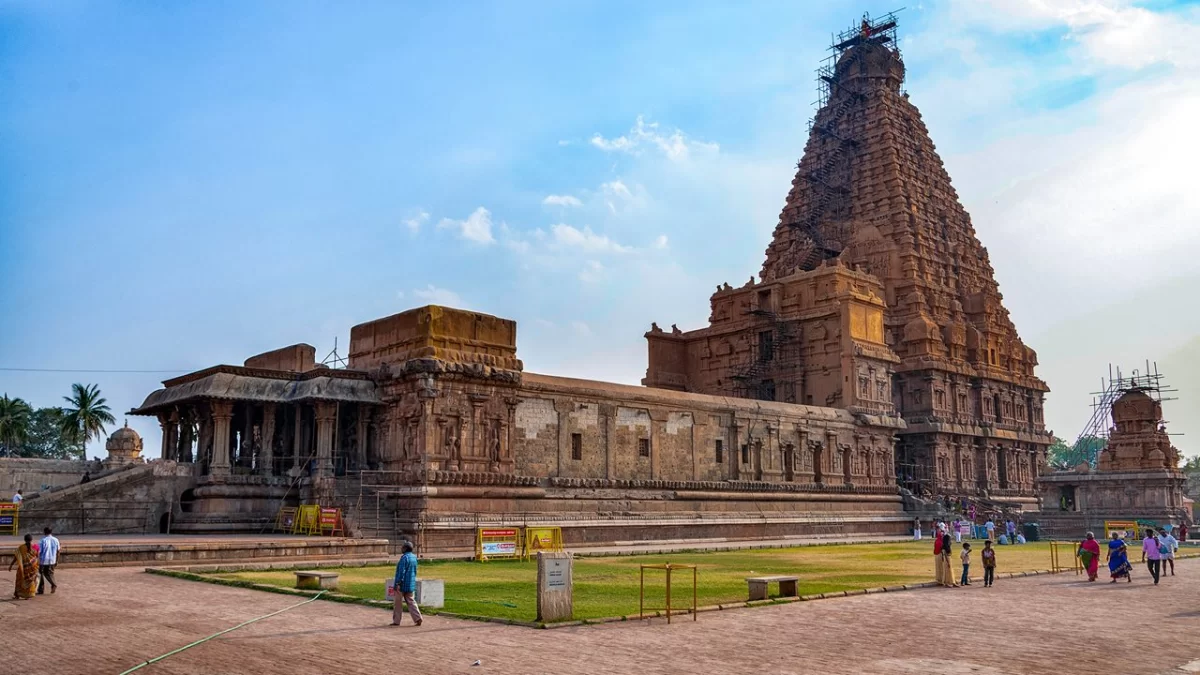
- The best photographs are captured from the main entrance axis and large open courtyards, where the massive vimana (tower), temple gateway, and granite architecture can be framed in full scale.
- Early morning provides soft natural light, cooler temperatures, and fewer visitors, making it ideal for capturing the temple’s symmetry and intricate Chola-era stonework.
- The courtyard offers multiple wide-angle viewpoints to capture the full height of the 66-meter vimana, one of the tallest in the world.
- The Nandi mandapa in front of the main shrine is a key photography subject, especially when aligned with the towering sanctum in the background.
- Side angles around the prakara walls allow detailed shots of carvings, inscriptions, and architectural precision of the Chola dynasty.
- Golden hour light enhances the granite texture, bringing out depth and contrast in the massive stone structure.
- Photography is generally permitted in outer temple areas under ASI guidelines, but visitors should avoid flash inside sanctum-adjacent spaces and respect restricted zones.