Quick Facts About Arulmigu Peruvudaiyar Temple
Arulmigu Peruvudaiyar Temple, Thanjavur Quick Facts
| Entry Fee | Free; charges may apply for camera and video equipment as per temple rules. |
|---|---|
| Timings | Generally 6:00 AM–12:30 PM and 4:00 PM–8:30 PM; timings may vary during festivals and special occasions. |
| Altitude (m) | Approximately 60 m |
| Ideal Visit Duration | 1–2 hours |
| Best Time of Day | Morning for peaceful darshan or evening to view the illuminated temple architecture. |
| Crowd Level | Moderate on weekdays; higher during weekends, public holidays, and major Shaivite festivals. |
| Distance from City Centre (km) | Approximately 2 km from Thanjavur railway station and city centre. |
| Walking Difficulty | Easy; the temple complex has broad pathways, though covering the full area requires walking. |
| Parking Available | Yes, parking facilities are available near the temple complex. |
| Last Mile Access | Accessible by road, auto-rickshaw, taxi, and public transport, followed by a short walk to the temple entrance. |
| Suitable for Kids | Yes; children should be supervised inside the heritage monument area. |
| Suitable for Seniors | Yes; seating areas are available, but walking across the large temple complex may require rest breaks. |
| Wheelchair Friendly | Partially; the outer areas are accessible, but some inner sections and heritage structures may have steps. |
Why Visit Arulmigu Peruvudaiyar Temple, Thanjavur
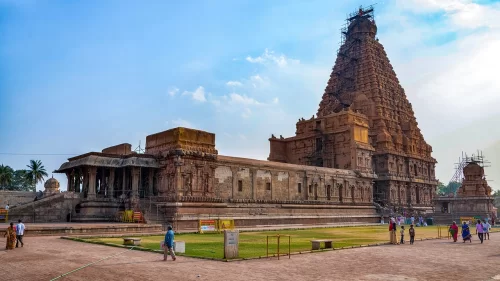
Visitors come to Arulmigu Peruvudaiyar Temple, also known as Brihadeeswarar Temple, to experience one of India's most significant Shiva temples and a UNESCO World Heritage Site. The temple is renowned for its grand Dravidian architecture, massive stone structures, and active religious traditions.
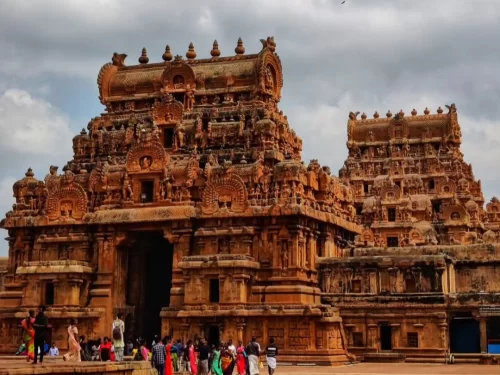
The atmosphere is impressive and peaceful, with devotees offering prayers while visitors explore the vast courtyard, towering vimana, and detailed stone carvings. The open layout of the temple complex allows visitors to appreciate its scale, craftsmanship, and architectural design.
What makes Arulmigu Peruvudaiyar Temple distinct is its exceptional Chola-era architecture and the engineering achievement of its towering granite structure. The temple combines living worship practices with remarkable artistic and architectural heritage, making it a significant destination in Thanjavur.
History of Arulmigu Peruvudaiyar Temple, Thanjavur
Arulmigu Peruvudaiyar Temple, also known as Brihadeeswarar Temple, is a UNESCO World Heritage Site located in Thanjavur, Tamil Nadu. The temple was built by Chola emperor Raja Raja Chola I and was completed in 1010 CE. It is dedicated to Lord Shiva and represents the architectural and artistic achievements of the Chola dynasty.
The temple was constructed as the royal temple of the Chola Empire and served as an important center for religious activities, cultural practices, and administration during the Chola period. Its massive granite structure, towering vimana, detailed sculptures, and inscriptions provide valuable information about Chola architecture, temple management, and society during that era.
Today, Arulmigu Peruvudaiyar Temple remains an active place of worship and one of the finest examples of South Indian temple architecture. It attracts visitors from around the world for its historical importance, intricate craftsmanship, and enduring religious significance.
Best Time to Visit Arulmigu Peruvudaiyar Temple, Thanjavur
The best time to visit Arulmigu Peruvudaiyar Temple (Brihadeeswarar Temple) is from October to March, when the weather in Thanjavur is more comfortable for exploring the historic temple complex. The temple remains open throughout the year, with special celebrations during festivals attracting more visitors.
- Ideal months: October to March for comfortable sightseeing, with early mornings and evenings being the best times to explore the temple premises.
- Best season conditions: Cooler temperatures make it easier to walk around the large temple complex, admire the Chola architecture, and spend time observing the sculptures and stone carvings.
- Periods to avoid: April to June due to high temperatures in Thanjavur, which can make outdoor temple visits uncomfortable during the afternoon. During major festivals and special events, expect larger crowds and longer waiting times.
How to Reach Arulmigu Peruvudaiyar Temple, Thanjavur
- Nearest Airport: The nearest airport is Tiruchirappalli International Airport, approximately 60 km from Arulmigu Peruvudaiyar Temple. Taxis and buses are available from the airport to Thanjavur. The journey usually takes around 1.5 to 2 hours depending on traffic conditions.
- Nearest Railway Station: Thanjavur Junction Railway Station, about 2 km from the temple, is the nearest railway station. It has regular train connectivity with Chennai, Tiruchirappalli, Madurai, and other major cities. Auto-rickshaws, taxis, and local buses are available from the station.
- By Road: Arulmigu Peruvudaiyar Temple, also known as Brihadeeswarar Temple, is located in the heart of Thanjavur city and is easily accessible by road. Regular TNSTC buses, taxis, auto-rickshaws, and private vehicles connect the temple with nearby cities such as Tiruchirappalli, Kumbakonam, and Chennai. Parking facilities are available near the temple, though the area can experience heavy traffic during festivals and peak visiting hours.
What to Expect When You Visit Arulmigu Peruvudaiyar Temple, Thanjavur
- Arulmigu Peruvudaiyar Temple, also known as Brihadeeswarar Temple, is a UNESCO World Heritage Site in Thanjavur and one of the finest examples of Chola-era Dravidian architecture. The temple complex includes the main shrine, towering vimana, Nandi statue, and extensive stone structures.
- Visitors can expect a large historic temple complex with open courtyards, detailed stone carvings, and active worship areas. The temple functions both as a heritage monument and a place of daily religious activities.
- The temple premises are spacious with mostly level pathways, making exploration convenient. Some areas involve walking across open stone surfaces, which may become warm under direct sunlight.
- Facilities such as parking areas, drinking water, restrooms, footwear deposit counters, and shops selling flowers and religious items are available near the temple. Restaurants and other visitor services are available in Thanjavur city.
- Visitors must remove footwear before entering designated temple areas, dress modestly, and maintain respect during ongoing prayers and rituals. Certain inner sections may have restricted access.
- The temple attracts heritage tourists, photographers, and devotees throughout the year. Crowds are generally higher during weekends, public holidays, and major festivals such as Maha Shivaratri.
- Photography is permitted in many outdoor areas, allowing visitors to capture the architecture and sculptures. Restrictions may apply in specific worship areas, so visitors should follow local guidelines.
- The large open complex requires walking, and summer temperatures in Thanjavur can be high. Visiting during morning or evening hours is more comfortable, especially for elderly visitors and families with children.
Important Visitor Information for Arulmigu Peruvudaiyar Temple, Thanjavur
- Crowd and weather: The temple attracts large crowds during weekends, public holidays, Maha Shivaratri, and cultural events. Thanjavur has a hot tropical climate, with peak summer months being particularly warm, while the northeast monsoon season may bring rainfall between October and December.
- Peak and quiet visiting hours: Early morning is ideal for a peaceful visit and comfortable exploration of the temple complex. Late morning and evening hours usually see more visitors, especially during holidays and festival periods.
- Dress code: Arulmigu Peruvudaiyar Temple is an active Hindu temple and a UNESCO World Heritage monument. Visitors should wear modest clothing suitable for a place of worship. Footwear must be removed before entering the temple premises.
- Safety and practical cautions: The large stone courtyard can become hot during summer afternoons, so visitors should plan accordingly. Follow designated visitor paths, avoid touching protected carvings and structures, and respect ongoing worship activities inside the temple complex.
Photography and Viewpoints at Arulmigu Peruvudaiyar Temple, Thanjavur
- The main courtyard, entrance pathways, and viewpoints facing the towering Vimana provide the best angles for capturing the scale and architectural details of this UNESCO World Heritage temple.
- Early morning and late afternoon are the most suitable times for photography, as softer sunlight highlights the granite carvings, temple walls, and the massive structure without harsh shadows.
- The Nandi Mandapa area offers a classic viewpoint where visitors can photograph the large Nandi statue with the main temple tower in the background.
- Photography is generally allowed in the outer temple complex. Visitors should follow Archaeological Survey of India (ASI) and temple guidelines, as photography may be restricted in certain inner worship areas.
- The temple attracts large crowds during festivals, weekends, and peak tourist hours. Visiting early in the day helps photographers access clearer viewpoints and capture architectural details with fewer interruptions.