Quick Facts About Jaisalmer Fort
Quick Facts: Jaisalmer Fort, Jaisalmer, Rajasthan
| Entry Fee | INR 50 per adult; children under 15 free |
| Timings | 9:00 AM – 6:00 PM daily |
| Altitude (m) | Approx. 250 m |
| Ideal Visit Duration | 2–3 hours |
| Best Time of Day | Morning or late afternoon for cooler temperatures and better lighting |
| Crowd Level | Moderate to high, especially during weekends and tourist season |
| Distance from City Centre (km) | Located within Jaisalmer city center |
| Walking Difficulty | Moderate; involves walking on uneven stone pathways and steep streets |
| Parking Available | Limited public parking near fort entrances |
| Last Mile Access | Walking from parking areas through narrow streets; auto-rickshaws available nearby |
| Suitable for Kids | Yes, but supervise on steep or uneven areas |
| Suitable for Seniors | Partially; steps and slopes may be challenging |
| Wheelchair Friendly | No; uneven surfaces and narrow lanes limit accessibility |
Why Visit Jaisalmer Fort, Jaisalmer, Rajasthan
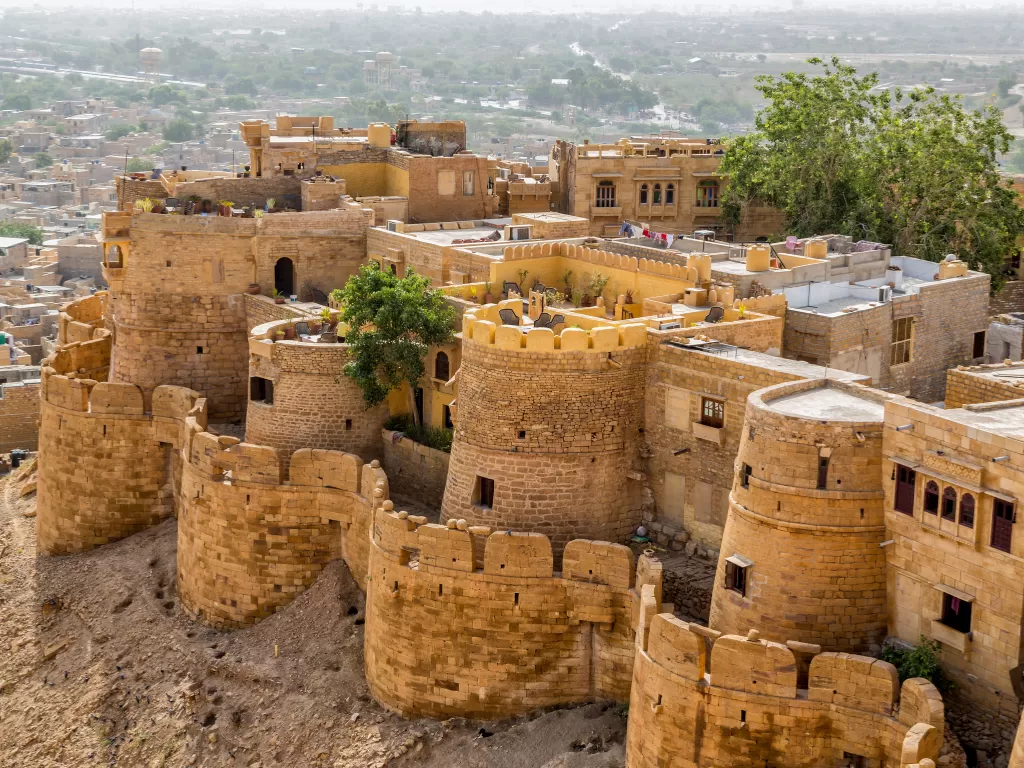
Visitors come to Jaisalmer Fort to explore its fortified walls, narrow alleyways, and historic havelis, offering a unique glimpse into Rajasthan’s architectural heritage.
The atmosphere within the fort is lively and residential, with shops, homes, and temples integrated into the historic structure, creating a mix of everyday life and heritage experience.
What makes Jaisalmer Fort distinct is that it remains an inhabited fort, allowing travelers to experience a living heritage site rather than just a preserved monument.
History of Jaisalmer Fort, Jaisalmer, Rajasthan
Jaisalmer Fort was built in 1156 AD by Rawal Jaisal and served as the center of the city’s administration and defense.
It has been a key site for trade and commerce in the Thar Desert, with architecture reflecting Rajput military and residential design.
The fort also houses several temples, havelis, and residences, highlighting its cultural and religious significance to the local community over centuries.
Best Time to Visit Jaisalmer Fort, Jaisalmer, Rajasthan
The fort is best visited during cooler months when temperatures in the desert city are comfortable for walking and exploring the fort’s alleys and terraces.
- Ideal months: October to March
- Weather conditions: Mild daytime temperatures, clear skies, and pleasant evenings
- Periods to avoid: April to June due to extreme heat; July to September may include occasional monsoon disruptions
How to Reach Jaisalmer Fort, Jaisalmer, Rajasthan
- Nearest airport: Jaisalmer Airport, approx. 10 km from the fort; taxis available for city transfer.
- Nearest railway station: Jaisalmer Railway Station, approx. 2 km from the fort; reachable by taxi or auto-rickshaw.
- Road access: Connected via NH 125 and city roads; last-mile access requires walking through narrow streets to the fort entrance.
What to Expect When You Visit Jaisalmer Fort, Jaisalmer, Rajasthan
- Environment: Busy fortified area with narrow alleys, residential quarters, shops, and terraces offering city and desert views.
- Facilities: Limited seating and rest areas; no large-scale food or restroom facilities inside the fort itself.
- Accessibility: Uneven stone paths and steps; some steep streets may be challenging for seniors or those with mobility issues.
- Visitor behavior: Expect moderate crowds, especially near popular havelis and viewpoints; maintain caution on narrow lanes and steps.
Important Visitor Information for Jaisalmer Fort, Jaisalmer, Rajasthan
- Crowd and weather: Moderate to high crowds during peak season (October–March); afternoons can be hot even in cooler months.
- Peak hours: Late morning to early afternoon; quietest times are early morning or late afternoon.
- Dress code: No formal requirements; light, comfortable clothing and sun protection recommended.
- Safety notes: Watch for uneven steps and narrow lanes; supervise children and be cautious on elevated terraces.
Photography and Viewpoints at Jaisalmer Fort, Jaisalmer, Rajasthan
- Best viewpoints: Upper terraces and fort walls provide panoramic views of the city and surrounding Thar Desert.
- Lighting: Early morning and late afternoon offer softer light and reduced harsh shadows on sandstone structures.
- Photography rules: Allowed throughout most areas; flash may be restricted in temples and certain havelis to protect artifacts.
- Crowd factors: Popular havelis and main alleys may be crowded during peak season; early visits provide unobstructed shots.