Raja Hunting Palace, Bhitarkanika National Park, Odisha, India

Raja Hunting Place , Bhitarkanika
Built by the former rulers of Kanika, the palace served as a royal hunting retreat before the area became a protected national park. Today, visitors explore the site for its historical significance, colonial-era architecture, and its location amid the mangrove forests and wildlife of Bhitarkanika.

Quick Facts About Raja Hunting Place

Raja Hunting Palace, Bhitarkanika Quick Facts

Entry Fee No separate entry fee; visitors must pay the applicable Bhitarkanika National Park entry and boating charges.
Timings Accessible during the park's visiting hours, generally from 8:00 AM–5:00 PM, subject to forest department regulations and boat schedules.
Altitude (m) Approximately 5 m
Ideal Visit Duration 30–60 minutes
Best Time of Day Morning, when boat safaris operate and wildlife activity is generally higher.
Crowd Level Low to moderate; visitor numbers increase during the peak tourism season (November–February).
Distance from City Centre (km) Approximately 10 km from Khola Entry Point by boat through the Bhitarkanika waterways.
Walking Difficulty Easy; requires a short walk from the boat landing to the palace.
Parking Available Parking is available at the designated Bhitarkanika entry points such as Khola; no parking is available at the palace itself.
Last Mile Access Accessible only by authorized boat through the mangrove waterways, followed by a short walk.
Suitable for Kids Yes, with adult supervision during the boat journey and while exploring the site.
Suitable for Seniors Yes, provided they are comfortable with boarding boats and walking short distances.
Wheelchair Friendly No; boat access and uneven pathways make the site inaccessible for wheelchairs.

Why Visit Raja Hunting Palace, Bhitarkanika, Odisha

Visitors come to Raja Hunting Palace to explore a historic royal retreat located within the Bhitarkanika region. The palace is often included in boat tours through the mangrove waterways, offering a glimpse into the area's former royal hunting traditions alongside its natural surroundings.

The atmosphere is quiet and remote, with mangrove forests, tidal creeks, and abundant birdlife surrounding the palace. Reaching the site by boat adds to the experience, allowing visitors to appreciate the unique ecosystem of Bhitarkanika while traveling through its waterways.

What makes Raja Hunting Palace distinct is its combination of royal heritage and location within Bhitarkanika's protected mangrove landscape. Unlike standalone historical monuments, it offers travelers an experience where cultural history and wildlife-rich natural scenery can be explored together.

History of Raja Hunting Palace, Bhitarkanika, Odisha

Raja Hunting Palace, also known as the Dangamal Hunting Lodge, is a historic royal retreat located within the Bhitarkanika region of Odisha. It was built by the royal family of Kanika as a hunting lodge during the period when the mangrove forests were used for controlled hunting expeditions by the local rulers.

Following the establishment of the Bhitarkanika Wildlife Sanctuary in 1975 and the declaration of Bhitarkanika National Park in 1998, hunting in the region was prohibited as conservation efforts gained priority. The palace remains as a reminder of the area's transition from a royal hunting reserve to one of India's most important protected mangrove ecosystems.

Today, Raja Hunting Palace is a heritage landmark visited by tourists exploring Bhitarkanika National Park. Surrounded by mangrove forests and waterways, it offers insight into the region's royal past while highlighting the success of modern wildlife conservation in Odisha.

Best Time to Visit Raja Hunting Palace, Bhitarkanika

The best time to visit Raja Hunting Palace is from November to February, when the weather is cool and the Bhitarkanika region is most suitable for boat safaris and wildlife exploration. The palace is typically visited as part of a Bhitarkanika National Park itinerary, and access depends on forest and boating schedules.
  • Ideal months: November to February, when comfortable temperatures and dry conditions make sightseeing and boat travel more enjoyable.
  • Best season conditions: Pleasant weather, navigable waterways, active birdlife during the migratory season, and comfortable conditions for exploring the historic hunting lodge and surrounding mangrove ecosystem.
  • Periods to avoid: June to September due to heavy monsoon rainfall, high water levels, and possible restrictions on boat operations. Summer months from March to May can be hot and humid, making outdoor exploration less comfortable.

How to Reach Raja Hunting Palace, Bhitarkanika, Odisha

  • Nearest Airport: The nearest airport is Biju Patnaik International Airport, Bhubaneswar, approximately 165 km from the Khola entry point to Bhitarkanika National Park. From the airport, visitors can hire taxis to reach the park's boat jetties.
  • Nearest Railway Station: Bhadrak Railway Station, about 80 km from Khola Jetty, is the nearest major railhead. Cuttack Railway Station is another convenient option. Taxis and buses are available from both stations to the park entry points.
  • By Road: Raja Hunting Palace is located inside Bhitarkanika National Park and cannot be reached directly by road. Visitors must first travel by road to entry points such as Khola or Gupti, and then continue by authorised motorboat through the park's network of tidal rivers and mangrove creeks. Boat services operate during permitted visiting hours and may be affected by tidal conditions or weather, so advance planning is recommended.

What to Expect When You Visit Raja Hunting Palace, Bhitarkanika, Odisha

  • Raja Hunting Palace is a historic structure located within the Bhitarkanika region and is surrounded by mangrove forests, creeks, and rich wildlife habitat. The setting is quiet and natural rather than urban.
  • Most visitors reach the palace as part of a boat trip through Bhitarkanika National Park. Travel times depend on the chosen route, water levels, and forest department regulations.
  • The palace is a heritage landmark that offers a glimpse into the area's royal past. The emphasis is on its historical setting rather than elaborate interiors or museum-style exhibits.
  • Walking around the palace and nearby areas is generally easy on designated paths, but some surfaces may be uneven. Visitors should remain within permitted zones and follow instructions from guides or forest officials.
  • Facilities at the palace are limited. Restrooms, food, drinking water, and accommodation are mainly available at entry points, forest rest houses, or nearby tourism facilities rather than at the site itself.
  • The journey through the mangroves often includes opportunities to observe estuarine crocodiles, birds, spotted deer, and other wildlife. Sightings depend on natural conditions and cannot be guaranteed.
  • Photography is generally allowed in public areas, but flash should be avoided near wildlife. Visitors should not disturb animals or leave designated routes during the visit.
  • As the palace lies within a protected ecosystem, visitors should carry drinking water, wear comfortable footwear, avoid littering, and follow all forest department rules regarding boating, wildlife viewing, and conservation.

Important Visitor Information for Raja Hunting Palace, Bhitarkanika

  • Crowd and weather: The Raja Hunting Palace receives the most visitors during the Bhitarkanika tourist season from October to February. Visitor numbers are higher on weekends and holidays. During the monsoon, access may be restricted or affected due to heavy rainfall and high water levels in the mangrove waterways.
  • Peak and quiet visiting hours: Late morning to early afternoon is generally the busiest, as most guided boat safaris include the palace during this period. Morning safari departures usually offer a quieter experience and more comfortable weather.
  • Dress code: There is no formal dress code. Lightweight clothing, full-sleeved attire for insect protection, comfortable footwear, a hat, and sun protection are recommended for exploring the area.
  • Safety and practical cautions: The palace can only be reached as part of an authorised boat route within Bhitarkanika National Park. Visitors should remain with their guide, avoid venturing beyond designated areas, and follow forest department instructions. As the surrounding mangrove ecosystem is home to saltwater crocodiles and other wildlife, entering the water or leaving marked visitor zones is strictly prohibited.

Photography and Viewpoints at Raja Hunting Palace, Bhitarkanika National Park, Odisha

  • The best photographs are taken from the river and jetty areas, where the historic hunting lodge can be framed against the mangrove forests and surrounding waterways.
  • Early morning and late afternoon provide the most favorable lighting, with softer sunlight enhancing the palace façade, river reflections, and the natural landscape.
  • Photography is generally permitted in visitor-accessible areas of the palace and during boat safaris. Visitors should follow instructions from forest authorities and avoid entering restricted or protected zones.
  • The elevated sections around the palace and nearby boat landing points offer wide views of the structure and its unique setting within the Bhitarkanika mangrove ecosystem.
  • Access to the palace depends on boat routes, tide conditions, and national park regulations. Visitor numbers are highest during the winter tourist season, while weekday visits often provide quieter photography opportunities.

Near By Attraction

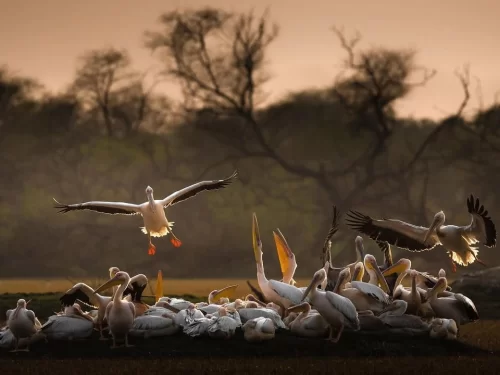
Bhitarkanika Bird Sanctuary large flock of pelicans resting and taking flight on golden wetland at sunrise, dramatic migratory bird colony scene for Odisha wildlife and photography tour packages. National Park

Bhitarkanika National Park

Bhitarkanika National Park is a protected wildlife reserve in Kendrapara district, Odisha, known for mangrove forests, estuarine waterways, and saltwater crocodiles.

Frequently Asked Questions About Raja Hunting Place

Raja Hunting Place is visited for its historical association with the former royal family and its location amid the mangrove forests of Bhitarkanika. Today it attracts visitors interested in history, wildlife, and scenic landscapes.
Visitors can explore a historic hunting lodge surrounded by rich biodiversity, peaceful waterways, and mangrove forests. The site offers a unique combination of heritage and nature within Bhitarkanika.
The ideal time to visit is from October to March when the weather is pleasant and wildlife sightings are more comfortable. Monsoon travel may be affected by heavy rain and boat conditions.
Raja Hunting Place is generally visited during the operating hours of Bhitarkanika National Park. Daytime visits are recommended for boat safaris, sightseeing, and wildlife observation.
There is no separate ticket for Raja Hunting Place, but visitors must pay the applicable Bhitarkanika National Park entry and boating fees where required.
Visitors usually reach Raja Hunting Place by private car or tourist vehicle to the park entry point, followed by an authorised boat ride through the waterways. Local cabs are available from nearby towns.
Parking facilities are available near the designated entry points of Bhitarkanika for private cars and tourist vehicles. From there, visitors continue by authorised boat.
The nearest major airport is Biju Patnaik International Airport in Bhubaneswar, about 170 km away. Visitors can continue by road to the park entrance.
The nearest major railway station is Bhadrak Railway Station, around 80 km away. Local cabs and tourist vehicles are available for onward travel.
Yes, Raja Hunting Place is suitable for families who enjoy nature and wildlife. Children should remain supervised during boat journeys and while exploring the protected area.
Senior citizens can visit comfortably if they are able to board and travel by boat. Wearing comfortable clothing and following safety instructions is recommended.
Photography is generally allowed for personal use. Visitors should avoid disturbing wildlife and follow any camera regulations issued by the forest authorities.
Visitors should remain inside authorised boats, avoid feeding wildlife, wear life jackets when instructed, follow forest officials' directions, and help keep the sanctuary clean.
No separate permit is required for Raja Hunting Place, but visitors must obtain the necessary Bhitarkanika National Park entry permissions and follow park regulations.
Nearby attractions include Dangamal Crocodile Centre, Bagagahan Bird Sanctuary, Habalikhati Beach, Bhitarkanika Mangroves, and boating routes through the national park.

Loved this place ? Let’s Plan Your Odisha Trip

Get customized Odisha tour planning designed around temple visit timing, coastal weather patterns, wildlife seasonality, and realistic travel pacing across regions. Whether you are visiting for spiritual journeys, heritage architecture, beach relaxation,

⚑ Quick Response | πŸ’° Free consultation | πŸ•’ 24Γ—7 expert support

×

Plan Your Trip

