Rainbow Falls Meghalaya – Stunning Hidden Waterfall Near Nongriat Village

Rainbow Falls , Cherrapunji
Rainbow Falls is one of the most beautiful and adventurous waterfalls in Meghalaya, located near the famous Nongriat village in the East Khasi Hills region. It is known for its powerful water flow, scenic forest surroundings, and a natural pool that looks deep blue and extremely refreshing. The waterfall is considered a hidden gem and is usually visited by trekkers who explore the Double Decker Living Root Bridge trail. Reaching Rainbow Falls requires a long trek through dense rainforest paths, bamboo bridges, and steep stone steps, making it ideal for adventure travelers and nature lovers. The peaceful environment, dramatic waterfall scenery, and misty atmosphere create a magical experience, especially during monsoon and post-monsoon seasons. It is a must-visit destination for travelers who want to explore Meghalaya’s raw natural beauty beyond regular sightseeing spots.

Quick Facts About Rainbow Falls

Entry Fee 0
Timings 06:00 - 17:00
Altitude (m) 700
Ideal Visit Duration (hrs) 2
Best Time of Day Morning
Crowd Level Moderate
Distance from Shillong (km) 70
Walking Difficulty Hard
Parking Available Yes
Last Mile Access Trek
Suitable for Kids No
Suitable for Seniors No
Wheelchair Friendly No

Why Visit Rainbow Falls

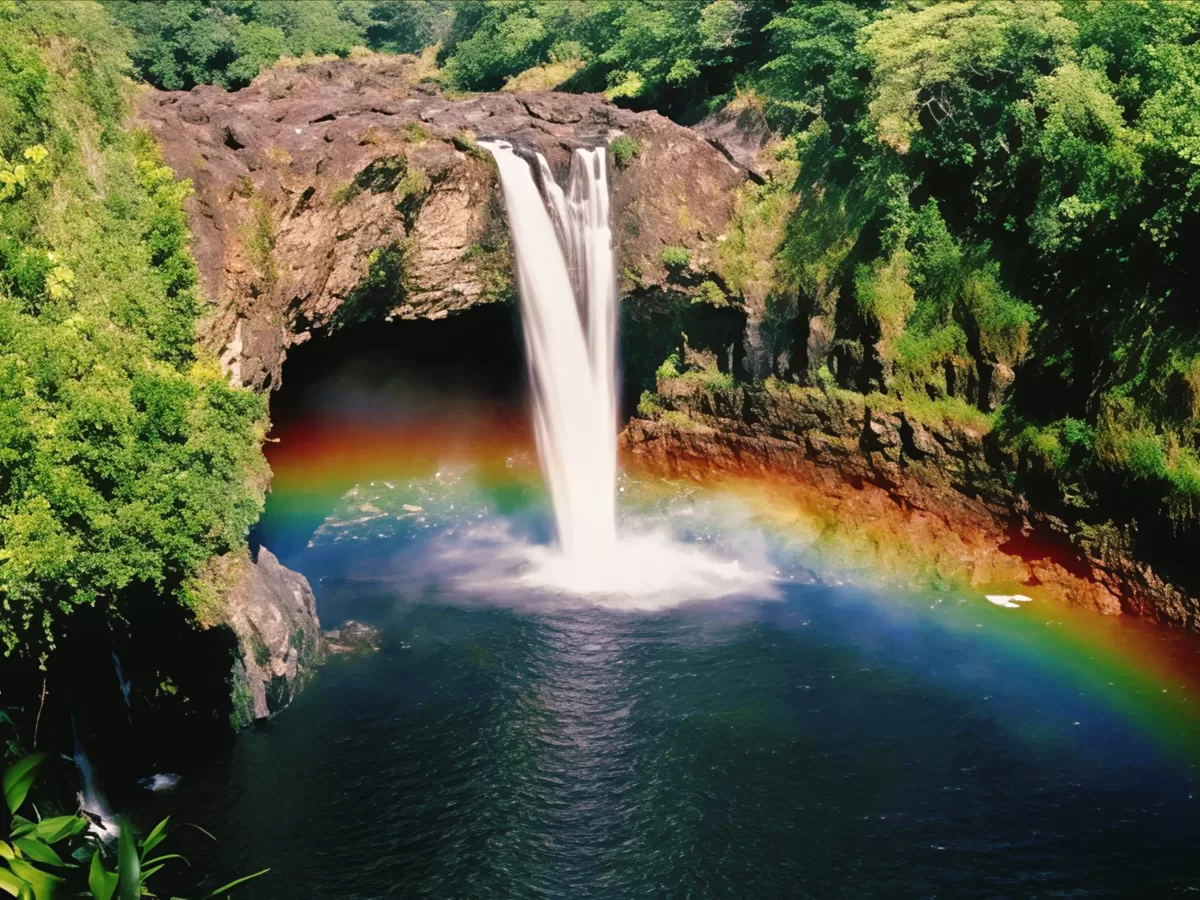
Rainbow Falls is one of the most stunning hidden waterfalls in Meghalaya and a dream destination for travelers who love adventure and untouched nature. Located deep inside the lush rainforest near Nongriat village, this waterfall is famous for its powerful flow, crystal-clear water, and a beautiful natural pool at the base. The name “Rainbow Falls” comes from the colorful rainbow-like mist effect that can sometimes be seen when sunlight falls on the waterfall spray, creating a magical sightseeing experience.

The atmosphere around Rainbow Falls is peaceful, wild, and refreshing. Surrounded by thick greenery, tall trees, and natural jungle trails, the area feels like a true escape from city life. The sound of falling water and the cool forest air make the place feel calm and energizing at the same time. Since it requires a long trek, the location remains less crowded, giving visitors a more private and raw Meghalaya nature experience.

What makes Rainbow Falls truly special is its combination of scenic beauty and trekking adventure. The journey to the falls passes through stone steps, bamboo bridges, dense forests, and village paths, making the trek itself an unforgettable part of the trip. For travelers exploring the Double Decker Living Root Bridge route, Rainbow Falls is the perfect extension that rewards you with one of Meghalaya’s most breathtaking waterfall views. It is a must-visit attraction for photographers, trekkers, and nature lovers looking for Meghalaya’s hidden gems.

Background

Rainbow Falls is a naturally formed waterfall located deep inside the forest region near Nongriat village in the East Khasi Hills of Meghalaya. The waterfall remained largely unknown to mainstream tourists for many years because it can only be reached by trekking through dense rainforest trails, steep stone steps, and narrow village pathways. It is situated close to the famous Double Decker Living Root Bridge trekking route, which helped Rainbow Falls gain popularity among trekkers and eco-tourism travelers over time.

The waterfall is part of Meghalaya’s rich natural landscape shaped by heavy rainfall and dense forest ecosystems. Over the years, continuous water flow carved a beautiful stream path and created a deep natural pool at the base, making it one of the most scenic hidden waterfalls in the region. As trekking tourism in Nongriat increased, Rainbow Falls gradually became known as a rewarding extension trek for visitors looking to explore Meghalaya beyond the living root bridges.

Today, Rainbow Falls is considered one of the finest examples of Meghalaya’s untouched natural beauty, attracting nature lovers and adventure travelers who want to experience the raw rainforest environment and a powerful waterfall in a peaceful setting.

Best Time to Visit

The best time to visit Rainbow Falls is from October to April, when the weather is pleasant and trekking conditions are safer. During this season, the forest trails remain less slippery, visibility is clear, and the waterfall looks beautiful with a steady flow of water. This is the most recommended period for tourists because the trek becomes comfortable and the surroundings remain green after the monsoon season.

Rainbow Falls can also be visited during the monsoon months from June to September, when the waterfall becomes extremely powerful and the entire rainforest turns lush green. However, trekking during this time is risky because the stone steps and forest paths become very slippery and leeches may be present. Post-monsoon months are considered the perfect balance of greenery and safe trekking conditions.

  • October to April: Best season for safe trekking, clear views, and pleasant weather
  • November to February: Cool climate, best for long trekking and photography
  • March to May: Slightly warmer but still ideal for trekking and sightseeing
  • June to September: Monsoon season with strongest waterfall flow, but slippery and risky trail
  • Best time of day: Early morning (6:30 AM – 10:30 AM) to complete trek safely and avoid returning late

How to Reach

  • By Air: The nearest airport is Shillong Airport (Umroi Airport), located around 80–90 km from Tyrna village (starting point of the trek). The nearest major airport is Guwahati Airport (Lokpriya Gopinath Bordoloi International Airport), approximately 165–175 km away. From the airport, hire a taxi to Shillong and continue towards Sohra (Cherrapunji).
  • By Train: The nearest major railway station is Guwahati Railway Station, around 165–175 km away. From Guwahati, travel by taxi or bus to Shillong, and then proceed to Cherrapunji and Tyrna.
  • By Road: Rainbow Falls is reached via road up to Tyrna Village, which is the main trekking entry point for Nongriat and the Double Decker Living Root Bridge. The common route is Shillong → Sohra (Cherrapunji) → Tyrna. Roads are scenic and pass through hills, viewpoints, and forest stretches.
  • From Shillong: The distance from Shillong to Tyrna village is around 65–70 km and it takes approximately 2.5 to 3 hours by road.
  • From Cherrapunji (Sohra): Tyrna is around 15–20 km away and can be reached in about 40–60 minutes by road.
  • Trek Route to Rainbow Falls: From Tyrna, visitors must trek down to Nongriat Village (Double Decker Root Bridge). From Nongriat, Rainbow Falls is an additional trek of about 2–3 hours one way through forest trails and bamboo bridges.
  • Total Trek Difficulty: The complete journey includes steep stone steps (over 3,000 steps), forest paths, and uneven terrain, making it a challenging trek.
  • Parking Available: Parking is available at Tyrna village near the trek starting point.
  • Local Guide Recommendation: Hiring a local guide is recommended for first-time visitors, especially if continuing from Nongriat to Rainbow Falls.
  • Travel Tip: Start early in the morning to ensure you return before sunset, as trekking after dark is unsafe.

What to Expect When You Visit

  • A challenging but rewarding trek: Visiting Rainbow Falls requires a long trek through steep stone steps, forest trails, and bamboo bridges. The journey is physically demanding but highly scenic.
  • Dense rainforest surroundings: Expect thick greenery, tall trees, and a true jungle atmosphere, making the trek feel like a real Meghalaya eco-adventure.
  • Multiple scenic trail points: Along the route, you will pass natural streams, small wooden bridges, and viewpoints that offer peaceful nature experiences.
  • Powerful waterfall view: Rainbow Falls is known for its strong water flow and dramatic fall height, creating a breathtaking natural sight in the middle of the forest.
  • Natural pool at the base: The waterfall forms a deep natural pool that looks blue-green and extremely refreshing. Visitors often relax near the pool area.
  • Peaceful and less crowded atmosphere: Since the trek is long, Rainbow Falls remains less crowded compared to other tourist waterfalls, offering a quiet and private nature experience.
  • Humidity and wet conditions: The forest remains humid, and during rainy season the trail becomes muddy and slippery, so expect wet trekking conditions.
  • Adventure vibe: The location is perfect for adventure travelers who enjoy trekking, exploring hidden spots, and experiencing Meghalaya’s raw natural beauty.
  • Limited facilities: Do not expect shops, food stalls, or washrooms near the waterfall. Carry water, snacks, and basic essentials before starting the trek.
  • Leeches in monsoon: During rainy season, leeches may be present on the forest trail. Wearing proper trekking gear is recommended.
  • Best combined with Nongriat trek: Most visitors explore Rainbow Falls along with the Double Decker Living Root Bridge trek, making it a full-day or overnight adventure trip.

Important Visitor Information

  • Crowd & Weather Notes: Rainbow Falls is less crowded than the Double Decker Living Root Bridge because it requires an additional long trek from Nongriat village. Weather in the region can change quickly, with sudden rain and fog, especially during monsoon months. Trekking is safest during dry and post-monsoon seasons.
  • Peak Hours: 10:30 AM to 1:30 PM (most trekkers reach the falls during this time).
  • Quiet Hours: 7:00 AM to 10:00 AM is the best time to enjoy the waterfall peacefully and take clear photographs.
  • Dress Code: Wear trekking-friendly clothes such as dry-fit t-shirts, track pants, and light jackets. In monsoon season, carry a raincoat or poncho. Avoid heavy clothing as humidity is high.
  • Footwear Recommendation: Trekking shoes or sports shoes with strong grip are mandatory. The trail includes steep steps, wet rocks, and slippery forest paths.
  • Safety Notes: Do not attempt risky climbing near the waterfall. Rocks near the pool can be slippery. Avoid going too close to strong water currents, especially during monsoon.
  • Swimming Warning: Swimming is not officially recommended as the pool is deep and currents can be unpredictable. If you enter water, do so only with extreme caution.
  • Monsoon Precaution: During heavy rainfall, the trek becomes dangerous due to slippery steps and rising water streams. Avoid trekking in extreme rain conditions.
  • Carry Essentials: Carry enough drinking water, energy snacks, ORS, and a basic first-aid kit. There are no shops near the waterfall.
  • Travel with Kids: Not suitable for small kids due to long trekking distance and steep climb.
  • Senior Citizen Advice: Not recommended for senior travelers because of difficult trekking and high physical effort.
  • Mobile Network: Network is usually weak or unavailable during the trek. Inform family members in advance and travel with a group if possible.
  • Guide Recommendation: Hiring a local guide is highly recommended for first-time visitors to avoid route confusion and ensure safety.
  • Eco-Tourism Rule: Do not litter. Carry back plastic waste and respect the forest environment to protect this natural attraction.

Photography and Viewpoint

  • One of the most photogenic waterfalls in Meghalaya: Rainbow Falls is famous for its dramatic waterfall drop, forest backdrop, and natural pool, making it a dream location for nature photographers.
  • Best viewpoint at the base area: The best viewpoint is from the rocky open space near the waterfall pool, where visitors can capture the full waterfall height along with the lush green surroundings.
  • Rainbow mist effect: In clear weather, sunlight hitting the water spray can create a rainbow-like effect, which is the main reason behind the waterfall’s name and makes photos look magical.
  • Best time for photography: Morning (7:00 AM – 11:00 AM) is the best time for sharp photography, fewer crowds, and better light angles inside the forest.
  • Monsoon photography beauty: During monsoon season, Rainbow Falls becomes extremely powerful and surrounded by vibrant greenery. This season is best for dramatic waterfall shots, but rain and mist may reduce visibility.
  • Wide-angle recommended: Use a wide-angle lens or phone wide mode to capture the full waterfall, forest canopy, and rocky landscape in one frame.
  • Portrait and travel shoot spot: The waterfall and natural pool background create a perfect setting for portraits, couple photography, and cinematic travel reels.
  • Nature pool reflection shots: The deep pool at the base often reflects surrounding greenery, creating beautiful mirror-like shots during calm water flow.
  • Drone photography caution: Drone photography may be difficult due to dense forest coverage and restricted open space. If using a drone, confirm local permission and fly carefully.
  • Low-light jungle effect: Since the waterfall is located inside dense forest, lighting can be slightly low, so visitors should keep camera settings ready for forest photography.
  • Photography safety tip: Avoid standing on slippery rocks for photos. Keep your phone/camera protected from water spray and carry a waterproof cover.
  • Best season for clear scenic shots: October to April is best for safe trekking and clear photography, while June to September is best for powerful waterfall visuals and greenery.

Near By Attraction

Nohkalikai Falls in Cherrapunji, Meghalaya, India’s tallest plunge waterfall cascading dramatically into a turquoise pool surrounded by lush green cliffs. Waterfall

Nohkalikai fall

Nohkalikai Falls is the most famous waterfall in Cherrapunji (Sohra), Meghalaya, known for its dramatic drop and stunning viewpoint scenery.

Seven Sisters Waterfall in Cherrapunji, Meghalaya, a spectacular multi-stream waterfall cascading down lush green cliffs during the monsoon season. Waterfall

Seven Sisters Waterfall

Seven Sisters Waterfall is a stunning multi-tier waterfall near Cherrapunji (Sohra), Meghalaya, famous for its seven separate streams flowing down lush green cliffs.

Thangkharang Park Cherrapunji during misty morning, featuring aerial view green lawns winding roads pavilion sacred pool trees lake backdrop, perfect nature park experience Cherrapunji Meghalaya tour package. Tourist Attraction

Thangkharang Park

Thangkharang Park is a beautiful viewpoint park in Cherrapunji (Sohra), Meghalaya, known for its panoramic valley views and peaceful natural surroundings.

Frequently Asked Questions About Rainbow Falls

Rainbow Falls is located near Nongriat village in East Khasi Hills district of Meghalaya, India.
Rainbow Falls is known for its clear blue pool and the rainbow effect visible in sunlight near the cascading water.
The best time to visit Rainbow Falls is from October to April when the weather in Meghalaya is suitable for trekking and sightseeing.
Visitors can reach Rainbow Falls by trekking from Nongriat after descending the living root bridge trail from Cherrapunji.
There is no separate major entry fee for Rainbow Falls, though local village or trekking charges may apply.
A half day is usually required to trek to and explore Rainbow Falls due to the long stair trail involved.
Rainbow Falls is suitable for physically fit families, though the trek involves steep steps and can be challenging.
Swimming is allowed at Rainbow Falls in designated safe areas, depending on water flow and local guidance.
Photography is allowed at Rainbow Falls, especially to capture the rainbow effect and natural pool.
Visitors should carry sturdy footwear, drinking water, light snacks, and rain protection when visiting Rainbow Falls.
Tourists can find homestays in Nongriat and more accommodation options in Cherrapunji and Shillong, Meghalaya, within driving distance of the trek starting point.

Loved this place ? Let’s Plan Your Meghalaya Trip

Get customized Meghalaya tour planning designed around rainfall patterns, road connectivity, seasonal visibility, and realistic hill travel timing. Whether you are visiting for waterfalls, cave exploration, scenic drives, village experiences, or nature-fo

⚡ Quick Response | 💰 Free consultation | 🕒 24×7 expert support

×

Plan Your Trip