Best Places to Visit in Mawlynnong Village
Mawlynnong is one of Meghalaya’s most charming destinations, offering clean village streets, living root bridges, bamboo skywalks, scenic landscapes, and authentic Khasi cultural experiences.
+91 9910402252
admin@chalbanjare.com


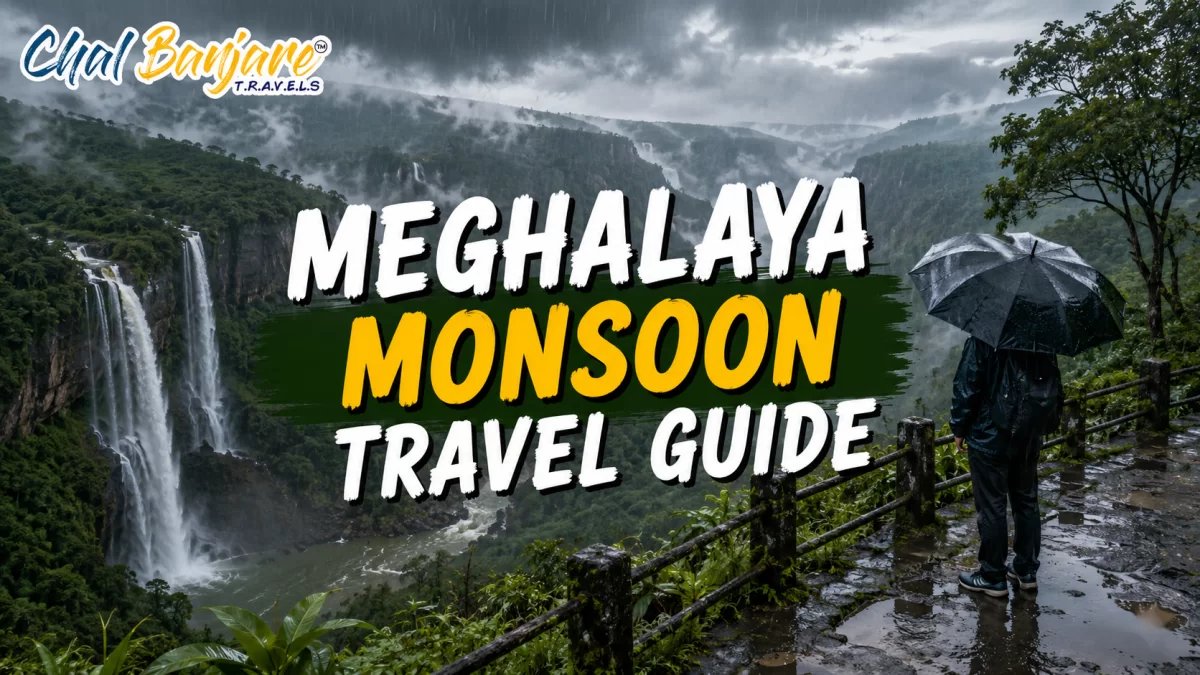
Meghalaya is at its most dramatic during the monsoon, with overflowing waterfalls, mist-covered valleys, lush green landscapes, and unique travel experiences, but it also comes with important weather and road challenges.
Monsoon transforms Meghalaya into one of India's most dramatic travel destinations. The hills turn intensely green, waterfalls reach their maximum flow, clouds drift through valleys, and landscapes become incredibly photogenic. This is the season when Meghalaya truly lives up to its reputation as the wettest region on Earth.
Rainfall is heaviest across Cherrapunji, Mawsynram, and the southern Khasi Hills, while Shillong generally receives comparatively moderate rainfall. Jaintia Hills and Garo Hills also experience significant rain, creating lush forests, flowing rivers, and spectacular seasonal waterfalls.
Monsoon is ideal for travelers seeking dramatic landscapes, waterfalls, photography, and nature experiences. Those preferring clear skies, easier road conditions, and comfortable sightseeing may find winter a better choice.
During monsoon, waterfalls across Meghalaya become exceptionally powerful. Seasonal streams emerge from cliffs, rivers swell dramatically, and famous waterfalls reach their most impressive form.
Dense mist frequently blankets forests, hills, valleys, and canyons, creating an atmospheric landscape that feels almost mystical throughout much of the season.
Clouds move rapidly across ridges, villages, and valleys, producing ever-changing scenery that makes every journey through Meghalaya visually unique.
Nohkalikai Falls becomes a spectacular sight during monsoon as enormous volumes of water plunge into the deep turquoise pool below, creating one of Meghalaya's most iconic landscapes.
Seven Sisters Falls is particularly impressive during heavy rainfall when multiple streams cascade simultaneously down towering limestone cliffs.
These famous waterfalls are surrounded by vibrant green forests during monsoon, creating stunning contrasts between turquoise water, cliffs, and lush vegetation.
Cherrapunji offers some of Meghalaya's most dramatic monsoon scenery, where clouds, waterfalls, canyons, and rain-soaked landscapes combine into unforgettable views.
Shillong becomes especially beautiful during monsoon, with pine forests, rolling hills, gardens, and viewpoints frequently surrounded by drifting mist.
The Sacred Forest appears particularly enchanting during monsoon when mosses, ferns, and ancient trees thrive in the moisture-rich environment.
This route offers dramatic viewpoints, cloud-covered valleys, roadside waterfalls, and some of the most scenic monsoon driving experiences in Northeast India.
The drive to Dawki passes through rolling hills, dense greenery, and picturesque countryside transformed by seasonal rainfall.
Monsoon enhances the beauty of the Jaintia Hills, where rivers, waterfalls, forests, and open countryside create stunning road trip scenery.
Frequent rain and dense fog can significantly reduce visibility, requiring cautious driving throughout many parts of Meghalaya.
Trekking routes, stairways, root bridge trails, and waterfall approaches become slippery and require extra care during monsoon conditions.
Although major roads generally remain operational, localized landslides and road maintenance work can occasionally cause delays.
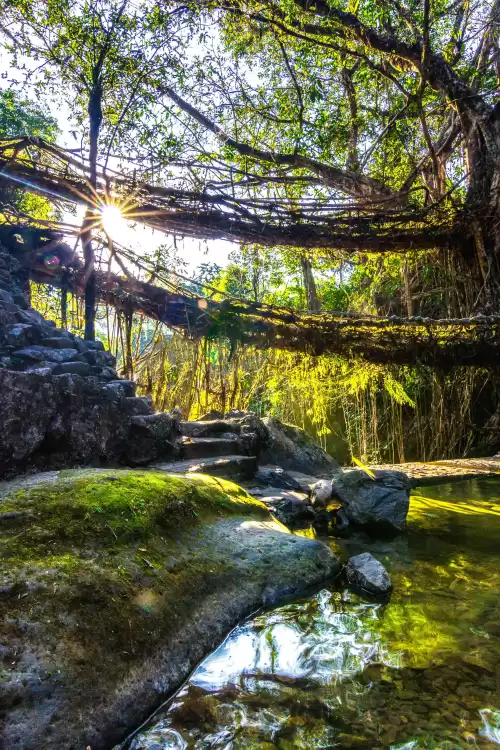
Root bridge treks remain possible during monsoon but require proper footwear, caution on stairways, and additional travel time.
Travelers should walk carefully, use trekking poles when necessary, and avoid rushing through slippery sections of trails.
Waterfall visits, short nature walks, village exploration, and scenic drives are generally more practical than long treks during periods of intense rainfall.
Monsoon offers the best opportunities to capture Meghalaya's waterfalls at maximum volume and visual impact.
Low clouds, shifting fog, and layered mountain scenery create exceptional conditions for landscape photography.
Village roads, forests, meadows, and valleys frequently disappear into mist, creating atmospheric photographs unique to the monsoon season.
Many visitors underestimate how quickly weather conditions can change, especially around Cherrapunji and Mawsynram.
Monsoon travel requires flexibility, and attempting to cover too many destinations in a short period often leads to rushed experiences.
Ignoring warning signs, venturing too close to slippery edges, or attempting risky photography can create serious safety concerns.
| Traveler Type | Monsoon Suitability |
|---|---|
| Nature Lovers | Excellent |
| Photographers | Excellent |
| Waterfall Enthusiasts | Excellent |
| Road Trip Travelers | Good with flexibility |
| Comfort Travelers | Moderate |
| Senior Travelers | Requires planning |
Monsoon is perfect for travelers seeking Meghalaya's most dramatic natural beauty but may not suit visitors who prefer predictable weather and easy sightseeing conditions.
| Season | Best For |
|---|---|
| Monsoon (June–September) | Waterfalls, clouds, greenery, dramatic scenery |
| Winter (October–February) | Clear views, road trips, sightseeing, photography |
| Summer (March–May) | Comfortable weather and balanced travel conditions |
If your goal is to witness Meghalaya at its most powerful and visually spectacular, monsoon remains the most rewarding season despite the challenges.
For travelers who appreciate waterfalls, clouds, mist-covered valleys, and lush green landscapes, Meghalaya during monsoon delivers one of the most extraordinary travel experiences anywhere in India.


Get customized Meghalaya tour planning designed around rainfall patterns, road connectivity, seasonal visibility, and realistic hill travel timing. Whether you are visiting for waterfalls, cave exploration, scenic drives, village experiences, or nature-fo
⚡ Quick Response | 💰 Free consultation | 🕒 24×7 expert support