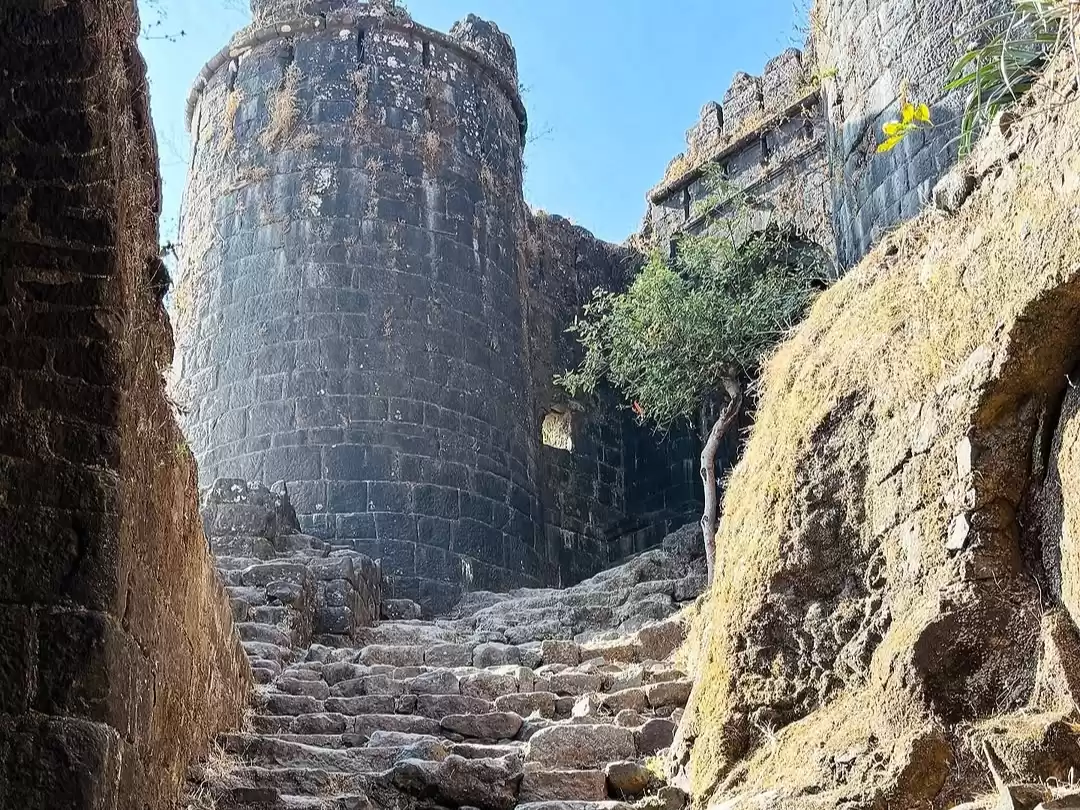
Sinhagad Fort, Pune – The Historic Hill Fort of the Maratha Empire

Sinhagad Fort , Pune
Sinhagad Fort, located about 30 km southwest of Pune, stands atop a hill in the Sahyadri range. Originally known as Kondhana, the fort gained prominence after the 1670 battle led by Tanaji Malusare under Chhatrapati Shivaji Maharaj. The fort features ancient gates, bastions, memorials, and panoramic views of the surrounding valleys. Today, it is a popular trekking and historical destination in Maharashtra.

Quick Facts About Sinhagad Fort

Quick Facts About Sinhagad Fort Pune

Entry Fee Adults 20 | Children 10
Timings 5:00 AM – 6:00 PM (daily)
Altitude (m) 1312 m
Ideal Visit Duration 2–3 hours
Best Time of Day Early morning for trekking and cooler weather
Crowd Level High (very popular on weekends and monsoon season)
Distance from City Centre (km) 30 km (from Pune city centre)
Walking Difficulty Moderate–Challenging (steep trek or uphill road drive)
Parking Available Yes (parking available near fort entrance)
Last Mile Access Taxi/auto to base village; trek or drive to fort top
Suitable for Kids Limited (trekking required; supervision essential)
Suitable for Seniors Limited (steep climb and uneven terrain)
Wheelchair Friendly No

Why Visit Sinhagad Fort Pune

Why Visit

Sinhagad Fort, located about 30 kilometres southwest of Pune, Maharashtra, is a historic hill fort with deep roots in Maratha history. Originally known as Kondhana, the fort gained prominence in 1670 when Tanaji Malusare, a trusted commander of Chhatrapati Shivaji Maharaj, recaptured it from the Mughals. Visitors come to explore its strategic hilltop setting and its strong association with the Maratha Empire.

Atmosphere

The atmosphere is rugged, panoramic, and historically evocative, with sweeping views of the Sahyadri ranges and surrounding valleys. The fort’s stone walls, bastions, and memorial sites create a sense of resilience and legacy. Early mornings are especially popular for trekking, offering cooler weather and clear vistas.

What Makes it Special

What makes Sinhagad Fort special is its legendary connection to the Battle of Sinhagad and the sacrifice of Tanaji Malusare, remembered in Maratha historical accounts. The fort also houses memorials, ancient water cisterns, and remnants of fortifications that reflect medieval military architecture. Its combination of historical significance, trekking appeal, and scenic hilltop location makes it one of Pune’s most iconic forts.

History of Sinhagad Fort Pune

Sinhagad Fort is located approximately 35 kilometers southwest of Pune in Maharashtra, perched atop the Bhuleshwar Range of the Sahyadri (Western Ghats). The fort’s origins date back over a thousand years and it was originally known as Kondhana, reflecting its early medieval history.

The fort gained prominence during the Maratha period under Chhatrapati Shivaji Maharaj. In 1670, it became the site of a significant battle when Tanaji Malusare led a daring night assault to recapture it from the Mughal forces commanded by Udaybhan Rathod. After Tanaji’s death in the battle, Shivaji is said to have remarked, “Gad aala pan Sinha gela” (The fort is won, but the lion is lost), leading to its renaming as Sinhagad, meaning “Lion’s Fort.”

Over the centuries, Sinhagad changed hands between the Marathas, Mughals, and later the British, who used it as a strategic military outpost. Today, the fort stands as a prominent historical monument near Pune, symbolizing Maratha valor and the military history of the Deccan region.

Best Time to Visit – Sinhagad Fort Pune

The best time to visit Sinhagad Fort near Pune, Maharashtra, is from October to February, when the weather is pleasant and ideal for trekking and exploring the historic hill fort. During these months, temperatures are moderate and visibility is clear, making it comfortable to walk along the fort walls and enjoy panoramic views of the Sahyadri ranges.

  • October–November: Post-monsoon greenery with clear skies—ideal for scenic treks and photography.
  • December–January: Coolest and most comfortable season—best for extended exploration of the fort.
  • February: Pleasant weather continues—morning visits are recommended.
  • March–May (Summer): Warm and dry; early morning treks are more manageable.
  • June–September (Monsoon): Heavy rainfall transforms the fort into a lush green landscape, but trails may be slippery during intense showers.

Best time of day: 6:00 AM to 10:00 AM is ideal for trekking to Sinhagad Fort, offering cooler temperatures and clearer views from the top.

  • Heritage tip: Visit the memorial of Tanaji Malusare and explore key fort structures like Pune Darwaza and Kalyan Darwaza.
  • Photography tip: Early morning light enhances panoramic views of the surrounding hills.
  • Visitor note: Weekends attract heavy crowds—start early for a smoother experience.

How to Reach Sinhagad Fort Pune

Sinhagad Fort is located about 30–35 km southwest of Pune city, Maharashtra, near the village of Donaje. Perched atop a hill in the Sahyadri range, the historic Maratha fort is accessible by road up to the base and by trekking or vehicle access to the top (as permitted).

  • By Air (Nearest airport): The nearest airport is Pune International Airport (Lohegaon), approximately 40–45 km away. From the airport, hire a taxi or app-based cab to Sinhagad via Sinhagad Road. Travel time is about 1.5 to 2 hours depending on traffic.
  • By Train (Nearest railway station): Pune Junction Railway Station is about 35 km from Sinhagad Fort. From the station, take a taxi or PMPML bus toward Sinhagad Road and Donaje village.
  • By Road: Sinhagad Fort is accessible via Sinhagad Road from Pune city. PMPML buses operate up to Donaje village (base of the fort). From there, visitors can trek or use local transport to reach the top.
  • Taxi / Private Cab: Hiring a taxi from Pune is the most convenient option, especially for families and groups planning a day trip.
  • Self-drive: Self-driving is convenient via Sinhagad Road. Vehicles are allowed up to the designated parking area near the top (subject to local regulations and timings). Parking fees may apply.
  • Trekking access: Visitors can trek from the base village (Donaje). The trek typically takes 1 to 1.5 hours depending on fitness level and chosen route.
  • Travel tips (EEAT): Visit early morning for pleasant weather and scenic views. Wear sturdy footwear for trekking and carry water. The fort can be crowded on weekends and during monsoon season; exercise caution on slippery paths.

What to Expect When You Visit Sinhagad Fort Pune

Sinhagad Fort, located approximately 30 kilometers southwest of Pune in Maharashtra, is a historic hill fort standing at an elevation of about 1,300 meters above sea level. Originally known as Kondhana, the fort gained prominence during the 17th century under Chhatrapati Shivaji Maharaj and is especially remembered for the Battle of Sinhagad (1670) led by Tanaji Malusare. The visit offers panoramic Sahyadri views and a physically engaging heritage experience rather than a preserved palace complex.

  • Maratha military history: the fort is closely associated with Shivaji Maharaj and the historic 1670 battle fought by Tanaji Malusare.
  • Hilltop panoramic views: expect sweeping views of the Sahyadri mountain range and surrounding valleys.
  • Fortified gateways and bastions: structures such as Pune Darwaza and Kalyan Darwaza reflect traditional Maratha fort architecture.
  • Tanaji memorial site: a memorial honors Tanaji Malusare’s valor at the fort.
  • Moderate to challenging trek: visitors can either trek uphill or access the fort via a motorable road up to a certain point.
  • Open and rugged terrain: much of the fort consists of stone pathways, ruins, and exposed hilltop surfaces.
  • Local food stalls: simple Maharashtrian snacks and refreshments are available near the top.
  • Heavy weekend footfall: being close to Pune, the fort attracts large crowds on holidays.
  • Monsoon greenery transformation: the landscape becomes lush during monsoon, though paths may be slippery.
  • Half-day excursion: most visitors spend several hours exploring viewpoints and historic remnants.

Tip for a smoother visit: start early morning to avoid heat and crowds, wear sturdy footwear for uneven terrain, carry water, and exercise caution during monsoon due to slippery paths and strong winds.

Important Visitor Information – Sinhagad Fort, Pune

  • Crowd & Weather Notes: Sinhagad Fort experiences heavy footfall during weekends, public holidays, and peak tourist season (October to February). Pune has a tropical wet and dry climate; summers (March to May) can be hot, monsoon months (June to September) bring heavy rainfall, mist, and slippery trekking paths, while winters are pleasant and ideal for trekking.
  • Peak / Quiet Hours: Peak hours are early morning and late afternoon when trekkers and local visitors arrive. For a relatively quieter experience, visit early morning on weekdays.
  • Dress Code: No formal dress code applies. Wear comfortable trekking attire and sturdy, non-slip footwear, as the fort involves climbing uneven stone steps and rugged terrain.
  • Safety Notes: Exercise caution on steep slopes, fort walls, and cliff edges. Avoid trekking during heavy rain due to slippery conditions. Carry sufficient water, follow local authority guidelines, and keep personal belongings secure.

Photography and Viewpoint – Sinhagad Fort Pune

Sinhagad Fort, located about 30 km southwest of Pune in Maharashtra, stands atop the Bhuleshwar Range of the Sahyadri hills at an elevation of approximately 1,312 meters. Historically associated with the 1670 Battle of Sinhagad led by Tanaji Malusare under Chhatrapati Shivaji Maharaj, the fort offers expansive valley views, rugged stone gateways, and dramatic monsoon landscapes. Photography here blends hilltop panoramas, heritage ruins, and sunrise–sunset silhouettes.

  • Best light for photography: Sunrise provides soft golden light over the Sahyadri hills, while sunset creates dramatic sky gradients and valley silhouettes.
  • Hilltop panoramic compositions: Use elevated ramparts to capture sweeping views of valleys and surrounding mountain ranges.
  • Stone gateway framing: Highlight historic entrances such as Pune Darwaza and Kalyan Darwaza in symmetrical compositions.
  • Wide vs. telephoto strategy: Wide lenses capture expansive fort landscapes, while telephoto lenses isolate distant hill layers and architectural details.
  • Monsoon mood frames: Lush greenery, mist, and cloud movement during monsoon create dramatic atmospheric imagery.
  • Detail-focused photography: Capture stone walls, bastions, memorial plaques, and rugged textures reflecting Maratha-era fort architecture.
  • Mobile photography tips: Use gridlines for straight horizons, stabilize against stone walls in windy conditions, and adjust exposure during bright daylight.
  • Crowd & timing awareness: Early morning visits provide quieter surroundings and unobstructed rampart viewpoints.
  • Silhouette & trekking frames: Include trekkers along fort edges to add scale and storytelling depth.
  • Responsible heritage photography: Avoid climbing unsafe sections, respect protected structures, and follow local safety and conservation guidelines.

Near By Attraction

Darshan Museum. Spiritual museum in Pune featuring detailed Hindu deity sculptures and cultural exhibits. Museum

Darshan Museum

Darshan Museum is an innovative museum in Pune, offering a multimedia spiritual experience based on the life of Sadhu Vaswani.
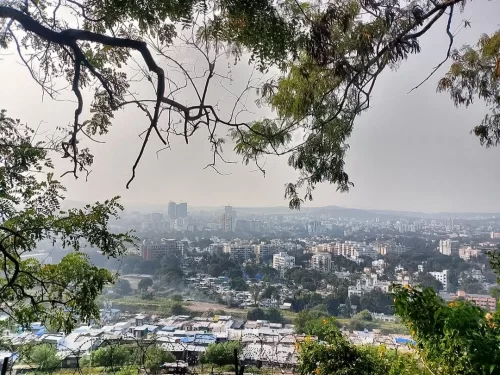
Parvati Hill Pune. Scenic hilltop viewpoint with panoramic city views and historic temples. Temple

Parvati Hill

Parvati Hill is a prominent hill in Pune, known for its ancient temples and panoramic views of the city.

Osho Garden Pune. Serene Zen garden near Osho International Meditation Resort with lush greenery and walking paths. Garden

Osho Garden

Osho Garden is a peaceful landscaped garden in Pune, known for its serene pathways and riverside setting.

Frequently Asked Questions About Sinhagad Fort

Sinhagad Fort is located about 30 kilometers southwest of Pune in Maharashtra on a hilltop in the Sahyadri range. It stands at an elevation of around 1300 meters above sea level.
Sinhagad Fort can be reached within 1.5 to 2 hours by road from Pune city center depending on traffic. Visitors can drive up to the parking area or trek from the base village.
The best time to visit Sinhagad Fort is between October and February when the weather remains pleasant for trekking and sightseeing. Early mornings offer cooler temperatures and clearer views.
Sinhagad Fort is popular for its historical significance scenic hilltop views and trekking routes. It attracts history enthusiasts nature lovers and adventure seekers from Pune and nearby cities.
Sinhagad Fort is suitable for family visits though some walking on uneven terrain is required. Families who prefer less trekking can drive close to the top and explore the fort area at a relaxed pace.
There are no accommodations directly at Sinhagad Fort so travelers usually stay in Pune. Pune offers a wide range of hotels and guesthouses for different budgets.
Sinhagad Fort has basic facilities including small local food stalls drinking water points and parking areas. Restroom facilities are limited and may not always be well maintained.
Most travelers spend two to three hours at Sinhagad Fort exploring viewpoints fort walls and local food stalls. It is commonly planned as a half day trip from Pune.
Trekking is optional at Sinhagad Fort as visitors can either hike from the base or drive up most of the way. The trek route is moderately challenging and suitable for beginners with basic fitness.
Travelers visiting Sinhagad Fort should wear comfortable trekking shoes carry drinking water and check weather conditions in advance. Visiting early in the day helps avoid heavy crowds and midday heat.

Loved this place ? Let’s Plan Your Maharashtra Trip

Get customized Maharashtra tour planning designed around seasonal weather shifts, long-distance road travel flow, hill station comfort, coastal timing, and heritage exploration pacing. Whether you are visiting for historic caves, spiritual journeys, beach

⚡ Quick Response | 💰 Free consultation | 🕒 24×7 expert support

×

Plan Your Trip