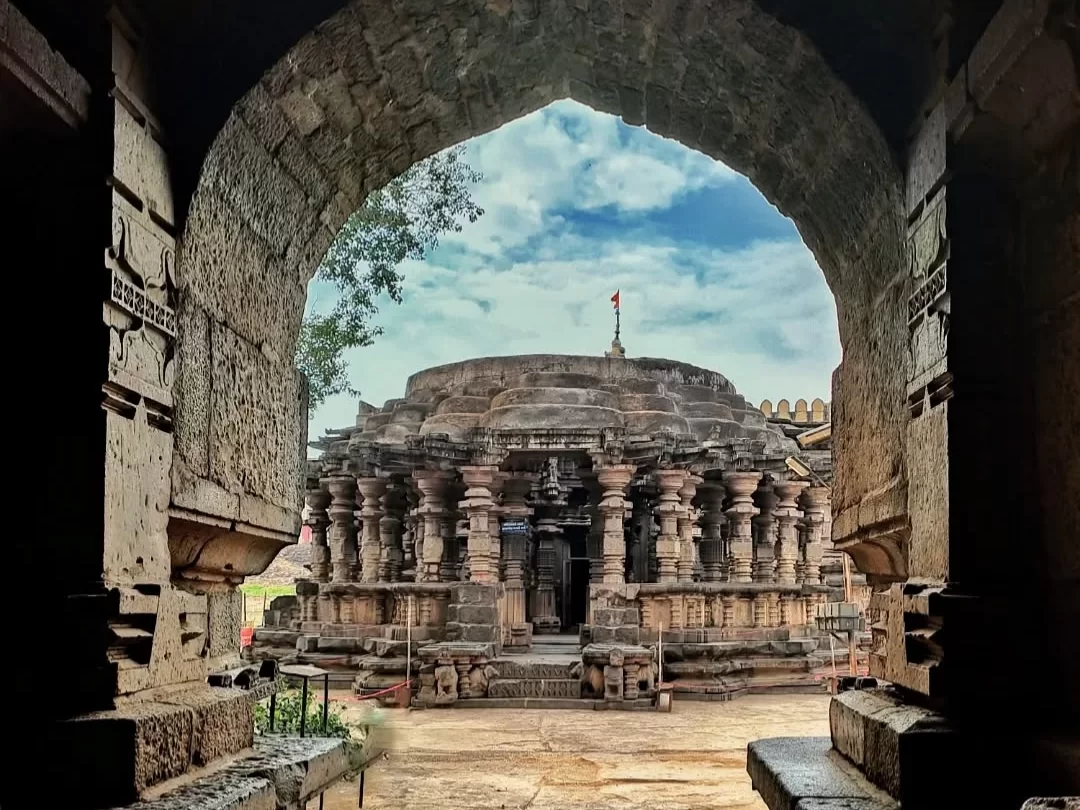
Shri Kopeshwar Temple Khidrapur, Maharashtra, India

Shri Kopeshwar Temple , Kolhapur
Tourists visit the temple for its intricate stone carvings, circular Swargamandapa assembly hall, and detailed sculptural panels built during the Shilahara and later Yadava periods. The temple stands close to the Maharashtra–Karnataka border and remains an active place of worship.

Quick Facts About Shri Kopeshwar Temple

Quick Facts – Shri Kopeshwar Temple Khidrapur

Entry Fee Free
Timings Open daily approximately 6:00 AM – 8:00 PM.
Altitude (m) Approximately 550 m above sea level.
Ideal Visit Duration 45–60 minutes.
Best Time of Day Morning for peaceful darshan and photography.
Crowd Level Low on weekdays; moderate during Mahashivratri and weekends.
Distance from City Centre (km) Approximately 60 km from Kolhapur city centre.
Walking Difficulty Easy; short walk from parking area.
Parking Available Yes (basic parking near temple complex).
Last Mile Access Accessible by road up to temple entrance.
Suitable for Kids Yes.
Suitable for Seniors Yes (minimal walking required).
Wheelchair Friendly No; steps at entrance and uneven stone flooring inside.

Why Visit Shri Kopeshwar Temple, Khidrapur

Shri Kopeshwar Temple in Khidrapur attracts visitors for its detailed stone architecture and riverside setting along the Krishna River. Travelers come here to see the intricately carved pillars, sculpted ceilings, and the unique circular Sabha Mandap that distinguishes this temple from many other Shiva shrines in Maharashtra.

The atmosphere at the temple is calm and less crowded compared to major pilgrimage centers. Located in a rural setting, the approach involves village roads leading to the temple complex, where the stone structure stands prominently against open skies and river plains. The interior remains shaded and quiet, allowing visitors to observe carvings closely.

What makes Shri Kopeshwar Temple distinct is its architectural layout, particularly the absence of a traditional Nandi idol directly facing the sanctum and the presence of a richly carved circular assembly hall. For travelers interested in temple architecture and lesser-known heritage sites, it offers a detailed, experience-focused visit away from urban crowds.

History of Shri Kopeshwar Temple, Khidrapur

Shri Kopeshwar Temple is an ancient Shiva temple located in Khidrapur village in Kolhapur district, Maharashtra, near the banks of the Krishna River. The temple is primarily attributed to the Shilahara dynasty and is dated to the 12th century CE, with later additions by the Yadava rulers of Devagiri. Its historical foundation is supported by architectural style and inscriptions associated with medieval Deccan temple construction.

The temple is built in black basalt stone and is renowned for its detailed sculptural work, ornate pillars, and a unique circular hall known as the “Swarga Mandap.” Unlike most Shiva temples, it notably lacks a traditional Nandi idol directly facing the sanctum, which distinguishes it architecturally and ritually from standard Shaivite temple layouts.

Shri Kopeshwar Temple remains an active place of worship and holds religious significance in Shaivite tradition. Its location near the Krishna River and its preserved medieval carvings make it both a sacred site and an important example of Western Deccan temple architecture from the late medieval period.

Best Time to Visit – Shri Kopeshwar Temple, Khidrapur

Shri Kopeshwar Temple in Khidrapur is most comfortable to visit during cooler, drier months, as the temple complex includes open stone courtyards and is located near the Krishna River, where humidity and heat can affect daytime visits.

  • Ideal months: October to February offers the most pleasant weather for exploring the temple’s intricate stone architecture in detail.
  • Weather during the best season: Winter in this part of Kolhapur district typically brings moderate daytime temperatures (around 15–30°C) with lower humidity. The stone floors remain cooler, and lighting conditions are better for observing carvings inside the mandapa and swargamandapa structure.
  • Periods to avoid (and why): March to May afternoons can become hot (often above 35°C), making exposed areas uncomfortable. During June to September, monsoon rains may cause waterlogging on approach roads near the Krishna River and restrict comfortable movement around the temple premises.

How to Reach Shri Kopeshwar Temple, Khidrapur

  • Nearest Airport: Kolhapur Airport (approximately 55–60 km from Khidrapur) offers limited domestic connectivity. For broader flight options, Belagavi Airport (around 70–80 km away) and Pune International Airport (approximately 290 km away) are commonly used. Travel time from Kolhapur to the temple by road is about 1.5–2 hours depending on rural road conditions.
  • Nearest Railway Station: Kolhapur (Chhatrapati Shahu Maharaj Terminus) is the nearest major railway station (around 60 km away) with regular connectivity to Mumbai and Pune. Jaysingpur Railway Station (approximately 30 km away) is geographically closer but has limited train services. From either station, taxis are the most practical onward option.
  • Road Access & Last-Mile Connectivity: Shri Kopeshwar Temple is located in Khidrapur village near the Maharashtra–Karnataka border, on the banks of the Krishna River. The temple is accessible by road via Shirol from Kolhapur. Private vehicles and taxis can reach close to the temple entrance, with basic parking available nearby. The final approach involves a short walk through the village area. Roads in the last stretch are narrow and rural, and during the monsoon season, waterlogging and slippery surfaces may slow travel.

What to Expect When You Visit Shri Kopeshwar Temple Khidrapur

  • Environment and Surroundings: Shri Kopeshwar Temple is located in Khidrapur village near the banks of the Krishna River, in Kolhapur district, Maharashtra. The temple stands in a relatively rural setting with open agricultural fields and river proximity. Built primarily in black basalt stone, the structure features detailed carvings and a circular sabha mandap (assembly hall). The surroundings are quiet compared to major pilgrimage centers, though the riverbank area can become humid, especially in summer. During monsoon (June to September), the nearby Krishna River may swell, and access roads can be affected by heavy rainfall.
  • Facilities and Amenities: Infrastructure at the site is basic. There are small local stalls selling flowers and ???? items near the entrance, but no large commercial establishments. Public toilet facilities are limited and simple. There are no extensive seating arrangements within the temple complex. Drinking water availability may be minimal, so carrying water is advisable. Structured tourist amenities are limited due to the village location.
  • Accessibility and Movement: The temple is accessible by motorable road and is approximately 60 km from Kolhapur city. The final stretch passes through rural roads that may be narrow in sections. Parking is available near the temple but is unstructured. Entry into the temple involves stepping down into the mandap area, and the stone flooring can be uneven. During rainy weather, the stone surfaces may become slippery. Footwear must be removed before entering the temple premises.
  • Typical Visitor Behavior and Conditions: The temple receives steady but moderate footfall, mainly from devotees and heritage visitors. It is comparatively less crowded than major temples in Kolhapur. Visitors typically spend 30–45 minutes exploring the carved pillars and sanctum area. On Maha Shivaratri and other important religious occasions, footfall increases, though crowd management remains simpler than in urban temple complexes.

Important Visitor Information – Shri Kopeshwar Temple Khidrapur

  • Crowd & Weather Notes: Shri Kopeshwar Temple generally sees moderate visitor flow, with increased footfall during Maha Shivratri and major Hindu festivals. The temple is located near the Krishna River; summers (March to May) can be hot in the open courtyard, while monsoon (June to September) brings humidity and occasional river swelling in surrounding areas.
  • Peak / Quiet Hours: Late mornings between 9:00 AM and 12:00 PM are typically busier for darshan. Weekday afternoons are comparatively quieter outside festival days.
  • Dress Code: Modest attire is expected within the temple premises. Footwear must be removed before entering the mandapa and sanctum area. Conservative clothing covering shoulders and knees is advisable.
  • Safety Notes: The temple features intricately carved stone floors and steps that may become slippery during monsoon. The circular Swarga Mandapa has open sections without a roof; visitors should move carefully around carved pillars and raised platforms. Basic facilities in the immediate vicinity are limited, so carrying water is advisable.

Photography and Viewpoints – Shri Kopeshwar Temple, Khidrapur

  • Best viewpoints/angles: The circular Swargamandap (open ceiling mandapa) is the most distinctive feature—stand directly beneath the oculus to frame the carved pillars against the sky; exterior shots from the temple’s river-facing side capture the intricate Hemadpanti stonework and sculpted panels; angled views along the mandapa corridor highlight the depth and symmetry of the carved columns.
  • Lighting & time-of-day: Early morning light filters naturally through the open Swargamandap roof, illuminating interior carvings with soft contrast; late afternoon enhances the texture of the exterior stone reliefs; midday can create strong top-light through the oculus, producing dramatic vertical light beams depending on season and sun position.
  • Rules/restrictions: Photography is generally permitted in outer mandapas and temple premises, but photography inside the sanctum (garbhagriha) is not allowed; avoid flash near idols and during active ???? (worship); always follow on-site instructions from temple authorities.
  • Crowd & access factors: The temple is relatively quieter on weekdays, allowing uninterrupted architectural compositions; weekends and festival days increase devotee presence; the stone flooring can be uneven, and the surrounding area may be slippery during monsoon due to proximity to the Krishna River.

Near By Attraction

Radhanagari Wildlife Sanctuary in Maharashtra featuring an Indian gaur standing amidst dense forest greenery, a rich biodiversity hotspot included in Maharashtra tour packages Wildlife Sanctuary

Radhanagari Wildlife Sanctuary

Radhanagari Wildlife Sanctuary is a protected forest reserve located in Kolhapur district of Maharashtra, India.
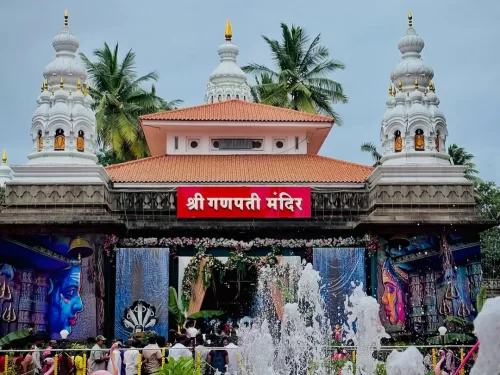
Sangli Shri Ganpati Temple in Maharashtra featuring the grand temple entrance with white domes, vibrant murals and devotees gathered for darshan, a prominent spiritual landmark included in Maharashtra tour packages Temple

Sangli Shri Ganapati Temple

Sangli Shri Ganapati Temple is a historic Hindu temple dedicated to Lord Ganesha, located in Sangli city, Maharashtra, India.
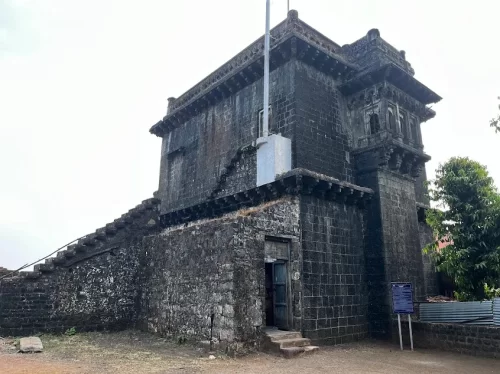
Sajja Kothi Kolhapur historic watchtower and Maratha era monument in Maharashtra tour packages Historical Site

Sajja Kothi

Sajja Kothi is a historic watchtower structure located near Rankala Lake in Kolhapur city, Maharashtra, India.

Frequently Asked Questions About Shri Kopeshwar Temple

The best time to visit Shri Kopeshwar Temple is between October and March when the weather in Maharashtra remains pleasant for temple visits. Early morning hours provide a quieter atmosphere for darshan.
Shri Kopeshwar Temple is located in Khidrapur village in Kolhapur district of Maharashtra near the banks of the Krishna River. The temple is known for its intricate stone carvings and historic importance.
Shri Kopeshwar Temple can be reached within about 1.5 to 2 hours from Kolhapur by private vehicle. The route passes through rural roads that are generally motorable and well connected.
Shri Kopeshwar Temple is generally open from early morning until evening with specific timings for rituals and aarti. Visiting during daylight hours allows better viewing of the architectural details.
There is no formal entry fee for darshan at Shri Kopeshwar Temple, as it is open to all devotees. Voluntary donations are accepted for maintenance of the temple complex.
Most visitors spend around one to two hours exploring Shri Kopeshwar Temple. The time required depends on interest in the temple’s detailed carvings and spiritual rituals.
Shri Kopeshwar Temple is suitable for senior citizens who can manage short walks and a few steps within the premises. Visitors can move at a comfortable pace around the temple courtyard.
Shri Kopeshwar Temple is architecturally significant for its circular sanctum design and detailed stone sculptures reflecting ancient craftsmanship. The structure attracts both devotees and heritage enthusiasts.
Photography at Shri Kopeshwar Temple may be restricted inside the sanctum area. Visitors should confirm local guidelines before taking pictures within the temple complex.
Shri Kopeshwar Temple can easily be included in a Kolhapur temple tour plan along with nearby religious and historical sites. Its riverside setting makes it suitable for a half day visit.

Loved this place ? Let’s Plan Your Maharashtra Trip

Get customized Maharashtra tour planning designed around seasonal weather shifts, long-distance road travel flow, hill station comfort, coastal timing, and heritage exploration pacing. Whether you are visiting for historic caves, spiritual journeys, beach

⚡ Quick Response | 💰 Free consultation | 🕒 24×7 expert support

×

Plan Your Trip