Quick Facts About Shingroba Waterfall
Shingroba Waterfall, Maharashtra Quick Facts
| Entry Fee | No entry fee. |
|---|---|
| Timings | Accessible during daylight hours; visiting during the monsoon season requires extra caution. |
| Altitude (m) | Approximately 600 m |
| Ideal Visit Duration | 30 minutes–1 hour |
| Best Time of Day | Morning or early afternoon for better visibility and safer access. |
| Crowd Level | Low on weekdays; moderate during monsoon weekends. |
| Distance from City Centre (km) | Approximately 15 km from Mahabaleshwar town centre. |
| Walking Difficulty | Easy to moderate; access involves walking on natural and sometimes uneven surfaces. |
| Parking Available | Limited roadside parking may be available near the access point. |
| Last Mile Access | Accessible by road followed by a short walk to the waterfall area. |
| Suitable for Kids | Yes, with close supervision, especially during the monsoon due to slippery surfaces. |
| Suitable for Seniors | Only if comfortable walking on uneven and potentially slippery terrain. |
| Wheelchair Friendly | No; the natural pathway and waterfall area are not wheelchair accessible. |
Why Visit Shingroba Waterfall, Maharashtra
Visitors come to Shingroba Waterfall to enjoy a seasonal natural attraction surrounded by the greenery and hilly landscape of Maharashtra. The waterfall is mainly visited during the monsoon when rainwater increases the flow and enhances the beauty of the surrounding area.
The atmosphere is peaceful and refreshing, with the sound of flowing water, rocky terrain, and lush vegetation creating a pleasant stop for nature lovers. Visitors should expect a natural setting with limited facilities and uneven surfaces near the waterfall area.
What makes Shingroba Waterfall distinct is its simple, scenic character and location within the Western Ghats landscape. It offers travelers an opportunity to experience a quieter roadside nature spot away from heavily developed tourist attractions.
History of Shingroba Waterfall, Maharashtra
Shingroba Waterfall is a natural waterfall located in the Western Ghats of Maharashtra. As a naturally formed geographical feature, it does not have a documented historical background, architectural heritage, or recorded cultural association.
The waterfall is known mainly for its seasonal beauty during the monsoon when rainfall increases the water flow across the rocky terrain. It forms part of the natural landscape of the Sahyadri ranges, where streams and cascades are shaped by the region's mountainous terrain and heavy seasonal rainfall.
Today, Shingroba Waterfall is visited by travelers exploring Maharashtra's natural attractions. Its importance is linked to its scenic surroundings, monsoon experience, and location within the Western Ghats rather than historical significance.
Best Time to Visit Shingroba Waterfall, Maharashtra
The best time to visit Shingroba Waterfall is from July to October, when monsoon rainfall increases the water flow and enhances the natural beauty of the surrounding Sahyadri landscape. The waterfall is most suitable for visitors who enjoy seasonal nature spots, with attention needed for wet and slippery conditions during rains.
- Ideal months: July to October, with August and September generally offering better waterfall flow and greener surroundings.
- Best season conditions: Monsoon and early post-monsoon months provide active water flow, fresh vegetation, and scenic conditions for nature visits and photography.
- Periods to avoid: March to May due to reduced water availability and warmer weather. During heavy monsoon rainfall, nearby paths and rocky areas may become slippery, so visitors should check local conditions before visiting.
How to Reach Shingroba Waterfall, Maharashtra
- Nearest Airport: The nearest airport is Pune International Airport, approximately 75 km from Shingroba Waterfall. Taxis and private vehicles are available from Pune for the onward journey through the Western Ghats.
- Nearest Railway Station: Pune Railway Station is the nearest major railway station with extensive connectivity to major cities. From Pune, visitors can continue by taxi or bus towards the waterfall area.
- By Road: Shingroba Waterfall is located along the old Mumbai–Pune route near the Khandala–Lonavala region of Maharashtra. It is accessible by private vehicle or taxi via the ghat roads. Visitors can stop near the roadside waterfall area and explore the surroundings on foot. During the monsoon, water flow increases but the rocks and roadside paths can become slippery, so extra caution is required while approaching the waterfall.
What to Expect When You Visit Shingroba Waterfall, Maharashtra
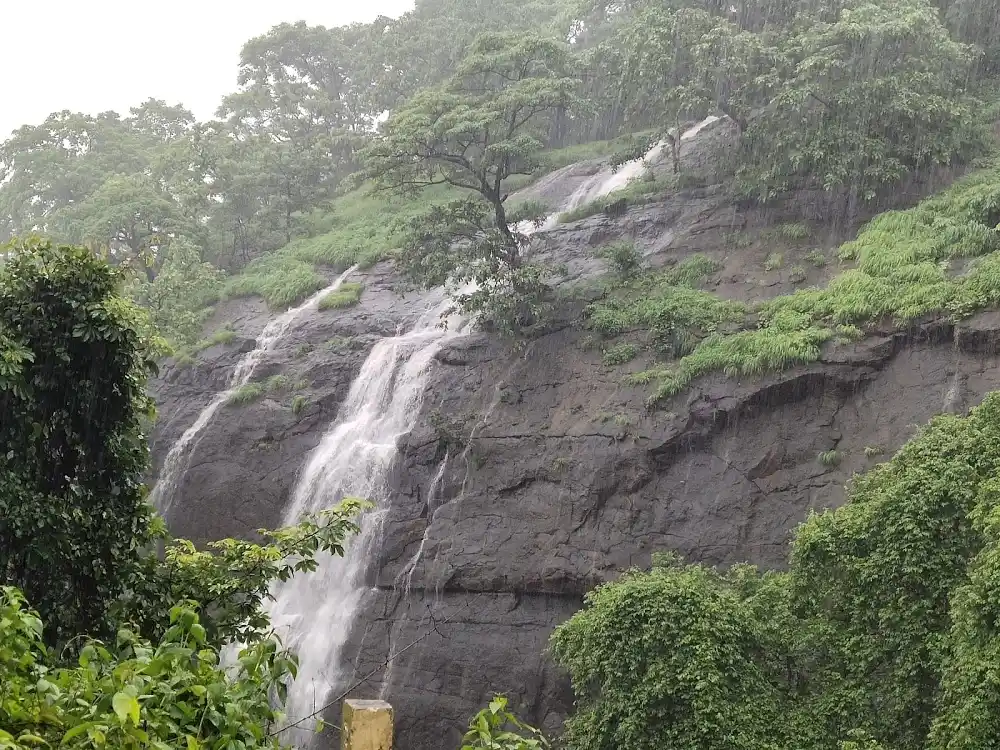
- Shingroba Waterfall is a seasonal natural waterfall located in the Western Ghats of Maharashtra. The waterfall is most active during the monsoon season when rainfall increases the water flow through the forested landscape.
- The surroundings are dominated by greenery, rocky terrain, and mountain scenery typical of the Sahyadri region. Visitors should expect a natural spot with limited development rather than a fully managed tourist facility.
- Access generally involves a roadside stop followed by walking on uneven natural surfaces. Rocks and pathways can become slippery during and after rainfall, requiring careful movement.
- Facilities at the waterfall area are limited. Visitors should carry drinking water and basic essentials, as restaurants, shops, fuel stations, and restrooms are usually available only at nearby towns or main roads.
- The waterfall attracts nature lovers, local visitors, and photographers during the monsoon months. Crowds may increase on weekends and holidays when the water flow is at its peak.
- Swimming or entering the waterfall pool is not recommended because water depth, current strength, and hidden rocks can change after heavy rainfall.
- Photography is popular during the rainy season when the surrounding hills are covered with greenery. Visitors should maintain distance from slippery edges while taking photographs.
- Weather conditions in the Western Ghats can change quickly. Wearing footwear with good grip, checking local weather conditions, and avoiding visits during heavy rainfall are advisable for safety.
Important Visitor Information for Shingroba Waterfall, Maharashtra
- Crowd and weather: Shingroba Waterfall is mainly visited during the monsoon and immediately after the rainy season when the water flow is stronger. Weekends and holidays usually attract more visitors, while heavy rainfall can make the surrounding terrain slippery and difficult to access.
- Peak and quiet visiting hours: Morning hours are generally quieter and offer better conditions for exploring the waterfall area. Visitor activity usually increases from late morning to afternoon during the monsoon season.
- Dress code: There is no formal dress code. Wear comfortable outdoor clothing and footwear with good grip, as the area may have wet rocks, muddy paths, and uneven surfaces during the rainy season.
- Safety and practical cautions: Rocks around the waterfall can become slippery, and water flow may increase suddenly during heavy rains. Avoid standing close to strong currents or slippery edges, and take extra care while walking on wet trails. Facilities near natural waterfall areas may be limited, so carry essential supplies before visiting.
Photography and Viewpoints at Shingroba Waterfall, Maharashtra
- The roadside viewpoint near Shingroba Waterfall provides the main photography spot, allowing visitors to capture the cascading water against the rocky hillside and surrounding greenery.
- The waterfall is most photogenic during the monsoon and immediately after the rainy season when water flow increases and the surrounding vegetation appears greener.
- Early morning and late afternoon offer softer natural light for photographing the waterfall and landscape, while cloudy monsoon conditions can provide even lighting across the wet rock surfaces.
- Photography is generally permitted from safe viewing areas. Visitors should avoid stepping close to the flowing water or climbing slippery rocks, as the area can become hazardous during heavy rainfall.
- The viewpoint may become busy during monsoon weekends and holiday periods due to its roadside accessibility. Visiting on weekdays or during early hours offers better opportunities for clear photographs with fewer visitors.