+91 9910402252
admin@chalbanjare.com


| Entry Fee | INR 10 for Indians, INR 250 for Foreign Nationals; additional charges for camera |
| Timings | 9:00 AM - 5:30 PM (closed on Tuesdays) |
| Altitude (m) | Approx. 600 m |
| Ideal Visit Duration | 1-2 hours (depending on the time spent exploring the temple and surroundings) |
| Best Time of Day | Morning (cooler weather and fewer crowds) |
| Crowd Level | Moderate to high; higher on weekends and public holidays |
| Distance from City Centre (km) | Approx. 30 km from Aurangabad city centre |
| Walking Difficulty | Moderate (some uneven terrain and steps; the temple itself is a rock-cut structure) |
| Parking Available | Yes (designated parking areas near the entrance) |
| Last Mile Access | Accessible by car/auto to the temple entrance; short walk to the temple complex |
| Suitable for Kids | Yes (with supervision near edges and steps) |
| Suitable for Seniors | Partially (steps and uneven ground may be challenging for some) |
| Wheelchair Friendly | No (steps and uneven terrain) |
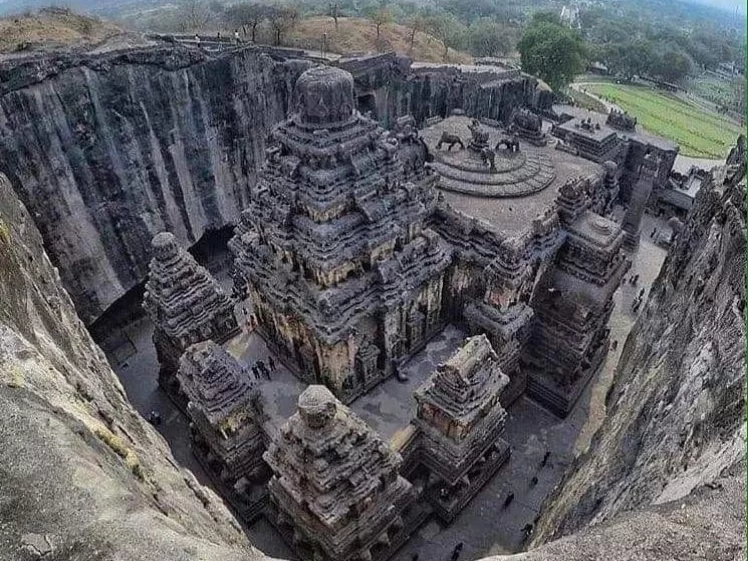
Visitors come to the Rashtrakuta Era Shri Kailasa Temple in Ellora to witness one of India’s most extraordinary architectural marvels, carved entirely from a single monolithic rock. Dating back to the 8th century, this temple, dedicated to Lord Shiva, showcases remarkable engineering skills from the Rashtrakuta dynasty and is renowned for its intricate sculptures and grand design. It stands as a testament to the architectural brilliance of ancient India.
The on-ground atmosphere is awe-inspiring, with visitors marveling at the massive structure that seems to emerge from the rock itself. The temple’s detailed carvings and the surrounding courtyards provide a peaceful and reflective environment for exploration. The sheer scale and complexity of the temple make it one of the most unique and striking sites in the Ellora Caves complex, offering a quiet and immersive experience away from the crowds.
What makes the Rashtrakuta Era Shri Kailasa Temple distinct for travelers is its monumental size and single-piece construction, setting it apart from other rock-cut temples. Unlike many other ancient sites, this temple allows visitors to appreciate the ingenuity and artistry involved in carving such an elaborate structure directly from the rock. It’s a must-visit for those interested in ancient architecture, history, and the legacy of the Rashtrakutas.
The Shri Kailasa Temple, located in Ellora Caves, Maharashtra, is one of the most remarkable architectural feats of the Rashtrakuta dynasty, dating back to the 8th century. This temple, also known as Cave 16, is a single monolithic structure carved out of solid rock, making it one of the largest and most intricate rock-cut temples in the world. The temple was commissioned by King Krishna I of the Rashtrakuta dynasty, reflecting the architectural ingenuity of the period.
The temple is dedicated to Lord Shiva and is designed to resemble Mount Kailash, the mythical abode of Lord Shiva. It features a stunning vertical excavation, where the entire structure, including its intricate carvings, columns, and sanctum, was carved from top to bottom in one continuous effort. The temple complex also includes large courtyards, inner chambers, and several sculptures of Hindu deities, all demonstrating the artistic and engineering brilliance of the Rashtrakuta era.
Today, the Kailasa Temple is a UNESCO World Heritage Site and a major tourist attraction, renowned for its grandeur, intricate carvings, and religious significance. The temple is not only a testament to the advanced engineering and craftsmanship of the Rashtrakutas but also an important site of religious and cultural heritage in India.
The best time to visit the Rashtrakuta Era Shri Kailasa Temple in Ellora is from October to March, when the weather is cooler and more comfortable for exploring this extraordinary rock-cut temple and its intricate carvings without the intense summer heat or monsoon rains.
The Shri Kailasa Temple at Ellora is one of the most remarkable rock-cut temples in India, built during the Rashtrakuta dynasty in the 8th century. It is part of the Ellora Caves complex and is famous for its unique architecture and intricate carvings. The temple is a single monolithic structure, carved from a single piece of rock, showcasing extraordinary engineering and artistic skill.
The Shri Kailasa Temple at Ellora, also known as Kailasa Temple (Cave 16), is one of the most remarkable architectural feats of the Rashtrakuta Dynasty. Carved entirely out of a single monolithic rock, it is a stunning example of ancient rock-cut architecture and a UNESCO World Heritage site. The temple’s intricate carvings, massive pillars, and grandeur make it one of the most photographed locations in India.
 Tourist Attraction
Jayakwadi Dam is a major irrigation and water-storage dam built across the Godavari River near Paithan in Maharashtra.
 Fort
Fort
Daulatabad Fort is a medieval hill fortress at Daulatabad near Chhatrapati Sambhajinagar, Maharashtra, known for its strategic defensive design and fortified hilltop setting.
 Temple
Shri Grishneshwar Jyotirlinga Temple is a historic Hindu temple dedicated to Lord Shiva, located near the Ellora Caves in Chhatrapati Sambhajinagar district, Maharashtra.
Get customized Maharashtra tour planning designed around seasonal weather shifts, long-distance road travel flow, hill station comfort, coastal timing, and heritage exploration pacing. Whether you are visiting for historic caves, spiritual journeys, beach
⚡ Quick Response | 💰 Free consultation | 🕒 24×7 expert support

