Quick Facts About Rankala Lake
Quick Facts – Rankala Lake Kolhapur
| Entry Fee | Free |
| Timings | Open throughout the day; promenade area active from early morning until late evening. |
| Altitude (m) | Approximately 560 m above sea level. |
| Ideal Visit Duration | 45–90 minutes. |
| Best Time of Day | Early morning for walks or evening for sunset views. |
| Crowd Level | High in the evening and on weekends; moderate on weekday mornings. |
| Distance from City Centre (km) | Approximately 2 km from Kolhapur city centre (Mahadwar Road area). |
| Walking Difficulty | Easy; flat paved promenade around the lake. |
| Parking Available | Yes (public parking along Rankala Road). |
| Last Mile Access | Accessible by car, auto-rickshaw, and city buses up to the lakeside road. |
| Suitable for Kids | Yes. |
| Suitable for Seniors | Yes (benches and level walking paths available). |
| Wheelchair Friendly | Partially; paved sections are accessible, but some areas may have uneven surfaces. |
Why Visit Rankala Lake, Kolhapur
Rankala Lake in Kolhapur attracts visitors as one of the city’s most accessible open spaces for evening walks and lakeside relaxation. Travelers come here to spend time along the promenade, enjoy local street snacks, and observe sunset views reflecting across the wide waterbody.
The atmosphere around Rankala Lake is active during late afternoons and evenings, with families, joggers, and local vendors lining the paved walkway. The open layout allows steady movement, and the lakeside breeze makes it more comfortable compared to the busier market areas of Kolhapur.
What makes Rankala Lake distinct is its role as a social and recreational hub rather than a formal tourist monument. Unlike viewpoint-based attractions, it offers an urban waterfront setting within the city, giving travelers a chance to experience Kolhapur’s everyday public life alongside scenic water views.
History of Rankala Lake, Kolhapur
Rankala Lake is a historic water body located in Kolhapur city, Maharashtra. The lake is believed to have originated after a major earthquake in the 9th century, which caused structural changes in the underlying basalt rock formations. Over time, the natural depression accumulated water and evolved into a permanent lake.
During the 19th century, under the rule of the Kolhapur princely state, the lakefront was developed with stone embankments and pathways to stabilize its edges and enhance accessibility. The construction of the Rankala Chaupati and later additions such as Shalini Palace along its banks reflect the planned urban development of Kolhapur during the princely era.
Rankala Lake has remained an important civic and recreational landmark rather than a religious monument. Its historical significance lies in its transformation from a geological formation into a structured urban lake integrated into Kolhapur’s princely-period planning and public life.
Best Time to Visit – Rankala Lake Kolhapur
Rankala Lake in Kolhapur is most enjoyable during cooler months when evening walks along the lakeside promenade are comfortable and visibility across the water is clear.
- Ideal months: October to February offers the most pleasant conditions for lakeside visits.
- Weather during the best season: Winter brings milder temperatures (approximately 15–30°C) with relatively lower humidity, making sunset strolls and time spent at the promenade comfortable. Skies are generally clearer, enhancing views across the lake.
- Periods to avoid (and why): March to May afternoons can be hot, often crossing 35°C, making exposed walking areas uncomfortable. June to September sees monsoon rainfall in Kolhapur, which can limit time outdoors and reduce visibility across the lake during heavy showers.
How to Reach Rankala Lake Kolhapur
- Nearest Airport: Kolhapur Airport (approximately 12–15 km from Rankala Lake) offers limited domestic connectivity. For broader flight options, Belagavi Airport (around 115 km away) and Pune International Airport (approximately 230 km away) are commonly used. Travel time from Kolhapur Airport to the lake area is about 25–35 minutes by taxi, depending on traffic.
- Nearest Railway Station: Kolhapur (Chhatrapati Shahu Maharaj Terminus) is the nearest railway station (about 4–5 km from Rankala Lake) with regular connectivity to Mumbai, Pune, and other cities. Auto-rickshaws, taxis, and city buses are readily available outside the station for direct access.
- Road Access & Last-Mile Connectivity: Rankala Lake is located within Kolhapur city and is directly accessible by private vehicle, taxi, auto-rickshaw, and local buses. Parking areas are available along Rankala Chowpatty and near the promenade. The final access involves short, level walks along the lakeside pathway. Traffic congestion increases during evenings, weekends, and festival periods, especially near food stalls and recreational zones.
What to Expect When You Visit Rankala Lake Kolhapur
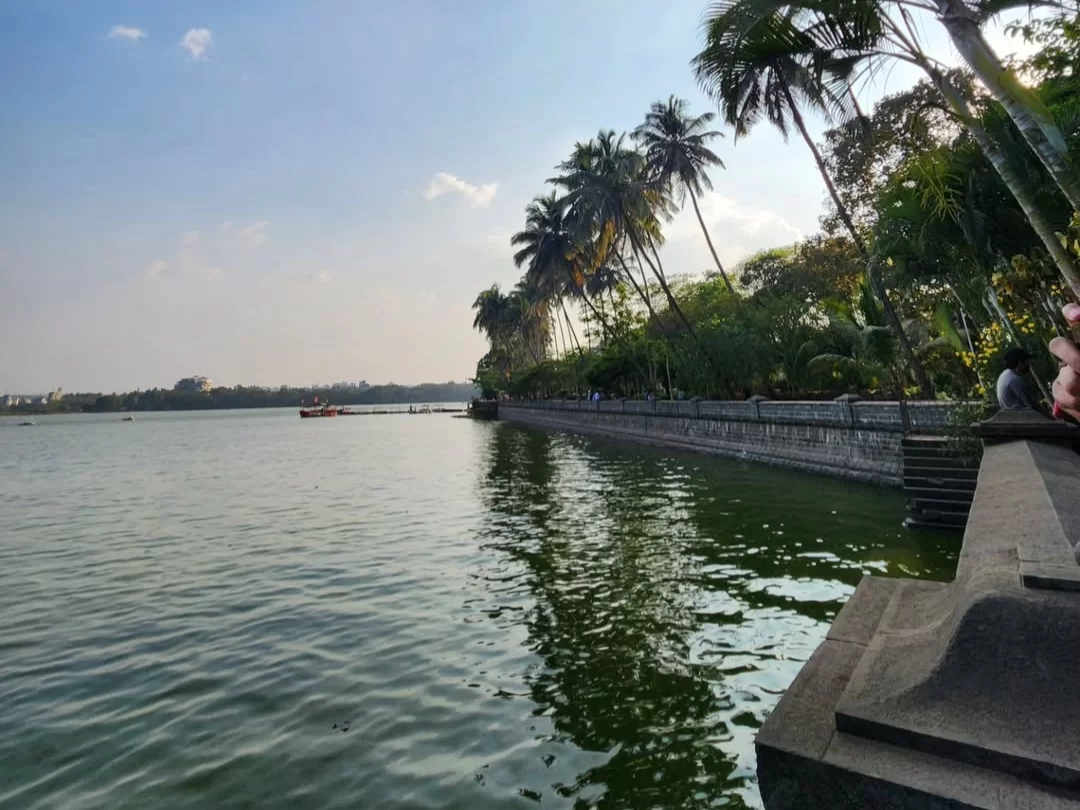
- Environment and Surroundings: Rankala Lake is located on the western side of Kolhapur city in Maharashtra and serves as a prominent urban water body surrounded by a developed promenade. The lake is broad and relatively shallow, with a stone-paved walking track along parts of its perimeter. The Shalini Palace structure is visible across the water. The area is open and exposed to sunlight during the day, while evenings are cooler with steady pedestrian activity. During monsoon (June to September), water levels rise and the surroundings appear greener, though occasional water stagnation and algae growth may be visible.
- Facilities and Amenities: The promenade area includes seating benches, street lighting, snack stalls, and small amusement activities such as horse rides or toy vendors in the evening. Public toilets are available near main access points but maintenance quality can vary. Informal food stalls are concentrated along the main stretch. Waste bins are placed at intervals, though cleanliness depends on crowd volume.
- Accessibility and Movement: Rankala Lake is directly accessible by road from any part of Kolhapur city and is approximately 4–5 km from Kolhapur Railway Station. Parking space is available along designated roadside areas but can become limited during peak evening hours. The walking path is largely paved and flat, making it manageable for most age groups, though certain sections may be uneven or crowded.
- Typical Visitor Behavior and Conditions: The lakefront is most active in the evening, particularly between 5:30 pm and 8:30 pm. Families, walkers, and local residents frequent the area daily. Weekends and public holidays bring higher crowds. Visitors typically spend 30–60 minutes walking along the promenade or sitting near the water. Early mornings are quieter and more suitable for uninterrupted walks, while late evenings may experience traffic congestion near entry points.
Important Visitor Information – Rankala Lake Kolhapur
- Crowd & Weather Notes: Rankala Lake sees consistent local and tourist footfall, especially in the evenings and on weekends. Winter months (October to February) offer the most comfortable weather for walking along the promenade. During monsoon (June to September), water levels rise and the lakeside walkway may remain wet, though the surroundings appear greener.
- Peak / Quiet Hours: The busiest time is between 5:00 PM and 8:00 PM, when families and visitors gather for sunset views and street food. Early mornings before 8:00 AM are comparatively quieter and preferred for walking or jogging.
- Dress Code: No formal dress code applies. Comfortable walking footwear is recommended due to the long promenade stretch and occasional uneven paving.
- Safety Notes: The lake is not designated for swimming, and entering the water is discouraged. Visitors should stay within the paved promenade area, especially after dark. Parking is available along the lakeside road, but traffic congestion is common during evening peak hours.
Photography and Viewpoints – Rankala Lake Kolhapur
- Best viewpoints/angles: The western promenade offers wide sunset compositions across the lake with the Shalini Palace visible on the far bank; frame the palace slightly off-center from the walking track for balanced water reflections; the Rankabhairav Temple side provides foreground elements like railings and steps leading toward the water for depth.
- Lighting & time-of-day: Late afternoon to sunset is the strongest window, with warm light reflecting across the lake surface and silhouettes forming along the horizon; early mornings provide softer tones and calmer water for reflection shots; post-monsoon months often offer clearer skies compared to peak monsoon haze.
- Rules/restrictions: Photography is allowed along the public promenade and lake edge; avoid entering restricted zones near boating areas or stepping into the water; drone use may be regulated by local authorities and typically requires permission.
- Crowd & access factors: Evenings are busy with local visitors, especially on weekends and holidays, which can limit uninterrupted frames along the promenade; early weekday mornings provide clearer compositions; the paved walkway is stable for handheld shooting, though strong lake winds can affect long exposures.