+91 9910402252
admin@chalbanjare.com


| Entry Fee | Indian adults 25 | Foreign nationals 300 | Children below 15 years Free |
|---|---|
| Timings | 9:00 AM – 5:00 PM (daily) |
| Altitude (m) | 625 m |
| Ideal Visit Duration | 1–2 hours |
| Best Time of Day | Morning for cooler weather and easier climb |
| Crowd Level | Moderate–High (busy on weekends and holidays) |
| Distance from City Centre (km) | 11 km (from Lonavala town centre) |
| Walking Difficulty | Moderate (around 300+ steps to reach caves) |
| Parking Available | Yes (parking available at base area) |
| Last Mile Access | Taxi/auto to Karla village; climb steps to caves |
| Suitable for Kids | Yes (supervision required on steps) |
| Suitable for Seniors | Limited (long staircase climb required) |
| Wheelchair Friendly | No |
Karla Caves, located near Lonavala in Maharashtra, are among the oldest and most significant Buddhist rock-cut cave complexes in India, dating from around the 2nd century BCE to the 2nd century CE. Developed during the Satavahana period (historical attribution based on inscriptions), the caves served as an important centre for Buddhist monastic life and trade-route patronage. Visitors come to witness their grand chaitya hall and early examples of Indian rock-cut architecture.
The atmosphere is historic and contemplative, with stone pillars, arched entrances, and a spacious prayer hall carved directly into basalt rock. The climb up the hill enhances the sense of arrival at an ancient spiritual site. Natural light filtering into the main chaitya hall creates a dramatic and reverent ambience.
What makes Karla Caves special is its magnificent chaitya (prayer hall), considered one of the largest and best-preserved of its kind in India. The hall features a vaulted ceiling with wooden rib remnants, intricate carvings, and inscriptions referencing early donors and merchants. Its architectural scale, historical inscriptions, and strong association with early Buddhist heritage make it one of Maharashtra’s most important ancient cave sites.
Karla Caves are located near Lonavala in Pune district, Maharashtra, and represent one of the oldest and largest Buddhist rock-cut cave complexes in India. The caves date back to approximately the 2nd century BCE to the 2nd century CE, during the period of Satavahana rule in the Deccan region.
The complex is renowned for its grand chaitya hall, which features a large horseshoe-shaped entrance, intricately carved pillars, and a massive stupa at its center. The architectural style reflects early Buddhist rock-cut tradition, with inscriptions indicating patronage from merchants, local rulers, and trade guilds connected to ancient commercial routes linking the western coast with the Deccan interior.
Strategically located along historic trade pathways, Karla Caves flourished as a monastic and devotional center supported by mercantile communities. Over time, while active Buddhist practice declined in the region, the caves remained an important archaeological site. Today, Karla Caves stand as a significant testament to India’s early rock-cut architecture and the spread of Buddhism in western India.
The best time to visit Karla Caves in Lonavala, Maharashtra, is from October to February, when the weather is pleasant and suitable for climbing the stone steps leading to this ancient Buddhist rock-cut complex. During these months, temperatures are moderate, making it comfortable to explore the grand Chaitya hall and surrounding caves.
Best time of day: 8:00 AM to 11:00 AM for cooler temperatures and fewer crowds while exploring the cave complex.
Karla Caves (Karla Buddhist Caves) are located near Malavli, about 10–11 km from Lonavala in Maharashtra. Dating back to the 2nd century BCE, these ancient rock-cut Buddhist caves are situated along the Mumbai–Pune route and are easily accessible by road and rail.
Karla Caves, located near Lonavala in Pune district, Maharashtra, is one of the finest examples of ancient Buddhist rock-cut architecture in India. Dating back to around the 2nd century BCE to the 2nd century CE, the cave complex is especially renowned for its grand Chaitya (prayer hall) and intricately carved pillars, offering a heritage-focused and moderately physical exploration experience.
Tip for a smoother visit: visit early morning to avoid heat and crowds, wear comfortable footwear for climbing steps, carry water, and allocate sufficient time to closely observe the carvings and inscriptions within the main Chaitya hall.
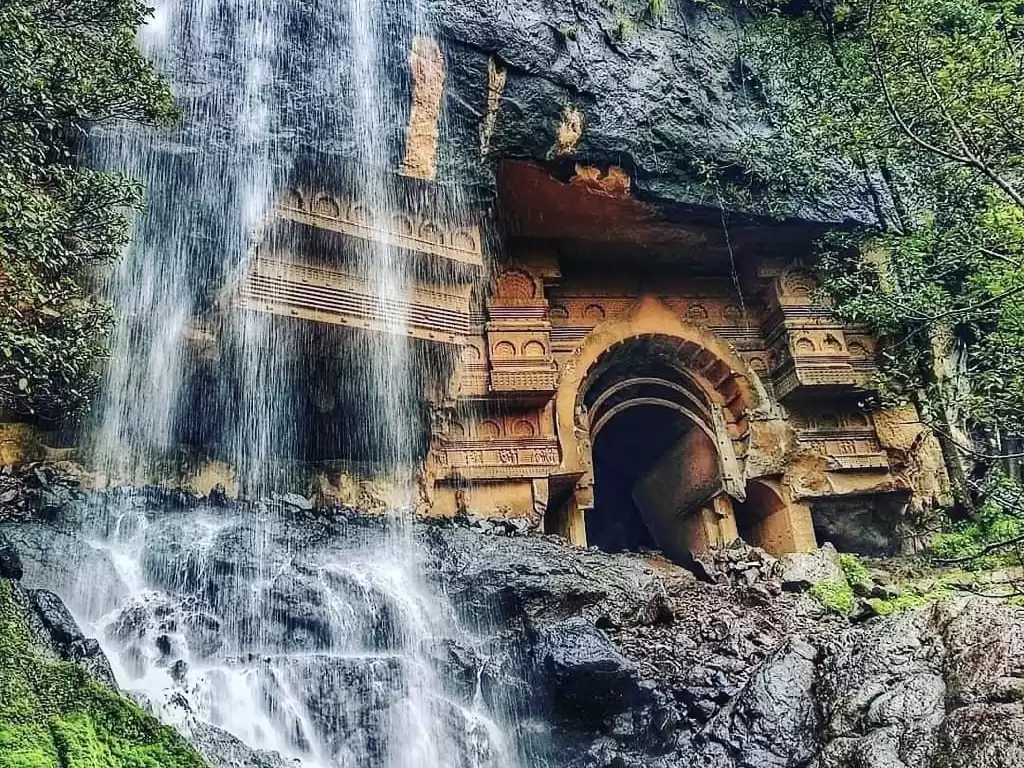
Karla Caves, located near Lonavala in Maharashtra, is one of the finest examples of ancient Buddhist rock-cut architecture in India, dating back to the 2nd century BCE. The complex is especially renowned for its grand Chaitya (prayer hall), ornate entrance façade, rock-cut pillars, and wooden ribbed ceiling elements—some of the oldest surviving wooden structures in Indian architecture. Photography here blends heritage symmetry, sculptural detailing, and hilltop surroundings within a protected archaeological site.
 Waterfall
Bhaje Waterfall is a seasonal waterfall located near Bhaje village in the Lonavala region of Pune district, Maharashtra, India.
 Fort
Fort
Lohagad Fort is a historic hill fort located near Lonavala in Pune district, Maharashtra, India.
 Waterfall
Shingroba Waterfall is a seasonal waterfall located in the Western Ghats region of Maharashtra, India.
Get customized Maharashtra tour planning designed around seasonal weather shifts, long-distance road travel flow, hill station comfort, coastal timing, and heritage exploration pacing. Whether you are visiting for historic caves, spiritual journeys, beach
⚡ Quick Response | 💰 Free consultation | 🕒 24×7 expert support