+91 9910402252
admin@chalbanjare.com


| Entry Fee | INR 40 for Indians, INR 600 for Foreign Nationals; additional charges for camera |
| Timings | 9:00 AM - 5:30 PM (closed on Tuesdays) |
| Altitude (m) | Approx. 300 m |
| Ideal Visit Duration | 2-3 hours (longer if visiting all caves) |
| Best Time of Day | Morning (to avoid the crowd and heat) |
| Crowd Level | Moderate to high, especially on weekends and holidays |
| Distance from City Centre (km) | Approx. 30 km from Aurangabad city centre |
| Walking Difficulty | Moderate (requires walking between caves; some caves have stairs) |
| Parking Available | Yes (designated parking near the entrance) |
| Last Mile Access | Accessible by car/auto up to the entrance; short walk to the caves |
| Suitable for Kids | Yes (supervision required near edges and steep areas) |
| Suitable for Seniors | Partially (some caves require climbing stairs and walking on uneven ground) |
| Wheelchair Friendly | No (steps and uneven terrain) |
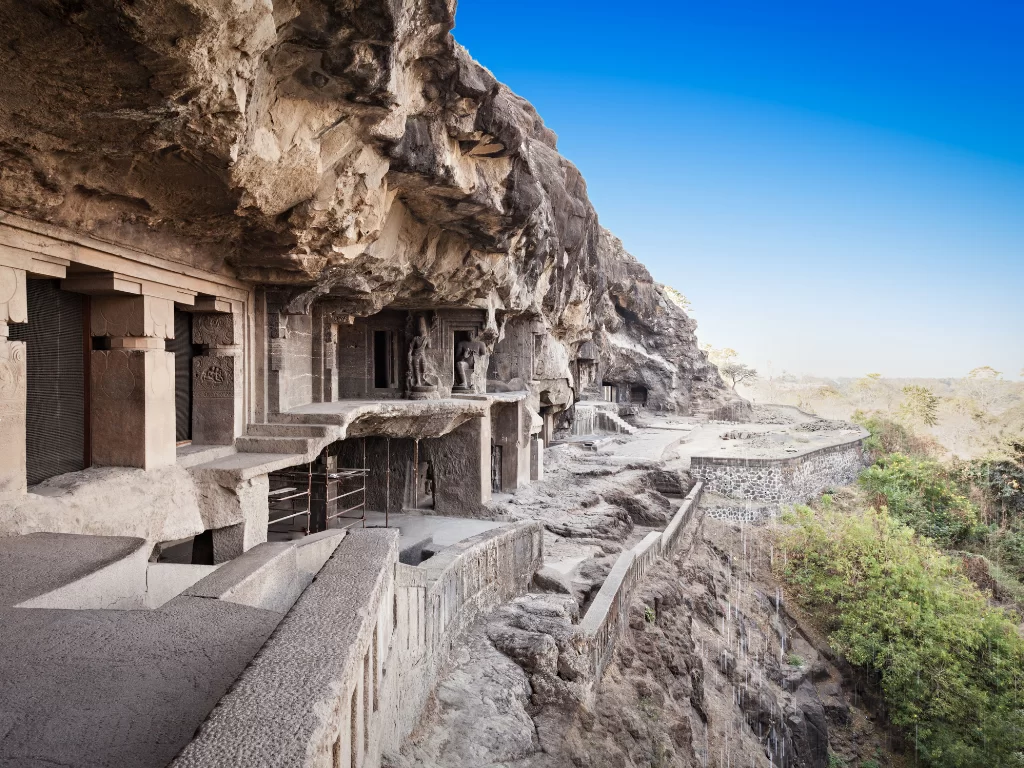
Visitors come to Ellora Caves to witness one of India’s most impressive rock-cut cave complexes, known for its blend of Buddhist, Hindu, and Jain monuments. With over 30 caves, including the massive Kailasa Temple, Ellora is a UNESCO World Heritage site and attracts history buffs, art lovers, and spiritual seekers alike, offering a rich tapestry of Indian religious and cultural history.
The on-ground atmosphere is awe-inspiring and quiet, with visitors exploring intricately carved temples, monasteries, and stunning sculptures set in the heart of the Deccan Plateau. The sheer scale of the cave architecture, particularly the Kailasa Temple, leaves visitors in awe, and the site’s serene surroundings add to the reflective experience. Early mornings or late afternoons are the best times to avoid crowds and enjoy the peaceful ambiance.
What makes Ellora Caves distinct for travelers is its unique combination of three major religious traditions housed in one location. Unlike other cave complexes, the Ellora Caves offer a rare opportunity to explore diverse architecture and art styles, all carved directly into the rock. It’s an unforgettable experience for anyone interested in ancient history, religious diversity, and architectural marvels.
Ellora Caves, located near Aurangabad in Maharashtra, are a complex of 34 monasteries and temples, carved out of basalt rock, which span a period from the 5th to the 10th century. These caves are one of the largest and most impressive rock-cut cave complexes in India and are renowned for their intricate sculptures and architectural magnificence.
The Ellora Caves are divided into three main sections: the Buddhist caves (Caves 1-12), the Hindu caves (Caves 13-29), and the Jain caves (Caves 30-34). The most famous of these is the Kailasa Temple (Cave 16), a single monolithic structure that was carved from top to bottom in one continuous piece, showcasing the remarkable craftsmanship of ancient Indian sculptors.
The site represents the harmonious coexistence of three major religious traditions in India—Buddhism, Hinduism, and Jainism. The caves feature exquisite carvings of deities, divine figures, and religious scenes, providing valuable insights into the religious and cultural life of ancient India. Today, Ellora Caves are a UNESCO World Heritage Site and attract tourists and pilgrims from around the world for their historical and spiritual significance.
The best time to visit Ellora Caves is from October to March, when the weather is cooler and more comfortable for exploring the intricate cave temples and sculptures without the intense summer heat or monsoon rains.
Ellora Caves, located about 30 kilometers from Aurangabad in Maharashtra, is one of the largest and most impressive rock-cut cave complexes in India. Known for its blend of Buddhist, Hindu, and Jain temples, the caves date back to the 6th to 10th centuries and are UNESCO World Heritage-listed.
Ellora Caves, located near Aurangabad in Maharashtra, are a UNESCO World Heritage site and one of the largest rock-cut monastery-temple complexes in the world. The site features Hindu, Buddhist, and Jain temples and caves carved into solid basalt rock, making it a must-visit for photographers interested in capturing intricate sculptures, religious architecture, and vast panoramic landscapes.
 Tourist Attraction
Jayakwadi Dam is a major irrigation and water-storage dam built across the Godavari River near Paithan in Maharashtra.
 Fort
Fort
Daulatabad Fort is a medieval hill fortress at Daulatabad near Chhatrapati Sambhajinagar, Maharashtra, known for its strategic defensive design and fortified hilltop setting.
 Temple
Shri Grishneshwar Jyotirlinga Temple is a historic Hindu temple dedicated to Lord Shiva, located near the Ellora Caves in Chhatrapati Sambhajinagar district, Maharashtra.
Get customized Maharashtra tour planning designed around seasonal weather shifts, long-distance road travel flow, hill station comfort, coastal timing, and heritage exploration pacing. Whether you are visiting for historic caves, spiritual journeys, beach
⚡ Quick Response | 💰 Free consultation | 🕒 24×7 expert support

