+91 9910402252
admin@chalbanjare.com


| Entry Fee | No entry fee |
|---|---|
| Timings | 8:00 AM – 6:00 PM (daily; shorter during monsoon peak for safety) |
| Altitude (m) | 650 m |
| Ideal Visit Duration | 1–2 hours |
| Best Time of Day | Morning to early afternoon (especially during monsoon) |
| Crowd Level | High (very popular during monsoon and weekends) |
| Distance from City Centre (km) | 3 km (from Lonavala town centre) |
| Walking Difficulty | Moderate (wet and slippery stones during monsoon) |
| Parking Available | Yes (limited parking near dam) |
| Last Mile Access | Taxi/auto from Lonavala station or town; short walk to dam |
| Suitable for Kids | Yes (supervision required near water and slippery areas) |
| Suitable for Seniors | Limited (slippery surfaces and uneven ground) |
| Wheelchair Friendly | No (uneven and wet terrain) |
Bhushi Dam is a popular masonry dam located on the Indrayani River near Lonavala, Maharashtra, originally constructed in the late 19th century to supply water to steam engines of the Great Indian Peninsula Railway (historical attribution; exact year not officially verified). Today, it serves as one of Lonavala’s most visited monsoon attractions, drawing travellers looking to experience flowing overflow steps and scenic hill surroundings.
The atmosphere is lively, energetic, and water-centric, especially during the monsoon season when rainwater cascades over the stepped structure. Visitors often gather to sit in the shallow flowing water, creating a festive and social environment. Weekends and peak rainy days can be crowded, while weekdays offer a relatively calmer experience.
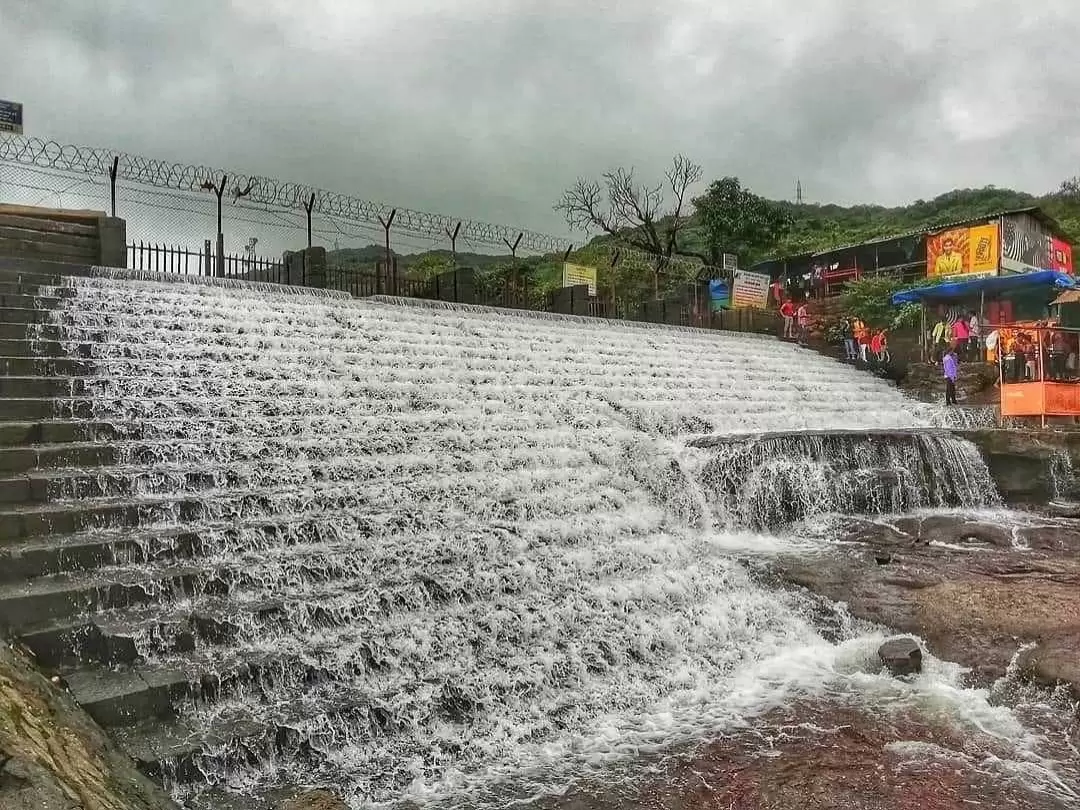
What makes Bhushi Dam special is the stepped overflow design that allows water to stream gently across flat rock levels, creating a natural recreational setting. Surrounded by green Sahyadri hills during the monsoon, it becomes a visually striking and interactive water destination. Its blend of colonial-era infrastructure and seasonal natural beauty makes it one of Lonavala’s most iconic attractions.
Bhushi Dam is located near Lonavala in Pune district, Maharashtra, along the Indrayani River within the Sahyadri (Western Ghats) range. The dam was constructed in the 1860s by the Great Indian Peninsula Railway during British colonial rule to serve as a reliable water source for steam locomotives operating on the Mumbai–Pune railway line.
Engineered as a masonry structure across a seasonal river channel, Bhushi Dam formed part of the broader colonial infrastructure network developed to support rail transport through the steep and rain-prone mountain passes of the Western Ghats. Its location reflects the strategic importance of Lonavala as a railway junction during the expansion of India’s early rail system.
Over time, as steam locomotives were phased out, the dam’s original functional role diminished, and it gradually emerged as a popular recreational site, especially during the monsoon season when water flows over its stepped structure. Today, Bhushi Dam stands as a historic engineering relic of the colonial railway era and a major seasonal attraction in Lonavala.
The best time to visit Bhushi Dam in Lonavala, Maharashtra, is from July to February, when the water flow is at its most attractive and the surrounding hills are lush. The monsoon and immediate post-monsoon months offer the most vibrant experience, while winter provides safer and more comfortable conditions for sightseeing.
Best time of day: 8:00 AM to 11:00 AM for cooler temperatures and manageable crowds.
Bhushi Dam is located about 5–6 km from Lonavala town in Maharashtra, near the Mumbai–Pune Highway. Built on the Indrayani River, the dam is a popular monsoon destination and is easily accessible by road.
Bhushi Dam, located near Lonavala in Pune district, Maharashtra, is a masonry dam built on the Indrayani River and is one of the most popular monsoon attractions in the region. Known for water overflowing across stepped stone formations during the rainy season, the site offers a lively and seasonal recreational experience rather than a quiet nature retreat.
Tip for a smoother visit: visit early morning on weekdays during monsoon to avoid heavy crowds, wear footwear with good grip, avoid deep or fast-flowing sections during strong rains, and monitor weather advisories before planning your trip.
Bhushi Dam, located near Lonavala in Maharashtra, is a popular monsoon attraction built on the Indrayani River. Surrounded by Sahyadri hills, the stepped stone structure allows water to cascade gently during the rainy season, creating dynamic seasonal scenery. Photography here blends flowing-water captures, stepped spillway compositions, and monsoon landscape backdrops.
 Waterfall
Bhaje Waterfall is a seasonal waterfall located near Bhaje village in the Lonavala region of Pune district, Maharashtra, India.
 Fort
Fort
Lohagad Fort is a historic hill fort located near Lonavala in Pune district, Maharashtra, India.
 Waterfall
Shingroba Waterfall is a seasonal waterfall located in the Western Ghats region of Maharashtra, India.
Get customized Maharashtra tour planning designed around seasonal weather shifts, long-distance road travel flow, hill station comfort, coastal timing, and heritage exploration pacing. Whether you are visiting for historic caves, spiritual journeys, beach
⚡ Quick Response | 💰 Free consultation | 🕒 24×7 expert support

