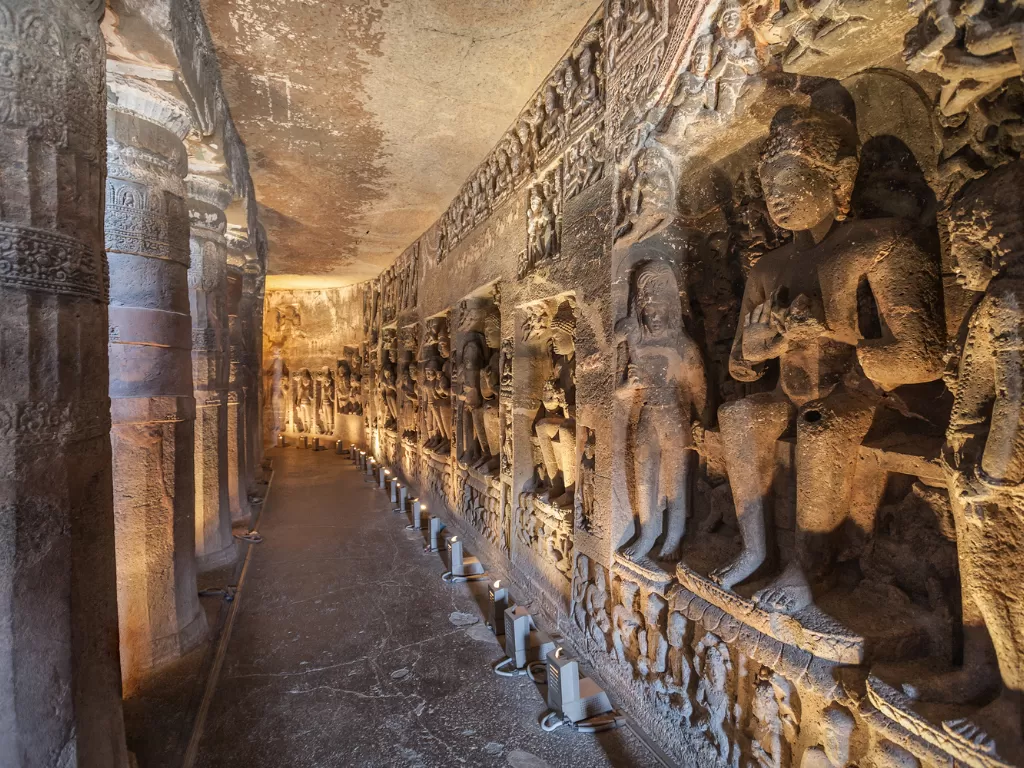
Ajanta Caves in Ajanta, Maharashtra, India

Ajanta Caves , Aurangabad
Tourists visit to explore ancient Buddhist murals, sculptures, and monasteries carved into the cliffs. The caves provide insights into Buddhist culture and art, especially through vivid frescoes depicting Jataka tales and religious life.

Quick Facts About Ajanta Caves

Quick Facts for Ajanta Caves, Aurangabad

Entry Fee INR 30 for Indians, INR 500 for Foreign Nationals; additional charges for camera
Timings 9:00 AM - 5:30 PM (closed on Mondays)
Altitude (m) Approx. 600 m
Ideal Visit Duration 2-3 hours (if visiting multiple caves)
Best Time of Day Morning (cooler weather and fewer crowds)
Crowd Level Moderate to high; weekends and holidays see higher footfall
Distance from City Centre (km) Approx. 100 km from Aurangabad city centre
Walking Difficulty Moderate (uneven paths and stairs leading to some caves)
Parking Available Yes (designated parking near the entrance)
Last Mile Access Accessible by car/auto to the base; short walk or shuttle to cave entrances
Suitable for Kids Yes (with supervision, especially near edges and caves)
Suitable for Seniors Partially (some caves require walking on uneven terrain and climbing stairs)
Wheelchair Friendly No (steps and uneven terrain)

Why Visit Ajanta Caves

Visitors come to Ajanta Caves to experience the stunning collection of Buddhist rock-cut caves, renowned for their ancient frescoes and sculptures depicting the life of Buddha. Dating back to the 2nd century BCE, the Ajanta Caves are a UNESCO World Heritage site and a major destination for history, art, and culture enthusiasts. The site offers a unique window into early Buddhist art and architecture.

The on-ground atmosphere is tranquil and awe-inspiring, with visitors exploring the dark, cool interiors of the caves, each offering intricate artwork and sculptures that tell stories of Buddhist teachings and life. The location, set amidst a scenic gorge, adds to the peaceful atmosphere, making it an ideal spot for contemplation and photography. The caves are less crowded during early mornings, offering a more intimate experience.

What makes Ajanta Caves distinct for travelers is its rich history and exceptional artwork. Unlike many other historical sites, Ajanta Caves showcase one of the finest examples of ancient Indian frescoes and sculptures, making it a must-visit for art lovers and those seeking to understand India’s Buddhist heritage. The caves provide a rare and immersive experience in religious and cultural exploration.

History of Ajanta Caves

Ajanta Caves, located in the state of Maharashtra near Aurangabad, are a group of 30 rock-cut Buddhist cave monuments that date from the 2nd century BCE to about 480 CE. The caves are renowned for their exquisite paintings, sculptures, and carvings, which offer a glimpse into the life and teachings of the Buddha. These caves were created by Buddhist monks as places for meditation, worship, and teaching, and they are considered a UNESCO World Heritage Site due to their historical and artistic significance.

The caves feature elaborate murals and frescoes that depict the life of the Buddha, Jataka tales, and other Buddhist teachings. The artwork within the caves is considered some of the finest examples of ancient Indian art, showcasing the intricate techniques and vibrant colors that have survived over centuries. The caves also include viharas (monasteries), chaityas (prayer halls), and stupas, making Ajanta one of the most important Buddhist monastic complexes in India.

The Ajanta Caves were rediscovered in the early 19th century by a British officer, and since then, they have attracted millions of visitors from around the world. Today, the site remains an essential destination for history enthusiasts, art lovers, and spiritual seekers, offering a profound insight into the cultural and religious landscape of ancient India.

Best Time to Visit Ajanta Caves, Aurangabad

The best time to visit Ajanta Caves is from October to March, when the weather is cooler and more comfortable for exploring the caves and enjoying the rich history and artwork without the intense summer heat or monsoon rains.

  • Ideal months: October to March, particularly November to February for the most pleasant weather and ideal conditions for cave exploration and photography.
  • Weather conditions during the best season: Expect temperatures ranging from 15°C to 25°C with dry weather and clear skies, making it perfect for visiting the caves, walking along the trails, and enjoying the beautiful surroundings.
  • Periods to avoid: April to June due to extreme heat (often exceeding 40°C), which can make outdoor exploration uncomfortable; July to September during the monsoon, when rain can make the paths slippery and reduce the overall experience.

How to Reach Ajanta Caves, Aurangabad

  • Nearest Airport: Aurangabad Airport (IXU) is the nearest airport, located approximately 100 km from Ajanta Caves. The airport offers domestic flights to major cities like Mumbai, Delhi, Pune, and Hyderabad. Taxis and app-based cabs are available at the airport, and the drive to the caves typically takes around 2 to 2.5 hours depending on road conditions.
  • Nearest Railway Station: Jalna Railway Station (J) is the nearest railway station to Ajanta Caves, about 60 km away. Aurangabad Railway Station (AWB), about 100 km from the caves, is another major railhead. Taxis, auto-rickshaws, and buses are available from both stations, with the drive taking around 1 to 2 hours.
  • Road Access: Ajanta Caves are located off the Jalna–Sillod Road (State Highway 162). The caves are about 100 km from Aurangabad, and the drive takes around 2 to 2.5 hours. The roads are generally good, though the final stretch may have some winding routes as the caves are located in a remote valley.
  • Last-Mile Connectivity: Taxis, auto-rickshaws, and local buses provide access to the caves from Jalna, Aurangabad, and other nearby towns. The caves are located on a hilltop, and visitors will need to walk up a short distance from the parking area to reach the caves. Expect more visitors during weekends and festival periods, so plan accordingly.

What to Expect When You Visit Ajanta Caves

Ajanta Caves, located in Maharashtra, are a UNESCO World Heritage site known for their exquisite Buddhist rock-cut temples, paintings, and sculptures. These caves date back to the 2nd century BCE to the 6th century CE, and are renowned for their vibrant frescoes and intricate carvings, offering a deep insight into ancient Buddhist art and culture.

  • Environment and surroundings: The Ajanta Caves are situated in a gorge along the Waghora River, surrounded by a rugged landscape and lush greenery. The setting is peaceful, offering a cool atmosphere due to the cave’s location in the hills, especially during the monsoon. The site is naturally beautiful, with a tranquil ambiance, but it can get busy during peak seasons. The area around the caves is primarily unspoiled, though there are some developments nearby to accommodate visitors.
  • Facilities and amenities: The Ajanta Caves offer basic facilities including a ticket counter, restrooms, and small kiosks selling snacks, drinks, and souvenirs. The facilities are functional but modest, as the site is focused more on preserving its heritage. There are no large restaurants inside the cave complex, but there are some eateries near the entrance for visitors to relax and eat. It’s a good idea to bring your own water and snacks, especially if you plan to explore the caves for an extended period.
  • Accessibility and movement: Ajanta Caves is accessible by road, and visitors can reach the site by private vehicle, taxi, or bus. The complex is built along the cliffside, and visitors need to walk along paved paths that lead to the caves. Some caves require ascending steps, and the terrain can be uneven, so comfortable footwear is necessary. The site is generally walkable, but there may be limited accessibility for visitors with mobility challenges due to uneven surfaces and steps. The site also tends to get crowded during peak tourist seasons, which can slow down movement.
  • Typical visitor behavior and conditions: Visitors typically come to explore the rich history and stunning artwork inside the caves. Photography is allowed in certain areas, but it is restricted in others to preserve the ancient murals and sculptures. Visitors often spend time admiring the frescoes and carvings, and there are informative plaques around the caves. The atmosphere is generally calm, though it can get busy during peak times, particularly in the late morning and afternoon. Visitors are expected to respect the sanctity of the site by maintaining quiet and not disturbing the artwork or the space.

Important Visitor Information for Ajanta Caves

  • Crowd and Weather Notes: Ajanta Caves, a UNESCO World Heritage site, is one of the most visited attractions near Aurangabad. It experiences heavy traffic during weekends, public holidays, and peak tourist seasons (October to March). The climate in the region is hot and dry during summer, with temperatures soaring above 40°C, while winters are more pleasant for exploring the caves. The monsoon brings heavy rainfall, making paths slippery, so visiting during this time should be done with caution.
  • Peak and Quiet Visiting Hours: The busiest hours are typically from 10:00 AM to 3:00 PM. For a quieter experience and better photo opportunities, it’s recommended to visit early in the morning (6:00 AM to 8:00 AM) or later in the afternoon (after 4:00 PM) when the caves are less crowded, and the temperature is more comfortable.
  • Dress Code: There is no formal dress code for visiting the caves, but modest and comfortable clothing is recommended. Since there is a fair amount of walking and climbing, wear sturdy footwear with good grip. Light, breathable clothing is ideal, particularly in the summer months. Avoid wearing shorts or revealing attire, as the site is a religious and cultural landmark.
  • Safety Notes and Practical Cautions: Ajanta Caves features uneven steps, narrow passageways, and sloping paths that can be slippery, especially after rain. It’s important to watch your step when walking through the caves. While the caves are generally safe, crowded areas can attract pickpockets, so keep personal belongings secure. Carry water to stay hydrated, and use sunscreen for protection from the sun, as the outdoor areas are exposed. Be mindful of the cave conservation guidelines and avoid touching or leaning on ancient artworks and carvings.

Photography and Viewpoints in Ajanta Caves

Ajanta Caves, located near Aurangabad in Maharashtra, are a UNESCO World Heritage site and one of the most significant and well-preserved rock-cut cave complexes in India. The caves feature Buddhist temples, monasteries, and stunning frescoes and sculptures dating back to the 2nd century BCE to the 6th century CE. The site offers incredible opportunities for capturing ancient art, architecture, and serene landscapes.

  • Best Viewpoints for Photography: The most iconic photos of Ajanta Caves are taken from the main viewing platform, where you can frame the entire row of caves along the cliff face against the surrounding hills and forest. Inside the caves, capturing the murals, carvings, and statues from different angles helps emphasize the depth and detail of the artwork. The frescoes, particularly in Cave 1 and Cave 2, provide excellent close-up photography opportunities to capture fine details in the wall paintings and sculptures.
  • Lighting Conditions and Time-of-Day Considerations: Early morning offers the best lighting, with soft light enhancing the cave murals and sculptures while keeping the surrounding landscape lit up without harsh shadows. The golden hour just before sunset can also provide beautiful lighting on the cave exterior and the hills, creating warm tones on the stone. Inside the caves, natural light is limited, and artificial lighting may create challenging contrasts, so it’s best to focus on details and small compositions in low-light conditions.
  • Rules and Restrictions: Photography is allowed in most areas of the Ajanta Caves, but flash photography is strictly prohibited inside to preserve the delicate paintings and artwork. Tripods or professional photography equipment may require permission from the Archaeological Survey of India (ASI). Drones are not permitted over the cave complex, as it is a protected heritage site. Always check with local authorities or guides for photography permissions inside specific caves.
  • Crowd and Access Factors: Ajanta Caves can get crowded, especially during peak tourist seasons and weekends. For the best photography experience, it’s recommended to visit early in the morning or during off-peak seasons when there are fewer tourists. The cave complex requires some walking, so comfortable footwear is recommended for exploring the caves and surrounding areas.

Near By Attraction

Rashtrakuta Era Shri Kailasa Temple Ellora. UNESCO World Heritage rock-cut temple carved from a single monolithic rock. Temple

Rashtrakuta Era Shri Kailasa Temple, Ellora

Shri Kailasa Temple is a remarkable rock-cut temple from the Rashtrakuta dynasty, carved from a single monolithic stone in the 8th century CE.

Soneri Mahal historic palace with garden reflection in Aurangabad Maharashtra tour packages Monument

Soneri Mahal

Soneri Mahal is a historic palace known for its golden and intricate architectural design, dating back to the 17th century.

Goga Baba Hill Aurangabad. Popular trekking spot with lush green trails and panoramic monsoon views. Hill Station

Goga Baba Hill

Goga Baba Hill is a hilltop shrine dedicated to the folk hero Goga Baba, a revered saint in the region.

Frequently Asked Questions About Ajanta Caves

Ajanta Caves are located about 100 kilometers from Aurangabad in Maharashtra in a horseshoe shaped gorge along the Waghora River. The site is a UNESCO World Heritage monument known for its ancient Buddhist caves.
Ajanta Caves can be reached within two to three hours by taxi or bus from Aurangabad railway station depending on traffic. Regular state transport buses and private vehicles operate on this route.
The best time to visit Ajanta Caves is between October and March when the weather remains pleasant for walking across the large cave complex. Morning visits provide comfortable temperatures and better viewing conditions.
Ajanta Caves are popular for their ancient Buddhist murals sculptures and rock cut architecture dating back to the 2nd century BCE. The detailed paintings are considered masterpieces of Indian art.
Visiting Ajanta Caves is suitable for family trips though exploring the entire complex involves considerable walking. Visitors can choose selected caves based on time and comfort levels.
There are limited accommodation options near Ajanta Caves so most travelers stay in Aurangabad or Jalgaon. Aurangabad offers a wide range of hotels for different budgets.
Ajanta Caves provide facilities including ticket counters shuttle bus service from the parking area basic restrooms and small food outlets near the entrance. The caves themselves have minimal amenities to preserve heritage.
Most travelers spend three to four hours at Ajanta Caves exploring major cave groups and viewing murals. It is generally planned as a full day trip from Aurangabad.
Ajanta Caves are closed on Mondays as per official schedule. Checking updated visiting hours before planning the trip is advisable.
Travelers visiting Ajanta Caves should wear comfortable walking shoes carry drinking water and avoid touching paintings or carvings. Planning the visit early in the day helps manage crowds and heat.

Loved this place ? Let’s Plan Your Maharashtra Trip

Get customized Maharashtra tour planning designed around seasonal weather shifts, long-distance road travel flow, hill station comfort, coastal timing, and heritage exploration pacing. Whether you are visiting for historic caves, spiritual journeys, beach

⚑ Quick Response | πŸ’° Free consultation | πŸ•’ 24Γ—7 expert support

×

Plan Your Trip