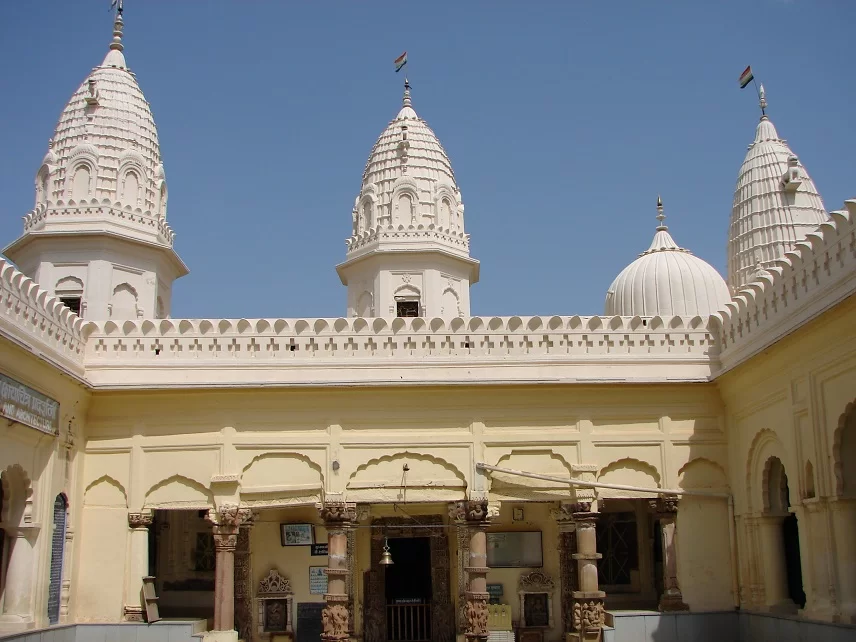
Quick Facts About Shri Shantinath Digambar Jain Mandir
Why Visit Shri Shantinath Digambar Jain Mandir, Khajuraho
Visitors come to Shri Shantinath Digambar Jain Mandir, Khajuraho to see one of the most active Jain temples within the Khajuraho complex, centered around a large idol of Lord Shantinath. Unlike the purely archaeological temples nearby, this is a functioning place of worship, giving travelers a chance to observe living religious practices alongside historic architecture.
On the ground, the atmosphere is devotional and orderly, with worshippers offering prayers and temple staff maintaining a quiet environment. The complex feels different from the ticketed Western Group temples—more community-oriented, with simple courtyards and adjoining shrines that are used daily rather than preserved only for viewing.
What makes Shri Shantinath Digambar Jain Mandir, Khajuraho distinct for travelers is the combination of scale and continuity: the prominent seated idol, the surrounding Jain shrines, and the fact that rituals are still performed here. It offers a direct look at how Khajuraho’s temple tradition continues in practice, not just as a monument but as an active spiritual space.
Why Visit Shri Shantinath Digambar Jain Mandir, Khajuraho
Visitors come to Shri Shantinath Digambar Jain Mandir, Khajuraho to see one of the most active Jain temples within the Khajuraho complex, centered around a large idol of Lord Shantinath. Unlike the purely archaeological temples nearby, this is a functioning place of worship, giving travelers a chance to observe living religious practices alongside historic architecture.
On the ground, the atmosphere is devotional and orderly, with worshippers offering prayers and temple staff maintaining a quiet environment. The complex feels different from the ticketed Western Group temples—more community-oriented, with simple courtyards and adjoining shrines that are used daily rather than preserved only for viewing.
What makes Shri Shantinath Digambar Jain Mandir, Khajuraho distinct for travelers is the combination of scale and continuity: the prominent seated idol, the surrounding Jain shrines, and the fact that rituals are still performed here. It offers a direct look at how Khajuraho’s temple tradition continues in practice, not just as a monument but as an active spiritual space.
History of Shri Shantinath Digambar Jain Mandir Khajuraho
Shri Shantinath Digambar Jain Mandir in Khajuraho is part of the Eastern Group of Jain temples and reflects the long-standing presence of the Digambar Jain community in the region. While several surrounding temples date back to the 10th–11th century Chandela period, the present Shantinath temple complex developed over time, incorporating earlier structural elements and later additions to support active worship.
The temple is dedicated to Lord Shantinath, the 16th Tirthankara of Jainism, and houses a prominent idol that serves as the focal point of devotion. Architectural fragments from the medieval period, including carved pillars and sculptural panels, are preserved within the complex, linking the site to the broader temple-building tradition that defined historic Khajuraho.
Unlike many monuments in Khajuraho that function primarily as protected heritage sites, Shri Shantinath Digambar Jain Mandir remains a living place of worship. Visitors can observe ongoing religious practices while also viewing surviving medieval carvings, offering a combined historical and spiritual experience within Khajuraho’s Jain heritage zone.
Best Time to Visit Shri Shantinath Digambar Jain Mandir
Shri Shantinath Digambar Jain Mandir is best visited during the cooler months, when temple darshan is more comfortable, walking around the premises is easier, and travel delays from summer heat or monsoon rains are least likely.
- Ideal months: October to March (especially November to February for the most pleasant conditions).
- Weather during the best season: Cool to mild days with lower humidity, making it comfortable to spend time in prayer, explore the temple surroundings, and visit nearby religious sites without rushing due to heat.
- Periods to avoid (and why): April to June due to high temperatures that can make daytime temple visits tiring, and July to September because monsoon rain can make local travel and temple-area walking less convenient.
How to Reach Shri Shantinath Digambar Jain Mandir, Khajuraho, Madhya Pradesh
- Nearest Airport: The closest airport is Khajuraho Airport (HJR), located about 5–6 km from Shri Shantinath Digambar Jain Mandir. The airport has regular flights from Delhi and limited seasonal connections from select Indian cities. Taxis and auto-rickshaws are available outside the terminal, and the drive to the Jain temple complex in the Eastern Group area typically takes 10–20 minutes depending on traffic.
- Nearest Railway Station: Khajuraho Railway Station is the nearest railhead, roughly 6–7 km from the mandir, with direct trains from cities such as Delhi, Kanpur, and Varanasi. For wider train options, Mahoba Junction (approx. 63 km) is a practical alternative. From both stations, taxis and auto-rickshaws are the most reliable way to reach the temple, with travel time from Khajuraho station usually under 20 minutes.
- By Road & Last-Mile Connectivity: Shri Shantinath Digambar Jain Mandir is located within the Eastern Group of Khajuraho Temples, around 3 km from the Western Group complex and close to Khajuraho’s main market area. Khajuraho is connected by road to Satna (approx. 115 km), Panna (approx. 45 km), and Jhansi (approx. 175 km) via state highways and NH39. MP state buses and private buses arrive at Khajuraho bus stand, from where you can hire an auto-rickshaw, cycle-rickshaw, or taxi for the short ride to the mandir. Roads are accessible throughout the year, but during peak winter months and festival days, the Eastern Group area can get crowded and parking space near the entrance may be limited.
What to Expect When You Visit Shri Shantinath Digambar Jain Mandir
Shri Shantinath Digambar Jain Mandir is a functioning Jain place of worship, so the experience is shaped more by prayer routines and temple discipline than by tourism infrastructure. Visitors generally come for a quiet darshan, and the overall atmosphere is calm, orderly, and respectful.
- Environment and surroundings: Expect a clean, peaceful temple setting with a quiet interior and a focus on worship rather than sightseeing. The surroundings depend heavily on the neighborhood it is in, but inside the temple complex the mood is typically subdued, with minimal noise and limited space for lingering.
- Facilities and amenities: Facilities are usually basic and oriented toward devotees. You may find a shoe area and a small waiting space, but do not expect tourist counters, guides, or food stalls inside the premises. Restrooms and drinking water may be available, but they are not guaranteed for visitors and may be reserved for temple use.
- Accessibility and movement: Movement is usually straightforward but may involve steps at the entrance and raised thresholds. Some areas can be narrow, especially near the sanctum. Wheelchair access is often limited due to steps and the layout, so visitors with mobility constraints may need assistance.
- Typical visitor behavior and conditions: Most people visit briefly, speak softly, and avoid disruptive photography. You may be asked to follow temple etiquette such as removing footwear, dressing modestly, and not bringing food inside. During prayer times and festivals, the temple can become crowded, and entry may feel slower due to queues and worship activity.
If you are visiting as a tourist, plan for a short, respectful stop where the experience depends on temple timings and local worship practices rather than sightseeing facilities.
Important Visitor Information for Shri Shantinath Digambar Jain Mandir, Khajuraho
- Crowd and weather notes: Located within the Eastern Group of Jain temples in Khajuraho, this is an active place of worship and can be moderately busy during Jain festivals and morning prayer hours. The complex is open and largely exposed, so midday heat (especially April–June) can make stone surfaces and courtyards uncomfortable.
- Peak and quiet visiting hours: The temple sees the most activity in the morning when devotees arrive for darshan and during late morning when tour groups visit the Eastern Group. Late afternoon generally offers a quieter atmosphere for viewing the 12th-century shrine and the large idol of Lord Shantinath.
- Dress code: As a functioning Digambar Jain temple, modest clothing is required. Shoulders and knees should be covered. Footwear must be removed before entering the temple interiors.
- Safety notes and practical cautions: The marble and stone flooring can be slippery if recently cleaned or after rain. Steps within the complex may be uneven. Maintain silence and respectful conduct inside the shrine areas, as worshippers may be present.
Photography & Viewpoints at Shri Shantinath Digambar Jain Mandir, Khajuraho
Shri Shantinath Digambar Jain Mandir in Khajuraho is the principal Jain temple in the town’s Eastern Group, known for its active worship space, detailed stone carving, and a strong sense of living religious use. Photography here is shaped by two factors: the bright courtyard light outside and the comparatively dim interior where devotees move through for darshan.
- Courtyard frontal view: From the open courtyard, shoot the temple front straight-on to capture its balanced elevation and shikhara. This viewpoint is easiest when the sun is angled across the façade rather than directly overhead.
- Carving panels along the outer walls: Walk the perimeter and photograph the sculpted bands from a slight diagonal, which shows depth in the relief work. The carvings read best when sunlight hits from the side, not when the stone is evenly lit.
- Entrance threshold framing: From just outside the doorway, you can frame the inner hall through the entrance while keeping the brighter courtyard behind you. This helps avoid glare and keeps interior details visible.
- Interior shrine viewpoint: Inside, the main shrine area is dimmer and often active with worship. Photos are most feasible when the space is briefly clear, and you maintain distance without blocking devotees’ movement.
- Time-of-day lighting: Early morning is ideal for a calmer courtyard and softer light on the sandstone, while late afternoon can bring warmer tones on the exterior carvings. Midday light is harsh and reduces texture on the stonework.
- Crowd and access factors: As a functioning temple, visitor flow changes with prayer activity. You may need to wait for a clear moment for entrance shots, especially during busy hours and festival days.
- Photography rules and respect: Modest behavior is expected in a Digambar Jain temple. Photography may be restricted inside the sanctum or during worship; follow on-site signage and staff guidance. Flash is best avoided indoors, and drones/commercial filming require official permission.
Near By Attraction
 Temple
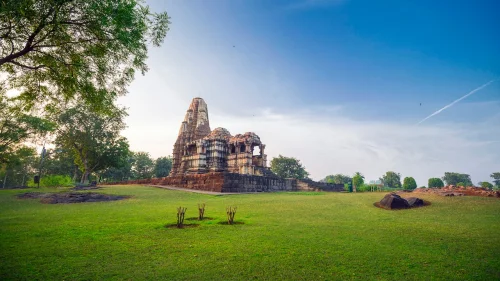
Dulhadeo Temple
Dulhadeo Temple is a historic Hindu temple dedicated to Lord Shiva, located in the southern group of monuments at Khajuraho, Madhya Pradesh.
 Temple
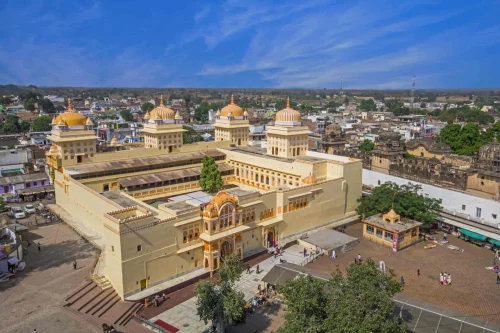
Ram Raja Temple
Ram Raja Temple is a unique Hindu temple in Orchha, Madhya Pradesh, where Lord Rama is worshipped as a king rather than solely as a deity.
 Temple
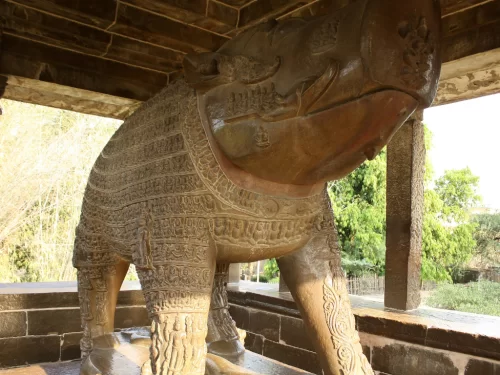
Varaha Temple Khajuraho
Vishwanath Temple is a 10th-century Hindu temple dedicated to Lord Shiva, located in the Western Group of Temples at Khajuraho.