Quick Facts About Rewa Kund
Quick Facts of Rewa Kund
Entry Fee – ?20 (Indian citizens); ?250 (foreign nationals); subject to revision by ASI
Timings – 8:00 AM – 6:00 PM (standard ASI monument hours; may vary seasonally)
Altitude (m) – Approximately 555 meters above sea level (Mandu plateau)
Ideal Visit Duration – 20–30 minutes
Best Time of Day – Morning (quieter atmosphere, better light for architecture)
Crowd Level – Low to moderate; higher during peak tourist season (Oct–Feb)
Distance from City Centre (km) – Approximately 1 km from Mandu main heritage zone
Walking Difficulty – Easy to moderate (stone pathways and a few steps)
Parking Available – Yes, limited parking near the approach road
Last Mile Access – Local taxis and private vehicles up to access road; short walk to site
Suitable for Kids – Yes, with supervision near water edges and steps
Suitable for Seniors – Partially suitable; steps and uneven surfaces may cause difficulty
Wheelchair Friendly – No; steps, uneven stone paths, and lack of ramps
Why Visit Rewa Kund
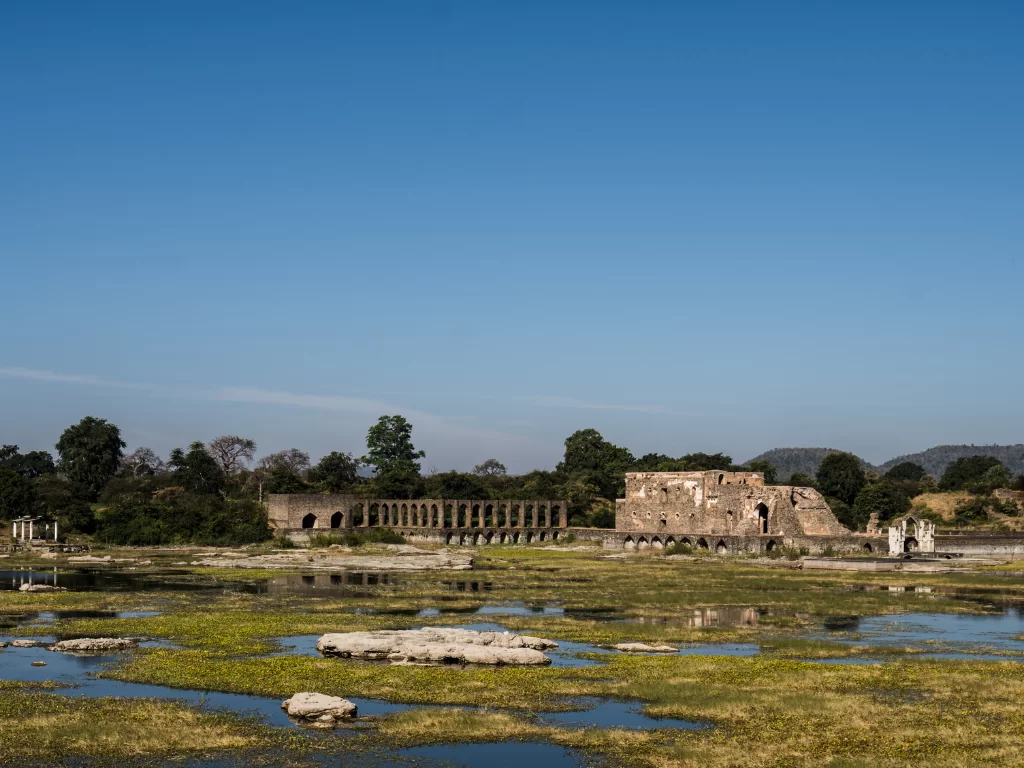
Visitors come to Rewa Kund as a quiet natural stop near Mandu, drawn by its clear water pool, surrounding greenery, and its location as a resting point along the route between major monuments.
The on-ground atmosphere is calm and shaded, with stone steps, trees around the water body, and a peaceful setting where visitors usually pause, sit, and observe rather than move quickly through the space.
What makes this place distinct for travelers is its simplicity—a natural water source within a historical landscape, offering a contrast to the forts and structures of Mandu through stillness, shade, and natural surroundings.
History of Rewa Kund
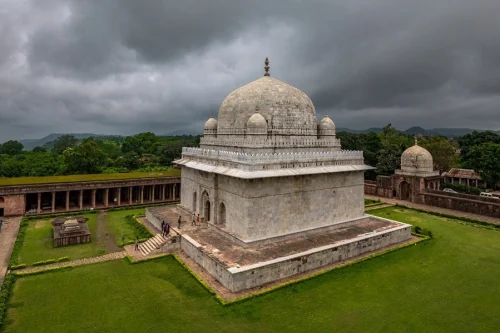
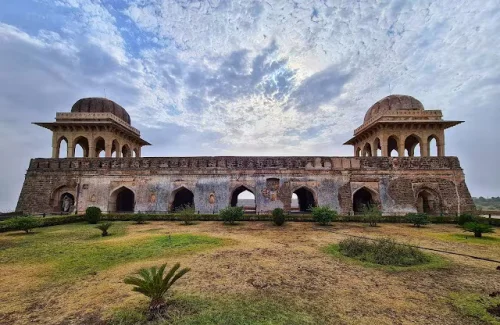
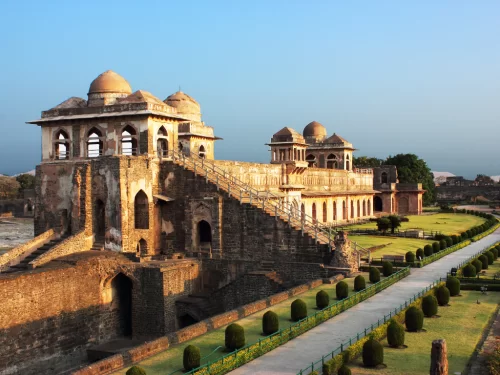
Rewa Kund is a historic water reservoir located near Baz Bahadur Palace in the Mandu fort complex, Madhya Pradesh. It was constructed in the 16th century during the Malwa Sultanate period as part of the royal water management system.
The reservoir was engineered to supply water to the nearby palace complex through a gravity-based channel system, reflecting the advanced hydraulic planning of Mandu’s medieval urban design.
Rewa Kund is closely associated with the reign of Sultan Baz Bahadur and forms an integral part of the royal residential and administrative infrastructure rather than functioning as a public water body.
Architecturally, the structure demonstrates stone embankments, controlled inlets, and reservoir engineering techniques used in Malwa-era construction.
Today, Rewa Kund stands as a preserved historical utility structure, representing Mandu’s water conservation systems and its planned royal landscape rather than ceremonial or decorative architecture.
Best Time to Visit Rewa Kund
Rewa Kund is best visited during the cooler season, when the surrounding stone pathways, historic structures, and natural water features can be explored comfortably and safely without climate-related difficulties.
- Ideal months: October to February
- Best-season conditions: Cool to mild temperatures, low humidity, clear skies, and dry stone surfaces, making walking, sightseeing, and photography comfortable
- Periods to avoid: March to June due to extreme heat and sun exposure in open areas; July to September because of monsoon rains, waterlogging, slippery stones, and limited safe access around the kund