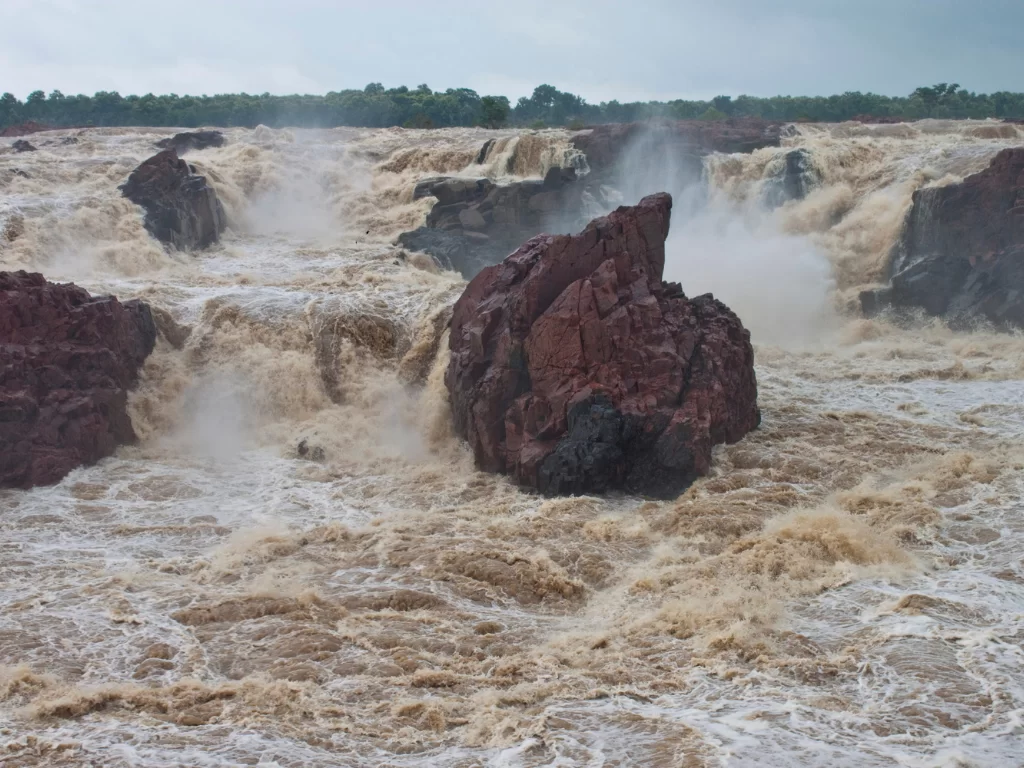
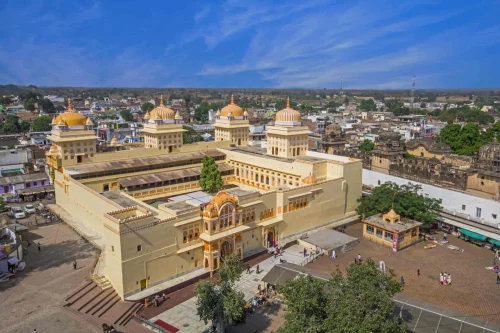
Raneh Waterfalls in Khajuraho, Madhya Pradesh, India

Raneh Waterfalls , Khajuraho
Tourists visit Raneh Waterfalls to view the deep granite canyon formed by volcanic rock formations and seasonal waterfalls during and after the monsoon. It is often combined with a visit to Khajuraho temples and the nearby Ken Gharial Sanctuary.

Quick Facts About Raneh Waterfalls

Raneh Waterfalls Khajuraho – Quick Facts

Entry Fee Forest entry fee and vehicle charges apply (managed by MP Forest Department); rates vary and are collected per person and per vehicle.
Timings Typically 8:00 AM – 5:00 PM (daily); timings may change by season and during heavy monsoon conditions.
Altitude (m) Approx. 250–300 m above sea level (Ken River gorge region; exact altitude varies across viewpoints).
Ideal Visit Duration 1–2 hours.
Best Time of Day Late morning to afternoon for better light inside the gorge and clearer rock color contrast.
Crowd Level Low to moderate; can be busy during October–March and weekends.
Distance from City Centre (km) Approx. 20 km from Khajuraho town centre.
Walking Difficulty Easy; short, mostly level walks to viewpoints.
Parking Available Yes; parking is available near the entrance/viewpoint area.
Last Mile Access Motorable road up to the forest gate and parking; short walk on marked paths to the viewpoints.
Suitable for Kids Yes, with supervision near gorge edges.
Suitable for Seniors Yes; minimal walking, but caution needed on uneven natural ground.
Wheelchair Friendly No; natural terrain and uneven paths limit wheelchair access.

Why Visit Raneh Waterfalls, Khajuraho

Visitors come to Raneh Waterfalls, Khajuraho to see the Ken River drop into a narrow gorge lined with striking rock formations, all within an easy drive from the temples. It’s one of the most common add-ons to a Khajuraho itinerary, especially for travelers who want a natural landscape break between temple visits.

On the ground, the experience is structured around forest department viewpoints reached by a short vehicle route and brief walks. The feel changes sharply by season—monsoon months bring a louder, wider flow, while the dry season exposes more of the canyon walls and the river channels, making the rock colors and shapes the main highlight.

What makes Raneh Waterfalls, Khajuraho distinct for travelers is the gorge itself: the canyon shows bands of pink, red, and grey rock that look unlike most river landscapes in central India. Even without peak water volume, the combination of geology, steep drops, and close-up viewing points makes it a visually memorable stop near Khajuraho.

History of Raneh Waterfalls Khajuraho

Raneh Waterfalls near Khajuraho in Madhya Pradesh are shaped by the Ken River as it cuts through a deep canyon formed from ancient volcanic rock. The gorge reveals layers of basalt and other igneous formations created by prehistoric lava flows, making the site geologically significant within the Bundelkhand region.

Over centuries, continuous river erosion carved the canyon’s steep walls and produced seasonal cascades that vary in intensity depending on rainfall and upstream water release. The striking rock textures and color variations visible from designated viewpoints are a direct result of the area’s volcanic history and natural weathering processes.

Raneh Waterfalls Khajuraho is valued for its natural formation rather than constructed heritage. For visitors, the experience centers on observing the canyon landscape, understanding the river’s role in shaping it, and exploring a site that reflects the region’s deep geological past.

Best Time to Visit Raneh Waterfalls, Khajuraho

Raneh Waterfalls near Khajuraho are most worth visiting during and immediately after the monsoon, when the Ken River fills the canyon and the falls show their full power, while winter offers the most comfortable conditions for a longer, relaxed visit.

  • Ideal months: August to October for peak waterfall flow; November to February for pleasant weather and clear gorge views.
  • Weather during the best season: August and September typically bring the strongest water volume after continuous monsoon rain, with greener surroundings and dramatic canyon scenes; October usually balances good flow with easier access, and November to February stays dry and cool for walking the viewpoints without humidity.
  • Periods to avoid (and why): April to June, when river levels often drop and the waterfalls can become weak or patchy; during heavy monsoon downpours (mainly July–August), viewpoints and paths can be slippery, reducing comfort and safety.

How to Reach Raneh Waterfalls, Khajuraho, Madhya Pradesh

  • Nearest Airport: The nearest airport is Khajuraho Airport (HJR), around 20 km from Raneh Waterfalls. The airport has regular flights from Delhi and limited seasonal connections from other cities. From the airport, the most convenient option is a pre-booked taxi, as public transport does not run directly to the waterfalls. The drive usually takes 30–45 minutes depending on traffic leaving Khajuraho.
  • Nearest Railway Station: Khajuraho Railway Station is the closest railhead, approximately 20–22 km away, with direct trains to Delhi, Kanpur, Jhansi, and Varanasi. For more frequent services, Satna Junction (approx. 110 km) is a major alternative. From both stations, hiring a taxi is the most practical way to reach Raneh Waterfalls, as last-mile connectivity is limited.
  • By Road & Last-Mile Connectivity: Raneh Waterfalls are located on the Ken River, on the Khajuraho–Panna route, and are best reached by private vehicle or taxi. The access road is motorable, but the final section involves walking inside the forest-managed viewpoint area. Local taxis in Khajuraho can be hired for a half-day trip, and many visitors combine this stop with Panna National Park. The waterfall is seasonal: it is most impressive during and just after the monsoon (typically July to October), while flow reduces sharply in late winter and summer. During heavy rains, parts of the gorge area may be restricted for safety due to slippery rocks and strong currents.

What to Expect When You Visit Raneh Waterfalls, Khajuraho

Raneh Waterfalls (often listed online as raneh-waterfalls-khajuraho) is a seasonal gorge viewpoint near Khajuraho, known for its steep canyon walls and exposed rock formations. The visit is more about seeing the gorge and water channel from above than standing close to a single, continuous waterfall.

  • Environment and surroundings: Expect a rocky gorge landscape with sparse forest cover and open, sun-exposed viewpoints. During monsoon and immediately after it, water flow is stronger and the gorge looks more dramatic. In drier months, the water level can drop sharply, and the site may feel more like a canyon lookout than a “waterfall” in the usual sense.
  • Facilities and amenities: Facilities are basic and limited. Do not expect restaurants, reliable drinking water points, or shaded rest areas on-site. Restrooms may exist near the entry area, but they are not consistently maintained, so it’s best not to rely on them for long visits.
  • Accessibility and movement: The visit involves short walks on uneven, dusty paths and rocky surfaces. Some viewpoints are close to the gorge edge, and protective railings are not continuous everywhere, so footing and attention matter. Wheelchair access is generally not practical due to terrain and lack of smooth pathways.
  • Typical visitor behavior and conditions: Most visitors spend a brief time taking photos and looking into the gorge from a few main viewpoints. The site is usually quieter than the Khajuraho temple complex, but weekends and peak season can bring short bursts of crowding. In monsoon, surfaces can be slippery, and visitors typically keep to safer viewing spots rather than moving around the edges.

Plan for this as a short, seasonal nature stop where the scenery is consistent but the water volume is not, and where amenities and safety infrastructure are limited compared to major tourist sites.

Important Visitor Information for Raneh Waterfalls, Khajuraho

  • Crowd and weather notes: Raneh Waterfalls, located about 20 km from Khajuraho along the Ken River, is highly seasonal. The canyon is most dramatic during and just after the monsoon (typically July–October), when water volume is strong. In peak summer, the water flow reduces considerably, though the exposed multicolored granite canyon remains visually striking.
  • Peak and quiet visiting hours: Late morning to early afternoon sees the highest visitor numbers, particularly on weekends and holidays. For a quieter experience and better canyon views with softer light, plan to arrive earlier in the day.
  • Dress code: There is no formal dress code. Wear sturdy walking shoes, as access involves paved paths, stone viewpoints, and uneven natural surfaces near the canyon edges.
  • Safety notes and practical cautions: Visitors view the falls from designated platforms managed by forest authorities; entry into the gorge is not permitted. During the monsoon, sections may be temporarily closed due to high water levels and slippery terrain. Stay within marked areas, avoid leaning over railings, and supervise children closely.

Photography & Viewpoints at Raneh Waterfalls, Khajuraho (Panna District)

Raneh Waterfalls near Khajuraho is a Ken River canyon viewpoint rather than a single “one-drop” waterfall. The site is known for its steep gorge, seasonal cascades, and striking multi-toned volcanic rock formations. Photography here is shaped by fixed railing viewpoints along the canyon edge and the river’s seasonal flow.
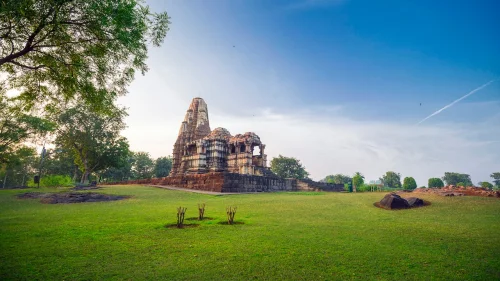
  • Main gorge panorama point: From the primary fenced overlook, you can photograph the Ken River cutting through the canyon with layered rock walls on both sides. This is the best position for wide shots that show depth and scale.
  • Railing-walk diagonal angle: Walk slowly along the viewpoint railing and shoot the gorge diagonally instead of straight across. This angle reveals the canyon’s drop and rock strata more clearly, especially when the river is visible below.
  • Monsoon cascade frames: In monsoon and post-monsoon months, multiple streams appear within the canyon. The most reliable action shots are from the upper platforms where you can include both the flowing water and the colored rock faces.
  • Dry-season rock-detail viewpoint: In low-flow months, the canyon’s rock formations become the main subject. From the same overlooks, you can focus on the exposed pink, red, and grey stone bands that are less visible when water volume is high.
  • Time-of-day lighting: Late morning to early afternoon usually provides the most even light inside the gorge, making rock colors more accurate. Early morning leaves more sections in shadow, while late afternoon can create harsh contrast across opposite canyon walls.
  • Crowd and access factors: Visitors are restricted to designated viewpoints behind railings, so positioning options are limited. On weekends and peak tourist months, the best railing spots can be occupied for long periods.
  • Rules and restrictions: The site is managed under forest/park regulations. Visitors must stay within fenced areas and not climb onto rocks. Drone use and commercial filming generally require official permission from the relevant authorities.

Near By Attraction

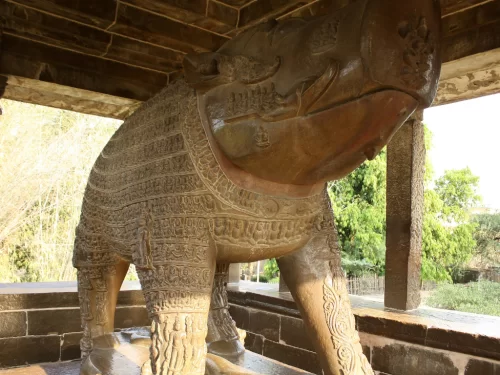
Varaha Temple Khajuraho monolithic boar Vishnu avatar sculpture, 2.6m sandstone carving 674 deities Chandela dynasty 900-925 AD Western Group UNESCO site, ideal Madhya Pradesh heritage tour package. Temple

Varaha Temple Khajuraho

Vishwanath Temple is a 10th-century Hindu temple dedicated to Lord Shiva, located in the Western Group of Temples at Khajuraho.

Asri Adinath Digambar Jain Mandir in Madhya Pradesh with intricately carved stone shikhara surrounded by lush trees, a serene heritage temple often featured in Madhya Pradesh tour packages. Temple

Sri Adinath Digambar Jain Mandir

Sri Adinath Digambar Jain Mandir in Khajuraho is a historic Jain temple dedicated to Lord Adinath.

Lakshmana Temple Khajuraho sunset golden hour Western Group UNESCO site, Nagara-style Vaikuntha Vishnu shrine intricate carvings Chandela dynasty 930-950 AD, perfect Madhya Pradesh heritage temple tour package. Temple

Lakshmana Temple

Lakshmana Temple in Khajuraho is one of the earliest and most magnificent temples of the Western Group.

Frequently Asked Questions About Raneh Waterfalls

Raneh Waterfalls is located near Khajuraho in Madhya Pradesh within the Ken Gharial Sanctuary. It is situated around 20 kilometers from Khajuraho town and is accessible by road.
Raneh Waterfalls is generally open from morning around 9 AM until sunset. Entry timings may vary slightly depending on forest department regulations.
There is an entry fee to visit Raneh Waterfalls as it falls under a protected sanctuary area. Separate charges may apply for vehicles and cameras.
Visitors can reach Raneh Waterfalls by taxi or private vehicle from Khajuraho in Madhya Pradesh. Public transport options are limited, so private travel is more convenient.
Parking is available at Raneh Waterfalls near the designated forest entry gate. Parking charges may apply depending on vehicle type.
The best time to visit Raneh Waterfalls is between October and March when the weather in Khajuraho, Madhya Pradesh is pleasant. The waterfall appears most dramatic during and just after the monsoon season.
Most travelers spend about 1 to 2 hours at Raneh Waterfalls exploring the viewpoints and canyon area. Additional time may be needed for photography.
Raneh Waterfalls is suitable for family visits with proper supervision. Visitors should be cautious near rocky edges and viewing points.
Photography is generally allowed at Raneh Waterfalls, but camera charges may apply. Drone usage typically requires special permission from authorities.
Food options are limited directly at Raneh Waterfalls, so carrying water and light snacks is advisable. Basic restroom facilities are available near the entrance area.

Loved this place ? Let’s Plan Your Madhya Pradesh Trip

Get customized Madhya Pradesh tour planning designed around safari seasons, road travel distances, heritage site exploration time, and comfortable pacing across regions. Whether you are visiting for wildlife safaris, temple architecture, historical monume

⚡ Quick Response | 💰 Free consultation | 🕒 24×7 expert support

×

Plan Your Trip