Quick Facts About Pitra Parvat
Pitra Parvat Indore – Quick Facts
| Entry Fee | No entry fee. |
| Timings | Generally open 6:00 AM – 8:00 PM; timings may vary during special religious events. |
| Altitude (m) | Approx. 553 m above sea level (Indore elevation; hilltop slightly higher than city average). |
| Ideal Visit Duration | 45–90 minutes. |
| Best Time of Day | Early morning or sunset for clearer views and cooler temperatures. |
| Crowd Level | Low on weekdays; moderate to high during weekends and religious occasions. |
| Distance from City Centre (km) | Approx. 6 km from Rajwada (central Indore). |
| Walking Difficulty | Easy to moderate; paved pathways with a gradual incline. |
| Parking Available | Yes; parking space available near the base area. |
| Last Mile Access | Motorable road up to the main entrance; short uphill walk within the premises. |
| Suitable for Kids | Yes. |
| Suitable for Seniors | Yes, if comfortable with mild uphill walking. |
| Wheelchair Friendly | Partially; base areas are accessible, but hill pathways may not be fully wheelchair-friendly. |
Why Visit Pitra Parvat, Indore
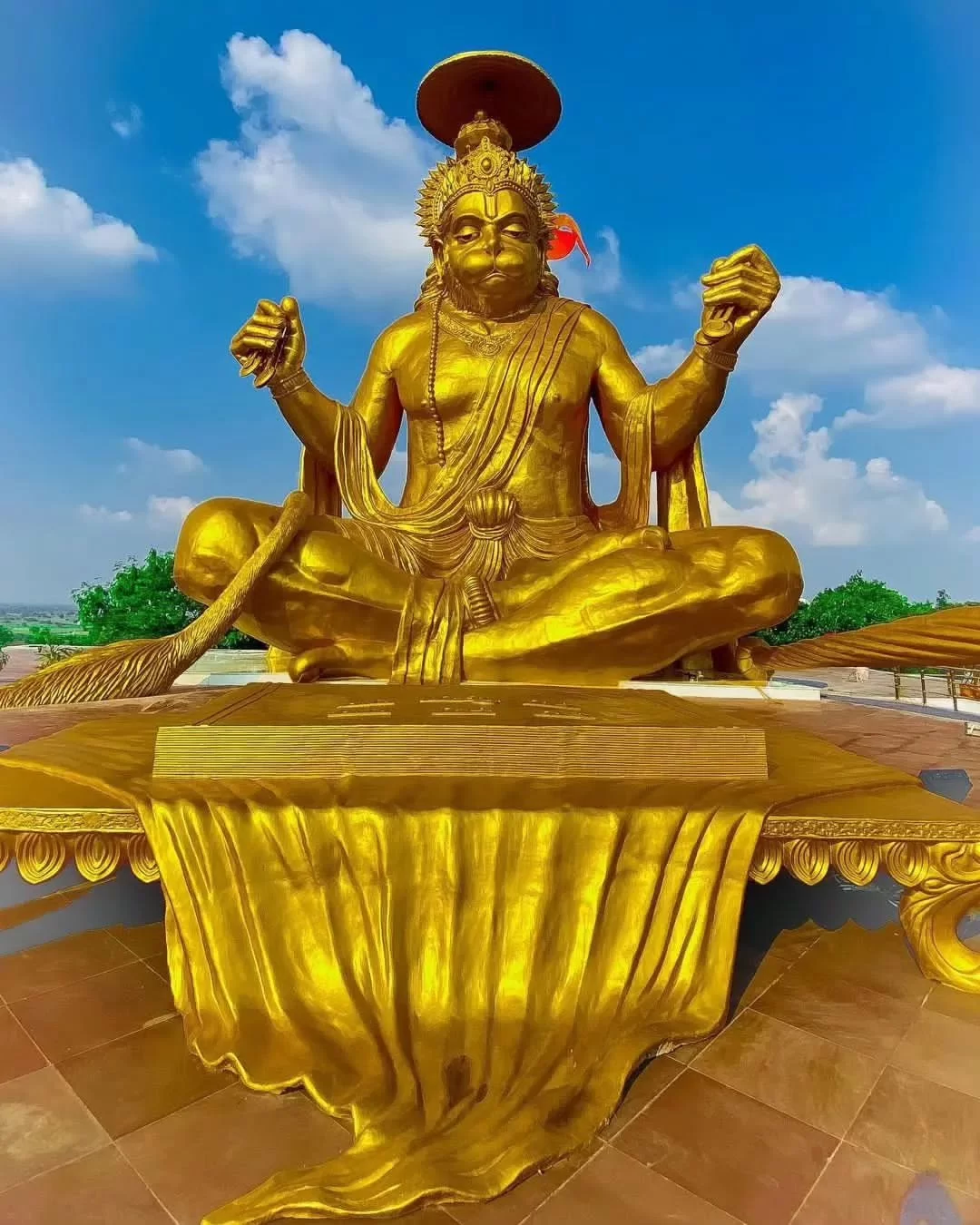
Visitors come to Pitra Parvat, Indore for the hilltop Hanuman statue and the wide, open views it offers over the city’s edge. It’s a popular stop for locals on evenings and weekends, and for travelers it works well as a short, low-effort outing after exploring Indore’s old city and food streets.
On the ground, the atmosphere is devotional but casual, with families, walkers, and small groups mixing with people coming specifically for darshan. The climb is manageable, the hilltop space feels breezy and open, and the visit is more about the setting and the pause it gives you than about a long temple circuit.
What makes Pitra Parvat, Indore distinct for travelers is the combination of a modern landmark shrine with a clear viewpoint experience. Unlike many city temples that feel enclosed by traffic and shops, this one gives you a sense of Indore’s scale and landscape from above, especially around sunset when the light and crowd energy change together.
History of Pitra Parvat Indore
Pitra Parvat in Indore is a prominent hill site that has become a modern religious and civic landmark, best known for its large statue of Lord Hanuman installed on the hillside. The location has long been part of Indore’s natural hill landscape, but its present identity is closely linked to recent development as a public pilgrimage and viewpoint destination.
The site’s name, “Pitra Parvat,” is associated locally with ancestral remembrance, and the hill is visited for devotional practices and prayers. Over time, improved access roads, stairways, and visitor facilities helped establish it as one of Indore’s most frequented hill temples and scenic overlooks.
For tourists, Pitra Parvat is experienced as a combination of a city viewpoint and an active place of worship, with the hilltop setting and the monumental Hanuman statue defining its contemporary significance within Indore.
Best Time to Visit Pitra Parvat, Indore
Pitra Parvat in Indore is best visited in the cooler months when the uphill approach and time spent around the hilltop Hanuman statue are comfortable, with clear skies that improve views over the city.
- Ideal months: October to March, with November to February being the most comfortable for climbing and longer visits.
- Weather during the best season: Mild days and cooler evenings with low humidity—ideal for walking up without heat exhaustion, spending time at the viewpoint, and visiting during early morning or late afternoon for better light and clearer city panoramas.
- Periods to avoid (and why): April to June due to intense Indore heat that makes the climb tiring, and July to September because monsoon rain can make the hill paths slippery and reduce visibility from the top.
How to Reach Pitra Parvat, Indore, Madhya Pradesh
- Nearest Airport: The closest airport is Devi Ahilya Bai Holkar Airport, Indore (IDR), located approximately 12–15 km from Pitra Parvat. The airport has regular direct flights from major cities such as Delhi, Mumbai, Bengaluru, Hyderabad, and Ahmedabad. From the airport, app-based cabs and taxis are easily available, and the drive to Pitra Parvat typically takes 30–45 minutes depending on city traffic.
- Nearest Railway Station: Indore Junction (INDB) is the nearest major railway station, about 6–8 km from Pitra Parvat. It offers strong connectivity to Mumbai, Delhi, Jaipur, Pune, and other major cities. From the station, you can reach the site within 20–30 minutes by auto-rickshaw or taxi.
- By Road & Last-Mile Connectivity: Pitra Parvat is situated on the outskirts of Indore near the Gomatgiri–Airport Road area. Indore is well connected by highways including NH52 and NH47, with regular state and private buses arriving at Sarwate and Gangwal bus stands. From central Indore, visitors can hire taxis or auto-rickshaws to reach the base of Pitra Parvat. The final approach involves an uphill road leading to the temple area, which is motorable but can be steep in sections. Parking is available near the entrance, though it may get crowded during weekends and religious occasions.
What to Expect When You Visit Pitra Parvat, Indore
Pitra Parvat in Indore is a hilltop religious site known for its large Hanuman statue and open views over parts of the city. The experience combines a devotional atmosphere with an elevated, exposed setting rather than a landscaped park environment.
- Environment and surroundings: Expect a hilltop location with wide, open areas and minimal natural shade. The site is exposed to direct sunlight and wind, especially during midday. The surroundings are largely paved or concrete, with the statue and temple structures as the main focal points rather than greenery.
- Facilities and amenities: Basic temple facilities such as a shoe-keeping area and small prasad stalls may be available near the entrance. However, do not expect a full tourist complex with extensive seating, shaded rest zones, or well-equipped restrooms. Drinking water availability can be inconsistent.
- Accessibility and movement: Access typically involves a road approach to the hill and then walking within the complex. Movement around the main statue area is generally straightforward on paved surfaces, but steps may be involved depending on the entry point. Wheelchair access can be limited due to gradients and steps in certain sections.
- Typical visitor behavior and conditions: Visitors usually come for darshan, photography, and short stays rather than long visits. The site becomes noticeably busier on Tuesdays, weekends, and religious occasions, when queues and crowd density increase. On regular weekdays, the atmosphere is calmer and movement is easier.
A visit to Pitra Parvat is typically brief and shaped by weather exposure and temple timings, so planning around heat and peak worship hours makes a noticeable difference.
Important Visitor Information for Pitra Parvat, Indore
- Crowd and weather notes: Pitra Parvat is best known for its towering Hanuman statue and open hilltop setting. The site is busiest on Tuesdays, Saturdays, and during Hindu festivals when devotees visit in large numbers. Summers in Indore can make the exposed hill area intensely hot by midday, while evenings are comparatively more comfortable.
- Peak and quiet visiting hours: Late afternoon to evening sees the highest footfall, especially around sunset. For a quieter darshan and easier access to the upper areas, early morning is generally the calmest time.
- Dress code: As a religious site, modest attire is expected. Clothing covering shoulders and knees is appropriate when visiting the temple areas around the statue.
- Safety notes and practical cautions: The climb and surrounding pathways include steps and open edges along the hillside. Surfaces can become slippery during or after rain. Parking areas can be congested on peak days, so allow extra time and keep personal belongings secure in crowded conditions.
Photography & Viewpoints at Pitra Parvat, Indore
Pitra Parvat in Indore is a hilltop religious site best known for its large Hanuman statue, broad stair approach, and elevated views over the city edge. Photography here is strongly affected by the open hillside exposure, the direction of sunlight on the statue, and the crowd flow around the main platform during peak visiting hours.
- Main statue platform front view: From the open area facing the Hanuman statue, you can capture the full height with the hill slope below. This is the cleanest angle for a complete statue shot without extreme distortion.
- Low-angle statue perspective: Standing closer to the base and shooting upward emphasizes scale, but the bright sky can overpower details on the statue. This works best when the sun is not directly behind the figure.
- Side-angle with hill backdrop: Move to the left or right edge of the platform to photograph the statue in profile with the surrounding hillside and steps. This angle adds depth and avoids the flat look of straight-on shots.
- Stairway leading-line composition: From partway down the stair route, shoot upward to use the steps as leading lines toward the statue. This is most effective early in the day when fewer visitors are climbing.
- City-view viewpoint: From open edges near the hilltop, you can photograph wide views toward Indore’s outskirts. Late afternoon often gives clearer, warmer light for skyline shots compared to midday haze.
- Time-of-day lighting: Early morning provides softer light and fewer harsh shadows on the statue’s surface. Midday light is strong and can wash out color and texture, while late afternoon produces warmer tones but can create longer shadows across the platform.
- Crowd and access factors: Evenings and weekends are the busiest, with visitors gathering around the statue and on the steps. For clean compositions, the first hour after opening is usually the least crowded.
- Rules and restrictions: As an active religious site, respectful photography is expected. Avoid photographing worshippers closely without consent, and follow any posted restrictions near the sanctum or donation areas. Drone use or commercial filming typically requires local permission.