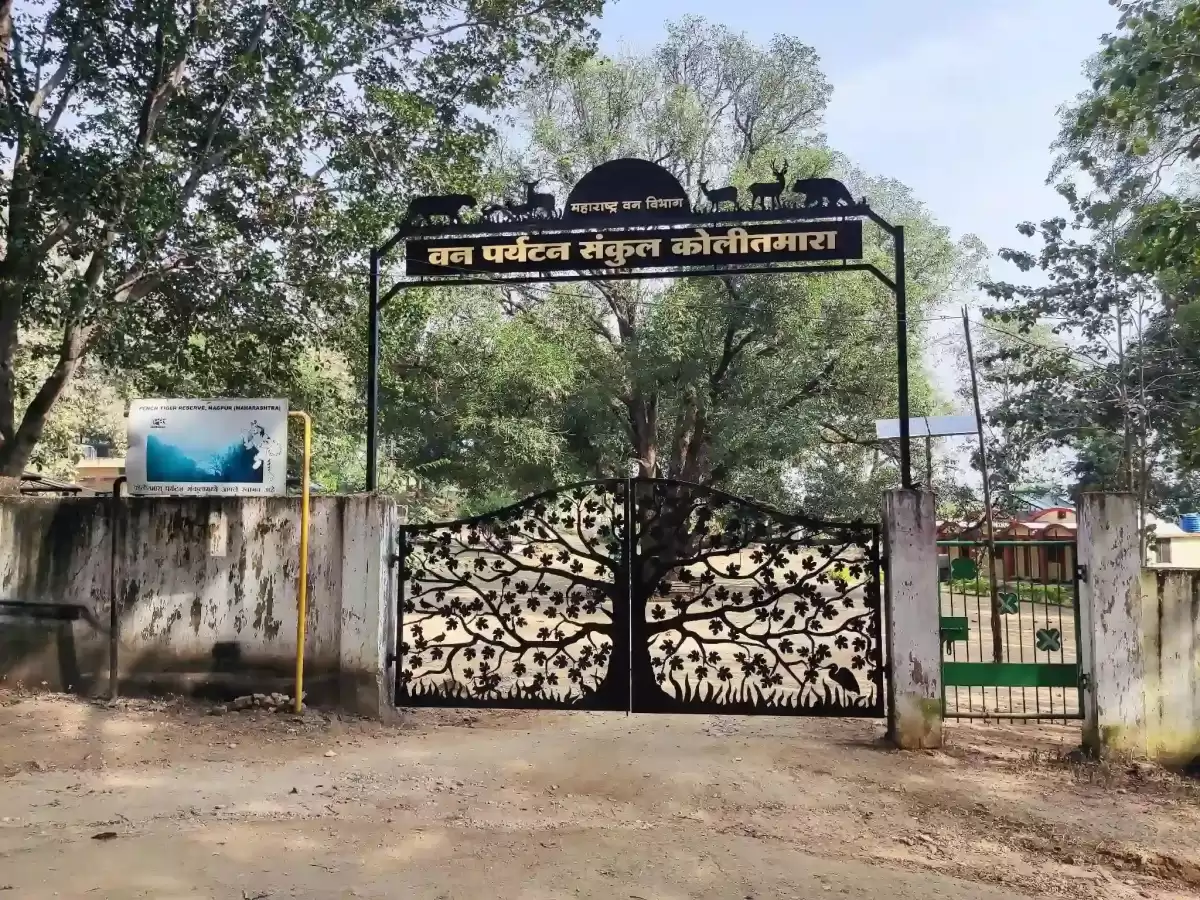
Quick Facts About Kolitmara Gate
Quick Facts – Kolitmara Gate, Pench National Park
| Entry Fee | Varies by safari permit, vehicle type, and forest department tariff |
| Timings | Seasonal safari slots; morning and afternoon entries as per forest department schedule |
| Altitude (m) | Approx. 580 m |
| Ideal Visit Duration | 2–3 hours (single safari drive) |
| Best Time of Day | Morning safari slot for wildlife movement and visibility |
| Crowd Level | Low to moderate compared to core zone gates |
| Distance from City Centre (km) | Varies by route; approx. 55–70 km from Seoni town |
| Walking Difficulty | Low (gate area and check-post zone are flat) |
| Parking Available | Yes, basic forest department parking area |
| Last Mile Access | Paved approach road; final stretch may be forest road |
| Suitable for Kids | Yes, for regulated safari visits |
| Suitable for Seniors | Yes, with limited physical movement required |
| Wheelchair Friendly | No |
Why Visit Kolitmara Gate, Pench National Park
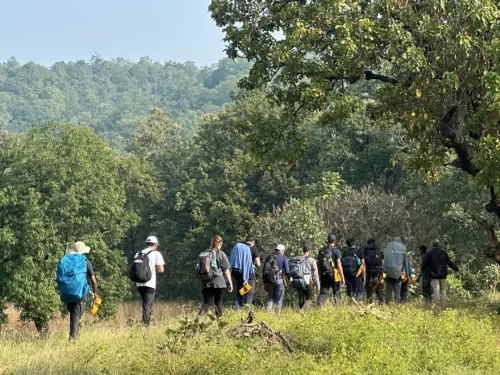
Visitors come to Kolitmara Gate primarily for regulated jungle safaris that offer access to the Pench landscape with lower vehicle density than the main core gates, making it suitable for quieter wildlife drives and birdwatching-focused visits.
The on-ground atmosphere is calm and forest-dominated, with limited commercial activity, basic forest department infrastructure, and safari movement restricted to permitted routes and time slots.
What makes Kolitmara Gate distinct is its role as a less-crowded entry point into the Pench buffer landscape, offering a more controlled safari environment, simpler logistics, and a stronger sense of being inside an active forest zone rather than a tourist hub.
History of Kolitmara Gate, Pench National Park
Kolitmara Gate developed as part of the regulated access infrastructure of Pench National Park, which was notified as a wildlife sanctuary in 1975, declared a national park in 1983, and later included under Project Tiger in 1992.
The gate functions as an administrative and safari-entry point for forest management and controlled tourism, supporting conservation operations rather than serving as a heritage or cultural site.
Best Time to Visit Kolitmara Gate, Pench National Park
Kolitmara Gate is best visited during the regulated safari season when forest routes are open, wildlife movement is active, and access permissions are operational under park management rules.
- Ideal months: October to April, aligned with the official safari season for Pench buffer and core zones
- Weather conditions: Clear visibility, dry forest tracks, and stable safari operations, with warmer afternoons from March onwards
- Periods to avoid: July to September due to monsoon closure of safari zones and restricted forest access; peak summer afternoons in May due to high heat and limited movement windows
How to Reach Kolitmara Gate, Pench National Park
- Nearest airport: Dr. Babasaheb Ambedkar International Airport, Nagpur (approx. 95 km); from the airport, travel by taxi to Khawasa/Turia area and onward to Kolitmara Gate
- Nearest railway station: Nagpur Junction (approx. 90–95 km); Seoni Railway Station (approx. 60 km) is closer but has limited train connectivity
- Road access and last-mile connectivity: Accessible by road via NH44 and forest approach roads from Seoni and Khawasa; the final stretch involves forest roads with limited signage and basic surface conditions—private taxis or pre-arranged safari vehicles are required, as public transport does not operate up to the gate
What to Expect When You Visit Kolitmara Gate, Pench National Park
- Environment and surroundings: Dense forest landscape with buffer-zone vegetation, dirt tracks, and minimal built structures, creating a quiet, non-urban setting.
- Facilities and amenities: Basic forest department infrastructure only, including gate office and check-post; no restaurants, shops, or public restrooms at the gate.
- Accessibility and movement: Entry strictly controlled by permits and safari schedules; movement limited to designated safari routes using authorized vehicles and guides.
- Typical visitor behavior and conditions: Visitors arrive primarily for pre-booked safaris, with short waiting times at entry points and limited on-site crowding compared to main Pench gates.
Important Visitor Information for Kolitmara Gate, Pench National Park
- Crowd and weather notes: Visitor volume remains low compared to core Pench gates; dust levels increase on forest tracks during dry months, and early mornings can be cold in winter.
- Peak and quiet visiting hours: Peak movement occurs during scheduled morning and afternoon safari entry slots; outside safari timings the gate area remains largely inactive.
- Dress code: No formal dress code; forest-appropriate clothing is practical due to dust, temperature variation, and vehicle-based travel.
- Safety notes and practical cautions: Entry without permits is not allowed; mobile network coverage is unreliable, and visitors should rely on pre-arranged transport and official safari coordination.
Photography and Viewpoints at Kolitmara Gate, Pench National Park
- Best viewpoints or angles: Photography is mainly from safari vehicles along designated forest routes, with open buffer landscapes, water bodies, and forest clearings providing natural sightlines rather than fixed viewpoints.
- Lighting conditions and time-of-day: Morning safaris offer softer light and clearer visibility, while afternoon safaris provide stronger contrast but dust can affect image clarity on dry tracks.
- Rules or restrictions on photography: Photography is allowed only during authorized safaris; use of drones, flash, and off-route movement is prohibited under forest department regulations.
- Crowd or access factors: Lower vehicle density at Kolitmara Gate reduces visual obstruction, but access is strictly limited to permitted safari routes and timings.