+91 9910402252
admin@chalbanjare.com


| Entry Fee | ASI ticket required for the Western Group of Temples: 40 (Indian citizens), 600 (foreign nationals); free for children below 15 years. Eastern and Southern group temples have separate access/fees depending on the specific temple. |
| Timings | Western Group: 6:00 AM – 6:00 PM (daily). Timings for Eastern and Southern group temples vary by site and whether the temple is actively used for worship. |
| Altitude (m) | Approx. 283 m above sea level (Khajuraho). |
| Ideal Visit Duration | 2–4 hours for Western Group only; 1 full day is more practical to cover Western + Eastern + Southern groups. |
| Best Time of Day | Early morning for fewer crowds and better light on carvings; late afternoon is also good for photography. |
| Crowd Level | Moderate; high during October–March, weekends, and public holidays. |
| Distance from City Centre (km) | Western Group entrance is approx. 1 km from Khajuraho town centre; Eastern and Southern groups are farther and vary by temple. |
| Walking Difficulty | Easy; mostly flat paved paths within temple complexes, with steps to climb onto temple platforms. |
| Parking Available | Yes; parking is available near the Western Group entrance and near major Eastern/Southern group sites. |
| Last Mile Access | Motorable roads reach all three groups; last mile is a short walk inside each temple complex. |
| Suitable for Kids | Yes. |
| Suitable for Seniors | Yes; walking is manageable, but temple steps and heat can be tiring. |
| Wheelchair Friendly | Partially; pathways are accessible in many areas, but temple platforms and uneven surfaces limit full wheelchair access. |
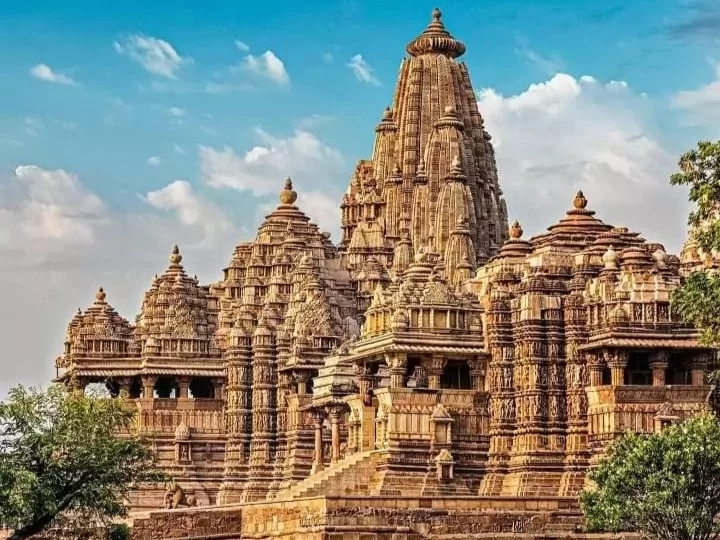
Visitors come to the Khajuraho Temple Group, Madhya Pradesh to see one of India’s most concentrated collections of intricately carved sandstone temples in a single, walkable complex. The Western Group is the main draw, where large temples like Kandariya Mahadeva stand within landscaped grounds, making it easy to explore multiple monuments without long transfers.
On the ground, the atmosphere is structured and open, with clear pathways, ticketed entry areas, and designated viewing points that allow time to study the carvings in detail. Mornings tend to be quieter and better for photography, while afternoons bring more guided groups moving between temples in a steady circuit.
What makes the Khajuraho Temple Group, Madhya Pradesh distinct for travelers is the density and craftsmanship of its sculptural work—outer walls are covered with panels depicting deities, musicians, daily life, and symbolic motifs. The experience is less about a single shrine and more about moving from temple to temple, comparing scale, layout, and carving styles within one compact heritage zone.
The Khajuraho Temple Group in Madhya Pradesh was built primarily between the 10th and early 12th centuries CE under the Chandela dynasty, during a period when Khajuraho developed as a major center of temple construction in central India. Originally, the site included a much larger number of temples than survive today, dedicated to Hindu and Jain traditions.
The temples are renowned for their mature Nagara-style architecture, with elevated platforms, finely proportioned spires, and exceptionally detailed stone sculpture. Their carvings include depictions of deities, musicians, celestial beings, and scenes of everyday life, reflecting both religious iconography and the artistic culture of the Chandela period.
After the decline of Chandela power, Khajuraho’s prominence diminished, and many temples fell into disuse, though several remained active places of worship. The surviving monuments were later documented and conserved during the colonial period and are now protected as a UNESCO World Heritage Site.
For visitors today, the Khajuraho Temple Group offers a concentrated view of medieval Indian temple art and architecture, with the Western Group forming the best-preserved core and the Eastern and Southern groups providing additional context for Khajuraho’s Hindu and Jain heritage.
The Khajuraho Temple Group is best explored between October and March, when the weather is comfortable for walking across the open temple complexes and observing the intricate sandstone carvings in natural light without the fatigue of extreme heat.
The Khajuraho Temple Group is a UNESCO World Heritage Site consisting of three main clusters: the Western, Eastern, and Southern groups. The Western Group is the largest and most visited, while the Eastern and Southern groups are more spread out and comparatively quieter. The experience is centered on walking between stone temples set within open grounds rather than moving through enclosed museum-style spaces.
Plan for several hours if covering all three groups, with the majority of time spent in the Western Group. The experience is shaped by outdoor walking, repeated stair climbing, and exposure to weather rather than indoor sightseeing.
The Khajuraho Temple Group is a UNESCO World Heritage Site divided into Western, Eastern, and Southern clusters, with the Western Group being the most architecturally elaborate and frequently visited. Photography here is shaped by open landscaped courtyards, raised temple platforms, and intricately carved sandstone surfaces that respond strongly to directional light.
 Temple
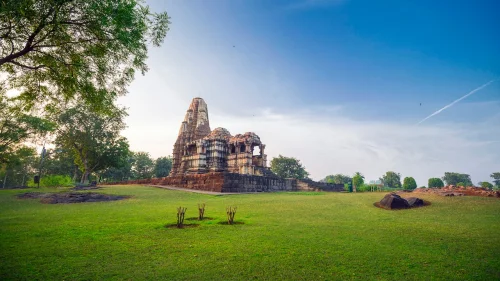
Dulhadeo Temple is a historic Hindu temple dedicated to Lord Shiva, located in the southern group of monuments at Khajuraho, Madhya Pradesh.
 Temple
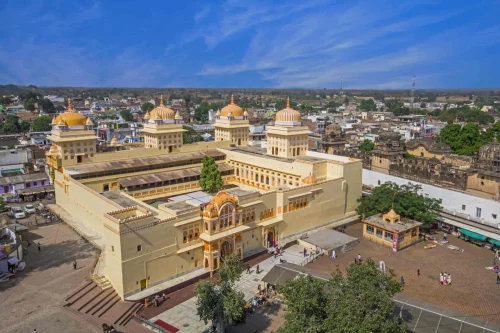
Ram Raja Temple is a unique Hindu temple in Orchha, Madhya Pradesh, where Lord Rama is worshipped as a king rather than solely as a deity.
 Temple
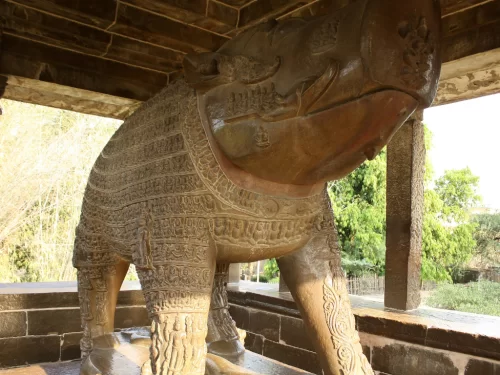
Vishwanath Temple is a 10th-century Hindu temple dedicated to Lord Shiva, located in the Western Group of Temples at Khajuraho.
Get customized Madhya Pradesh tour planning designed around safari seasons, road travel distances, heritage site exploration time, and comfortable pacing across regions. Whether you are visiting for wildlife safaris, temple architecture, historical monume
⚡ Quick Response | 💰 Free consultation | 🕒 24×7 expert support

