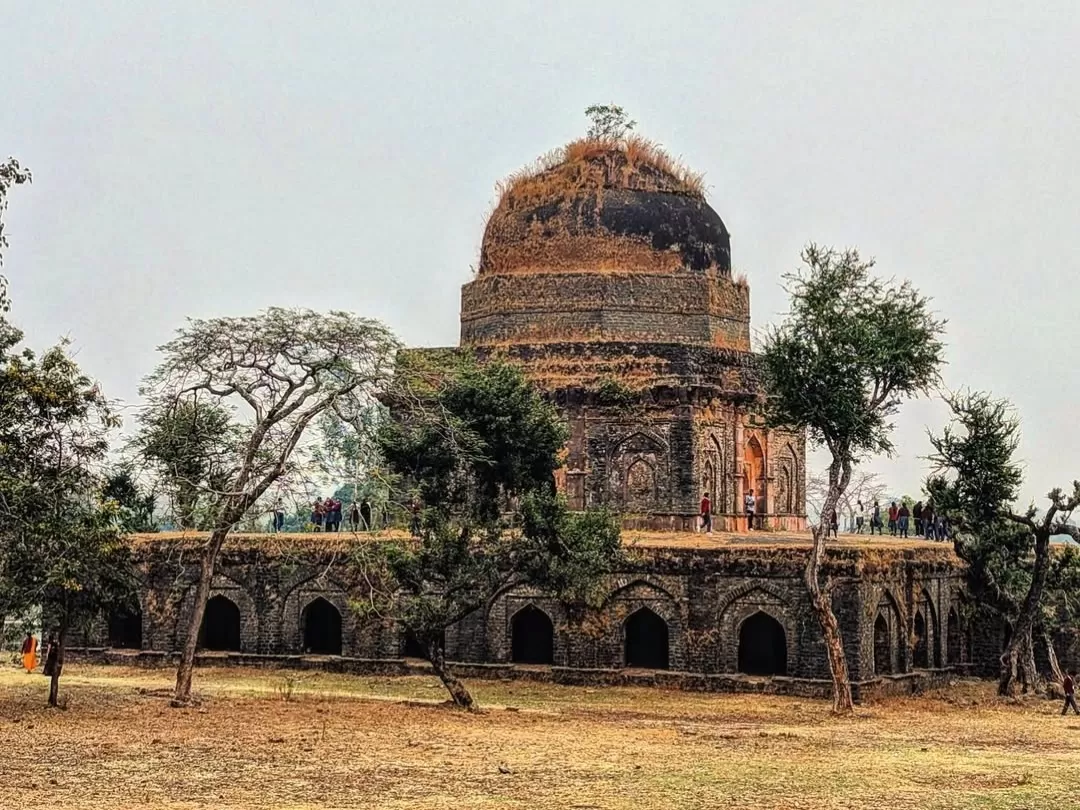
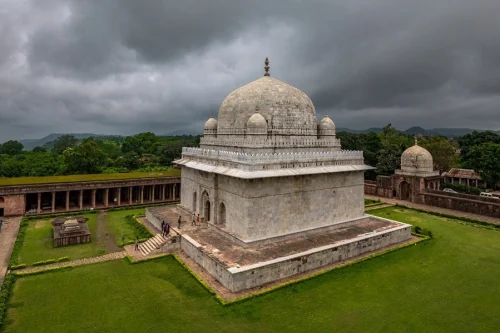
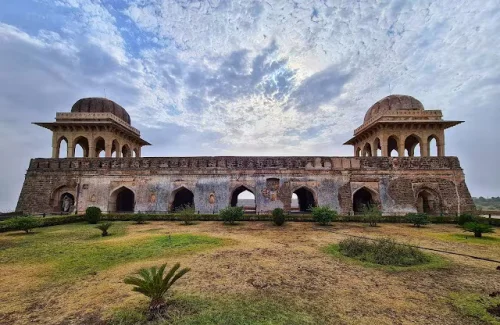
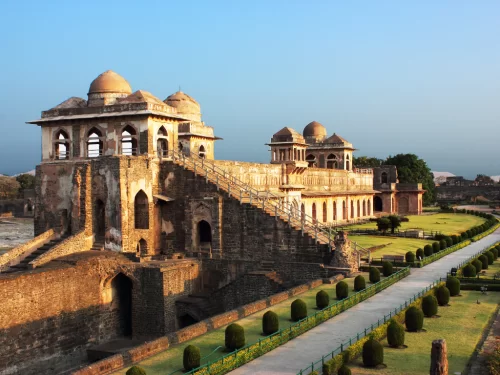
Quick Facts About Echo Point Mandu
Quick Facts of Echo Point
Entry Fee – No entry fee
Timings – Open access during daylight hours; no official closing time
Altitude (m) – Approximately 560 meters above sea level (Mandu plateau)
Ideal Visit Duration – 15–20 minutes
Best Time of Day – Morning or late afternoon (clear acoustics and valley visibility)
Crowd Level – Low; occasional tourist presence during peak season
Distance from City Centre (km) – Approximately 1.5 km from Mandu main heritage zone
Walking Difficulty – Easy (short walk, natural ground surface)
Parking Available – No formal parking; roadside stopping only
Last Mile Access – Walkable access from nearby monuments and local roads
Suitable for Kids – Yes, with strict supervision near cliff edges
Suitable for Seniors – Partially suitable; uneven ground and lack of seating
Wheelchair Friendly – No; natural terrain, uneven surfaces, and no paved access
Why Visit Echo Point
Visitors come to Echo Point for the natural acoustic effect created by the surrounding rock formations, where sound reflections form a simple, interactive experience within the Mandu landscape.
The on-ground atmosphere is open and casual, with visitors stopping briefly to test the echo, take photos, and enjoy the open valley surroundings before moving on to nearby sites.
What makes this place distinct for travelers is its experience-based appeal, where the visit is driven by a natural sound phenomenon rather than architecture, structures, or exhibits.
History of Echo Point
Echo Point is a natural acoustic site located within the Mandu (Mandavgarh) plateau region of Madhya Pradesh. Unlike forts, palaces, or monuments, it does not have a constructed historical origin or dynastic association.
The site’s significance is based on its natural geological formation and surrounding rock surfaces, which create sound reflection and echo effects due to the landscape’s shape and open valley structure.
Echo Point was not developed as a religious, royal, or administrative site in historical records and has no documented role in Mandu’s political or architectural history.
Its recognition as a tourist spot emerged in the modern period as part of Mandu’s natural sightseeing locations, rather than as a heritage monument or historical structure.
Best Time to Visit Echo Point
Echo Point is best visited during the cooler months when the rocky terrain, open viewpoints, and surrounding forested areas can be explored comfortably, with clear acoustics and safe walking conditions.
- Ideal months: October to February
- Best-season conditions: Cool to mild temperatures, dry paths, clear air, and stable weather, allowing safe access to viewpoints, strong echo effects, and good visibility for photography
- Periods to avoid: March to June due to extreme heat and direct sun on exposed rock surfaces; July to September because of monsoon rains, slippery rocks, muddy trails, and unsafe footing near cliff edges